Iowa 3-year-old becomes youngest musician to play at Grand Ole Opry

By Katrina Markel

Click here for updates on this story

    SIDNEY, Iowa (KMTV) — Three-year-old Remi Steinert appears to be the youngest musician to ever play at the Grand Ole Opry. It’s an extraordinary milestone for the toddler who was born with a congenital heart defect.

Remi, at home in Sidney, with his parents Jessica and Alec showed off his drumming skills to KMTV. The Air Force family moved to the area a couple of years ago when Alec was transferred to Offutt Air Force Base.

“And then we moved here and we started noticing he’s really picking up beats, like he can do this,” Jessica said.

Jessica suspects she might have set the stage for Remi’s musical talents very early by playing Elvis Presley’s music to him while she was expecting.

Right after delivery, Louisiana doctors discovered Remi’s heart defect, and within hours, the newborn and his father wound up flying on a medical jet to Dallas.

“There’s like 15 doctors all hooking him up to everything,” Alec said.

“Alone in Dallas with his newborn baby and didn’t know what was going on, so he constantly played Elvis for him,” Jessica said.

The King’s music played for five months while waiting for the baby’s open heart surgery in Dallas.

“He became known as the ‘Elvis Baby’ because the only thing that would calm him down was, especially, it was ‘Burning Love’ by Elvis Presley,” Jessica said.

Now, with hundreds of thousands of social media followers, his parents say his heart beats to its own drum.

After winning a contest, Remi was selected to perform “Little Drummer Boy” with the group For King + Country at the Opry last month.

“Words cannot describe that moment,” Alec said.

“To see him on stage just thriving and just living his best little life. He has no idea, you know, what he’s been through,” Jessica said.

“This story was reported on-air by a journalist and has been converted to this platform with the assistance of AI. Our editorial team verifies all reporting on all platforms for fairness and accuracy.”

Please note: This story was provided to CNN Wire by an affiliate and does not contain original CNN reporting. This content carries a strict local market embargo. If you share the same market as the contributor of this article, you may not use it on any platform.
Teen to plead guilty to mass shooting in Hedingham neighborhood

By WRAL Staff

Click here for updates on this story

    RALEIGH, North Carolina (WRAL) — Austin Thompson, the Raleigh teen accused of shooting six people, killing five of them in October 2022, will plead guilty to all charges, his lawyers announced on Tuesday.

The intent to plead guilty was filed one day before Thompson was scheduled for a a hearing ahead of a trial planned for February. That hearing is still scheduled for Wednesday. It’s likely Thompson would enter his plea at that time.

Thompson, who was 15 when he initiated the shooting spree that took him from his home in the Hedingham neighborhood to the Neuse River greenway, “recognizes the deep pain he has caused,” his lawyers said in giving notice of the intention to plead guilty.

“We are ready to move forward. Our thoughts are with the families of the victims,” Wake County District Attorney Lorrin Freeman said.

The plea allows Thompson and his victims’ families to avoid a trial.

“After lengthy discussions with his attorneys about how a trial would proceed, he has decided he wishes to save the community and the victims from as much additional infliction of trauma as possible,” said Thompson’s lawyers, Kellie Mannette and public defender Deonte Thomas, in the paperwork filed with the court.

Thompson will still face a sentencing hearing, but because he was under 18 at the time of his crimes, the death penalty is off the table.

Thompson, who had a gunshot wound to the head when officers found him hiding in a shed hours after the shootings, has a brain injury that his lawyers said, “has made it such that Austin cannot explain why he committed this shooting.”

As recently as last week, Thompson’s lawyers were filing motions to ask the court to allow for his brain injury. They said in those documents that Thompson suffered a seizure on Jan. 11, 2026, that they attributed to the stress of the scheduled trial.

Mannette and Thomas had also argued that statements Thompson made to police after the shooting should not be allowed in court because he was “medicated, brain-injured [and] under constant police surveillance.”

They said when he woke up in the hospital after the shootings he demonstrated symptoms of a severe brain injury, including confusion, poor memory, poor focus and impulsivity.

His defense argued that because of that injury, the statements that he gave to police were “confused and chaotic.”

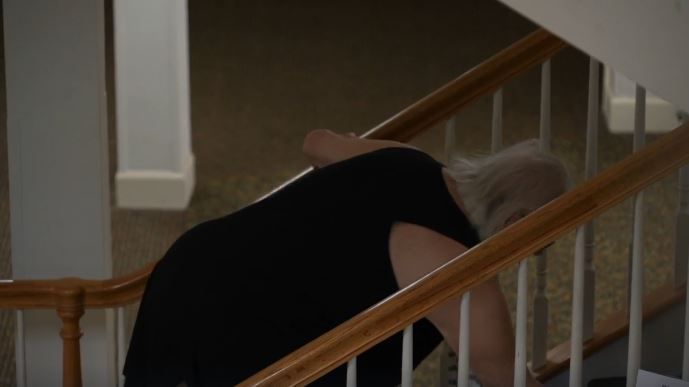
On Oct. 13, 2022, police say, Thompson killed first his brother, James Thompson, inside their Hedingham neighborhood home, then fled through the neighborhood to the nearby Neuse River Greenway, shooting another four people along the way.

Friends Nicole Connors, 52, and Marcille “Lynn” Gardner were shot on Sahalee Way.

Connors died; Gardner survived but spent weeks in the hospital.

Raleigh police officer, Gabriel Torres, 29, was on his way to work when he was shot outside his home on Osprey Cove Drive.

Mary Marshall, 34, and Susan Karnatz, 49, were shot on the greenway.

Raleigh police officer Casey Clark was injured during the search for the shooter.

Thompson was charged with five counts of murder, two counts of attempted murder, two counts of assault with deadly weapon with intent to kill and one count of assault with firearm on law enforcement officer.

Court documents show the teenager was found in a shed with a shotgun, $772 in cash, multiple pistols, “projectiles,” knives, rifles, rifle magazines, shell casings, ammunition rounds and bullets.

Inside the Thompson home, officers found 11 firearms and 170 boxes of ammunition. Detectives also found what appeared to be a confession note signed by Thompson describing the killing of his brother, James Thompson, inside the home.

Alan Thompson, father of Austin and James, was cited for failure to secure a weapon linked to the gun allegedly used in the mass shooting. He pleaded guilty in September 2024 and was sentenced to one year of unsupervised probation.

Please note: This story was provided to CNN Wire by an affiliate and does not contain original CNN reporting. This content carries a strict local market embargo. If you share the same market as the contributor of this article, you may not use it on any platform.

Homeowner says blasting from nearby construction is cracking her house

By Hannah McDonald

Click here for updates on this story

    HENDERSONVILLE, Tennessee (WTVF) — A Hendersonville homeowner is watching cracks spread through her walls and ceiling, and she believes intense blasting from a nearby construction project is to blame.

Despite filing multiple complaints with state authorities, CJ Stapleton says nothing has changed.

“It’s the absolute feeling of you can’t do anything about it,” Stapleton said. “There’s nothing you can do, you can’t stop them. You just can’t stop them. And it just gets worse.”

The cracks in Stapleton’s home appeared six months ago and are only getting wider and deeper. She points to damage throughout her living space, where she spends most of her time.

“It started a little bit, and then it was more and more, and now it’s quite noticeable,” Stapleton said.

The construction site of concern is less than a mile from her house on Molly Walton Drive. Public social media posts advertise 500,000 square feet of industrial space being built there.

The timing troubles her most. After more than two decades without problems, the cracks coincided with ramped-up blasting at the site.

“This is my living space. I have my TV and everything here,” Stapleton said. “So I’m sitting in my chair and looking at everything going on.”

Stapleton has pictures from a July assessment showing her house wasn’t as damaged before blasting intensified. The documentation could help her prove a connection between the construction and her home’s deterioration.

“It makes me mad. It makes me want to go over and start yelling: Who’s responsible for this? Why are you doing this?” Stapleton said. “Why didn’t you tell us? What are you going to do about my home?”

The State Fire Marshal’s Office can stop blasting for up to five days under specific conditions, but it cannot require repairs or compensation. Violations are based on exceeding blasting limits, not the number of complaints or reported damage.

The regulatory limitations leave Stapleton feeling powerless.

“I’m just flabbergasted. I don’t know… God’s the only one who can help me now, looks like,” Stapleton said. “It doesn’t seem that anyone around here – human-wise – is willing to do anything.”

Stapleton plans to call the same assessor back out to document the worsening damage.

The Tennessee Department of Commerce and Insurance, which oversees the State Fire Marshal’s Office, regulates blasting in Tennessee and fields numerous questions from the public about blasting rules and procedures. Consumers can learn more about filing blasting complaints and read up on frequently asked questions about the regulations online.

I submitted records requests with the Fire Marshal’s office to learn more about the project and any complaints that have been filed.

This story was reported on-air by Hannah McDonald and has been converted to this platform with the assistance of AI. WTVF verifies all reporting on all platforms for fairness and accuracy.

Please note: This story was provided to CNN Wire by an affiliate and does not contain original CNN reporting. This content carries a strict local market embargo. If you share the same market as the contributor of this article, you may not use it on any platform.

Mom advocates for silent panic alarm technology in Tennessee schools statewide

By Chris Davis

Click here for updates on this story

    NOLENSVILLE, Tennessee (WTVF) — A Nolensville mother is pushing Tennessee lawmakers to expand funding for silent panic alarms in all schools across the state, hoping the wearable technology could save lives during emergencies.

Kristen Rucker, a mother of two boys, has been searching for school safety solutions since the Covenant and Antioch school shootings changed Middle Tennessee families forever. “When you think about your kids at school, we’re understandably worried about their safety,” Rucker said.

After hearing about silent panic alarms from fellow mothers, Rucker became convinced this technology could make a difference. “There can be a lot of debate on prevention, and those are important conversations that need to continue to happen — but that stuff takes a long time — so I don’t want to get stuck there,” Rucker said.

The panic alarms allow any staff member to trigger a total school lockdown by repeatedly pressing a crisis alert badge they wear. “Every mom I forwarded it to said the same thing. How do we get this technology in our schools? How do we get this to our teachers? Because seconds matter,” Rucker said.

Tennessee lawmakers previously passed “Alyssa’s Law,” named in memory of a victim in the Marjory Stoneman Douglas High School shooting in Parkland, Florida. Alyssa’s mother, Lori Alhadeff, has advocated for the legislation. “Therefore, every school needs their panic button,” Alhadeff said in a 2023 interview.

The Tennessee version established a pilot program for six public and private school systems to test the technology from Centegix. They were awarded to Franklin County Schools, Christ’s Legacy Academy, Hollow-Rock Bruceton, Priest Lake Christian Academy, Sacred Heart Cathedral School and Gibson County Special District.

“That’s a great start, but like let’s move from 6 to like all of them,” Rucker said.

Rucker is calling on state lawmakers to provide enough funding for every school — public or private — to have this technology. “I would breathe so much easier knowing my teachers have that on their badge, they have it around their neck. Help is just a click of a button away,” Rucker said.

However, the issue may not be willingness but availability of funds. Lt. Gov. Randy McNally warned, in a sit-down interview two weeks ago, that this legislative session will be tight, depending on how revenues come in. “It could be, it definitely could be” a harsh reality for some members, McNally said.

According to a state review, the panic alarm proposal would cost about $14 million to install in every public school and $19 million to also include private schools. The cost is expected to go down after the initial installation of the technology “You can’t put a price on life and luckily the sticker price on this is doable. Tennessee can do this,” Rucker said.

Rucker believes the technology could be at least part of the solution parents have been hoping for. “We can’t control like what happens, but we can choose how we’re going to respond. And let’s be a state that’s like, we’re going to respond as quick as possible,” Rucker said.

The legislation to make Alyssa’s Law statewide is being sponsored by Senate Majority Leader Jack Johnson, R-Franklin, and State House Rep. Ron Gant, R-Piperton. However, no debate has been scheduled on the bill so far this session.

Please note: This story was provided to CNN Wire by an affiliate and does not contain original CNN reporting. This content carries a strict local market embargo. If you share the same market as the contributor of this article, you may not use it on any platform.

Grandmother pleads for help as three girls reported missing

By John Hood

Click here for updates on this story

    PORTSMOUTH, Virginia (WTKR) — The grandmother of one of the three girls reported missing out of Portsmouth is pleading for help, saying she fears for her granddaughter’s safety.

Fourteen-year-old Joseline Krofek was reported missing Sunday morning along with 12-year-old Forever Scott and 16-year-old Darsha McAllister. Police said the girls were last seen in the area of Fort Lane in Portsmouth.

“They’re just out there, hopeless and scared,” said Tammy Krofek, Joseline’s grandmother and legal guardian. “I just want her to be found safe.”

Krofek said her granddaughter had been living at Harbor Point Behavioral Health Center on Fort Lane to address behavioral issues. She said Joseline is originally from Morgantown, West Virginia — about seven hours away — and does not know anyone in the Hampton Roads area.

“She has no business being out on the streets,” Krofek said.

Krofek said she was not notified by the behavioral health facility that her granddaughter was missing until hours after police had already been alerted. She said the facility told her staff contacted Joseline’s social worker, but not her.

Krofek believes her granddaughter may have tried to reach her using unknown or blocked phone numbers.

“In the meantime, I have six private blocked numbers,” she said. “Had they called me when she disappeared, I would have answered those calls.”

Krofek said Joseline previously ran away from the facility on New Year’s Eve but returned a few hours later. She said she does not know the other two girls but believes the three may have run away together.

“I just want her home, and I want her safe,” she said.

News 3 reached out to Harbor Point Behavioral Health Center for a statement, but has not yet received a response.

Anyone with information is asked to contact Portsmouth police.

Please note: This story was provided to CNN Wire by an affiliate and does not contain original CNN reporting. This content carries a strict local market embargo. If you share the same market as the contributor of this article, you may not use it on any platform.
How one donation pickup truck is fueling veterans’ support

By Cyera Williams

Click here for updates on this story

    SILVER SPRING, Maryland (WMAR) — Founded in 1978 by Vietnam-era veterans, the Vietname Veterans of America was created in response to the lack of support many veterans faced when they returned home from war. Its founding principle, “never again will one generation of veterans abandon another,” continues to guide its mission today.

While its leadership is rooted in Vietnam-era service members, the organization now serves veterans of all generations.

A major part of that mission is funded through a nationwide donation pickup program. Trucks collect clothing, furniture, and household items directly from homes, then deliver those items to retail thrift stores. The stores purchase the donated goods, generating revenue that helps keep veteran programs running.

“It’s a real easy way for us to raise money,” said Quentin Butcher, Director of Fundraising and Development for Vietnam Veterans of America. “You don’t have to write a check or anything like that…you give us an item, and the thrift stores pay us for those items.”

Unlike other organization, Vietnam Veterans of America does not operate its own thrift stores. Butcher said that approach allows the organization to avoid overhead costs like building maintenance and staffing.

“By doing the business this way, we’re able to very nicely collect donated items, sell them, and be able to focus our attention on our veteran programs,” he said.

On a good year, Butcher said the donation pickup program represents the majority of the organization’s revenue, funding claims assistance, advocacy, and local chapter outreach.

“That represents anywhere from about 65 to 70 percent of our total revenue,” Butcher said. “So it’s very important to our operation.”

Those funds support veteran service officers who help veterans seek benefits through the Department of Veterans Affairs, including representing veterans whose claims have been denied.

“When those claims get denied, we have service officers who will actually represent them and make sure that veteran gets the services or items they need,” Butcher said.

The pickup program also provides broader benefits, keeping usable items out of landfills and making affordable goods available in communities.

“We’re keeping things out of landfills, and we’re helping folks make room for themselves,” Butcher said. “It’s connected to a larger ecosystem, and for us, it just works really well because we’re able to fulfill our mission.”

Vietnam Veterans of America has state councils and local chapters in nearly every state, with pickup trucks operating across much of the country to support the donation program.

Please note: This story was provided to CNN Wire by an affiliate and does not contain original CNN reporting. This content carries a strict local market embargo. If you share the same market as the contributor of this article, you may not use it on any platform.

‘Wrong call’: Buffalo Bills fans react to Sean McDermott’s firing

By Taylor Epps

Click here for updates on this story

    BUFFALO, New York (WKBW) — Buffalo Bills fans didn’t expect to say so long to head coach Sean McDermott Monday.

“Absolutely shocked,” said lifelong fan Don McElheny. “If anything, I thought maybe [Joe] Brady would go or maybe even [Brandon] Beane, but McDermott was not who I thought would be gone.”

I went to Danny’s South right near One Bills Drive to see how people were feeling.

“For the last 9 years, what we’ve had going on has been wonderful,” said Mark Ebling, Co-owner of Danny’s. “I think they’re ready for a change.”

Many fans worry about starting over, hoping it doesn’t stall the progress the team has made.

“I think we were starting to gain momentum,” said James Craig. “Especially Josh Allen. I think we needed a whole structure change, but I think starting with him is the wrong call.”

No matter who’s next, fans are again left saying: “There’s always next year.”

“I’m kind of sad,” said Austin Marshall. “I hope maybe in the next year they’ll find someone to get in and take us to the Super Bowl, but I have a lot of faith in the Bills, I’ve always had faith.”

Please note: This story was provided to CNN Wire by an affiliate and does not contain original CNN reporting. This content carries a strict local market embargo. If you share the same market as the contributor of this article, you may not use it on any platform.
Hawaii’s physician workforce on life support with hundreds of doctors needed

By Kristen Consillio

Click here for updates on this story

    HONOLULU, Hawaii (KITV) — HONOLULU (Island News) — When they can’t find a doctor, neighbor island patients end up here on Oahu at hospitals like Straub.

That’s the case year after year as patients and providers call for help with the worsening doctor shortage.

“In the neighbor islands, it’s almost devastating,” said patient Jonathan Opey.

According to the latest Hawaii Physician Workforce Report, the state needs more than 830 doctors, up more than 20% from a shortage of 760 the year before.

The neighbor islands have it the worst with the Big Island and Maui short more than 40%. Even on Oahu, it can take at least 10 months to see a primary care physician for a routine physical exam.

“If you needed to see a specialist and you couldn’t get to the Oahu and they didn’t have one on your island, guess what? You go without,” he said. “That’s the fear.”

Dr. Esther Smith is a family physician in Kona. She knows firsthand the hardships in rural communities.

“Absolutely there isn’t a person who lives in Hawaii who doesn’t know somebody who can’t find a primary care provider,” Smith said. “When you have a primary care shortage, you have a shortage of everything.”

Without enough doctors, chronic diseases worsen and patients end up sicker, often costing the system more in emergency rooms and hospitals.

“Then people have late diagnoses of their cancers, and then we only have one oncologist who lives on Big Island at this time, it’s dire,” Smith said.

And with more and more physicians leaving the islands because the cost of living doesn’t match the pay, providers are hoping there’s light at the end of the tunnel.

They want a new rural health transformation program funded by the feds to help with scholarships and incentive payments for those who practice in underserved communities. Because it all comes down to keeping people healthy.

“Because health is everything,” she said. “If you don’t have your health, you don’t have anything.”

Please note: This story was provided to CNN Wire by an affiliate and does not contain original CNN reporting. This content carries a strict local market embargo. If you share the same market as the contributor of this article, you may not use it on any platform.

Aimee Bock, “mastermind” of Minnesota’s biggest fraud scheme, says “I wish I could go back and do things differently”

By Michael Kaplan, Jonah Kaplan

Click here for updates on this story

    MINNEAPOLIS (WCCO) — The Trump administration has justified its ongoing immigration crackdown in Minnesota by citing a need to curb fraud and pointing to a widening scandal involving members of the Somali American community. Yet prosecutors say the mastermind of the state’s biggest fraud scheme to date was not Somali but a White woman — 45-year-old Aimee Bock.

In an exclusive interview from her jail cell, Bock defended her conduct, admitted regrets and argued that state officials who she worked with should bear some of the blame. It was the first time Bock spoke publicly since she was arrested for her role in what prosecutors say was a $250 million COVID-era effort to defraud a federal program to feed hungry children.

“I wish I could go back and do things differently, stop things, catch things,” said Bock, who was the head of Feeding Our Future, the now-infamous nonprofit that signed up restaurants and caterers to receive taxpayer money for providing meals to kids. “I believed we were doing everything in our power to protect the program.”

So far, prosecutors have charged 78 defendants connected to Feeding Our Future, with more than 60 pleading guilty or convicted at trial. All are Somali American, except for Aimee Bock.

During a five-week trial last year, prosecutors alleged Bock signed off reimbursement claims for millions of meals that were never served. She was also charged with collecting bribes. Together, she and the meal site operators were accused of stealing tens of millions of federal dollars and spending it on luxury cars, real estate ventures and vacations.

“That money did not go to feed kids,” said Acting U.S. Attorney Lisa D. Kirkpatrick at the time. “It was used to fund their lavish lifestyle.”

A jury convicted her on all counts. She’s now awaiting sentencing and faces up to 33 years in prison. Evidence submitted at trial included text messages where Bock compared Feeding Our Future to the mob.

“The jury saw overwhelming evidence of what Bock knew,” said lead prosecutor Joe Thompson following the verdict. “She was at the head of the scheme from Day One. She signed every single fraudulent claim that was submitted to the state of Minnesota.”

Bock told CBS News she was neither mastermind nor mob boss.

“It was heartbreaking,” Bock said, describing the moment she heard the verdict. “I believe in accountability. If I had done this, I would’ve pled guilty. I wouldn’t have gone to trial. I wouldn’t have put my children and my family through what we’ve been through. I’ve lost everything.”

Last month, a judge ordered her to forfeit more than $5 million in proceeds from the scheme.

Most of the millions federal officials seized from her were sitting in a bank account for the nonprofit, and Bock denied she personally lived a lavish lifestyle. She downplayed the items FBI agents found at her home when they raided it in 2022 — a home she had lived in for more than a decade.

“They found minimal jewelry,” Bock said. “I believe it was like two pairs of earrings, a bracelet, a watch. There was some cash there.”

Bock’s attorney, Kenneth Udoibok, shared video showing stacks of food at meal sites operated by Feeding Our Future contractors. Bock said she was doing everything in her power to root out fraud and terminated agreements with dozens of entities she believed were cheating the system.

“I was the only one that stopped a claim and said, this is fraudulent,” Bock said. “There are tens of millions of dollars in claims that we did not pay, that we refused.”

The sudden growth of Bock’s organization was staggering. In 2019, Feeding Our Future submitted $3.4 million worth of meal claims. In 2021, it submitted nearly $200 million. Bock attributed the increase to the looser guidelines during the pandemic that allowed parents to pick up meals and bring them home. Asked whether the spike in volume raised red flags at the time, Bock claimed she had sign-off from Minnesota officials.

“We relied on the state,” she said, adding that local officials, including Rep. Ilhan Omar, would often visit the meal sites. “We told the state, this site is going to operate at this address, this time, and this number of children. The state would then tell us that’s approved.”

Omar has denied she was aware of individuals defrauding the food program, and previously has condemned the misuse of funds. Minnesota Gov. Tim Walz has drawn widespread scrutiny for his handling of fraud in the state. But Walz has defended his administration’s response, saying “we’ve spent years cracking down on fraudsters” and accusing the Trump administration of “politicizing the issue to defund programs that help Minnesotans.”

Udoibok, Bock’s attorney, said state officials at the time weren’t particularly interested in stopping the fraud, because the nonprofit was providing at least some food to an important constituency during a time of significant instability.

“What is a lie is that they were policing this fraudulent activity at any time,” Udoibok said. “They wanted a scapegoat. She ran the only food program in the state, so they pinned it on her.”

A spokesperson for Walz did not respond to a request for comment

Bock spoke to CBS News in the aftermath of the killing of Renee Good, as Minneapolis became a flashpoint in the administration’s push to crackdown on illegal immigration. According to Bock, some of the individuals picked up in ICE sweeps are now being held at the jail where she is being held until she is sentenced.

In some ways, it’s possible to trace origins of the current tensions in Minnesota to Bock and her nonprofit. Good was killed by an ICE agent after the Department of Homeland Security surged thousands of personnel into the state with a twin mandate to enforce immigration laws and help investigate fraud.

Yet long before the issue of fraud became a galvanizing issue for the right — and fodder for conservative influencers — federal prosecutors in Minnesota had zeroed in on Bock. A lifelong Minnesotan, Bock earned a degree in elementary education and held roles at day cares and early childhood centers before starting Feeding Our Future in 2016.

“Our goal as an organization was to reach the kids that were not being fed,” said Bock, who has two sons of her own. “There is kind of this quiet need in Minnesota, these food deserts, where there’s just not access to healthy nutritionist food for children.”

The nonprofit became a so-called “sponsor” for two federal nutrition programs funded by the Department of Agriculture and overseen by Minnesota’s Education Department that paid for kids’ meals during the school year and over the summer. When COVID hit, the USDA issued waivers that gave sponsors like Feeding Our Future more flexibility in how they distributed the food.

“During COVID, for obvious reasons, parents were allowed to come and pick up meals,” Bock explained. “So we suddenly were able to reach more children. We were also able to deliver meals to homes.”

Restaurants and caterers, particularly from Minnesota’s large Somali immigrant community, were eager to sign up. Bock said her organization was well-positioned to fill the need, but state education officials were wary about letting in some of the business that applied.

“The Department of Education was sitting on the applications,” Bock said. “They were just not processing them.”

As racial justice protests swept the country in the wake of the killing of George Floyd by a Minneapolis police officer, Bock filed a lawsuit, alleging the state’s scrutiny of Somali applicants was discriminatory and deprived low-income and minority children access to “desperately needed federal food programs.”

Asked how she believed state officials received the lawsuit, Bock acknowledged “nobody wants to be labeled as racist.”

That aggressive advocacy won her praise from the tight-knit Somali community. One community leader told a local reporter Bock was “a modern-day Robin Hood.”

Bock denied the lawsuit was a scare tactic. The parties reached a settlement where Minnesota’s Education Department agreed to process applications to the meal program “reasonably promptly.”

“The notion that a state government is paralyzed and has to allow this level of fraud because they were afraid of what I might do in a lawsuit is preposterous,” Bock said.

Years later, education officials told a state watchdog “the threat of legal consequences and negative media attention” intimidated them into easing off. Still, officials with Minnesota’s Department of Education (MDE) insist they did act, noting they were the ones who referred Bock to the FBI in 2021.

“Criminals took advantage of the program even though MDE met or exceeded federal regulations,” the education commissioner wrote in a letter to the state watchdog. “At all times MDE made its best judgments about its authority for oversight in the context of legal requirements and pushback.”

Please note: This story was provided to CNN Wire by an affiliate and does not contain original CNN reporting. This content carries a strict local market embargo. If you share the same market as the contributor of this article, you may not use it on any platform.

Severely burned firefighter to get workers’ comp after outrage over denied care

By Ginger Allen

Click here for updates on this story

    FORT WORTH, Texas (KTVT) — A Fort Worth firefighter severely burned in the line of duty is speaking out after his family, the public and politicians said the workers’ compensation system failed him, denying him of much needed care.

“I love my job. I love the city of Fort Worth,” said Caleb Halvorson. “I grew up in Fort Worth. I wanted to help the citizens of Fort Worth when I grew up.”

But for the last four months, Halvorson’s family and many others say the City of Fort Worth has not helped its firefighter.

In September, while fighting a fire, a garage collapsed, trapping and badly injuring the 27-year-old.

He spent a month in the burn unit, away from a newborn son, and faced a half dozen surgeries, the latest last week.

“Everything I’ve applied to get surgery for has been denied at least once,” Halvorson said.

Chosen doctors, specialized medicine and even equipment were denied.

“[The doctor] said I needed this, and it was denied,” said Halvorson.

Halvorson went from fighting fires and injuries to a battle against workers’ compensation for needed healthcare

It was a fight he kept quiet, but one his mom finally took to social media, posting last week that Halvorson had “been denied medical services” and the “system was failing” him.

“First, I was pissed off, like I think everyone else was,” said Charlie Lauersdorf, a Fort Worth city council member.

Lauersdorf was among several Fort Worth council members and state representatives who saw the posts and were outraged.

“Then I thought it was a state-level issue with, you know, state laws on workers’ comp,” said Lauersdorf. “And then to find out that, no, there’s actually more that the City of Fort Worth could have been doing.”

Lauersdorf took the battle to the city.

“Always default and on the side of the first responder,” he said. “Get them the care they need, that’s at full stop. Approve it. Don’t delay it. Don’t deny it. Especially whenever you’re some pencil pusher back behind a desk who’s never had to run to the sound of chaos.”

On Friday, in a letter to the mayor and council, City Manager Jay Chapa assigned a case manager to Halvorson to “minimize any further delays or unnecessary denials.”

But that’s not all. He added a position in the city to do the same for others to “mitigate the potential bureaucratic hurdles.”

It was all welcomed and needed, but never Halvorson’s intent nor dream.

“I didn’t want the confrontation because, you know, I love my job, and I don’t want that to be affected, or for people look bad, but it’s time for us to stand up and get the help that we need,” said Halvorson. “You know, in these situations where I literally can’t walk, and I have an infant at home who needs to be taken care of.”

“After multiple denials from HR, today I was able to obtain a letter today from Joanne Hinton, the Assistant Director of Human Resources with the City of Fort Worth, who finally approved the CPM (Continuous Passive Motion) machine that will significantly help me recover from my triple ligament knee surgery (ACL, MCL and PCL). I also received a call that my laser surgery for my burns has been finally approved, which is not just one surgery but multiple to help flatten the burns and receive more range of motion in my armpit and shoulder,” Halvorson said via social media. “With tears and heartfelt gratitude, I want to say THANK YOU to everyone who has been showing love and incredible support through this very difficult time in mine and my families lives. Thank you to the people who have offered help to step up to get me the supplies I need for recovery. Thank you for passionately fighting for me and with me.”

Halvorson also thanked Rep. Jared Patterson and Rep. John McQueeney for their help.

CBS News Texas reached out to Sedgwick, the workers’ compensation company, on which Fort Worth councilman Laursdorf “declared war” in a social media post.

In an email, a Sedgwick spokesperson referred CBS News Texas back to Fort Worth and would not answer questions about the denials or its policies. The division of workers’ compensation in Texas did not respond to the I-Team’s requests either.

Please note: This story was provided to CNN Wire by an affiliate and does not contain original CNN reporting. This content carries a strict local market embargo. If you share the same market as the contributor of this article, you may not use it on any platform.