Former Rexburg man remembers uncle, who oversaw construction of the Teton Dam

By Rett Nelson

Click here for updates on this story

    IDAHO FALLS (eastidahonews.com) — Richard Robison was 13 when he saw the collapse of the Teton Dam about 15 miles northeast of Rexburg. His uncle, Robert Robison, oversaw its construction in the 1970s, and its failure affected him for the rest of his life. Fifty years later, Richard hopes to transform one of the worst civil engineering disasters in American history into a cornerstone of Idaho’s future.

Robert Robison was the last man on the crest of the dam at the moment of failure on June 5, 1976. As an employee for the U.S. Bureau of Reclamation, Robert was involved in the construction of Willard Bay — the dam separating the fresh water from the salt water in the Great Salt Lake — more than a decade earlier. He’d worked on projects in Colorado and Nevada after that before moving to Rexburg in the early 1970s.

Richard, 63, lives in Cincinnati, Ohio, today, but grew up in Rexburg. He was about 9 years old when his uncle came to town to begin construction on the Teton Dam.

“I can still remember how exciting it was when dad told us Uncle Bob was moving to Rexburg,” Richard says.

Richard describes his uncle as a handsome man with a look similar to that of Rock Hudson or James Garner. Robert had a commanding presence and was intelligent and well-spoken, according to Richard. He and his siblings deemed him the favorite uncle because he’d spend time with them and take them fishing.

Although the Bureau had approved the Teton Dam project in 1964, political tensions had stalled its construction. Despite concerns about its design, funding was secured in 1971, and the project moved forward.

Richard, a retired engineer who has studied the Teton Dam for 40 years, attributes the project’s approval to one major factor.

“It was just hubris and overconfidence in their design,” he says.

Between 1950 and 1979, more than 40,000 dams were built across the country. The Bureau of Reclamation had built many of them, none of which had failed.

“The design they’d chosen for the Teton Dam was a pretty standard embankment design,” says Richard. “The design group didn’t feel like they needed to make any significant changes to compensate for the difficult geology.”

At the time, Richard says engineers considered the design a cost-effective and efficient way to build a dam, and it earned a major engineering award. That award was rescinded after its collapse.

Robert had expressed concerns about the dam’s design from the beginning. Since the designers and contractors were siloed in different buildings, they rarely communicated with each other. Robert’s feedback fell on deaf ears, and as the project manager, he had no other choice but to move forward with construction.

Richard has fond memories of riding in the car with his dad to see Robert at the Teton Dam site and get a behind-the-scenes tour.

“I remember standing at the top of the canyon looking down and Robert showing us the massive excavation that was going on to put in the foundation,” Richard recalls. “The enormousness of the excavation … was just unbelievable. It was the coolest thing an 11-year-old boy could see.”

In subsequent tours, Richard and his dad got to see the diversion channel being built along the Teton River and watch the reservoir rise as the dam was built.

The collapse and the aftermath Hours before its collapse, on June 5, the reservoir was nearly filled to capacity, and the dam was operating without a functioning outlet works or spillway gate. Without a mechanism to control water flow and pressure, the dam’s failure was imminent.

“Bob was fairly certain at 9 a.m. that morning that the dam was going to collapse,” says Richard.

Robert and several other contractors were on site that day. He, along with John Calderwood, Owen Daley and others, tried in vain to plug seepage holes on the downstream face of the dam. Richard says his uncle ended up being the last man standing on the crest of the dam.

“They were pushing what they called riprap — large boulders — into the whirlpool that developed. They hoped it would plug up the pipe,” says Richard.

Minutes before its failure, the group realized their efforts were futile and were forced to evacuate.

At 11:55 a.m., the dam burst, destroying about 3,000 homes and tens of thousands of acres of land. Eleven people died, along with 13,000 head of livestock, according to news reports at the time.

Robert’s home was among those affected. Once the floodwaters had permeated the area, Richard says his family’s driveway became the control center for the Bureau of Reclamation.

“I was feeling a lot of despair, and then my uncle showed up. They set up a trailer and radio systems,” Richard recalls. “(Robert) was completely professional in doing his job to manage the crisis.”

In the weeks that followed, Richard says Robert and his family received death threats.

According to Richard, Robert saved hundreds of lives and successfully fought to ensure the Bureau of Reclamation compensated those affected.

The total cost in damages was around $2 billion — more than $11 billion in today’s dollars.

Once the cleanup was finished and reparations had been made, Richard says his uncle expected to begin rebuilding the Teton Dam, but it never happened. Instead, the dam site was closed, and all the contracted employees lost their jobs. Richard says the tragedy became a “national embarrassment,” and major dam construction projects nationwide ceased.

“Our country lost its stomach to go out and build major dams like that again,” Richard says.

Congress passed the Reclamation Safety of Dams Act in 1978. It authorized the U.S. Secretary of the Interior to modify, repair, or replace Bureau of Reclamation dams to ensure structural safety.

Robert continued working for the Bureau for decades, but Richard says he carried the weight of the tragedy for the rest of his life. Although Robert never talked about it, Richard says it affected him until his passing in 2018.

“It traumatized him, but it never impacted his productivity or his role as a father or uncle,” says Richard. “He passed away at age 93, so that’s a long time to carry that weight.”

Reshaping a legacy Fifty years later, the Teton Dam collapse remains one of the most studied civil engineering disasters worldwide. A proposal to rebuild it co-sponsored by Idaho Senator Kevin Cook, R-Idaho Falls, in 2025, is gaining momentum and Richard is one of its most ardent supporters.

One of the reasons Richard became an engineer was because of his uncle and he sees the dam’s reconstruction as an opportunity to complete his uncle’s “unfinished business.”

“It was meant to be a promise to the Snake River Valley for water security and irrigation resilience. Fifty years later, it represents unfinished business and an unkept promise,” he says.

In a conversation with EastIdahoNews.com last week, Cook cited a 1996 study conducted by the Bureau of Reclamation. The report says that the Bureau had the necessary resources to build the Teton Dam back then and that it could be rebuilt safely in the same location.

“The Bureau had the necessary information available (in 1976) to develop an adequate defensive design. A safe dam could have been built at the site utilizing design concepts that were known at the time,” the report said.

During a presentation with water stakeholders in August 2025, Cook cited data that showed rebuilding the Teton Dam was the most cost-effective of any other proposed water storage project. That’s due, in part, to the infrastructure that’s still in place.

It would also store about 350,000 acre-feet of water — the most capacity of any other project.

“It gets the most bang for the buck,” says Richard. “So that really is the cornerstone project.”

He hopes to see the proposal gain support as he continues to advocate for it. Richard says he’s planning to return to Rexburg this summer to commemorate the disaster’s 50th anniversary.

Please note: This story was provided to CNN Wire by an affiliate and does not contain original CNN reporting. This content carries a strict local market embargo. If you share the same market as the contributor of this article, you may not use it on any platform.


Army investigating if military aircraft dropped fuel on Phoenix-area homes, burns woman’s eye

By Nicole Grigg

Click here for updates on this story

    PHOENIX (KGUN) — The U.S. Army is investigating an incident that possibly involved a military aircraft dropping fuel on multiple Valley neighborhoods, which left one woman with chemical burns to her eye.

Stephanie Bagorio was outside when she felt what she thought was rain falling on her hair and clothes — but the liquid ended up leaving her with an instant reaction that left her in the emergency room.

“The gas fell inside my eyelid,” Bagorio said.

Bagorio and several of her neighbors describe a fuel-like chemical that fell from a low-lying helicopter last Thursday that landed on cars and homes off 45th Street and Broadway.

The ABC15 Investigators have confirmed that first responders with the Phoenix Police Department and the Phoenix Fire Department were called Thursday night for medical evaluation after people came in contact with a substance believed to be fuel.

“I thought it was raining. I could feel the drops in my hair. I could feel it falling on my clothes,” said Bagorio.

Bagorio had to have her eye flushed after going to the emergency room for chemical burns to her eye.

“This morning when I woke up, my eye wasn’t even opening because of how inflamed and swollen it was. All the tissues, the gas fell inside my eyelid. So it was all inside the bottom of my eye, and I couldn’t even open my eye this morning at all,” Bagorio said.

She described the smell as “horrible” and said she felt like she was going to pass out.

“It was almost like I drank fuel,” Bagorio said.

The substance also landed on cars in the neighborhood, leaving a film that residents say still smells like gas.

ABC15 confirmed the incident involved a military aircraft, and after reaching out to every branch of the military, we have learned the U.S. Army is investigating whether it was theirs.

Neighbor Marketha Hendrix, who first reported the incident, said no one has communicated with them about how the fuel fell on the neighborhood. She suffers from respiratory issues, and said the smell of the fuel impacted her and her grandchildren.

“I’m hoping that we find out the solution or why the helicopter was flying so low, and why was it losing fuel in the neighborhood,” Hendrix said.

The City of Tempe said they are also aware of reports of fuel falling on Tempe neighborhoods, including Priest Drive and 10th Street, and 6th and Wilson streets.

A spokesperson for the U.S. Army said in a statement that they are aware of an incident “potentially involving an Army aircraft and fuel release near Tempe, Ariz. on Feb. 5, 2026.”

The Army did not say how or why fuel was released.

FULL STATEMENT:

“The U.S. Army is aware of an incident potentially involving an Army aircraft and fuel release near Tempe, Ariz. on Feb. 5, 2026. Coordination with the Tempe Fire Department and Environmental Services is ongoing to assess any possible impact. The Army is looking into the incident and will release more details as they become available. For additional questions about the clean-up, please contact the Tempe Fire Department and Environmental Services.”

A Spokesperson for the City of Tempe said there were no injuries reported in Tempe, and they directed any questions about the incident to the U.S. Army.

Please note: This story was provided to CNN Wire by an affiliate and does not contain original CNN reporting. This content carries a strict local market embargo. If you share the same market as the contributor of this article, you may not use it on any platform.

Wasatch County Republican Chair arrested for allegedly waterboarding teen daughter

By Michael Martin

Click here for updates on this story

    HEBER CITY, Utah (KSTU) — A 54-year-old Heber City man is facing aggravated child abuse charges after his 16-year-old daughter told police that he waterboarded her. FOX 13 News is not disclosing the name of the arrested party in an effort to protect the identity of the victim.

The Heber City Chief of Police confirmed to FOX 13 News that the arrested man was the Wasatch County Republican Party Chair.

According to court documents, on January 21, Heber City police received a mandatory child abuse and neglect report from the Utah Division of Child and Family Services. The report stated that the 16-year-old girl didn’t feel safe in her home and feared for her life.

Investigators spoke to the teen, who stated the incident happened one or two weeks prior to the interview.

The teen stated that she had gotten home from hanging out with friends when her father became upset that her room wasn’t completely cleaned. The teen stated that her father grabbed her by the back of her neck and took her into the bathroom, where a sink was filling with water.

The father allegedly dunked the teen’s head under the water before taking it out and splashing water on the teen’s face. The victim couldn’t remember how long this continued, but said she couldn’t breathe for about 20 to 30 seconds.

In addition to the recent incident, the victim told police that the same act had happened to her now 8-year-old brother following another argument. The victim told police that following the argument, her father grabbed the young child and forced his head underwater several times.

In another incident, the victim stated that a few years prior, her father backhanded her torso when she wasn’t compliant in doing something she was ordered to do.

The victim stated that after being struck, she started to cry, which prompted her father to make fun of her for crying. The incident allegedly caused bruising that lasted a week.

“I don’t feel very safe,” the victim told investigators. “When I go to bed, I feel like I can’t sleep because I don’t feel safe.”

The father was arrested on Tuesday and is being held without bail as detectives believe he may be a danger to the two younger children in the home.

Please note: This story was provided to CNN Wire by an affiliate and does not contain original CNN reporting. This content carries a strict local market embargo. If you share the same market as the contributor of this article, you may not use it on any platform.
Meet Lassie—the dog who helped LMPD find a missing 3-year-old

By DeAndria Turner

Click here for updates on this story

    LOUISVILLE, Kentucky (WLKY) — In January, the search for a missing 3-year-old ended in the best way possible, thanks to an unlikely hero.

Not all heroes wear capes. Some have four paws, and one dog played a critical role in the rescue.

“You a good boy,” said neighbor Sean Calloway.

We don’t know his real name, so for now, we’re calling him Louisville’s Lassie.

“You’re a hero,” Calloway added.

If you see paw prints winding through an Okolona neighborhood, there’s a good chance they belong to him.

“He’s always out here like this, but he’s a good dog,” Calloway said. “He’s always chasing me on my bike. He’s just having fun. He don’t bite nobody.”

According to Louisville Metro Police, the dog helped officers locate the missing 3-year-old on a cold January day.

“Anytime you have a kid that young, you’re fearful,” an officer said.

Officers used every resource: on-foot searches, a drone, and the air unit. Then, something unexpected happened.

“As I’m walking to the front, the craziest thing happened. A dog starts walking with me,” the officer said.

The dog wasn’t trained or commanded; he just moved with purpose, leading the officer to a backyard.

To the officers’ surprise, the boy was found in an SUV parked in the yard, terrified but safe.

“That’s God working through that animal,” Calloway said.

A search that could have ended in tragedy instead ended in relief, thanks to Louisville’s Lassie, who showed up when a little boy needed help the most.

According to neighbors, the dog has a home but wanders the neighborhood on warm days. A familiar face in the community, he is now a hero no one will forget.

Please note: This story was provided to CNN Wire by an affiliate and does not contain original CNN reporting. This content carries a strict local market embargo. If you share the same market as the contributor of this article, you may not use it on any platform.

Students say nicotine flavor ban could help peers

By James Maloney

Click here for updates on this story

    MONTPELIER, Vermont (WPTZ) — Some Vermont students are calling for a ban on flavored nicotine products on Tuesday. They said the use of nicotine in schools is harming their peers and want lawmakers to do something about it.

Students associated with ‘Our Voices Xposed’ gathered on the statehouse steps in Montpelier. The youth group is partnering with the Vermont Department of Health.

Health officials said as of 2023, 16 % of Vermont high school students used e-cigarettes recently. Of those students, 37% did so daily. 6% of middle schoolers also report using a vape.

Nearly 90% of teens who vape say they use flavored e-cigarettes. Bonni Lunna, a student at BFA St. Albans, said she does not blame her classmates who use tobacco, the companies that make the products.

“This is not a kids making dumb choices issue,” Lunna said. “This is an industry issue- big tobacco didn’t disappear, they just got smarter, they took addiction and turned it into something flavored, colorful and easy to hide.”

A Senate bill has been introduced at the state house that seeks to ban devices that don’t appear to look like an e-cigarette.

Gov. Phil Scott vetoed a flavor ban bill in 2024. He said it takes away from the rights of adults.

He also said raising the age to buy tobacco from 18 to 21 and increasing taxes on some tobacco products were reasonable steps to address youth and nicotine use.

Please note: This story was provided to CNN Wire by an affiliate and does not contain original CNN reporting. This content carries a strict local market embargo. If you share the same market as the contributor of this article, you may not use it on any platform.
Two residents navigate homelessness despite employment

By Allie Ware

Click here for updates on this story

    JACKSON, Mississippi (WAPT) — James Knowles and Markeeta Coleman, both employed, are facing homelessness in Jackson due to different circumstances, highlighting the struggles of the “working homeless.”

Knowles, who has battled drug addiction for more than half his life, left a home he shared with his sister during his recovery three years ago.

“I understood the pressure I put on her being a single mom trying to put him through school,” Knowles said.

He was introduced to his first homeless encampment and found solace in the freedom it provided.

“One day led to two; led three, and then I put myself up a tent,” he said. “Not that rushed fast-paced 9-5 — to be here at 8 a.m., get off at 4:30 p.m. — and the bills. The car might have gas, might not. Then utilities getting cut off, and might get evicted next month. I don’t have those worries right now.”

Knowles works at a retail store and volunteers when he is not working.

Across town, Coleman found herself homeless after withholding rent at the troubled Blossom Apartments due to unresolved water issues.

“I had just faced homelessness, so it’s not like I don’t want to pay my rent. I want to pay, but I don’t want to not have water,” Coleman said.

She was evicted after facing a judge for not paying rent, and the eviction on her record prevents her from leasing another apartment.

“In an apartment, you are paying rent, lights and maybe Wi-Fi, if you have it, but in a house, it’s rent, lights, gas and water,” she said.

Coleman, who has a job and lives in a house, struggles to pay bills each month while caring for her four children with special medical needs.

“The room to be able to bring my children to do things is never there,” she said. “When I am at work, I’m having a great time because every minute I look at the clock, I know I am one step closer to paying my rent.”

Knowles and Coleman are among the “working homeless,” a group that, according to the National Alliance to End Homelessness, includes approximately 40–60% of people experiencing homelessness who are employed. And the city of Jackson has the highest number of people experiencing homelessness in Mississippi, according to the Central Mississippi Continuum of Care’s 2023 Point in Time Count report.

The circumstances differ for Knowles and Coleman, but both are working to break stigmas. Knowles challenges perceptions of the homeless population.

“Drug addict, thief, worthless, don’t want to work, want to live off someone else’s paycheck or going to steal their car when they go in the store,” he said. “None of it easy. It’s difficult. Every part of being homeless takes effort: where you are going to eat, hygiene, clothes.”

Coleman has the added struggle of single motherhood.

“A lot of people are embarrassed about asking for help, but I didn’t choose this life for myself,” she said.

Despite their struggles, both Knowles and Coleman express a desire to give back to others in similar situations.

“These guys are my brothers. This is my chosen family,” Knowles said. “Unless I can take them with me, I am right here with them.”

“To me, that would be the peak of success to be able to help other people and not have it affect how my children are going to eat,” Coleman said.

Advocates for homeless individuals say more working families are now more than ever just one unexpected expense away from losing their homes.

Please note: This story was provided to CNN Wire by an affiliate and does not contain original CNN reporting. This content carries a strict local market embargo. If you share the same market as the contributor of this article, you may not use it on any platform.

Baseball team perseveres after fire destroys equipment

By Zoe Blair

Click here for updates on this story

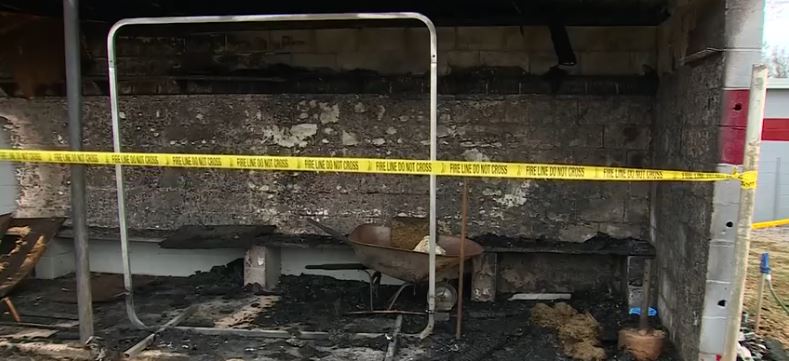
    TALLADEGA, Alabama (WVTM) — The Talladega High School baseball team is preparing for its first game of the season next Thursday against Gaylesville, despite a recent fire that caused significant damage to the equipment building.

Robert Duncan, the Talladega High School baseball coach, admires his team’s resilience.

“Just the fact that they’re out here and excited about it in the midst of this,” Duncan said. “Adversity is one thing, but how you respond to adversity now is another thing.”

He noted that the team is “having to go around and scrape up baseballs to get work in.”

The building was full of their cleats, uniforms, baseballs, gloves—everything they need to play a game. Some students are practicing in slides and Crocs and the team is uncertain about which field they’ll call home this season.

Talladega City Schools Superintendent Dr. Quentin Lee described the fire as heartbreaking for both the school system and the students.

“It’s a devastating loss. This is home court, especially for the seniors who want to play their last season at home,” he said. “So we’re just trying to figure out where we go next as far as trying to rebuild, what do we need to do just to keep them on the right path. I do know they’ve reached out to a nearby community, and they’re going to allow us to hopefully play a lot of our home games there until we get this kind of figured out. We’re very optimistic.”

The cause of the fire is still under investigation, but it is being treated as a potential arson, according to Lee.

Please note: This story was provided to CNN Wire by an affiliate and does not contain original CNN reporting. This content carries a strict local market embargo. If you share the same market as the contributor of this article, you may not use it on any platform.

Inside a high-tech sawmill powering the state’s forest economy

By Scott McDonnell

Click here for updates on this story

    ENFIELD, Maine (WMTW) — “Everything you see in back of us here is new,” said Jason Brochu of Pleasant River Lumber.

Between this mill in Enfield and another in Dover-Foxcroft, Pleasant River Lumber produces about 130 million board feet of lumber each year. The operation employs around 300 Mainers with jobs tied to logging, trucking, cabinet-making and log home businesses.

Reaching that level of production required a major investment.

“Since 2018, we’ve put in about 100 now, probably $80 million on this site alone,” said Chris Brochu of Pleasant River Lumber.

Inside the mill, the results are hard to miss. Advanced technology now drives nearly every step of the process.

“There’s a machine control, there’s computers, there’s cameras that are, that are basically taking visual images,” said Burley Higgins of Pleasant River Lumber.

Every single board is analyzed, measured and mapped down to the last knot.

“Right now, we’re running at approximately 100 boards per minute,” Higgins said.

The mill produces enough lumber to build roughly two houses every hour. Precision is key in an industry where margins matter.

Mills like this are a major driver of Maine’s forest products industry, which contributed $8.3 billion to the state’s economy in 2024, according to the Maine Forest Products Council.

“Sawmills, you know, in particular the way that they feed the forest economy, you know, every part of the forest economy is important, right? From the land all the way to the paper mills and all the different aspects of it,” Jason Brochu said. “Sawmills are right in the middle of it. And the, you know, 100% of the raw material we get comes locally.”

That raw material is plentiful.

“It’s around 22 billion trees that are growing right now,” said Krysta West of the Maine Forest Products Council.

Maine is the most forested state in the nation, with 88% of the state covered by trees.

“Maine has an abundance of wood. We have proximity to some of the wealthiest and most dense populations in the world, and we’ve got a workforce that is used to working,” West said.

Protecting that resource has been a priority.

For nearly two decades in Maine, the number of trees growing has outpaced the number being cut. For every tree harvested, about one and a half trees grow back.

For Pleasant River Lumber, owners say protection comes not just from forest management, but from trade policy.

“Canada produces way more lumber than they need, so they’ve got to dump it somewhere. And we can’t compete with that,” Jason Brochu said.

U.S. producers argue that Canada subsidizes its lumber industry and sells wood at unfairly low prices. Duties and tariffs imposed on Canadian lumber, they say, help level the playing field.

“That one thing gave us the confidence to add the second shift here and put the investment in the over. Yeah, of it’s going to be a $7.5 million investment,” Chris Brochu said.

From the forest floor to finished lumber, investment, innovation and protection are shaping the future of Maine’s forest economy.

“Our goal is to keep logs that are cut in Maine, in Maine, process and get all the economic benefit of them, grow our mills,” Jason Brochu said. “There’s a lot of capacity for Maine to grow.”

Please note: This story was provided to CNN Wire by an affiliate and does not contain original CNN reporting. This content carries a strict local market embargo. If you share the same market as the contributor of this article, you may not use it on any platform.

Basketball coach saves life of opposing coach during medical emergency

By John Atwater

Click here for updates on this story

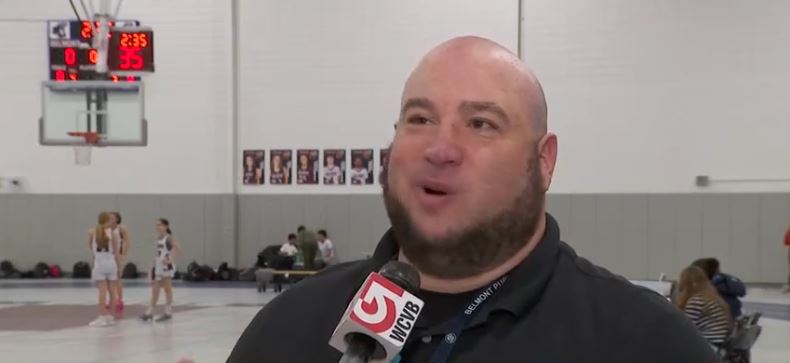
    BELMONT, Massachusetts (WCVB) — The quick response of a middle school basketball coach in Belmont, Massachusetts, saved the life of an opposing coach who was having a heart attack during a game last Thursday night.

Belmont Middle School coach Ian Haffer was on the sidelines during a boys basketball game against Waltham’s John F. Kennedy Middle School when coach Ronnie Poirier fell face down about three minutes into the game.

“Everyone was just unsure of what was going on,” Haffer said. “I noticed his lips were purple, he wasn’t breathing, you know, I kind of said, ‘We need an AED, we need to call 911.'”

Haffer’s training as a doctor immediately kicked in as he removed Poirier’s shirt and put the AED pads on Poirier’s chest.

“I was on with the dispatcher and the dispatcher was talking me through it, and goes, ‘Okay, get the AED,'” said Reed Bundy, a parent. “And before I could even tell them to do that, Ian had already done that.”

Officials confirm Poirier had suffered a heart attack and credit Haffer’s quick action for saving the Waltham coach’s life.

Although Poirier is still recovering at the hospital, he said he’s “beyond grateful” for Haffer and the support he’s received.

Poirier told NewsCenter 5 he’s waiting on some more hospital testing before he’s released.

Please note: This story was provided to CNN Wire by an affiliate and does not contain original CNN reporting. This content carries a strict local market embargo. If you share the same market as the contributor of this article, you may not use it on any platform.

Emergency dispatcher guides family through CPR on child who stopped breathing

By Jamy Pombo Sesselman

Click here for updates on this story

    HOLBROOK, Massachusetts (WCVB) — An emergency dispatcher in Massachusetts is being celebrated for helping save the life of a 4-year-old girl.

A 911 call came into the Holbrook Regional Emergency Communications Center on Monday night, reporting the child had stopped breathing.

“We’re going to do CPR, OK?” asked Dispatcher Sophia Zervos. “Are you with your child right now?”

“Yes,” the caller answered.

“I want you to put the heel of your hand in the center of their chest, right between the nipples, and you’re going to push down hard and fast, 2 inches in depth,” Zervos told the caller. “OK? We’re going to start now. I’m going to count with you.”

Zervos counted for the caller as they followed her instructions.

“Ready? Go. One, two, three, four, five, six,” she counted as the girl’s family followed her instructions.

“You’re doing a great job,” Zervos said. “Everyone’s already on the way. How’s she doing? Is she breathing?”

One of the child’s crying family members answered no. Her heart was beating but she still wasn’t breathing.

“Take a second,” said Zervos. “Stop compressions, and see if her chest is rising and falling. OK?”

She still wasn’t breathing. The caller resumed compressions. Zervos again counted out for the family as they performed CPR.

After two rounds of chest compressions, her family noticed the child’s stomach moving. She threw up and started to breathe again. Zervos told them to turn the child on her side so she wouldn’t choke.

“Awesome job,” she told the relieved family.

The child closed her eyes, but she was breathing. Then the young child started to cry.

“Is that her crying?” Zervos asked.

The family confirmed the child was awake and breathing on her own.

“I want you to watch her breathing for me,” Zervos said. “I want you to make sure she’s getting some good deep breaths and she’s breathing on her own.”

Once crews arrived, she was taken to the hospital.

“Sophia Zervos handled this call with absolute professionalism and integrity,” said HRECC Director Steve Hooke. “While every call is handled by a true team of emergency professionals, this particular incident exemplifies our daily mission. I have no doubt that Dispatcher Zervos saved a life yesterday. Our team’s dedication to public safety spans every moment of every day, but this phone call really put us to the test. Dispatcher Zervos and our team passed with flying colors.”

According to the family, the child is doing much better and recovering at a local hospital.

Please note: This story was provided to CNN Wire by an affiliate and does not contain original CNN reporting. This content carries a strict local market embargo. If you share the same market as the contributor of this article, you may not use it on any platform.