Hawaii residents prepare for possible storm, while still trying to recover from the Kona Lows

By Angela Cifone

Click here for updates on this story

    HONOLULU (KITV) — “Walking out and seeing what the Kona lows did to the farm was very drastic and traumatic in a way,” said Cheyenne Adams, Marketing manager for Waimanalo Country Farms.

That trauma came after the March Kona Low storms.

“You could hear like the crackling of the wind and rain coming down over the mountain, and then you could see in the mist the wind whipping,” said Adams.

Now, another storm is on the horizon.

“We’re still in recovery mode. So being hit with another potential hurricane is daunting,” said Hawaii County Mayor Kimo Alameda.

For many, the concern goes beyond the forecast.

“People are still picking up the pieces. We are still recovering from the Kona low, from the earthquake,” said Alameda.

Waimanalo Country Farms is still feeling the effects from the first storms.

“There are only so many fields that we are able to use because some of the other ones are still damaged,” said Adams.

Now, they are hoping this storm passes without setting them back again.

“We’re just praying that it’ll just pass by and not damage those crops because if not, we’re going to be delayed again,” said Adams.

But even just preparing can be a setback.

“Now it’s like we have to pause and now go back to, okay, now we have to go into like survival mode, right? And then go back to work after that,” said Adams.

But the disasters have also taught communities to prepare and rely on each other.

“The earthquake and the Kona Low really made it so that neighbors were reminded to be supportive of one another and work together and with each other. And I think that’s very fresh in people’s minds and experiences,” said Colehour Bondera, an organic farmer on the Big Island.

And while preparation can bring some peace of mind, the fear of what comes after remains.

“The biggest worry is not knowing if you’d be able to recover or assessing the damage,” said Adams.

So for now, it’s prepare, wait and hope this storm doesn’t add another chapter to a year of recovery.

Please note: This story was provided to CNN Wire by an affiliate and does not contain original CNN reporting. This content carries a strict local market embargo. If you share the same market as the contributor of this article, you may not use it on any platform.

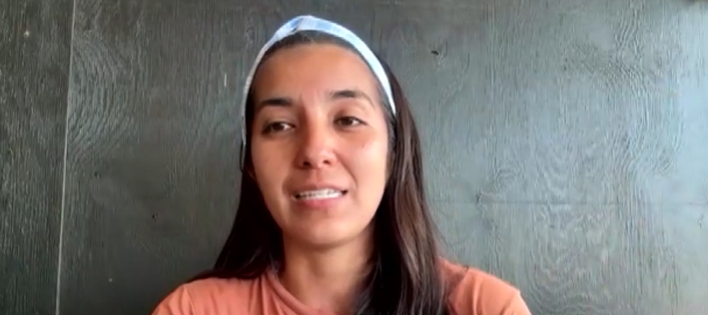
He survived a helicopter crash in Vietnam. Nearly 60 years later, he’s still giving back

By Cyera Williams

Click here for updates on this story

    BALTIMORE COUNTY, Maryland (WMAR) — Friday is Purple Heart Day, honoring the service members who were wounded or killed while serving the United States.

Army veteran Lee Chambers entered the Army in 1967 and was trained to operate a 106 recoilless rifle, an anti-tank weapon mounted on the back of a Jeep.

When he arrived in Vietnam, however, Chambers said his unit told him it did not have the weapon. He was instead assigned to be a radio telephone operator for his platoon sergeant, keeping the unit connected while soldiers were in the field.

One day, Chambers and the other soldiers were told they would take part in a combat assault by helicopter into a “hot” landing zone. They were warned to expect incoming fire when they jumped from the aircraft.

Chambers boarded the final helicopter with his platoon sergeant, a medic and another radio operator.

“The next thing I know is there was a huge explosion above the helicopter,” Chambers said. “And we started descending like you were on an escalator bumping down on your behind lower and lower.”

As the helicopter fell, Chambers watched the faces of his platoon sergeant and the medic, hoping their reactions would tell him how serious the situation was.

“They were poker faced,” he said. “They didn’t give me any indication how serious it was.”

Chambers then saw his helmet slowly lift from his head. He reached out to grab it.

“And it was instant darkness,” he said.

Chambers said he did not feel as though he had a body or was floating. He only felt as though he was waiting for someone to tell him where to go.

When he regained consciousness, Chambers was lying in a rice paddy.

“I was in pain from my head to the tip of my toes,” he said. “I couldn’t tell where the pain was coming from. All I knew was it was excruciating.”

Chambers opened his eyes but could not see. When he tried to touch his face, he could not move or feel his arms. He also could not feel his legs moving.

“I thought I was blind, I lost my arms, and I probably lost my legs,” Chambers said. “I started to cry.”

Chambers passed out again. A soldier later found him, pulled him from the mud and helped get him to an aid station.

An investigator later told Chambers the pilot had attempted to land the damaged helicopter rather than allow it to fall straight down. The aircraft struck a rice paddy berm, killing the pilot and a door gunner.

The co-pilot suffered a serious head injury. Chambers’ platoon sergeant was trapped beneath the aircraft and suffered a broken back. The other radio operator lost his foot.

The medic had jumped from the helicopter before the crash and injured his back. Despite his injuries, Chambers said the medic returned to the burning aircraft and pulled people from the wreckage. He was later awarded the Silver Star.

Chambers was taken to the 67th Evacuation Hospital, where doctors treated a severe wound that left his scalp open.

“They spent a lot of time getting the rice paddy mud out of, off of my skull,” Chambers said.

Because he had suffered a head wound, Chambers said doctors could not give him pain medication during the procedure.

“I said, ‘I wish you were having this pain,’” he recalled.

Chambers later discovered he could not walk because of his leg injury. He remained in the hospital for about a month before returning to his unit on light duty.

A general presented Chambers with the Purple Heart while he was recovering.

“It was a big deal in the hospital because this general came onto our ward and was pinning Purple Hearts on the patients,” Chambers said.

Chambers kept the medal in its box inside his rucksack. After returning to his unit, he discovered someone had gone through his belongings and stolen it.

“They left the box though and the ribbon,” he said.

While stationed at Fort Rucker, Alabama, Chambers met another soldier who worked in awards and decorations. The soldier offered to replace his stolen Purple Heart and asked how many he wanted.

Chambers requested three.

“The next time I got home on leave, I gave one to my mama and one to my girlfriend, and I had one for my uniform,” he said.

When Chambers returned home from Vietnam, he encountered some of the anger and division surrounding the war.

While traveling through a California airport in his Army dress uniform, a young man approached him and asked about the Purple Heart ribbon.

“He said, ‘Oh, that’s because you’re wounded, right?’” Chambers recalled. “So, yeah, and he says, ‘Serves you right.’”

Chambers said he had been warned that returning troops could face hostility, but he was still stunned.

“He just walked away,” Chambers said. “And I just stood there.”

Chambers continued serving through the Army Reserve before transitioning into the retired reserve in 1993. He estimates his military career spanned about 26 years.

Over time, Chambers began to recognize how fortunate he was to survive.

“I know that I’m here for a purpose,” Chambers said. “I know I have a lot to give back that I never thought how—never reflected on how fortunate I am. Not to have just survived, but how fortunate I am.”

Chambers volunteered for 10 years in the hospice unit at the Loch Raven VA Medical Center. He helped provide bags for families who needed to carry home the belongings of veterans who died in hospice care.

He now tries to visit a 100-year-old World War II veteran and Purple Heart recipient at least once a week.

“He is so glad to see me that that lifts me up too,” Chambers said.

Nearly six decades after the helicopter crash, Chambers said his military service continues to shape the way he lives and treats others.

His message this Purple Heart Day is simple.

“Be good to yourself and be good to others,” Chambers said.

Please note: This story was provided to CNN Wire by an affiliate and does not contain original CNN reporting. This content carries a strict local market embargo. If you share the same market as the contributor of this article, you may not use it on any platform.

Inflation Eases, Stocks Mixed, PPI Ahead

By Tom LoBianco | Quincy News Correspondent

Click here for updates on this story

    Washington (Quincy News) — Market Recap: The July Consumer Price Index rose 0.1% from June, while annual inflation eased to 3.4% from 3.5%. U.S. stocks ended mixed Wednesday as investors digested the latest inflation data and AI stocks helped lift the Nasdaq. The S&P gained 0.3% and the Nasdaq rose 0.5%, while the Dow edged lower.

Oil prices saw little movement Wednesday as uncertainty over the Strait of Hormuz continued. Treasury yields on the 10-year stayed relatively flat at 4.69%

Today’s Focus: Inflation remains in focus Thursday with the July Producer Price Index (PPI) at 8:30a ET. Weekly jobless claims arrive at the same time, providing another look at the labor market following last week’s weaker jobs report.

U.S. stock futures are slightly higher Thursday morning, while oil prices are falling. Brent is down around 2% as weaker global demand forecasts and a sharp increase in U.S. crude inventories outweigh continued uncertainty around the Strait of Hormuz.

ON THE SCHEDULE FOR THURSDAY, AUGUST 13, 2026

-8:30 a.m. ET – Producer Price Index; weekly jobless claims

-Friday, 8:30 a.m. ET – Retail sales

-Friday, 10:00 a.m. ET – University of Michigan Consumer Sentiment Index (preliminary)

Please note: This story was provided to CNN Wire by an affiliate and does not contain original CNN reporting. This content carries a strict local market embargo. If you share the same market as the contributor of this article, you may not use it on any platform.
18-year-old Orange County man arrested for teenage girlfriend’s death

By Dean Fioresi

Click here for updates on this story

    ORANGE COUNTY, California (KCAL, KCBS) — Garden Grove police arrested an 18-year-old man for homicide after his girlfriend died from injuries she sustained when they were allegedly fighting over the weekend.

In a news release shared Wednesday, police said that they were called to the 8800 block of Hewitt Place at around 11:30 p.m. on Sunday for reports of someone bleeding from the head.

“Upon officers’ arrival, they located one female victim bleeding profusely from the head area,” the release said.

The victim, who has since been identified as 17-year-old Janely Gutierrez, was taken to a nearby hospital in grave condition, according to police. She died the next day.

While investigating the incident, Garden Grove detectives said that they interviewed Gutierrez’s live-in boyfriend, Ethan Vidal. He told them that they were involved in an altercation, and he was taken into custody at the scene for attempted homicide, according to the news release.

“To protect the integrity of the investigation, no additional information will be released at this time,” police said. “We ask for your patience as we try to determine the facts of the case, provide assistance to surviving family members and additional information will be released at a later time, if appropriate.”

Please note: This story was provided to CNN Wire by an affiliate and does not contain original CNN reporting. This content carries a strict local market embargo. If you share the same market as the contributor of this article, you may not use it on any platform.
Ripon moves to ban feeding feral cats on public property to protect endangered rabbit

By Carmela Karcher

Click here for updates on this story

    RIPON, California (KOVR) — The City of Ripon is moving forward with an ordinance aimed at protecting an endangered species by prohibiting people from feeding feral cats and stray animals on public property.

The amendment to the city’s municipal code would allow the city to issue citations to people who continue feeding feral cats after being warned.

The proposed ordinance comes as conservationists work to protect the riparian brush rabbit, an endangered species found only along portions of the lower Stanislaus and San Joaquin rivers.

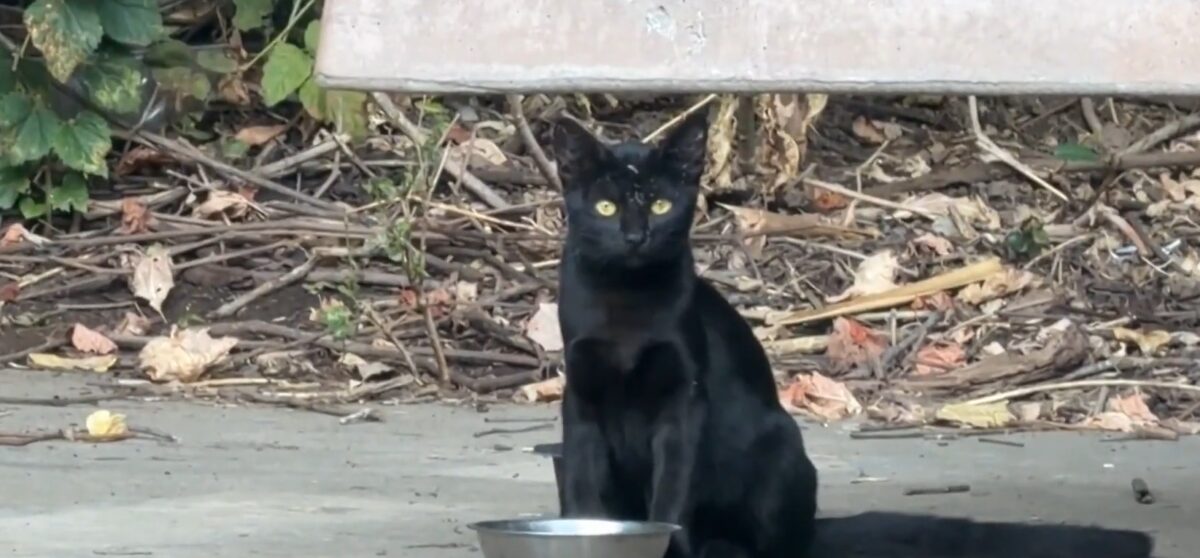
In Ripon, residents say feral cats are a common sight, including around Mavis Stouffer Park, where people have been leaving bowls of food for them.

“We have a lot of cats in our neighborhood, and people do feed them,” Ripon resident Aislinn Ingles said.

Ingles said she understands why people want to help stray cats but believes controlling their population is important.

“Spay and neutering sucks. It costs money, but I think it is a needed thing, especially around here where there are so many,” she said.

Susan Manning, who has worked with Tri-County Wildlife Care for years, said feeding feral cats can contribute to population growth.

“If people feed, they breed,” Tri County Wildlife Care President Susan Manning said.

Manning added, “Reality is one in seven Americans feeds cats that they don’t own. We get a warm and fuzzy and we want to take care of them, so then we feed them and that’s bad.”

The riparian brush rabbit is an endangered species found nowhere else except the Lower Stanislaus and San Joaquin Rivers.

They were practically wiped out after a major flood swept through the region three decades ago.

Since then, conservationists have been working to bring them back. The City of Ripon adopting this ordinance is one way to help.

“There’s a very limited population along certain stretches of the Stanislaus River,” council said. “While you’re trying to help out these cats and other animals by feeding them, you’re just multiplying them and making a bigger problem.”

Feral cats are naturally good hunters and known to spread diseases to these rabbits.

For Manning, she says more needs to be done.

“It does not help. People will continue feeding. They’ll be sneaky around it and it does nothing about the current population,” she continued. “The only way for it to be humane is if they trap, neuter, release, or they trap, neuter and find homes for them.”

First comes a warning and if residents don’t comply, $100 citation comes next.

All to help this small species make a comeback.

“When we lose this rabbit, we lose something that’s really critical to us, which is biodiversity,” Manning said. “Biodiversity helps create clean air and water, which is necessary for all of us to survive and thrive.”

The ban has not come into effect yet but will once the city council does its second reading of the ordinance next month.

Please note: This story was provided to CNN Wire by an affiliate and does not contain original CNN reporting. This content carries a strict local market embargo. If you share the same market as the contributor of this article, you may not use it on any platform.
New Colorado law inspired by Megan Trussell’s case requires colleges to act within 6 hours when students go missing

By Sarah Horbacewicz

Click here for updates on this story

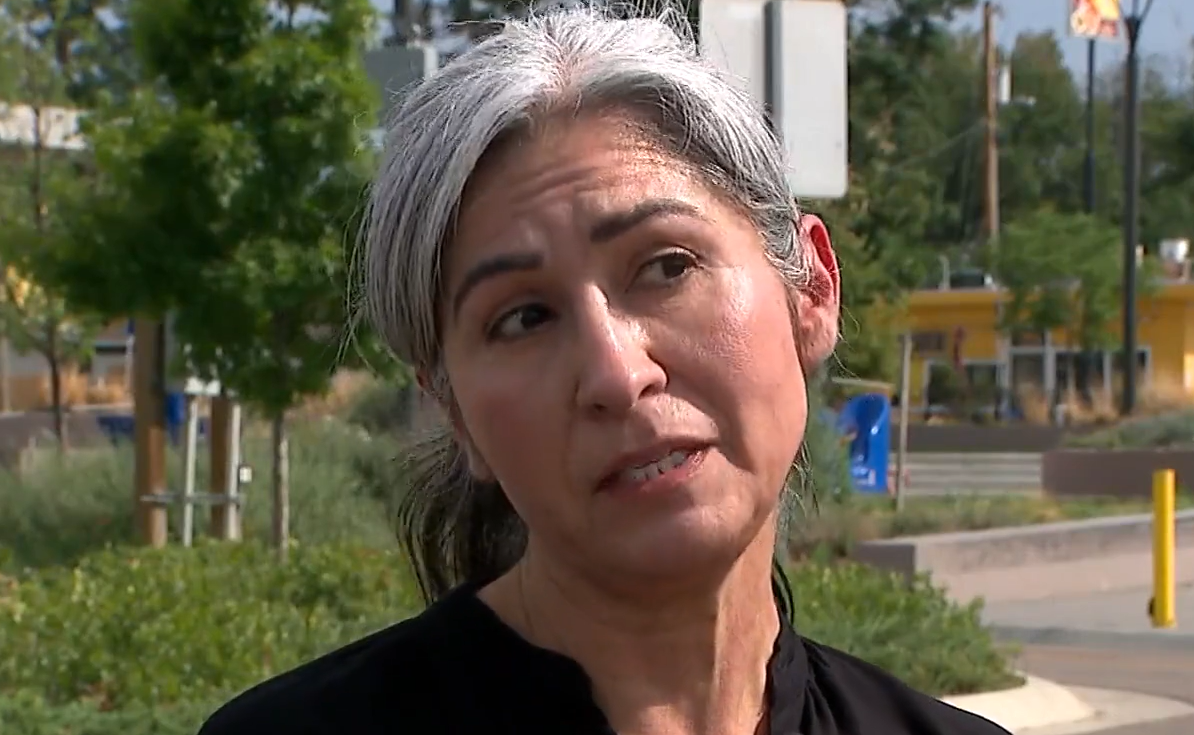
    BOULDER, Colorado (KCNC) — When Megan Trussell disappeared from the University of Colorado Boulder campus in February 2025, her mother, Vanessa Diaz, expected the university and law enforcement to move quickly. Instead, she says, her family was told not to worry and left frustrated by what she saw as a slow and uncertain response.

“What happened in February 2025 was the absolute unimaginable,” Diaz said, “What we went through, and the fact that the university really didn’t know what they were doing.”

Six days after she was first reported missing, Megan Trussell’s body was found in Boulder Canyon.

For the next year, Diaz and Megan Trussell’s father, Joe Trussell, worked alongside state lawmakers to change how Colorado universities and trade schools respond when a student is reported missing.

The new law creates specific requirements for the institutions, including a six-hour window for schools to take action. That includes checking a student’s phone records and social media posts, going door to door at the student’s dorm and questioning school staff and emergency contacts.

If a student is missing for more than six hours, police must be contacted. The law also requires police training on missing-person alerts.

As students prepare to move into CU Boulder next week, Diaz hopes the new requirements will help prevent another family from experiencing what hers did.

“I think this bill, this law, is gonna bring some relief to families at least initially, when they’re dropping their kids off,” Diaz said.

She says her daughter had a strong sense of justice and that has helped motivate her family’s push for change.

“It’s Megan’s legacy, you know. She had a very strong sense of justice,” Diaz said.

CU Spokesperson Michele Ames wrote in a statement:

“We take seriously the safety of our students. Across each of our four campuses, we are working to make sure we implement the new law and that it helps to enhance student security as the law was intended to do.”

Diaz says that’s exactly what she wants to see.

“If it saves one life, it’s worth it. One life,” Diaz said.

Megan Trussell’s family is not stopping with this law, but Diaz says she is also working with lawmakers to advocate for family members to have greater access to evidence and information about procedures after a case is closed.

Please note: This story was provided to CNN Wire by an affiliate and does not contain original CNN reporting. This content carries a strict local market embargo. If you share the same market as the contributor of this article, you may not use it on any platform.

New Colorado law expands school zones to 1,000 feet after 13-year-old was killed in crash

By Ashley Portillo

Click here for updates on this story

    LITTLETON, Colorado (KCNC) — There are new protections to make roads safer around schools and school zones. One law that went into effect on Wednesday is the Liam Stewart School Zone Act, which expands school zones to roads within 1,000 feet of a school. Liam was 13 years old when he was hit and killed by a car while riding his bike to school in Littleton back in 2023.

For nearly three years, Liam’s father, Josh Stewart, has been advocating for safer streets and changes since his son’s death.

“After Liam’s death, we made sure that the school route signs went up, showing kids where the safe ways to get to schools are,” Josh told CBS Colorado. “We really are working with our city government, trying to make changes, not just for kids trying to get to school, but for anybody trying to get anywhere.”

It wasn’t until he was driving in the area, that Josh noticed the signage was moved, and the school zone changed at Euclid Middle School, where Liam was biking to when he was hit in a roundabout.

In a statement, the city of Littleton said, after research and an evaluation with consultants, in some cases, shortening school zones increases driver awareness and improves overall safety for drivers and students.

Josh argues that the changes made the area “considerably less safe.”

“It felt very much the opposite of a change towards safety,” Josh said. “The thing that hit the hardest is realizing that Liam had been killed in a school zone, and the changes to the school zone put his death just outside of the school zone.”

Josh’s priority then became ensuring children have safe avenues to get to school. He began visiting school zones in other districts and communities and learning more about them. He found that, in Colorado, cities, counties, municipalities and Colorado Department of Transportation manage school zones.

“There were a lot of inconsistencies I found across cities and across counties, and school zones aren’t the same anywhere, which creates confusion, and we needed to fix that,” Josh said. “This is the first statewide law that actually puts a standard around a school zone for Colorado.”

Under the new law, school zones are now defined as roads within 1,000 feet of a school. School zones less than 200 feet must update their school zone to be compliant with the law. It also requires signs indicating there’s a school zone, with traffic penalties doubled.

“That right there makes it enforceable. What I learned from police departments is that they have a hard time enforcing double penalties in school zones because most cities don’t sign them correctly to be enforceable,” said Josh, who added clear signage also gives prosecutors the ability to prosecute negligence in school zones if someone is injured, seriously hurt or killed.

Schools with existing zones between 200 and 1,000 feet can keep their current boundaries but must follow the legal process in order to modify them. To reduce the size of a school zone, a public hearing must be held ensuring the community can provide feedback.

“It still gives a city the opportunity to go less than 1,000 feet, but they have to hold public engagements, and they have to involve the school districts, and they have to involve the people that utilize these areas,” Josh said.

Cities can also designate a “school street,” and reduce the speed limit to as low as 10 mph. Governments can use automated vehicle identification systems to track traffic violations in a school zone. Districts and cities who also want to expand their school zone boundaries can raise funds for new signage.

Stewart hopes the changes in law improves driver behavior in and around school zones.

“What good is a school zone that doesn’t start until you can see the school? You really need to know that you’re in an area that there’s going to be a lot of students well before you get to the school,” Josh said. “I think it also puts a reset on the people that are designing these school zones to really think about the people that are using school zones.”

Josh added that the law also sets a guideline on the changes communities can advocate for, a change he believes Liam would’ve supported.

“Liam would have been a sophomore in high school. He would have been driving this year,” Josh said. “He cared for kids. He cared for his friends. He cared for others. And I think anything that he thought was going to make sure somebody was safer without asking for it would have been something that he would have wanted to have happen.”

Josh said the work is just beginning. Next is educating parents, principals and school boards on the changes.

“I’m happy that school districts and parents will have a legal standing when it comes to a school zone. Right now, if you feel like the school zone your child’s school has is too small or unsafe, there’s no legal recourse for you to do anything about it,” Josh said. “This law gives a standard where now you can hold a city accountable for something that they need to bring up to maintenance.”

In the full statement from the city of Littleton, it told CBS Colorado, “Following the October 2023 death of Liam Stewart, the City Council established the Safer Streets initiative. As part of this program, city staff conducted a School Zone Safety Evaluation that involved 12 area schools. In that comprehensive third-party evaluation, consultants and staff considered national best practices and guidance as outlined by the U.S. Department of Transportation (USDOT) and Federal Highway Administration (FHWA), per the Manual on Uniform Traffic Control Devices (MUTCD). The MUTCD establishes national standards and research-backed guidance for the use of traffic control devices on streets, highways, and in school zones across the United States. It was determined that standardizing the distance of all school zones (to include, in some cases, shortening them in closer proximity to school properties) fosters increased driver awareness, thereby improving overall safety for drivers and students. The public can view the School Zone Safety Evaluation in its entirety at LittletonCo.Gov/SaferStreets under the 2024 tab. Since the completion of this study, city staff has been implementing the results.”

Please note: This story was provided to CNN Wire by an affiliate and does not contain original CNN reporting. This content carries a strict local market embargo. If you share the same market as the contributor of this article, you may not use it on any platform.

Texas Ag Commissioner Sid Miller demands answers after nearly 30,000-pound beef recall

By S.E. Jenkins, Matthew Ablon

Click here for updates on this story

    DALLAS, Texas (KTVT) — Texas Agriculture Commissioner Sid Miller is demanding answers after the recent recall of nearly 30,000 pounds of raw beef from Argentina.

Officials from Texas and Florida recalled the meat because the product entered U.S. commerce without going through a standard reinspection process. He says the USDA needs to answer for this mix-up.

“We’ve been doing this for a year,” Miller said. “How much got through we didn’t know about? How much is out there, uninspected, that we didn’t catch? We caught this one basically treasure truck trove of 30,000 pounds. I think the agriculture committees in the House and Senate need to bring Brooke Rollins, USDA, we need to figure out what happened. We don’t need a repeat of this. We gotta get to the problem and fix it.”

Five products, all of which are boneless beef products in cardboard boxes of various weights and carry the “FrigorIfico Gorina SAIC” brand, are impacted:

– “Top Sirloin Butt” (“Cuadril Sin Tapa”) – “Eye Round” (“Peceto”) – “Topside Cap Off” (“Nalga AD S/Tapa”) – “Flat” (“Carnaza Cuadrada”) – “Knuckle” (“Bola de Lomo”)

“The sad part about it is this: when it’s repackaged and mixed with our beef, it can be labeled as a product of the USA. We don’t even know what it’s from Argentina,” said Miller. “That’s lying to the American consumer.”

The recall comes about a year after President Trump announced a plan to import more meat from Argentina. Miller has said he disagrees with that plan.

The National Cattlemen’s Beef Association, along with the Ranchers-Cattlemen Action Legal Fund United Stockgrowers of America and other farming groups — who are normally some of the president’s biggest supporters — all criticized Trump’s plan because of what it could do to American ranchers and feedlot operators. And agricultural economists say Argentine beef accounts for such a small slice of beef imports — only about 2% — that even doubling that wouldn’t change prices much.

Several factors have sent beef prices soaring, starting with continued strong demand combined with the smallest U.S. herd size since 1961.

Please note: This story was provided to CNN Wire by an affiliate and does not contain original CNN reporting. This content carries a strict local market embargo. If you share the same market as the contributor of this article, you may not use it on any platform.

Husband charged with abuse of a corpse after Plano woman found dead, police say

By S.E. Jenkins

Click here for updates on this story

    PLANO, Texas (KTVT) — A Plano man has been charged with abuse of a corpse and taken to jail after his wife was found dead in their home, police said Wednesday.

Officers were called for a welfare check regarding potential for family violence just before 10:30 a.m. The caller said they were unable to make contact with the woman.

When the officers arrived at the home in the 4700 block of Charles Place, they found the woman dead. Her husband was arrested, charged with abuse of a corpse without authorization and taken to Plano City Jail. Neither has been identified.

Plano police did not disclose the woman’s cause of death and said additional charges may follow as the investigation continues.

Please note: This story was provided to CNN Wire by an affiliate and does not contain original CNN reporting. This content carries a strict local market embargo. If you share the same market as the contributor of this article, you may not use it on any platform.

4 more rescued beluga whales from Marineland in Canada coming to Shedd Aquarium

By Web Staff

Click here for updates on this story

    CHICAGO, Illinois (WBBM) — The Shedd Aquarium says it’s making room for four more beluga whales that were rescued from a defunct Canadian theme park.

The aquarium said 27-year-old Caspian, 23-year-old Peekachu, 22-year-old Secord and 20-year-old Rain were loaded onto a cargo plane for the journey early Wednesday.

They will be joining 27-year-old Acadia, 26-year-old Osiris, 26-year-old Sierra and 21-year-old Lillooet, all females, who arrived at the Shedd last month.

Several aquariums from around the country are also taking in some of the rescued belugas.

Marineland, in Niagara Falls, Ontario, shut down in 2024 after its owners died, but remained in possession of the whales. However, it has since run out of funding to properly care for the whales and warned that it might be forced to euthanize them if they couldn’t be relocated.

The Shedd did not say when they expect the whales to arrive but said they will provide more information once the rescue is complete.

Please note: This story was provided to CNN Wire by an affiliate and does not contain original CNN reporting. This content carries a strict local market embargo. If you share the same market as the contributor of this article, you may not use it on any platform.