Man creates sensory-friendly, welcoming restaurant experience for autism families

By Lisa Hughes

Click here for updates on this story

    BOSTON (WBZ) — The biggest private room at Maggiano’s Little Italy in Boston is set for a holiday brunch. Christmas trees dot the hallway, decorations hang from the ceiling, and holiday candies are scattered on big round tables. As families arrive, they take off their coats and choose a seat. They admire the decorations and, at their own pace, make their way toward a buffet of pancakes, eggs, pasta, and more. There is no waiting for servers, menus, or food.

The “children” are as young as two and as old as 40. Some fidget in their seats or rock back and forth. Some shout with happiness or jump up and down. Others sit quietly. No one, in this room of 150-plus diners, bats an eye. For all of the excitement, parents and guardians are unusually relaxed. This brunch offers an experience that makes everyone feel welcome. “This kind of event is really special for us as a family,” Linda Bram explains as she and her daughter Sophia finish their meal.

Autism Eats This brunch is what Lenard Zohn dreamed of when he came up with the idea for Autism Eats. Many of his formative memories, growing up in Lexington, were made during meals. “We were a family that loved being in the community. We loved food. So, when we weren’t eating at our own kitchen table we were out with friends at a restaurant,” Lenard said.

He and his wife Delphine assumed that they would create similar memories with their own children. “I never anticipated it would be anything other than that. Just a simple tradition that would continue for Delphine and I when we had our kids,” Lenard said.

Lenard and Delphine have two children—Ava and Adin. Adin is on the autism spectrum and, from a young age, was overwhelmed in restaurants. “The sights, the sounds, the ambient noise. He absolutely did not like waiting for food. And that would come out in ways that showed he was overwhelmed,” Lenard said. “He would flop on the floor. he would run for the door. He would jump on the seats.” Lenard says that even the most well-intentioned servers couldn’t help but struggle with Adin’s behavior. The Zohns felt self-conscious, judged, and often unwelcome. They often left with their food in “to go” containers or, when Adin simply couldn’t deal with the environment, no food at all.

The family’s defining restaurant experience came at the Lexington Bertucci’s when Adin was about 10 years old. As much as he disliked restaurants, he loved pizza. That night the Zohns were with a big group of family members and friends. The pizza was taking an especially long time to get to the table, Lenard recalls. Adin was restless. “He decided to take matters into his own hands. He jumped up from the table and he started running through the restaurant grabbing slices of pizza off other diners’ plates,” Lenard said.

Lenard jumped up from the table to stop him. “I finally caught up with him. But by the time I did, he’d taken food off three different tables,” he said. Delphine’s face drained of color. “After that event we stopped going out. It was just too stressful,” Lenard said.

Challenges in restaurants The pain of judgement was replaced by the sting of isolation. When friends and relatives were at restaurants on weekends, the Zohns were at home. They did not dine out for roughly two years. Then, they began to brainstorm. It dawned on Lenard and Delphine that they couldn’t be the only autism family experiencing challenges in restaurants. “We took out a sheet of paper,” Lenard said, “and on one side of the sheet we wrote down everything that does not work for a typical autism family when we try to go out in the community and have a bite to eat. And on the other side of that sheet of paper we wrote the opposite.”

If guests could enjoy a buffet, there would be no waiting for menus or service and no arguing or agonizing over choices. If they paid in advance, there would be no waiting for a bill at the end of a meal. If the restaurant had a private room, autism families could enjoy their experience without disrupting other patrons. Lighting and music could be adjusted to accommodate sensory sensitivities. All ages and behaviors would be welcome.

The next step was to find a restaurant that would let him try it. He approached a number of establishments in Andover. Many were unsure of the concept. But eventually, Lenard found an owner who was receptive to the idea. Six weeks before the event, he asked Lenard how many people he expected. Lenard knew that he could guarantee at least 20 people. He promoted it on the internet and through word-of-mouth. “By the night of the event, we had 150 people. We sold the restaurant out entirely,” Lenard said. “The small room they reserved for us became ‘you guys have the run of the restaurant for the whole night.’ And it was amazing!”

“Life-changing” events Families came from all over Massachusetts—as far away as Springfield—and from communities in Rhode Island and New Hampshire. Lenard saw people smiling, laughing, making small talk, and watching their kids enjoy themselves without criticism or reprimands. Parents who never thought they would experience family time in a restaurant thanked him with tears in their eyes. “Without being overly dramatic,” he says, “It was life-changing.”

Almost 10 years later, the all-volunteer, nonprofit Autism Eats has hosted more than 250 events around the country. Restaurant events take place year-round. All family members benefit from the experience. “Autism is a family sport,” Lenard explains. “If you have a loved one on the spectrum, the whole family is involved.” He says that it was especially helpful for Ava, who is now 22, to see that other teens and tweens “deal with the same things” when they have a sibling on the spectrum.

The isolation that parents often feel disappears at the Autism Eats event which, he says, creates a positive cycle. “The parents become a bit more relaxed and can let their guards down. There’s less telling their loved one or child ‘don’t do that’ or ‘stop doing that’ or ‘sit down.'” As a result, he says, the kids are also more relaxed.

Mariann and Howard Brown agree. The Maggiano’s brunch is their second Autism Eats event with their daughter Halley. Their happiness is palpable. Mariann says they feel “bonded” with the other families and more hopeful. “We’re a little bit stronger. And then we have the confidence to walk into a 99 or another typical restaurant,” Mariann said. Howard points out that enabling kids on the spectrum to enjoy a restaurant experience (and a visit with Santa) also gives them valuable social practice. “They need to see it in front of them out there in the world—the fact that the holidays are here for everybody,” Howard said. “Look at them. This is them at their best!”

Lenard’s goal is to offer more events more often in more communities. He works full-time as a sales executive for a robotics company, but Autism Eats is his passion, his way of giving back to the community that has given so much to his family and to Adin. “Every community across the country where there are people with autism who have families and loved ones and friends—they want to feel welcomed and accepted,” Lenard said. “And I want to enable them to do that.”

Please note: This story was provided to CNN Wire by an affiliate and does not contain original CNN reporting. This content carries a strict local market embargo. If you share the same market as the contributor of this article, you may not use it on any platform.


Deputies swim to rescue drowning paragliders near Malibu

By Matthew Rodriguez

Click here for updates on this story

    California (KCAL, KCBS) — Two Los Angeles County Sheriff’s deputies swam to save drowning paragliders who crashed just off the Malibu coast on Friday.

The daring rescue happened at around 12:30 p.m., shortly after deputies Sevak Grigoryan and Christopher Matkin arrived at Carbon Beach. The two deputies saw the paragliders’ equipment pulling them under the water and quickly removed their bulletproof vests, gun belts, and boots before jumping into the ocean.

Grigoryan and Matkin swam about 75 feet to reach the paragliders. When deputies reached them, they found that the cords wrapped around the paragliders, making it difficult to tread water as the heavy equipment pulled them under.

The deputies used their knives to cut the entangled cords and freed them. The group swam back to the shore, where paramedics treated the victims for their injuries.

“This rescue demonstrates the courage, quick thinking, and selfless dedication of LASD deputies, who routinely place themselves in harm’s way to protect and save lives,” the LA County Sheriff’s Department wrote.

Please note: This story was provided to CNN Wire by an affiliate and does not contain original CNN reporting. This content carries a strict local market embargo. If you share the same market as the contributor of this article, you may not use it on any platform.
Raccoon falls through ceiling at restaurant, bites guest who tried to catch it

By Jenna Wells

Click here for updates on this story

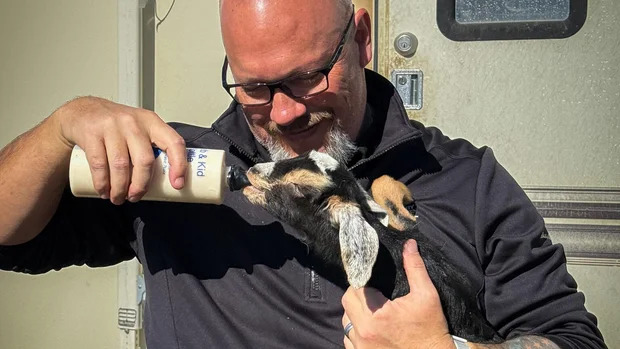
    WALWORTH COUNTY, Wisconsin (WDJT) — It was an unusual Sunday night for diners and first responders at Grand Geneva Resort’s Ristorante Brissago.

According to the Walworth County Sheriff’s Office, a raccoon fell from the ceiling in the resort’s fine dining restaurant and bit a guest who tried to catch it.

Deputies responded just after 7:30 p.m. on Dec. 14. They called in Town of Lyons and City of Lake Geneva firefighters to help, along with Guaranteed Gone Wildlife Control.

“When I get out to a site, I’m kind of like a MacGyver-slash-detective and investigator,” said Matt Snorek, owner of the wildlife control company.

When Snorek arrived, he told CBS 58, a firefighter had contained the critter under a trash can in the back dining room.

“It certainly had a lot of vigor and energy and, you know, anger and spite being under that tote,” Snorek described, noting the raccoon seemed well fed.

Snorek used a catch pole and cage to trap the raccoon and bring it out to his car.

“Once it was in a cage, it was much more subdued and relaxed,” he said. “Considering what happened. It was a pretty light mood, and we got it out really well.”

Unfortunately, because the raccoon bit someone, he had to take it to a local veterinary clinic to be humanely euthanized for testing.

“If an animal doesn’t bite somebody, we have other options once we get there and get the animal,” Snorek explained. “Once it bites somebody, there’s really one option, and that’s to get that animal tested as soon as possible for the transmission of rabies.”

The animal will be tested at the state laboratory of hygiene in Madison.

According to Snorek, rabid raccoons are rare in Wisconsin. He hasn’t seen one in his 20-year-long career.

“The chances are very minimal, but with the near 100% mortality, it’s something you really can’t take lightly,” he said.

He hopes this event is a teaching moment: people should not touch wild animals without proper training.

“Appreciation, love for wildlife is a great thing,” Snorek said. “Just don’t try to do things outside of your pay grade, or above your level of comfort. Trust your instincts.”

Officials haven’t told us the condition of the person who was bitten by the raccoon.

Snorek said there was an ambulance on scene, and the state health lab will be in contact with that person.

When asked about the situation, Grand Geneva Resort sent this statement to CBS 58:

“A raccoon entered the building Sunday night. Animal Control was contacted, and the animal was removed. As always, the safety and well-being of our guests is our priority.”

Please note: This story was provided to CNN Wire by an affiliate and does not contain original CNN reporting. This content carries a strict local market embargo. If you share the same market as the contributor of this article, you may not use it on any platform.

Trap intended for bear living under home catches another bear

By Julie Sharp

Click here for updates on this story

    ALTADENA, California (KCAL, KCBS) — A bear living under an Altadena home doesn’t seem to want to come out, not even falling for a sweet-scented bear trap – but another, non-intended bear did end up inside the trap.

The California Department of Fish and Wildlife is assisting resident Ken Johnson in trying to rid his uninvited guest, an above-average-sized California black bear. The 550-pound bear has been living in Johnson’s crawlspace for over two weeks, and so far, he’s not motivated to leave.

Cameras on the property showed the bear milling about last month, and the first time it entered the crawlspace, ripping away a small screen and squeezing inside. It has come and gone, one could say sneaking out, only to return — and has even growled at Johnson as he got close to the underground spot.

This is when Johnson called CDFW, and they said this is the typical time of the year that bears find warm and safe places to den.

“Unfortunately, it sounds like this is what that bear has potentially found under the homeowner’s house in the crawlspace,” said Cort Klopping, with CDFW. “It’s unfortunate. We want to see the bears in the woods, not in people’s homes.”

A large metal cage bear trap, placed by CDFW biologists on Johnson’s property, was sprayed with cherry and caramel scents, and on Dec. 16, a bear was inside it. Officials with CDFW said, unfortunately, it was a non-target bear, not the squatter under the home.

The captured 3 or 4-year-old healthy male bear was released to a nearby suitable habitat the following day, according to CDFW.

“Yes, I can confirm that Yellow 2120 is still underneath the home as of the latest update,” Klopping said on Friday morning.

It’s named Yellow 2120 because of the tag on his ear. Department records show that there had been a previous encounter with Yellow within the last year, where he was trapped, tagged, and released to the Angeles National Forest about 10 miles from where he is now, under Johnson’s home.

It is estimated that Yellow has been in the Altadena area for about five months.

Please note: This story was provided to CNN Wire by an affiliate and does not contain original CNN reporting. This content carries a strict local market embargo. If you share the same market as the contributor of this article, you may not use it on any platform.
Teen girl arrested, accused of writing threat on wall at high school

By Jeremiah Estrada

Click here for updates on this story

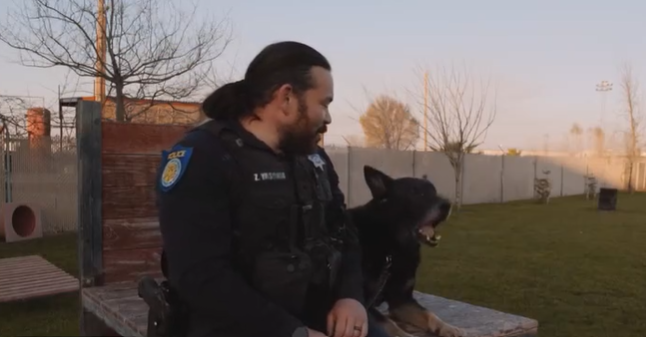
    EWA BEACH, Hawaii (KITV) — Police arrested a teenage girl after a message threatening violence was found on a restroom wall at Campbell High School on Wednesday morning.

Campbell High administration released a letter to parents and guardians about a threat made to the campus on Wednesday morning, Dec. 17, that the Honolulu Police Department is looking into. Police received a call around 11:45 a.m. for terroristic threatening after a message was found on the school’s wall threatening violence.

The Campbell student, a 15-year-old girl, was arrested on Friday, Dec. 19. The teen is facing terroristic threatening charges.

School remained in session and all classes continued as scheduled. The school continues to ensure the campus remains safe and additional police presence was requested as a precaution.

In the letter, administration reminded the school community that terroristic threats are considered Class A student conduct offenses. These offenses can result in punishments ranging from detention to suspension with the possibility of arrest and serious criminal charges.

Questions or concerns can be made by contacting the school administration at 808-305-3600.

Please note: This story was provided to CNN Wire by an affiliate and does not contain original CNN reporting. This content carries a strict local market embargo. If you share the same market as the contributor of this article, you may not use it on any platform.

Grand jury declines indictment in deadly downtown fight

By KTBS Web Staff

Click here for updates on this story

    SHREVEPORT, Louisiana (KTBS) — The death of a man following a fight in downtown Shreveport in January has been resolved with the Caddo Parish grand jury declining to hand up an indictment Friday. Discovery in the case revealed there was insufficient evidence to try the man arrested in connection with the death and that self-defense could not be discounted. Trevor Moses, 26, was identified by a witness as a suspect in the Jan. 26 assault on Christopher J. Temple, 43, of Webster Parish. Temple was struck in the face in the 400 block of Commerce Street following an early morning altercation. He fell and the back of his head hit the concrete. Temple was taken to Ochsner LSU Health hospital for surgery and then was sent to The Carpenter’s House Hospice, where he died Feb. 15. He was Shreveport’s fifth homicide for the year.

Surveillance footage from the Real-Time Crime Center corroborated the witness’s account but did not show Moses delivering the actual blow that knocked Temple down. Moses was initially charged on a warrant for second-degree battery and surrendered to authorities Feb. 10. Discovery included surveillance video showing the victim striking Moses several times outside a nearby bar prior to the fatal encounter, as well as 14,000 pages of Temple’s medical records that revealed he still had a blood-alcohol level of .205% two days after the incident. Investigation also determined the two men did not know one another and had not met prior to their fight.

Please note: This story was provided to CNN Wire by an affiliate and does not contain original CNN reporting. This content carries a strict local market embargo. If you share the same market as the contributor of this article, you may not use it on any platform.

‘I found my voice’: Turkish artist brings traditional water marbling art, or ebru, to Milwaukee

By Ellie Nakamoto-White

Click here for updates on this story

    MILWAUKEE (WDJT) — Outside of the Mitchell Street Arts building, the sounds of the city are loud and constant.

But inside, the noise fades into something softer — brushes tapping on glasses, water gently rippling, and the quiet concentration of a woman practicing a centuries-old craft.

Vesile Yilmaz and her family came to Wisconsin years ago, originally from Istanbul, Turkey.

Now she considers herself a “modern-day caravan”, teaching the ancient art of ebru to people in southeast Wisconsin every other week.

“It’s such a unique form of art, and it’s quite different than what we know as art,” Yilmaz told CBS 58’s Ellie Nakamoto-White. “You just follow your intuition.”

Ebru, or traditional Turkish water marbling, dates back thousands of years to Central Asia and, according to Yilmaz, is recognized by UNESCO as a Cultural Heritage of Humanity.

Its roots run deep — and so do the meanings behind its name.

“Eb means water, ru means surface like surface of the water, you’re working on the surface of the water,” Yilmaz said. “And ebru means cloud-like because every piece you make is unique, resembles clouds in the sky.”

It starts with hand-grinding pigments that she brings back from annual trips to Turkey.

Then, Yilmaz mixes a red seaweed extract into her water bath, essentially creating a texture she describes as skim milk so that the paint can float on top.

“Marbling art is very temperamental. The air humidity, air pressure, even environmental factors, everything impacts the quality of your work,” Yilmaz said. “You cannot really give a certain formula because everything is changing. Everything is depending on external factors.”

Once everything is set to her liking, Yilmaz takes a brush made of rosewood and horse hair and dips it into the paint before lightly tapping drops of it onto the water bath’s surface.

“When you first watch the paint spread on the water, you can’t believe that it’s real; it looks so magical, so mesmerizing,” Yilmaz said. “It’s very open-ended, it’s very forgiving, it’s all about the process and not the product, and it takes out the stress of creating and just lets you work with colors and paint and water.”

From there, it’s all about the imagination.

“Usually, you just get started, and then you let the water take control of the rest of the process,” Yilmaz said. “After you do it once, you get really hooked because it’s so captivating.”

Once the paint is down, Yilmaz will use other special tools to draw designs on top of the water’s surface.

Then, she lays a piece of paper onto the water, and seconds later, the paint design is transferred.

“It’s all about the process, embracing the unknown, and letting go of controls,” Yilmaz said.

Every other week, she teaches ebru classes at Mitchell Street Arts to spread her knowledge and culture in southeast Wisconsin.

“Creating Ebru art makes me feel like I’m in my home,” Yilmaz said. “Ebru is just like our mother tongue. When we start marbling, it just connects you, and people are curious to learn about Turkish culture and history.”

Please note: This story was provided to CNN Wire by an affiliate and does not contain original CNN reporting. This content carries a strict local market embargo. If you share the same market as the contributor of this article, you may not use it on any platform.

NC Supreme Court upholds conviction in 2021 viral video of man dodging oncoming truck

By Deanna Sipe

Click here for updates on this story

    ASHEVILLE, N.C. (WLOS) — The North Carolina Supreme Court is upholding the conviction of an Asheville man in a viral video case from 2021 that sparked outrage.

The video showed a truck driven by Scott Everett Ford, 45, trying to run over Alex McPherson, also known as “Cat Man” due to his constant companion, a cat named Thomas.

After trying to run over McPherson, the video continues, showing Ford hitting a carriage that contained Thomas. Luckily, Thomas was not injured, only badly shaken.

As previously reported, Ford was convicted of felony cruelty to animals, felony obstruction of justice, and assault in 2022.

Ford served seven months in prison.

According to court records, the Supreme Court upheld the obstruction conviction, which was the only part of the case that could be appealed, as the North Carolina Court of Appeals previously ruled against Ford in 2022, upholding his animal cruelty charge.

McPherson was killed in June after being struck by a car on Patton Avenue.

Please note: This story was provided to CNN Wire by an affiliate and does not contain original CNN reporting. This content carries a strict local market embargo. If you share the same market as the contributor of this article, you may not use it on any platform.

‘We want this to stop’: Milwaukee neighborhood facing ongoing property graffiti vandalism

By Andie Bernhardt

Click here for updates on this story

    MILWAUKEE (WDJT) — Ongoing vandalism in a Milwaukee neighborhood is causing major frustration among neighbors and business owners.

“It makes me upset, we’ve got a lot of hardworking people in the area, and we don’t need our property defaced,” said Steven Price, a Milwaukee resident.

Residents say graffiti is being drawn on their garages, fences and businesses in the Forest Home Hills neighborhood.

“When I saw all the graffiti on our garages, then I came to the store and I saw this, I said oh my God that can’t be happening,” said Alberto Aguirre, a Milwaukee resident. “That is going too far.”

Sodika Lasisi has owned SISI’s Food and Beverages for four years now. He says this month is the second time his shop has been recently defaced and this time he caught it all on camera.

“I just hope this can stop,” said Lasisi. “I hope they can catch the people that were doing it, because it’s going to cost a lot of money to take them off.”

Residents say the graffiti is a problem they can’t beat, saying it’s been an ongoing issue since the summer.

“We want this to stop,” said Aaguirre.

Now months later, with no solution in sight, they say they are hesitant to even pay to cover up the markings. Homeowners say they’ve been hit several times and graffiti keeps reappearing.

“Yeah, it’s really frustrating and that’s my concern,” said Lasisi. “That’s the reason I haven’t taken them off yet, because I’m thinking when I take them off, they are going to come back and paint them again.”

Residents say they want the people responsible to be accountable.

CBS 58 reached out to the Milwaukee Police Department for more information on this case and has not heard back yet.

Please note: This story was provided to CNN Wire by an affiliate and does not contain original CNN reporting. This content carries a strict local market embargo. If you share the same market as the contributor of this article, you may not use it on any platform.

Homeless woman found not guilty by reason of insanity in stabbing death of 82-year-old

By Kimberly King

Click here for updates on this story

    HENDERSONVILLE, N.C. (WLOS) — A homeless North Carolina woman charged with murder was found not guilty by reason of insanity after a judge reviewed her lengthy psychiatric history.

In July 2023, Amber Nelson was arrested and charged after the body of Patricia Moniz, an 82-year-old Henderson County woman, was discovered. Multiple sources close to the investigation confirmed shortly after Moniz’s death that Nelson is homeless and Moniz had been letting her sleep in her home.

Authorities said that at the time of her arrest, Nelson had a long record, including charges of assault with a deadly weapon and theft.

On Friday, Dec. 19, 2025, a judge found Nelson not guilty by reason of insanity, citing numerous hospitalizations, episodes of extreme hallucinations, paranoia, bipolar disorder and self-harm.

While the ruling was not a surprise, it was a huge disappointment for the family of Patricia Moniz.

“I’m very distraught,” said Rebecca White, Moniz’s adult daughter. “We didn’t have a trial.”

White said her mother was kind to a fault, and she felt her mother had been coerced by a friend to take Nelson in because she had nowhere to stay. After two years waiting for justice, White said the ending is heartbreaking for her.

“She’s not going to be incarcerated. She’s going to be put into a mental hospital, but she could be out in 50 days.” Dr. Jill Volin, a forensic psychiatrist who works at Central Regional Hospital in Raleigh, testified Friday in detail before the judge about Nelson and her severe mental illness.

Volin talked about an episode in which Nelson stabbed her stomach three times to get “acid out of her body because she believed the acid would eat her organs from the inside.”

Volin told the judge that Nelson had a lengthy history of hallucinations and paranoia, including thoughts that robots were taking over her body at different points in her life. Volin testified at the time that Nelson killed Moniz that she was having a paranoid break and thought Moniz, who invited her into her home, was going to kill her.

But Moniz’s daughter said detectives told her they had a strong case.

“They said she knew what she was doing. There was evidence, by getting the knife and pulling the shades down, and then taking off in my mother’s car to Black Mountain,” said White.

“We are angry,” said Brittany Wallers, Moniz’s granddaughter. “We feel like the ball was dropped.”

“We don’t feel like there was justice, and no one deserved it more than my grandmother,” said Heather Parker, also Moniz’s granddaughter.

“They were not aggressive in the case.”

Several months before Nelson stabbed Moniz to death, Dr. Volin testified that she was having severe hallucinations that included a belief “Satan has taken her over.”

Volin testified that over the years, Nelson had been hospitalized and taken to emergency rooms but released prematurely, ultimately ending up on the streets and also becoming heavily addicted to drugs.

Volin also testified, however, that she believed Nelson had no drugs in her system at the time she stabbed Moniz to death.

According to Volin, Nelson was prescribed a range of anti-psychotics over the years, including Lemictal, a mood stabilizer to treat bipolar disorder.

When interviewing Nelson, Volin said, she acknowledged that she knew she had done wrong and that she had killed someone. But Volin maintained to the judge that her expert professional opinion was that at the time she stabbed Patricia Moniz to death, she was insane.

Volin said Nelson did express regret for her actions and told her she knew Moniz had tried to help her when no one else would. But for Patricia Moniz’s family, it’s little consolation to lose their beloved mother and grandmother, hoping North Carolina’s Department of Health and Human Services will continue to keep Nelson in custody for decades to come.

Please note: This story was provided to CNN Wire by an affiliate and does not contain original CNN reporting. This content carries a strict local market embargo. If you share the same market as the contributor of this article, you may not use it on any platform.