Accumulating snow expected across Colorado; atmospheric river on the West Coast sending leftover moisture to Rockies

By Joe Ruch

Click here for updates on this story

    COLORADO (KCNC) — A tale of two forecasts is shaping up across Colorado this weekend.

The next system approaches with an atmospheric river currently impacting California, sending some leftover moisture into Colorado. Accumulating snow begins across the high country early Saturday morning, with impacts increasing by Saturday evening along the I-70 corridor and during peak ski traffic.

Confidence is high in the mountains. Most locations in the high country should see 4 to 8 inches, with 6 to 12 inches common at higher elevations. Snow totals closer to 12 inches are likely near Vail Pass and the Eisenhower Tunnel, while the far northern mountains, including Rabbit Ears Pass, could see up to 18 inches by Sunday morning.

Travel impacts are expected to be significant late Saturday night into early Sunday. Delays are likely, and overnight closures on Interstate 70 cannot be ruled out. If possible, delaying mountain travel until later Sunday morning is advised. Given how warm conditions have been recently, roads should improve relatively quickly once snowfall tapers off.

Forecast confidence decreases for the Front Range, including downtown Denver. The realistic range remains anywhere from a trace to 5 inches, but confidence is higher that snowfall will land somewhere in the middle of that range. Current projections call for 1 to 3 inches along the I-25 corridor, with up to 5 inches possible in the foothills.

The biggest challenge will be temperatures. Highs reach 59 degrees on Saturday, with snow arriving roughly 12 hours later. Much of the initial snowfall will be lost to melting, especially on roadways. While snow may fall for several hours overnight, one to two inches could melt on contact.

Expect a messy, slushy accumulation. Most roads should remain wet to slushy, with localized slick spots, especially on bridges, overpasses, and untreated surfaces.

Please note: This story was provided to CNN Wire by an affiliate and does not contain original CNN reporting. This content carries a strict local market embargo. If you share the same market as the contributor of this article, you may not use it on any platform.
New report paints grim picture of water use problems with Colorado River

By Alan Gionet

Click here for updates on this story

    COLORADO (KCNC) — A new report compiled by the University of Colorado’s Colorado River Research Group warns that threats to the river’s water supply are now so severe that they pose a significant risk to the water supply in seven Western states and tribal areas, potentially impacting the economy and governance.

The report is titled “Colorado River Insights 2025: Dancing with Deadpool.” It is a compilation of reports by a variety of experts looking at different aspects of high demand and supply shortages that have led to low water levels in places like Lake Powell and Lake Mead. These issues threaten both power generation and supply.

“What’s missing is urgency. The window for decisive, collaborative action is closing fast,” said Douglas Kenney, director of the Western Water Policy Program of the Getches-Wilkinson Center at the University of Colorado Law School and chair of the Colorado River Research Group.

This warning comes after more than two years of re-negotiation of a 100-year-old water use pact that sets aside water for use by Western States, native tribes, and even Mexico, missed a November deadline for cutting a deal. That deadline is now pushed back to Feb. 14, 2026.

“The Colorado River Compact of 1922 has some language in it about how much water must move from the upper states to the lower states, and we’re getting very close to dropping below the threshold specified in that compact,” said Kenney.

At a conference in Las Vegas, Kenney said he was reading the room, and there were still vast divides.

The lengthy report has a series of conclusions that paint an ugly picture of the future. Reservoirs that formerly stored four years of river flows are currently more than two-thirds empty. The report indicates that a single dry year or two could jeopardize hydropower, water deliveries, and even physical conveyance downstream as Lake Powell and Lake Mead fall below critical thresholds.

“The problem is that there is more water that’s been promised to people than has ever existed, and that will ever exist. I mean, it’s just a simple case of everyone can’t have what they were promised, and so the solution to that is everyone needs to agree to take less than they were promised,” said Kenney.

But the political will to do so has been hard to generate. The Upper basin states – those that use less water than they add to the river system, Colorado, Utah, Wyoming and New Mexico- are loath to give up rights to claim water for use. Colorado maintains that it has never used all the water it was allowed to under the 1922 pact.

Lower basin states are primarily consumers of Colorado River water. They are Arizona, Nevada and California. California is a major consumer, and much of the water goes to agriculture, over 70%. California uses more than 50% of the power from the Hoover Dam on Lake Mead. There are half a million acres of high water-consuming alfalfa, as well as winter vegetables and other crops, in the state’s Imperial Valley. Farmers are faced with the potential of growing less thirsty crops, but say they should not be alone in cuts.

The original pact was negotiated at a time when the Colorado River had more water, and there was far less population in the Western States. Experts in the report note that climate change has been part of the cause of reductions in available water.

“In the last 25 years, the flows in this basin are down about 20% from what they were the previous century,” said Kenney. “And that correlates quite closely with the fact that this basin got a couple degrees hotter. You know, the whole world got hotter, but parts of this basin got even hotter than that.”

The report indicates that more heat means more rapid evaporation of snowpack, so even if the snowpack is the same, less gets into the basin. Growing seasons are longer, and the vegetation takes more moisture for growth, rather than re-supplying the basin.

Kenney says the Federal Bureau of Reclamation may need to play a bigger role.

“I’ve been writing about this since 1991. I mean, my God, that’s 35 years ago,” said Kenney.

“This is just like driving a car at two miles an hour toward a cliff in the distance, and now we’re right up against that cliff, and we still don’t have the good sense to put our foot on the brake. I mean, it’s just so frustrating, because we’ve had so much warning that this was coming.”

Please note: This story was provided to CNN Wire by an affiliate and does not contain original CNN reporting. This content carries a strict local market embargo. If you share the same market as the contributor of this article, you may not use it on any platform.
Chinook salmon returning to Alameda Creek in Niles Canyon

By Ryan Yamamoto

Click here for updates on this story

    SAN FRANCISCO (KPIX) — Almost every day, you will find amateur photographers Dan Sarka and David Young traversing the trails around Alameda Creek, looking to capture and document the return of Chinook salmon in the Niles Canyon area.

“I catch more fish with cameras than I do with a hook,” joked Young. “I used to liken it to a kid in a candy factory, but it’s better, it’s better.”

Sarka would agree, and will patiently spend two to three hours staring at the creek, hoping for any sign of salmon.

“We are looking for ripples in the water,” Sarka said. “And when you see it, it is total excitement to see those fish struggling to make it up into the watershed and beyond. It is a fabulous experience.”

Together, the pair have taken dozens of photos of salmon, including the most recent migration through the creek, which began this fall.

Young even recorded a video of a salmon leaping over a weir.

“I got the final leap,” said Young. “I have several leaps before that that weren’t successful, but the very last one, he leapt all the way across and made it by, you know, a good 2 to 3 feet.”

The return of Chinook salmon has been a historical and pivotal moment for the region after a community of environmentalists, scientists and researchers spent the past several decades trying to restore the area’s natural habitat.

In 2022, the Alameda County Water District completed a massive infrastructure project downstream that included a series of fish ladders to help with the migration of Pacific lamprey, endangered steelhead trout and, of course, salmon.

“They’ve been showing up in big numbers, and the unique thing about them is they are highly visible,” said ACWD water planning manager Thomas Niesar. “They’re just an enigmatic fish, and they are energizing for people.”

No one is more energized than Jeff Miller with the Alameda Creek Alliance, whose group has worked with other environmental organizations to clear dams along the creek, including the final unnatural fish barrier that was removed by CalTrout and PG&E this year, creating nearly 20 miles of potential spawning habitat.

“This is the biggest run of Chinook we’ve seen,” Miller said. “And this is the first time we know since the 1950s that showed Chinook salmon could swim on their own, all the way up as far as they’ve gotten to the Sunol Valley.”

The return of the salmon is already having an impact on the ecological health of the region.

“We have already seen a family of river otters move in, there is a local bald eagle pair that comes in and gets the salmon carcasses,” said Miller. “Turkey vultures, raccoons, and we may have bears here in the next couple decades in the Bay Area.”

It will only mean more natural wildlife for Sarka and Young to document, and whose work capturing the migrating salmon has been more than just a hobby, but also an invaluable piece of research for scientists.

“We actually refer to them as citizen scientists,” said Niesar. “Those early photographs that Dan captured were critical for biologists to determine when we would expect to see the fish. If we didn’t have that data, we would have been shooting in the dark.”

ACWD is encouraging other photographers to upload their photos and videos of wildlife to study and share with researchers.

Please note: This story was provided to CNN Wire by an affiliate and does not contain original CNN reporting. This content carries a strict local market embargo. If you share the same market as the contributor of this article, you may not use it on any platform.
Man’s body found inside partially submerged car in Lancaster

By Dean Fioresi

Click here for updates on this story

    LOS ANGELES (KCAL, KCBS) — A man’s body was found inside a partially submerged car in Lancaster on Friday morning, hours after the region was battered by rain from a powerful winter storm.

The discovery was made at around 9:45 a.m. near 58th Street East and Avenue H-10, according to a news release from the Los Angeles County Sheriff’s Department.

Deputies said that a department helicopter was flying over the area and spotted a “blue sedan that was partially submerged following yesterday’s flooding.”

They said that due to the terrain and significant flooding that occurred, the car was not visible from the road. Deputies from Lancaster Sheriff’s Station and the Los Angeles County Fire Department were called to the location.

The man, who hasn’t yet been identified, was declared dead at the scene.

“The investigation remains ongoing,” deputies said. “No further information is available at this time.”

Please note: This story was provided to CNN Wire by an affiliate and does not contain original CNN reporting. This content carries a strict local market embargo. If you share the same market as the contributor of this article, you may not use it on any platform.
Storm spotter remembers warning of a deadly tornado that hit North Texas towns 10 years ago

By Bo Evans

Click here for updates on this story

    TEXAS (KTVT) — 10 years ago today, an EF-4 tornado touched down and ripped through Sunnyvale, Garland, and Rowlett, leaving more than a dozen dead.

But things could have been worse; a storm spotter watched the tornado form and alerted the National Weather Service and emergency responders immediately, no doubt saving countless lives.

“Just hate to think that people lost their lives and there was nothing we could do,” said Laszlo Laky.

10 years later, Laky still lives with the fact that 13 people were killed when an EF-4 tornado touched down in Sunnyvale.

He saw the events of that day from the beginning.

“We were warning them, and they were setting off the sirens based on what we were seeing when it first formed, so we couldn’t have done it any earlier. We saw it before it actually touched the ground,” said Laky.

The trained storm spotter called 911 as the tornado was forming

“It’s fixin’ to cross I-30. It’s fixin’ to cross I-30. We need to shut traffic down on I-30,” Laky can be heard on the 911 calls. “It’s getting bigger. God it’s huge.”

There’s no doubt Laky saved lives that night, but the memories of the ones he couldn’t save stay with him.

“Man, this is 10 years later, and I can still see that lowering and I can still see that closet, I can still see the gas station,” he said. “The closet was exposed, and there was a dress hanging that was undisturbed. How does that happen?”

But he knows that his actions that night mattered.

“That’s why we do it. The idea of spotting is to give early warning to people, give them a chance to seek cover,” said Laky.

Laky did exactly that. He gave people a chance.

Please note: This story was provided to CNN Wire by an affiliate and does not contain original CNN reporting. This content carries a strict local market embargo. If you share the same market as the contributor of this article, you may not use it on any platform.
Firefighters and their families celebrate Christmas together at Fort Worth fire station

By Marissa Armas

Click here for updates on this story

    TEXAS (KTVT) — While many families get to be at home on Christmas Day, many first responders must work during the holiday. For them, Christmas Day looks a little different.

“We played basketball, wiffleball, scooter riding. She brought a scooter that was a hit,” said Jessie Lilly and Chelsea McConnell, two fire wives who were visiting the station with their kids.

Thursday, Lilly and McConnell celebrated Christmas, not at home, but inside Fort Worth Fire Station 14.

“The fireman had prepared some food for us, and then we brought some sides and so we all had lunch together too,” said Lilly.

Holiday or not, first responders are on the clock, no matter the day.

“This was actually our first year to experience it,” said McConnell. “It’s been really cool to get together, get to know everyone, you know, kind of bond and spend time with each other.”

Lieutenant Brant Frazier said, while it can be tough, this is the job they signed up for.

“The majority of us are used to working on the holidays,” said Frazier. “I think being in the emergency services, look at doctors, nurses, police officers, anybody who’s in a civil servant type of position, those are all selfless service positions. So, you know, we’re here to serve others before ourselves.”

And that selfless service was put into action on Thursday, when the crew was called out to assist with a small fire nearby. Frazier said making the day feel as close to home as possible helps keep morale strong.

“Christmas day, it’s no different. We still run all the same call types. People still get sick, accidents still happen,” he said. “To be able to see mom or dad, to see them at work and actually see what they’re doing and still have that family lifestyle, I think is as good as it is for the kids and the wives, I think it’s equally as important for the guys to keep their morale up as well.”

For many of these firefighters, this job is a calling, and while Christmas may look different for their families, it’s these small moments they are grateful for.

Lilly and McConnell said they want to make Christmas bigger and better next year, hopefully adding a Christmas tree to Station 14.

“You just kind of learn and adapt and keep moving,” McConnell said.

Please note: This story was provided to CNN Wire by an affiliate and does not contain original CNN reporting. This content carries a strict local market embargo. If you share the same market as the contributor of this article, you may not use it on any platform.
As “Hockey Mom of the Year” battles cancer, sports community helps hold the line

By Heather Brown

Click here for updates on this story

    MINNESOTA (WCCO) — Starting Friday, some of the world’s best hockey players will face off in the Twin Cities at Grand Casino Arena and Mariucci Arena for the next week and half.

Minnesota is hosting the 50th IIHF World Junior Hockey Championship, where the best men’s players under the age of 20 will compete for the gold.

In honor of the competition, the organizers of the event thought it also important to honor the people behind the players — the moms who helped make it all happened.

In November, five “Hockey Mom of the Year” finalists were chosen and one was crowned at a ceremony at Mall of America. She is Jacqueline Nowakowski of Lino Lakes, mom to 5-year-old Jake, 8-year-old Owen and 11-year Centennial peewee Leo.

“I’m happy to represent all hockey moms,” said Jacqueline Nowakowski at the time. “We’re all doing it together, we’re all one big community.”

Hockey moms are a community, one that Jacqueline Nowakowski had no idea she’d need as much as she does. In June, she was diagnosed with breast cancer.

“It was last week of school, and it was, ‘This is cancer.’ And at the time it was really scary,” she said.

She underwent 12 weeks of chemotherapy and had a mastectomy in October. Right away, there were meal trains, gift cards, carpool offers, pink shirts for Leo Nowakowski’s team and pink hockey tape for their sticks.

Even hockey moms who coached opposing teams chipped in.

“You think about the family, their kids, just how their lives are going to change, and whatever you can do to help,” said Spring Lake Park coach Jess Scott.

The Nowakowski family was and continues to be grateful for all that support. But for Jacqueline Nowakowski herself, it was the quiet words of support to her eldest son that mattered to her most.

“His peers would ask him, ‘How are you? How are things? How is your mom?'” she said. “Just for people to ask that, you know, it meant a lot.”

She said hockey brought her family a sense of normalcy in abnormal times.

“He’ll look back and, he’s old enough to understand what happened this summer, what we’ve been through as a family,” she said. “But he’ll also remember the good times. I’m thankful for that.”

Jacqueline Nowakowski will have to undergo more treatment in the New Year, but doctors say her prognosis looks good. She and her family are excited about attending as many World Junior hockey games as they can.

Please note: This story was provided to CNN Wire by an affiliate and does not contain original CNN reporting. This content carries a strict local market embargo. If you share the same market as the contributor of this article, you may not use it on any platform.

SoCal mother and 2-year-old daughter who were living in car surprised with fully furnished apartment

By KABC Staff

Click here for updates on this story

    LOS ANGELES (KABC) — The holidays are now a lot brighter for a Southern California mother and daughter.

Kioka Hampton and her daughter Paris had been living in their car after the death of Kioka’s grandmother.

But thanks to the Holliday’s Helping Hands nonprofit, Hampton and her daughter secured housing and support services.

The nonprofit gave the family their own fully furnished apartment complete with a Christmas tree and presents.

“She thinks that she’s walking into an empty apartment, just to check and see if they painted a couple of things, and so when she walks in … she’s going to be totally surprised,” said Holliday’s Helping Hands Founder Katina Holliday before the big reveal. “She’s going to walk in to a refrigerator full of food, a stove because she was waiting on somebody to donate a stove to her. We were able to purchase that as well, and a little Christmas cheer.”

“Paris, the baby, is deserving of it all, and so is the mom,” she added.

The mother is also enrolled in the nonprofit’s Certified Nursing Assistant program.

Once she completes her state exam, Hampton plans to start working in healthcare to build a brighter future for her family.

Please note: This story was provided to CNN Wire by an affiliate and does not contain original CNN reporting. This content carries a strict local market embargo. If you share the same market as the contributor of this article, you may not use it on any platform.
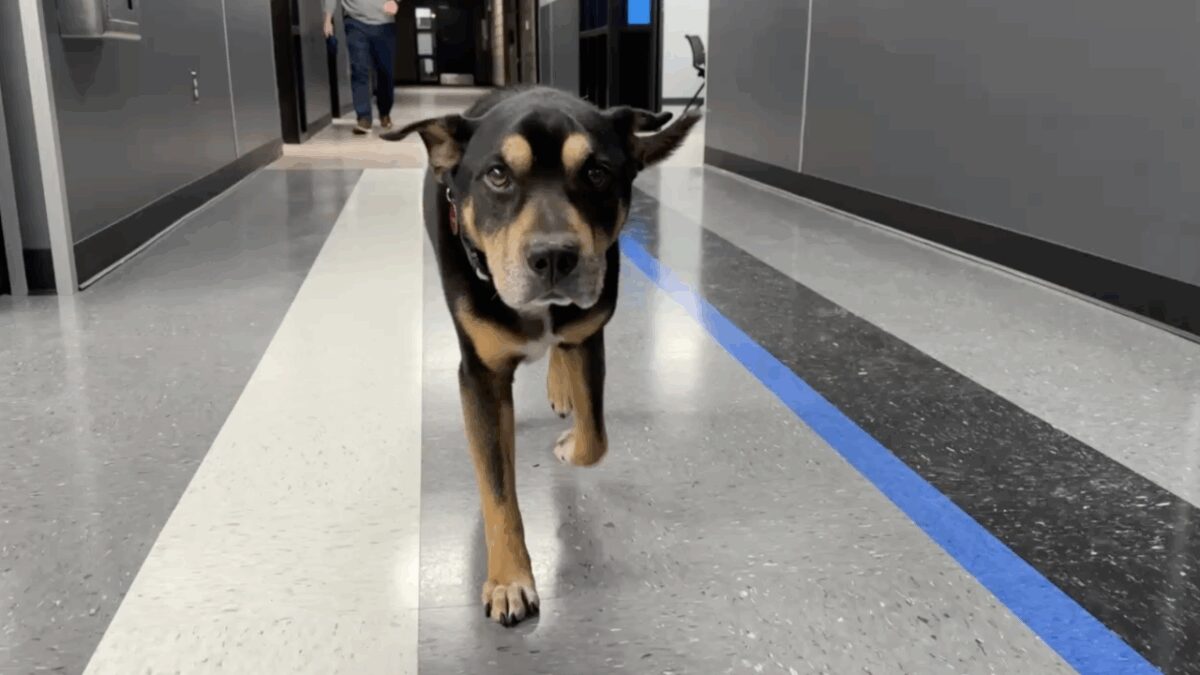
Shelter dog reunited with former family, four years after he went missing

By Paula Wethington

Click here for updates on this story

    DETROIT (WWJ) — A dog that had been living for over a year in a shelter with Friends of Michigan Animals Rescue was reunited with his former family.

After 387 days in the Belleville animal rescue shelter, the dog called Ziggy had become the shelter’s longest resident, according to the details related on the rescue agency’s social media accounts.

The staff knew that the dog was surrendered into shelter care when his owner had to enter long-term memory care. But the canine’s story began long before that – it turns out that he was lost from a Dearborn Heights family about four years ago. And that’s who eventually came to claim him.

“Over a year passed, and we couldn’t understand how such a gentle, affectionate dog was still here,” the staff said.

“Shelter life wore him down. He barely lifted his head when people walked in. We tried everything to help him feel safe … but he was waiting for something he couldn’t name.”

A photo of the dog looking at Christmas tree ornaments that was circulating on Facebook as part of a shelter promotion to find new homes for their animals got in front of the right people. A message was sent to the shelter with the author saying Ziggy might actually be her dog Toby, who ran away four years ago.

The shelter looked over photos she submitted of the dog as a puppy, showing the markings on his face and body.

“She came to meet him,” the shelter staff said. “Ziggy, who almost never wagged his tail, suddenly did. There was no doubt he was hers.”

With that, Ziggy went back to a family that had never forgotten him, and called him Toby.

“There wasn’t a dry eye in the building,” the staff said.

Please note: This story was provided to CNN Wire by an affiliate and does not contain original CNN reporting. This content carries a strict local market embargo. If you share the same market as the contributor of this article, you may not use it on any platform.

Local radio station brings Christmas joy to hospitalized children at Kadlec

By Dan Hanson

Click here for updates on this story

    KENNEWICK, Wash. (KAPP) — A local holiday tradition continues to bring smiles to children who won’t be home for Christmas this year.

For the past four weeks, listeners of 94.9 The Wolf have donated new, unwrapped toys as part of the radio station’s eighth annual Christmas Tree of Cash and Prizes. Each donation gave listeners a chance to draw an envelope from the tree, which was filled with cash or prizes donated by the Kennewick Police Department Foundation and local businesses.

All donated toys go directly to Kadlec Regional Medical Center’s pediatric center for children who will spend the holidays in the hospital.

The toy drive represents 17 years of Christmas magic for kids in Richland hospitals, organized by Jazz Little, who understands firsthand what it’s like to be hospitalized during the holidays.

“I was in the hospital when I was yay high. I was three years old when I was diagnosed with Crohn’s. I’ve spent many holidays and birthdays in the hospital,” Little said. “I know how much it sucks to be in there for those important events and for us to go there and provide toys for the children so they can have just a little more holiday joy.”

What started as Little’s personal mission has grown into a community-wide effort. STCU, law enforcement agencies, and volunteers now donate their time to support toy deliveries to hospitalized children.

The annual tradition serves as a reminder that small acts of kindness can make a significant difference during the holiday season, especially for families facing medical challenges.

Little’s experience with childhood illness drives his commitment to ensuring no child feels forgotten during Christmas. His family has maintained this tradition for nearly two decades, turning a personal understanding of hospital stays into a source of joy for other young patients.

The Christmas Tree of Cash and Prizes creates a win-win situation for the community. Radio listeners receive chances to win prizes while contributing to a meaningful cause that directly impacts local families during one of the most challenging times of the year.

Organizers emphasize that the initiative demonstrates how community partnerships can create lasting positive impact. The collaboration between the radio station, local businesses, law enforcement, and volunteers shows how different sectors can work together to support families in need.

For children facing extended hospital stays during the holidays, receiving an unexpected toy can provide a bright spot during a difficult time. The gesture reminds young patients and their families that their community cares about their well-being beyond their medical treatment.

Please note: This story was provided to CNN Wire by an affiliate and does not contain original CNN reporting. This content carries a strict local market embargo. If you share the same market as the contributor of this article, you may not use it on any platform.