Arizona Gov. Katie Hobbs signs 264 bills into law after record 2,100 measures presented


By Marc Monroy

Click here for updates on this story

    ARIZONA (KGUN) — Arizona Gov. Katie Hobbs signed 264 bills into law and vetoed 151 others after a record 2,100 laws were presented to her — capping a lengthy partisan battle over educational issues in the state.

The new laws cover a wide range of issues, from food labeling and public safety to distracted driving and drone restrictions.

Lab-grown meat labeling

Arizona House Bill 2762 mandates clear labeling on lab-grown meat packaging for customer transparency. The move comes after the FDA approved lab-grown meat as safe to eat, though joint approval from the USDA is still required before it can be sold to consumers.

Arizona joins Colorado and Utah among states passing transparency laws for the sale of lab-grown meat. Unlike Mississippi and Texas, Arizona has not fully banned the product.

Cade’s Law Arizona expanded manslaughter charges under what is now known as Cade’s Law. Adults who encourage a minor — online or verbally — to commit suicide could face serious felony charges.

The law is named after Cade Keller, who died in 2022.

Religious services protection House Bill 4117 makes interfering with religious services a serious offense. The charge escalates from a misdemeanor to a felony if there is a prior conviction, threats, or group disruption involved.

Fentanyl sentencing Sentencing for fentanyl sales has been increased. Selling over 100 grams now carries longer prison terms, with previous convictions adding additional years to a sentence.

Distracted driving fines Fines for texting while driving are going up. Drivers now face fines between 75and75and149. Repeat offenders face penalties of $400, up from $250.

Shade structures and HOAs Homeowners associations can no longer ban shade structures, including umbrellas and canopies.

Drone restrictions Drone rules near events are now tighter. Operators cannot fly within a mile of ticketed events without a permit.

Other laws already in effect Several other bills passed earlier with an emergency clause. Those include a measure repealing Cesar Chavez Day in the state, and a law allowing businesses to round costs to the nearest 5 cents as pennies are no longer being minted.

This story was reported on-air by a journalist and has been converted to this platform with the assistance of AI. KGUN’s editorial team verifies all reporting on all platforms for fairness and accuracy.

Please note: This story was provided to CNN Wire by an affiliate and does not contain original CNN reporting. This content carries a strict local market embargo. If you share the same market as the contributor of this article, you may not use it on any platform.
Dove hunting season brings thousands of visitors, boosts Arizona economy

By Lauren Duffel

Click here for updates on this story

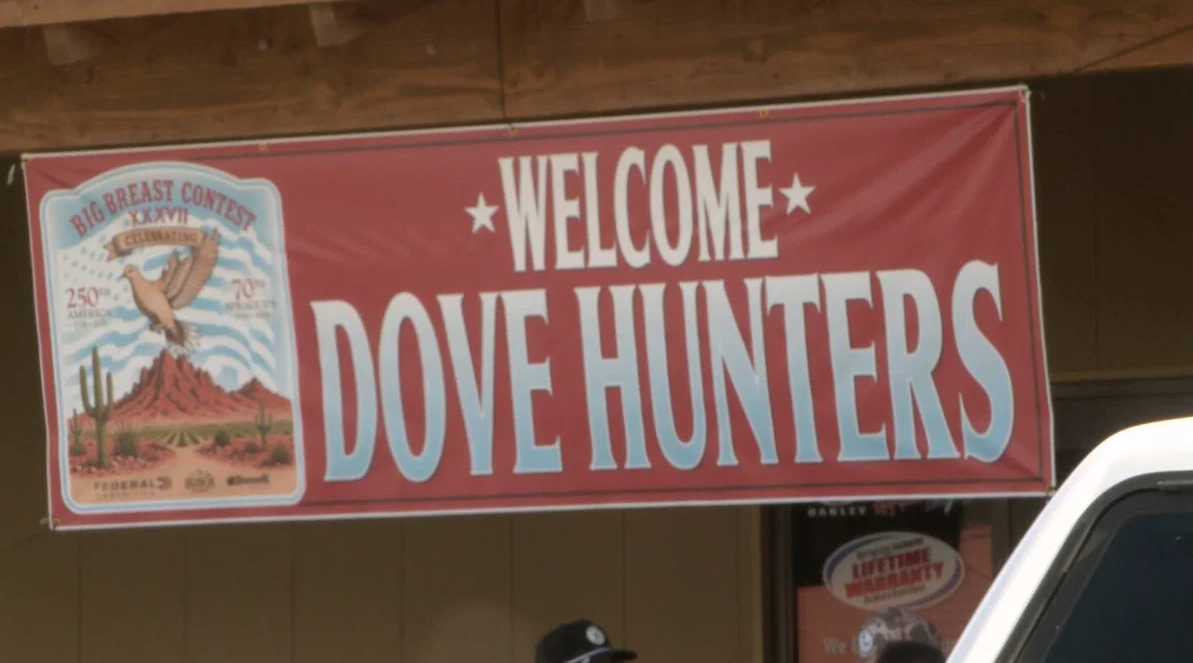
    YUMA, Arizona (KYMA-DT) — The early dove-hunting season has come to an end, attracting thousands of hunters from across the region.

Dove hunting is a million-dollar industry that continues to generate revenue for the local economy through tourism.

Yuma sees an average of 10,000 dove hunters each season, benefiting local hotels, restaurants, and other businesses.

Visit Yuma says the dove-hunting season plays an important role in the local economy.

“Hunters are booking their hotel rooms a year in advance, so our hotels are filling up with people who come back every single year,” said Marcus Carney with Visit Yuma. “Hunters are such methodical creatures of nature…it’s something our hotel industry really relies on.”

The hotel industry sees a significant increase in business during dove-hunting season.

“We have right around 4,000 hotel rooms. Almost all of those hotel rooms were filled for September 1 for the dove-hunt opener, so our hotels did really well,” Carney said. “There were a lot of people sleeping in our hotels.”

One of those hotel rooms was booked by Kirk Cowan, a San Diego resident who has been coming to Yuma to hunt for more than 30 years.

“We usually stay in a hotel. I think this year, we stayed at the Springfield because it was close to where we knew we were going to hunt,” Cowan said. “The main reason we knew where we wanted to hunt was because we went to Sprague’s, and I met the best guy I’ve ever met, named Ken, who showed us where to go.”

Cowan said some of the best times of his life have been spent hunting with his family and friends.

“It’s something that builds a bond different than anything else. We live in a concrete world, even in San Diego, and to get out and do things like that is so important in life…and for your children to experience something different,” Cowan said.

The next wave of hunters is expected to return for the late dove-hunting season, which begins November 20 and runs through January 3, 2027.

Please note: This story was provided to CNN Wire by an affiliate and does not contain original CNN reporting. This content carries a strict local market embargo. If you share the same market as the contributor of this article, you may not use it on any platform.
Researchers warn of arsenic risk in Iowa private wells

By KCCI Staff

Click here for updates on this story

    IOWA CITY, Iowa (KCCI) — Researchers are warning that Iowans relying on private water wells may face a higher risk of arsenic contamination, with free testing now being offered in select counties.

The Iowa INSIGHT program estimates that 5 to 7 percent of Iowans get their drinking water from private wells, which are unregulated and untested. Arsenic, a naturally occurring element, can seep into groundwater and has been found in higher concentrations in the northern and central parts of the state. Iowa INSIGHT analyzed data from the Iowa Department of Natural Resources over a ten-year period.

Researchers are now providing free testing for arsenic in five counties identified as vulnerable: Benton, Cedar, Jones, Mitchell, and Plymouth. The DNR says its Private Well Grants Program will also provide free testing for arsenic to private well owners.

“If we’re having a conversation about environmental determinants that could be influencing Iowans’ health with regard to forms of cancer that we know we struggle with, like lung cancer and certain forms of skin cancer, then we need to be understanding arsenic is a vulnerability for Iowans, particularly Iowans that rely on private wells, because they’re unregulated, they’re untested,” said David Cwiertny, director of the Center for Health Effects of Environmental Contamination at the University of Iowa.

Arsenic is a known carcinogen linked to skin, lung, and bladder cancer. The Environmental Protection Agency states that any amount of arsenic poses a risk to humans. Public water utilities are required to remove arsenic under the Safe Drinking Water Act, but private wells are not subject to the same regulations.

The DNR encourages private well owners to take advantage of the free testing programs to ensure their water is safe.

Please note: This story was provided to CNN Wire by an affiliate and does not contain original CNN reporting. This content carries a strict local market embargo. If you share the same market as the contributor of this article, you may not use it on any platform.

Community stepping up to help volunteer firefighters protecting them from Caddo County wildfire

By Olivia Hickey

Click here for updates on this story

    CADDO COUNTY, Okla. (KOCO) — For days, volunteer firefighters have been working around the clock to contain wildfires in Caddo County.

Many people have been forced to evacuate, and several structures have been destroyed by the flames. Now, community members stepping up to help the first responders who have been keeping them safe.

A woman told KOCO 5 that she’s been dropping off drinks for volunteer firefighters, including her grandson who is one of the firefighters working to protect Caddo County.

“He’s been out since Sunday night. Got a break in last night to sleep a little bit, and he’s back out there,” Neva Meiwes said.

Up the road from the Gracemont Fire, Longview Church has opened its doors to the public, offering snacks and supplies to everyone who comes through. They’ve even made stops to drop off supplies to firefighters.

Around 3,000 acres have burned in the wildfires over the course of the last several days. The cause is still under investigation.

Please note: This story was provided to CNN Wire by an affiliate and does not contain original CNN reporting. This content carries a strict local market embargo. If you share the same market as the contributor of this article, you may not use it on any platform.

NC teen who died from brain-eating amoeba ‘most likely’ contracted infection in Durham: Officials

By Starletta Watson

Click here for updates on this story

    DURHAM, N.C. (WXII) — The North Carolina Department of Health and Human Services has released more information surrounding the death of the teen who died in August from Naegleria fowleri, a microscopic amoeba found in warm freshwater.

According to health officials, interviews and tests on four different locations concluded that the teen “most likely” contracted the infection at a “community-based organization in Durham.” The facility, El Futuro, was mentioned in an NCDHHS report that detailed the source of the amoeba.

“While this investigation does not allow us to conclusively determine the location of exposure, the epidemiologic, laboratory, and environmental findings suggest that the El Futuro water feature was the most likely source,” the NCDHHS report said. “The lack of effective disinfection, visible algal growth, and detection of non-viable N. fowleri from the water feature support this conclusion.”

A photo from NCDHHS showed one location at EL Futuro where officials collected water samples to detect the amoeba. According to the report, the mental health nonprofit organization and clinic has a garden area that resembles a manmade creek with a pump and multiple fountains.

“The design of this creek was interactive with a play water pump and fire hydrant fountain,” the report said. “The center reported that the feature was cleaned by power washing and hand-fed chlorination. Algal growth was observed throughout the manmade creek with heavier growth at the top portion of the creek than the bottom. Organic material and debris were observed around the pump system and covered the filter.”

Results from the samples showed that “non-viable” Naegleria fowleri was detected in the place’s storage tank.

Officials said it was reported that the teen likely had contact with the water by splashing their face at the facility. “This is also consistent with information shared by family members indicating that the patient had contact with the water feature during the likely exposure period,” the report said.

Officials said Naegleria fowleri infections are not contracted by swallowing water but by amoebas entering the nasal passages. With water, officials said that typically happens from activities such as jumping, diving, rafting, water-skiing, or any type of cleansing of the nasal passage.

Officials said the teen was in the hospital critically ill on Thursday, Aug. 28, and died the following Monday. The identity of the teen has been withheld due to the family wishing to maintain privacy.

Please note: This story was provided to CNN Wire by an affiliate and does not contain original CNN reporting. This content carries a strict local market embargo. If you share the same market as the contributor of this article, you may not use it on any platform.

New Orleans diocese accused of being ‘morally repugnant’, church disputes claim

By Erin Lowrey

Click here for updates on this story

    NEW ORLEANS (WDSU) — A new court filing claims the Archdiocese of New Orleans is not meeting certain nonmonetary obligations under its bankruptcy settlement with clergy sexual-abuse survivors.

Donald Massey, the settlement trustee, raises several concerns in his latest filing.

“ANO flatly refuses to conduct IRB investigations of the alleged perpetrators,” Massey alleges in the filing.

“It is believed that some of these clergy are still alive. Yet somehow, these individuals have not been investigated or added to the list,” the filing alleges.

As part of the court-approved settlement plan, the Archdiocese agreed to new child-protection measures and changes to how it handles reports of sexual abuse. Those provisions include reporting and investigation protocols, outside oversight, survivor protections and the creation of a public document archive. The filing says that archive is not yet publicly available, although the Archdiocese has begun providing documents to LSU for review and preparation, records show.

Massey also accuses the Archdiocese of failing to demonstrate transparency or a change in institutional culture:

“ANO flatly refuses to conduct IRB investigations of the alleged perpetrators,” the document alleges.

In the document it is also alleged “ANO is not demonstrating transparency nor a culture of change. Finally, it is morally repugnant and unconscionable to allow ANO to continue to suppress identities of credibly accused abusers, as has been the case for decades.”

A follow up conference at federal court is set for this week.

The Archdiocese of New Orleans issued the following statement regarding the allegations made in Massey’s filing:

“Archbishop Checchio and archdiocesan leadership work tirelessly everyday to honor our commitments to survivors and to keep children entrusted to our ministries safe. We continue to implement the nonmonetary provisions and in many cases are doing more than agreed upon in these provisions. We are surprised by the tone of the trustee’s report and confused by the apparent misunderstandings included in the report.

“Archbishop Checchio continues to meet regularly with individual survivors upon their request. What he hears often are concerns about the delay in payments and processes of the trust.

“In regards to the Settlement Trustee’s assertions that we are not investigating claims against clergy, this is a misrepresentation of the facts. All living archdiocesan clergy named in a proof of claim have been presented to the IRB or are still under investigation for presentation to the IRB for its recommendation on suitability for ministry. Furthermore, Archbishop Checchio has ordered a review of all deceased archdiocesan clergy named in a proof of claim to be presented to the IRB. That process is already underway.

“The nonmonetary provisions require a written request directly from the survivor for an investigation into his or her accused so as to avoid retraumatizing the survivor through unsolicited contact from the archdiocese. The archdiocese welcomes these requests directly from a survivor of abuse.

“Under Archbishop Checchio, any allegation of sexual abuse is reported to law enforcement. The archdiocese continues to wait for the Settlement Trust Advisory Committee to provide the required written consent from each survivor so that we may in turn provide law enforcement unredacted proofs of claim which include individual contact information of the survivor and the description of his or her abuse.

Please note: This story was provided to CNN Wire by an affiliate and does not contain original CNN reporting. This content carries a strict local market embargo. If you share the same market as the contributor of this article, you may not use it on any platform.

NH Supreme Court Chief Justice MacDonald resigns after Judicial Conduct Committee investigation

By Kirk Enstrom, Kaitlin Corbett

Click here for updates on this story

    CONCORD, New Hampshire (WMUR) — New Hampshire Supreme Court Justice Gordon MacDonald has resigned his position following an investigation by the Judicial Conduct Committee.

In a brief letter to Gov. Kelly Ayotte, MacDonald said he was voluntarily resigning.

“I believe this is in the best interests of the New Hampshire Judicial Branch,” MacDonald wrote in the letter. “I accept responsibility and accountability for my conduct. It has been an honor to serve the people of New Hampshire.”

The JCC posted a document Tuesday stating it had been investigating MacDonald since November 2025 for his actions related to the employment and performance of Dianne Martin.

In March of this year, that investigation was elevated to a complaint.

The JCC said after an internal investigation related to job performance issues, which MacDonald was aware of, Martin was removed from her position as the Director of the Administrative Office of the Courts in February 2025.

The document goes on to say Martin later emailed MacDonald about her termination.

MacDonald allegedly reacted in anger and frustration, slamming doors and using profanity towards other justices.

On April 1, 2025, the JCC said Martin was told her position was eliminated, and she was officially being laid off, allowing her to cash in on close to $50,000 in unused sick and vacation time and benefits.

After Martin was laid off from her position, she was rehired 48 hours later in a new position as general counsel to the Office of Bar Admissions, a position she was previously offered when terminated, but declined.

The document also said it was a whistleblower who said the whole idea to lay off and rehire Martin was MacDonald’s.

In the stipulation and agreement posted by the JCC, MacDonald admitted to violating three provisions of the Code of Judicial Conduct, including failing to avoid the appearance of impropriety, bypassing Judicial Branch rules and procedures in extending Martin a position without the same process required of every other Judicial Branch employee, and failing to exercise the power of administrative appointment impartially.

In a written statement, MacDonald said he fell short in his duties and took “full responsibility for my shortcomings.”

“To maintain the integrity of the judicial branch and to avoid the protracted and disruptive spectacle a public hearing would cause to the judicial branch and its dedicated employees, I have agreed to resign my position,” he said in the statement. “It is my sincere hope that the judicial branch can move forward without further distraction and do the critical work for the citizens of New Hampshire.”

The JCC posted MacDonald’s responses to its questions regarding the personnel decisions.

In his response, he also acknowledged rumors that he was having an affair with Martin, something that was false “and has caused great damage to me.” He “emphatically” stated that his relationship with Martin has always been professional.

In response to the whistleblower’s claim, MacDonald said the decisions to lay off and rehire Martin were made collectively by the then-sitting three justices and himself, on the advice of counsel.

The committee also asked about incidents in which MacDonald was accused of yelling at other justices.

Ayotte said she would accept MacDonald’s resignation effective immediately.

“It is essential that the Judicial Branch maintain the public’s trust in its mission to impartially adjudicate matters brought in front of the courts,” the governor said in a written statement. “I am extremely disappointed to learn today of the former Chief Justice’s violations of the Judicial Code of Conduct, and I received his resignation this morning.”

In a written statement, the Judicial Branch noted that the current associate justices of the Supreme Court were not members of the panel that approved the agreement with MacDonald.

“Chief Justice MacDonald had been on medical leave since July 24. During that time, the four associate justices have assumed the Chief Justice’s responsibilities with respect to the administration of the courts,” spokesman David Sakowich said in the statement. “The Judicial Branch remains focused on carrying out its responsibilities to the public and ensuring that the work of the courts continues without interruption.”

In late July, state court officials announced that MacDonald was taking a medical leave of absence effective immediately.

The Supreme Court’s next oral arguments are scheduled for Sept. 22.

Please note: This story was provided to CNN Wire by an affiliate and does not contain original CNN reporting. This content carries a strict local market embargo. If you share the same market as the contributor of this article, you may not use it on any platform.

South Carolina sheriff: Copper wire theft led to internet outages, $50,000 in losses

By Graham Cawthon

Click here for updates on this story

    FLORENCE COUNTY, S.C. (WJCL) — Authorities in South Carolina have made a second arrest in connection with the theft of copper wiring that authorities say caused internet outages and resulted in about $50,000 in losses.

Megan Rae Powell, 31, of Johnsonville was arrested Monday on 17 charges related to the theft, possession and sale of nonferrous metals, according to a Florence County Sheriff’s Office news release.

Copper wire allegedly sold to recycler Investigators allege Powell cut copper wires belonging to Frontier Internet near Johnsonville around July 8 and sold the material to a metal recycler in Hemingway.

The damaged cables disrupted internet service for Frontier customers, the Sheriff’s Office said. Investigators estimated the stolen wire’s value at approximately $50,000.

Powell faces one count of obtaining nonferrous metals and disrupting critical infrastructure, five counts of transporting or possessing stolen nonferrous metals, five counts of unlawfully selling nonferrous metals and six counts of damaging property to obtain nonferrous metals.

A co-defendant, 43-year-old Shawn Chapman Stone, was arrested July 16 on similar charges, according to the Sheriff’s Office.

Please note: This story was provided to CNN Wire by an affiliate and does not contain original CNN reporting. This content carries a strict local market embargo. If you share the same market as the contributor of this article, you may not use it on any platform.

Mistrial declared in sexual assault case of former YDC worker

By Alanna Flood

Click here for updates on this story

    MANCHESTER, New Hampshire (WMUR) — A New Hampshire Superior Court judge declared a mistrial Tuesday in the criminal case against Jeffrey Buskey, a former Youth Development Center employee charged with dozens of counts of sexual assault.

Judge William Delker made the ruling following an emotional morning of testimony. The decision came after a key witness for the prosecution alluded to alleged sexual assaults committed by YDC employees other than Buskey.

Delker determined that the outside abuse allegations should not be heard by the jury. He concluded that a second round of instructions to disregard the testimony would not be effective enough to correct the error.

“I am forced to declare a mistrial in this case,” Delker said. “I just don’t think further curative instruction is going to be effective to unring the bell a second time.”

Buskey faces 21 counts of felonious sexual assault stemming from his employment at the Manchester-based Youth Development Center during the 1990s. He has pleaded not guilty to all 21 charges.

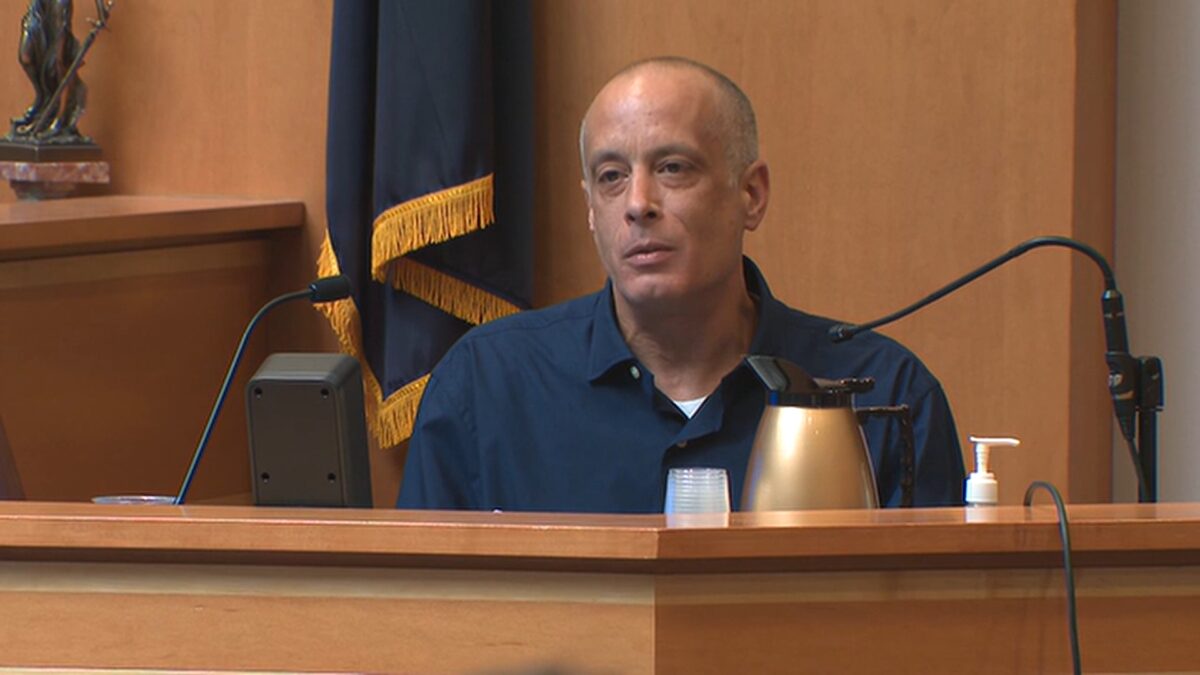
The defense’s motion followed testimony from Buskey’s accuser, David Meehan, who has previously testified in separate cases against other YDC employees. Meehan was previously awarded a $38 million settlement in a civil lawsuit against the state related to the abuse allegations, though that amount was later reduced to $475,000.

News organizations typically do not share the identities of sexual assault victims, but Meehan has been publicly outspoken about his experience.

Assistant Attorney General Thomas Velardi explained that the state will review its options moving forward now that the initial trial has been halted.

“In this instance, the judge found that some of the evidence that came in should not be heard by the jury,” Velardi said. “So, when the judge believes such evidence does come in and there’s not an adequate way to instruct the jury to disregard it, the judge believes he must declare a mistrial.”

Velardi noted that the state can pursue the charges again.

Please note: This story was provided to CNN Wire by an affiliate and does not contain original CNN reporting. This content carries a strict local market embargo. If you share the same market as the contributor of this article, you may not use it on any platform.

Video footage leads to arrest of Charlotte County woman accused of sexual acts with family dog

By Carson Zorn

Click here for updates on this story

    CHARLOTTE COUNTY, Fla. (WBBH) — A Charlotte County woman was arrested on Tuesday after deputies said her husband found video of her engaging in sexual activity with the family dog.

According to the Charlotte County Sheriff’s Office arrest report, on Sept. 11, a man posted on Facebook accusing his wife, Malia Nummerdor, 38, of engaging in sexual acts with the family dog. The man said he had photo and video evidence of the incident.

On Sept. 14, deputies conducted an interview with the man, who told deputies he had installed two security cameras in the home in order to find out who had been stealing money from a coin container, the report said. He told deputies that the presence of the cameras was known to everyone in the home.

The man told deputies that while reviewing recordings from the bedroom camera, he found video footage of Nummerdor engaging in sex acts with the family dog, the report said. He provided deputies with images from the recording and access to the laptop containing the video footage.

On Sept. 15, deputies spoke with Nummerdor, who acknowledged that the video showed her and the family dog, but denied sexual conduct and told deputies she had just been petting the dog, the report said.

Deputies said that throughout the interview, Nummerdor was unable to explain the actions in the video, and that her explanations were contradictory.

Nummerdor was arrested and faces a charge of sexual contact with an animal.

Please note: This story was provided to CNN Wire by an affiliate and does not contain original CNN reporting. This content carries a strict local market embargo. If you share the same market as the contributor of this article, you may not use it on any platform.