Paramedics can now give blood on scene. It’s transforming trauma care.

By KCCI Staff
Click here for updates on this story
DES MOINES, Iowa (KCCI) — A new pilot program giving Des Moines paramedics the ability to perform blood transfusions in the field is already being credited with saving lives — and changing how trauma care begins.
Doctors say some of the most critical moments in saving a patient don’t happen in the hospital, but in the minutes after they are injured.
“By treating patients early, we can automatically decrease the risk,” said Dr. Carlos Pelaez, trauma medical director at Iowa Methodist Medical Center.
That philosophy helped launch a pilot program last November that equips certain ambulances with blood and the tools needed to administer transfusions on scene.
Now, first responders and medical specialists say it’s making a life-or-death difference.
Coby Klocko, a paramedic in Des Moines, saw that impact firsthand on Feb. 19.
A 911 call reported a stabbing at Polk County’s Life Services Center.
“There was a stabbing victim that was in trouble and was bleeding out,” Klocko said.
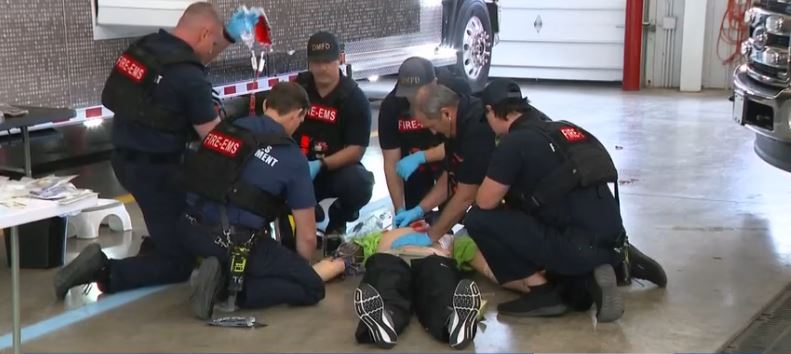
When Klocko arrived, he was faced with a critical decision. Although he had only practiced administering blood transfusions on training mannequins, he knew the situation called for immediate action.
“I just took a few deep breaths, realized I’ve done this plenty of times, and it’s just another routine thing, just on a live patient,” he said.
Using the mobile blood transfusion system, Klocko began treatment before the victim arrived at the hospital.
That early intervention, doctors say, can increase survival rates by roughly 30 percent.
“I have been in practice for approximately 15 years,” Pelaez said. “This is the single most relevant change in trauma care in our city that I have seen since I started practicing trauma surgery.”
Klocko also believes having the kit and training to use it was critical to his patient’s survival.
“If I didn’t have the blood, I don’t think it would be the outcome that we had today,” he said.
His decision to begin the transfusion in the field ultimately saved the man’s life — and led to a moment not every paramedic gets to experience: meeting the patient he helped save.
For Klocko, it’s a reminder of the stakes that come with every call.
“Coming to work every day, you just never know what you’re going to get yourself into,” he said. “But having the tools that we have in our ambulances, knowing that I can make a difference in somebody else’s life, and also make an impact on their family, is definitely a huge reward, not just for myself, but for our entire department.”
As the pilot program continues, doctors and first responders say it could mark a major shift in how trauma care is delivered — starting long before a patient reaches the hospital.
Please note: This story was provided to CNN Wire by an affiliate and does not contain original CNN reporting. This content carries a strict local market embargo. If you share the same market as the contributor of this article, you may not use it on any platform.