Backyard beekeeper loses hive as warm winter impacts bees, honey production

By Clara Faith
Click here for updates on this story
DENVER (KMGH) — It’s finally spring, and flowers aren’t the only things waking up from hibernation across the state. But the warm and dry winter has left some creatures struggling to survive.
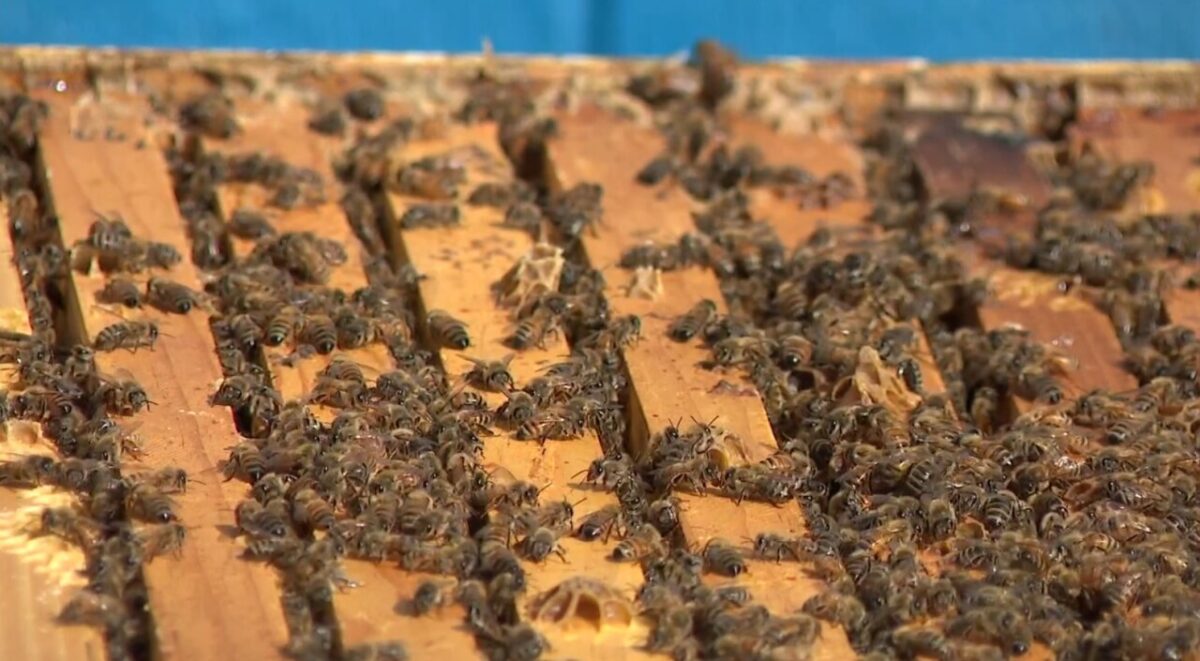
In Laura Roberts’ backyard, everything is coming out of winter dormancy — including her bees.
“I am a backyard beekeeper. I keep two hives,” Roberts said. “I think bees serve a really important part of the ecosystem.”
Roberts has kept bees for years, but this winter brought challenges.
She told Denver7’s Clara Faith that one of her hives likely died after last year’s unseasonably warm season.
“They’ve been eating through their food stores faster, so they ran out of food, and they haven’t eaten the food that I feed them,” Roberts said. “So, I think one of my hives died of starvation.”
The fo-founder of Free-Range Beehives, Mike Rosol, has spent nearly a decade in the beekeeping industry and manages nearly 125 hives across the Denver area, partnering with Urban Gardens.
He understands what Roberts and other backyard beekeepers are going through.
“With the dryness, we worry about drought and not enough nectar to feed the bees,” said Rosol.
Rosol said his bees are now down to limited frames of honey, forcing beekeepers to supplement food sources such as dry sugar to help colonies survive.
“You can use dry white sugar and put it on top of the inner cover, and the bees will come up and eat the sugar,” he said.
As the bee population grows, another threat is growing as well — mites.
These parasites can wipe out entire hives if not treated, which is what Roberts suspects killed one of her neighbor’s entire hive.
“They eat the fat bodies of the bees,” Rosol said. “More importantly, they reproduce in cells where the baby bees are developing, so it is very difficult to see them.”
Roberts said she believes mites may have contributed to losses in nearby hives as well.
Despite losing one hive, Roberts said she is not giving up.
“I started beekeeping because my son had really bad seasonal allergies, and I read that local honey can help,” she said. “I started keeping bees a couple of years ago with my dad and my son.”
As the season continues to shift, she hopes her remaining hive can withstand the season through next winter.
“I am watching them a little closer these days and doing everything I can to hopefully ensure their success,” Roberts said.
For now, beekeepers across the Denver area are watching closely — hoping their colonies can weather the changing climate and keep the buzz alive.
Please note: This story was provided to CNN Wire by an affiliate and does not contain original CNN reporting. This content carries a strict local market embargo. If you share the same market as the contributor of this article, you may not use it on any platform.