Historic building in downtown Pocatello set for demolition

Par Kermani
POCATELLO, Idaho (KIFI) — The Monarch building, A historic brick building in downtown Pocatello, is set to come down this summer after years of decay, despite efforts to revive it.
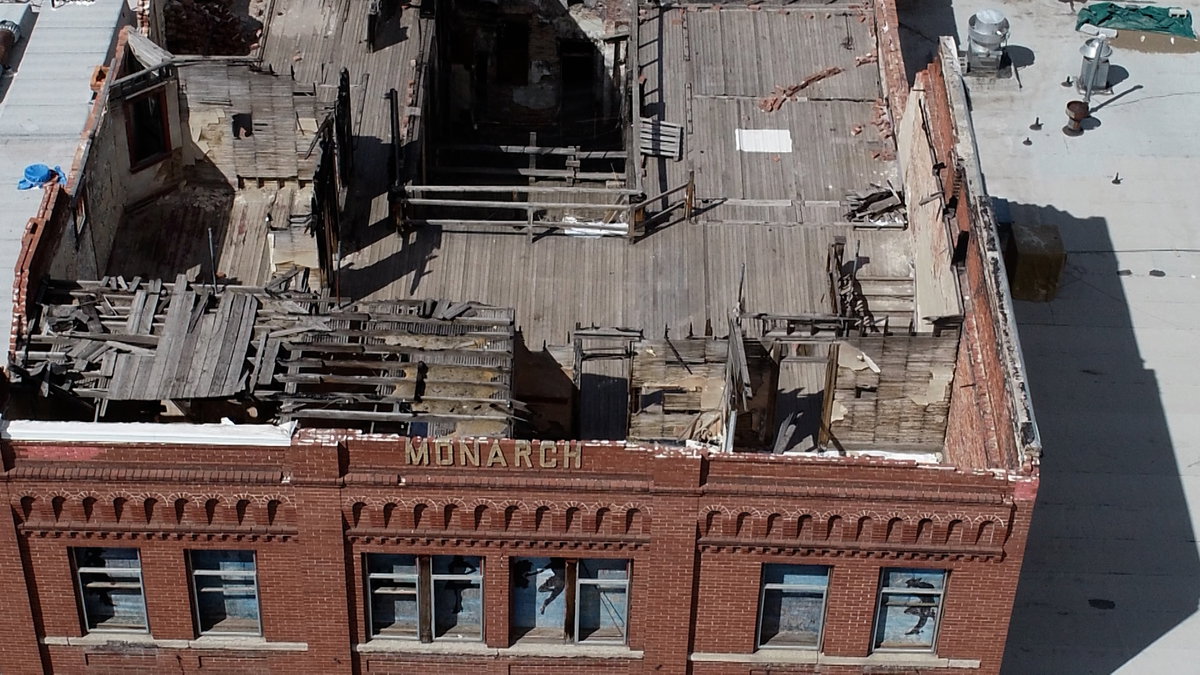
The building was believed to have been built around 1909, and has sat open to the elements for more than a decade after a fire left it roofless and unsafe. The Pocatello Development Authority, which now owns the property, says demolition is necessary to protect public safety and make way for new development.
The Monarch was originally built as a hotel, with a separate entrance leading to rooms on the second and third floors and retail space on the ground level. Over the years, the upper floors were used as low-income housing while the street level continued to host various businesses.
The building remained in use until the 2014 fire effectively ended its life as a functioning property.
After the fire, the original owners sold the building to private individuals who attempted to clean out and renovate the structure. Those efforts stalled early, leaving the building exposed.
Eventually, the building was gifted to the Pocatello Development Authority, but recent safety concerns contributed to the decision of tearing down the building.
“We feel it’s a really important asset to downtown, and we went through many steps to try to preserve it,” said Brent McLane, executive director of the Pocatello Development Authority. “But it’s just financially not feasible.”
As debate continues over the loss of a familiar landmark, McLane said he hopes residents will understand that the agency tried to save the building but ultimately had to balance sentiment with safety and financial reality.
“We really wanted to see it saved, but it needs to be saved in a way that is going to economically enhance the downtown as well,” he said. “We want it to be something that comes back that is going to really enhance and add to the downtown and enhance and add to the experience of Pocatello.”