Owen Ramsingh, Columbia man deported by ICE, is rewriting his story

By Cecelia Koparanyan, KOMU 8 Reporter
Click here for updates on this story
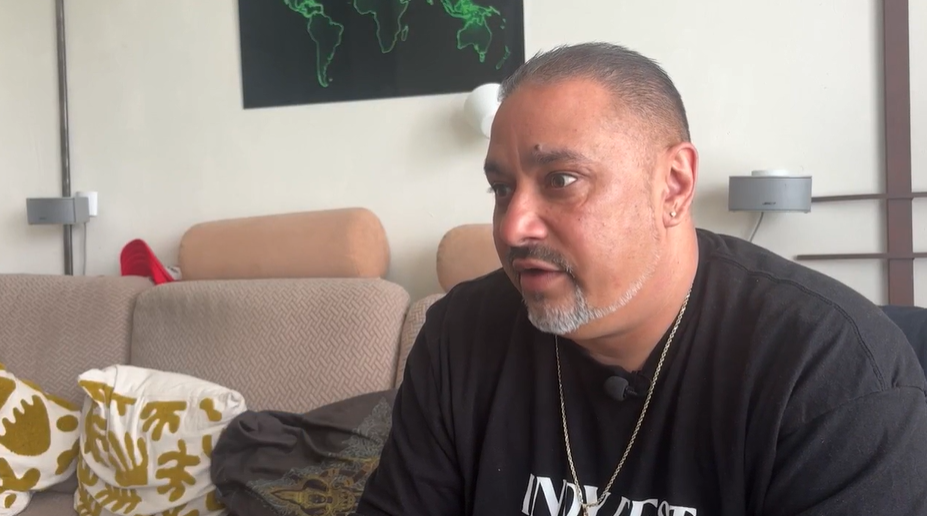
NETHERLANDS (KOMU) — Owen Ramsingh, the Columbia man deported by Immigration and Customs Enforcement in February, is now living in Utrecht, Netherlands, with his father.
He arrived in the Netherlands in February and has been adjusting to his new life since then.
“Getting off the plane… I mean, I was in shock,” Ramsingh said. “I had so much going through my mind, just starting from zero, everything being taken away from me, my family. Luckily, I have my father here, you know, in the Netherlands, and he’s a big support system, and he is keeping my head above water.”
Coming to the United States
Ramsingh was born in the Netherlands in 1981, but his mother took him to the United States in 1986 when he was 6 years old.
“During that time, my mom told me my dad was deceased,” Ramsingh said.
Ramsingh believed that his father was gone and that he was left to take care of his mother and sister, both of whom he does not speak to anymore.
Ramsingh said his mother was a drug user, often leaving he and his sister with limited food in the house. Ramsingh turned to dealing drugs when he was a teenager to support his family.
“We had lack of food in the house, so I joined the streets,” Ramsingh said. “I had to make sure that I was able to put food in the fridge for my family (and) my mom as well.”
In 1997, he was charged with cocaine possession at age 16 and tried as an adult at 17. When Ramsingh was released in 1999, he found out his father was actually alive.
“Two weeks before my release date out of prison, I got a letter from him,” Ramsingh said. “When I looked at the letter, it said the last name Ramsingh on it, which shocked me. So I opened it up and it said, ‘Hey, I’m your father.’”
His father worked in law enforcement in the Netherlands and found his son through the system. They’ve maintained phone contact since then, and in 2009, his father came to the U.S. to visit his son for the first time.
“We realized that we are the same, basically,” Ramsingh said. “Just the way we are with people, our work ethic — we are father and son, for sure.”
Despite the circumstances that brought this father and son together, Ramsingh is happy to be back with his father.
“We’re able to make up the time from being separated for all those years,” Ramsingh said.
Time spent in ICE detention
When Ramsingh returned to the U.S. from a trip to the Netherlands in September 2025, he was questioned about his green card in the Chicago O’Hare International Airport and then detained for his juvenile criminal background.
Ramsingh first obtained a green card when he was brought to the U.S. as a young boy. In 2025, when he was preparing for his last trip to the Netherlands to visit his father, he renewed his green card in February. His green card was renewed for 10 years, according to documentation obtained by KOMU 8.
Ramsingh has two prior drug-related incidents on his record, including the cocaine possession charge from 1997. He also had a 2011 marijuana possession conviction in Boone County, which has since been expunged.
The Department of Homeland Security cited the prior convictions for cocaine and marijuana possession as justification for his detention. The immigration policy allows officers to detain a legal resident who has a former drug-related conviction upon reentry into the country.
Ramsingh was taken to an ICE detention center in El Paso, Texas. He spent over three months at Camp East Montana. In a Facebook post, Ramsingh described horrific living conditions, starvation and said he witnessed a murder.
“What I went through from the minute I was detained … I had went through a lot of trauma,” Ramsingh said.
In the Facebook post, Ramsingh described how Akima security, the security force that ran the facility, was unprofessional and dangerous. Ramsingh said he remembered hearing security guards take bets on who was going to commit suicide.
He also said he witnessed the security force use excessive force on detainees and witnessed how the security force shackled, cuffed and strangled a 55-year-old man to death. Ramsingh said Akima security reported the death as a suicide to the press and law enforcement.
Ramsingh said he was given three meals a day, about 12 ounces of food each. He added that the food they got was only enough to survive. Ramsingh’s Facebook post said there were five round tables with six seats each in his pod, but detainees were only allowed to eat in the tents or near the bathrooms.
“With the whole ICE situation and being in holding cells with one meal a day, just lying on concrete floors… it was just too much,” Ramsingh said. “I’ve been through a lot of stuff in life, and this was very difficult for me.”
During his detainment, Ramsingh was also abruptly moved from the Texas facility to the Cibola County Correctional Center in New Mexico on Nov. 14. Ramsingh’s family only found out about the transfer from the wife of someone
Ramsingh is currently working on getting insurance so he can go to therapy to help with the trauma from his detention.
“I have a lot of trauma and major nightmares from everything that I went through in the detention,” Ramsingh said.
Ramsingh is no stranger to adversity, but admitted the detention was a challenge for him.
“I’m okay, but I’m not okay,” Ramsingh said. “Having that pressure on me the whole time in the detainment, (my) frustration level was very high. I just felt like (I was at) a blowing up point. But I kept my cool and just fought through it and just prayed.”
Ramsingh’s wife and daughter still in Columbia
Right now, Ramsingh’s wife and teenage daughter are still living in Columbia. They went to the Netherlands in February to visit Ramsingh after he was deported.
“It’d been almost six months since (I’d) seen them,” Ramsingh said. “(Being) ripped apart from them, it was all tears. Just being separated for so long… it was very hard.”
Ramsingh is currently working on finding housing for his family. His wife and daughter are working on passports and visas to eventually move to the Netherlands.
“I have to build my foundation here, starting with getting a house and then working on getting my wife and daughter here,” Ramsingh said.
Throughout his detention, Ramsingh’s wife, Diana Ramsingh, updated a Facebook group dedicated to Ramsingh, spoke to the media and advocated for her husband.
“She’s strong, I’m strong. And we just, we just fight this battle together,” Ramsingh said.
Since his deportation, Ramsingh and his wife speak daily, even with a seven-hour time difference between them.
“That’s super difficult, but we make the best out of it,” Ramsingh said.
Ramsingh’s daughter will graduate from a Columbia high school in May. He plans to FaceTime his wife so he can watch his daughter walk across the stage, and his friend Robert Olsen will bring the cardboard cutout that he made of Ramsingh to the graduation.
“It’s very hard… that she’s going to graduate and I can’t be there,” Ramsingh said. “It sucks not being there to be her support.”
Putting together his new life
A big part of reuniting Ramsingh’s family is settling the logistics of his new life, both physical and emotional.
“It’s a lot that runs through my mind right now,” Ramsingh said. “Just getting, filing, all my identification (and) everything here now, setting up doctor appointments, and looking for work — it’s a lot.”
In Columbia, Ramsingh worked as a security guard at Blue Note and Rose Music Hall, along with being a property manager and power washer.
After Ramsingh can get into therapy, he said he wants to look for similar work.
“I want to get back into security, because I always want to make sure people are safe,” Ramsingh said. “Giving other people that feeling of, you know, that they’re in good hands and that they don’t have to worry, and they could enjoy themselves means a lot to me.”
In addition to the big tasks— like looking for housing, insurance and a new job— even the small things in Ramsingh’s life have changed.
“The TV is in Dutch (and) I don’t understand no Dutch, which is going to be another learning thing for me,” Ramsingh said.
Even learning how to ride a bike in the Netherlands, the rules of the bike lanes are different.
“The bikes are insane,” Ramsingh said. “When you’ve got 40 people in front (and) you’ve got 20 people in the back… I hit the brakes a lot.”
When the stress is just too much and he needs to clear his head, Ramsingh said he goes on daily walks, listens to music and takes his e-bike out for a ride.
“When I get frustrated or something like that I take a nice little ride and learn new streets and everything,” Ramsingh said. “I get lost and then I find my way back.”
For Ramsingh, this time outside helps him get through his day and adjust to this new normal.
“I was taken away from the Netherlands at a young age,” Ramsingh said. “(So) just exploring… it helps with my mental as well, because it gets me out of the house and in fresh air.”
Moving forward
As Ramsingh starts to slowly adjust to his new life, he said he still hasn’t accepted the ruling New Mexico Judge Brock Taylor made back in December.
“I’m still in shock,” Ramsingh said. “I’ll never get over it, but it’s gonna take a long time for me to get it all processed.”
Even in Ramsingh’s shock and hurt, he said he’s keeping a positive and hopeful outlook to the future.
“I raised myself and I just knew a lot of negative energy that was around me,” Ramsingh said. “Once I started getting rid of that negative energy, it kept me lifted up. And that’s just the way I continue with my life.”
Ramsingh said he’s experienced what he calls “keyboard warriors” who believe being deported was what Ramsingh deserved.
“All the people that are negative about my situation, when it could be one of their family members going through the same thing,” Ramsingh said. “I didn’t do it to build a life in the drug business. I did it for survival, and this is what I got out of it.”
Despite the challenges in his past and future, Ramsingh said the Netherlands feel safer for him.
“I just got to keep pushing, no matter (what)” Ramsingh said. I’ve been through hell and back my whole life. There’s no stopping in me. I just have to keep moving.”
There is a possibility of applying for a waiver in eight to 10 years that could let Ramsingh reenter the United States. He said this is an option, but in the present moment, he is not focusing on it and instead taking it one day at a time.
This report was conducted in collaboration with KBIA as a part of the Missouri News Network.
Please note: This story was provided to CNN Wire by an affiliate and does not contain original CNN reporting. This content carries a strict local market embargo. If you share the same market as the contributor of this article, you may not use it on any platform.