Lead poisoning threat to local raptors as eagle recovers

Harley Coldiron
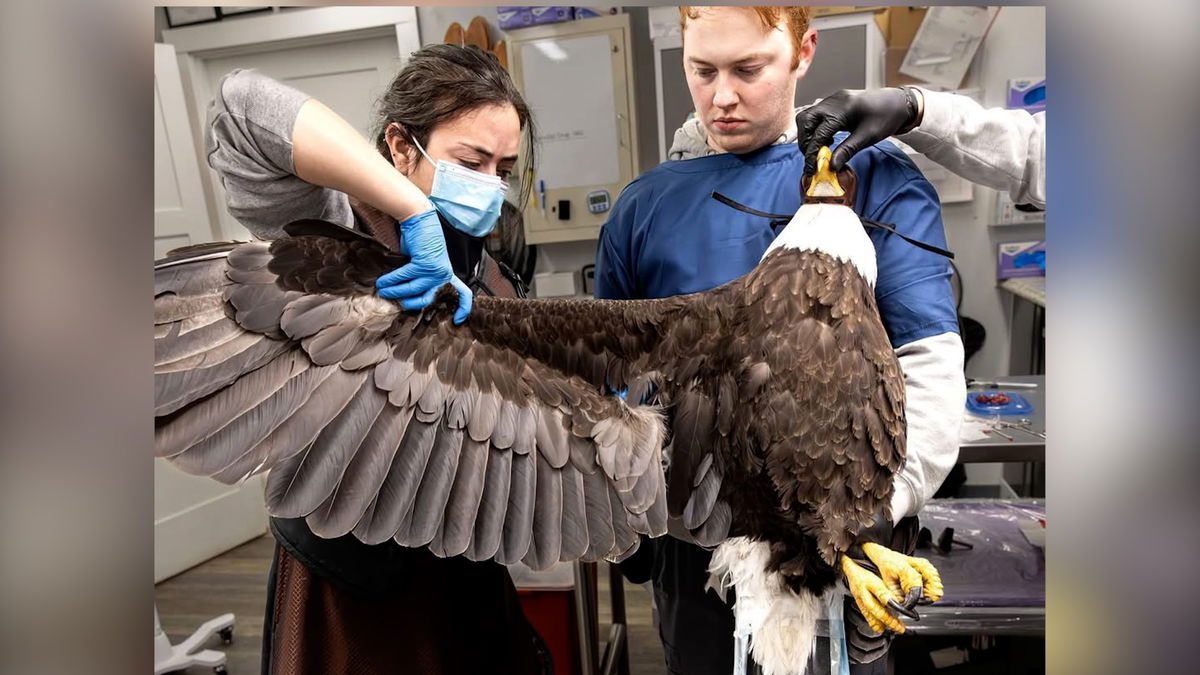
BEND, Ore. (KTVZ) — An adult bald eagle is recovering at a Bend wildlife hospital after being found grounded and unable to fly in Prineville. The bird, identified as Bald Eagle 26-54, spent more than 24 hours in a field before being rescued and transported to Think Wild for urgent care.
Upon intake, the veterinary team diagnosed the eagle with multiple traumatic injuries. These included a scapular luxation, or shoulder injury, pulmonary contusions, and a maxillary beak fracture with blood present in the mouth. The bird also showed signs of wobbling and ataxia at the time of its rescue.
The eagle has shown signs of improvement while receiving pain management, fluids, and assisted feeding. The bird was recently moved to a larger raptor enclosure. Staff report the eagle is beginning to perch well, reach higher spaces, and hold its wings with more symmetry. Currently, the bird still requires supportive feeding and ongoing evaluation of its strength.


While the eagle recovers from physical trauma, the facility also monitors for lead poisoning, a common issue for local raptors. Sally Compton serves as the executive director for Think Wild. Compton explained that most poisonings occur when birds eat the carcasses of animals killed by lead ammunition. When lead ammunition enters an animal, it can splinter up to 12 inches, infecting the carcass with lead.
Compton described how the toxin affects the birds as it enters the bloodstream. “As it permeates through their system, gets to their brain, gets to their internal organs, that’s when they start to really feel those symptoms,” Compton said. While the results for this specific bald eagle were positive, Compton noted that for most animals, the poisoning is fatal.


Think Wild has treated 85 animals for lead poisoning over the years. Of those cases, three have been bald eagles. Almost all of the animals brought in with the illness have died. The facility is supported by donations for food, medical supplies, and staff time, which can be sent to their Erickson Road location in Bend.
If the bird’s progress continues, the next step in its rehabilitation will be the introduction of gentle flight therapy. The team will continue to monitor the eagle’s ability to regain strength for an eventual return to flight.
The Problem Solvers have spoken to hunters and outdoorsmen about the benefits and downsides of using lead while hunting. Find that story here.