KRDO13 Investigates: The home insurance fine print loophole that could cost you thousands

Josh Helmuth
Some Colorado homeowners say a single line in their insurance policy cost them thousands
COLORADO SPRINGS, Colo. (KRDO) – Home insurance rates in Colorado have surged more than 50 percent in just a few years. But some homeowners say it’s not just the price of coverage that’s changing — it’s what that coverage actually pays.
KRDO13 Investigates found a little-known clause buried deep inside some homeowners’ insurance policies that can drastically limit how much a company will pay after a disaster.
For some condo owners, that clause has meant the difference between tens of thousands of dollars in coverage or just a few thousand dollars paid.
One Colorado Springs homeowner says she learned that lesson the hard way.
“It’s Unethical.”
That’s how Marisa O’Malley describes what happened after a hailstorm hit her neighborhood in Colorado Springs’ Gold Hill Mesa community last summer.
O’Malley said she believed she had done everything right when it came to her Progressive insurance policy.
“I was pretty much reading from a script,” she said, describing the questions she asked when buying coverage.
But after the storm damaged roofs across the community, the homeowners’ association issued a $17,000+ special assessment to cover repairs.
That’s when O’Malley says she discovered something buried deep in her policy.
“And then being sold a policy with a clause that was buried, I think on page 40 something,” she said.
When she filed her claim, the response stunned her.
“They responded and said, ‘We can give you a thousand dollars,’ to that effect, and I was like, ‘That can’t be right,’ this is for seventeen thousand dollars.”
The experience left her frustrated and confused.
“I mean, just kind of a sick feeling in my stomach,” she said.
O’Malley believed her policy covered $50,000 in loss assessment protection — coverage designed to help condo owners pay HOA assessments after major damage.
But the payout offer was only $1,000.
“It’s just a way for them to be off the hook when these things come up,” she said.
Later, she added a broader question about the industry.
“I guess my question is, why can’t people just take care of people? … Let’s just do better.”
A loophole hidden in the fine print
The issue centers around a type of coverage many condo and townhome owners purchase called loss assessment coverage.
Here’s how it works.
Most condo communities carry a master insurance policy through their homeowners association. That policy typically includes a large deductible — sometimes tens of thousands of dollars. If a catastrophic event occurs, like hail or fire, the HOA can divide that deductible among homeowners. Those charges are called loss assessments.
To prepare for that possibility, many condo owners buy additional insurance specifically meant to cover those assessments. But some policies now contain a “special limit” clause that caps how much insurers will pay if the assessment comes from the HOA’s deductible.
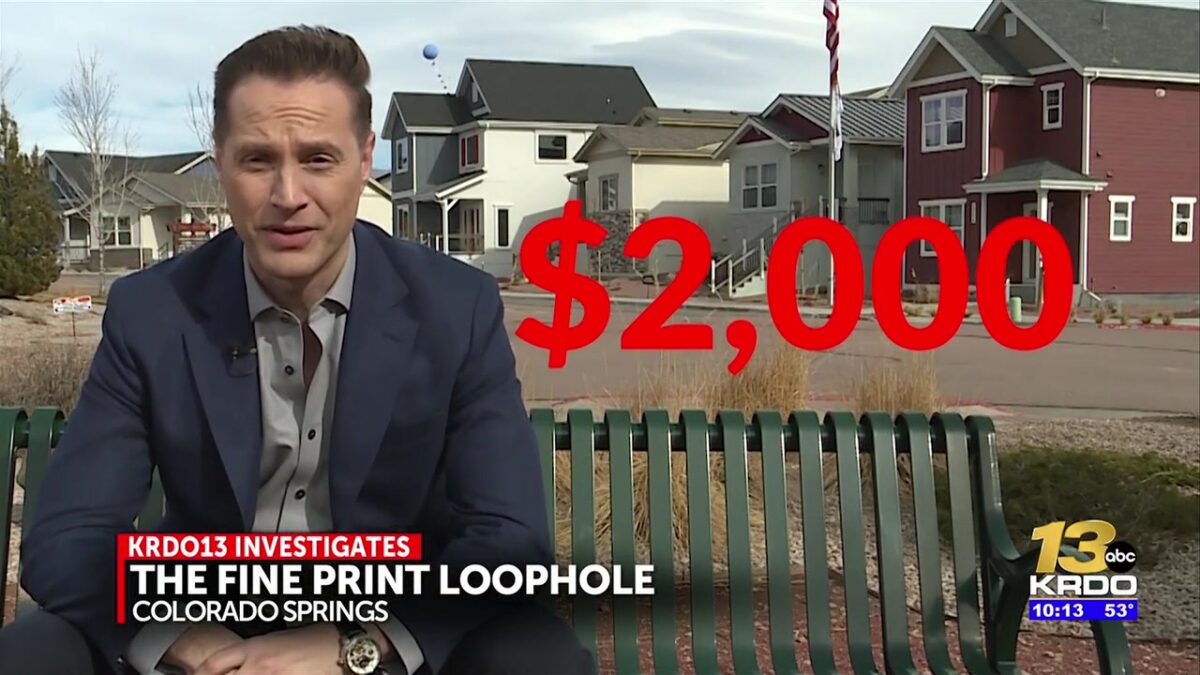
In some cases, that cap is just $2,000 — even if the homeowner purchased much higher coverage.
KRDO13 Investigates found several homeowners in Gold Hill Mesa who ran into the same limitation after last summer’s hailstorm.
KRDO13’s Josh Helmuth discovered the issue because it happened to him as well; a special limit clause was added to his policy without his knowledge, a policy also with Progressive.
 Colorado is a high-risk state for insurers, especially because of hail and wildfire.Source: Insurify
A lawyer says he’s seen it before
When KRDO13 Investigates showed the policy language to Colorado Springs real estate attorney Robert Schifferdecker, he immediately recognized it.
“You act like you’ve seen this before,” said KRDO13’s Helmuth.
“Yes,” he said.
Schifferdecker has spent seven years practicing real estate law and says he reviews insurance policies regularly.
“Unfortunately, I think a lot of insurance companies view it as a way to cut costs,” he said. “They don’t want to pay out these special assessments.”
He says the clause essentially gives insurers predictability when catastrophic damage occurs.
“Because, quite frankly, they know how much they’re going to be on the hook for if a special assessment happens,” said Schifferdecker.
That means even homeowners who buy large amounts of protection may still hit the same cap.
“So I could have signed up for $100,000 in coverage… and still only received $2,000?” asked Helmuth.
“That is very correct,” he replied. “Yes. You are reading this correctly.”
Schifferdecker says he’s seeing broader changes in policies across the insurance industry.
“They’re auto-renewing policies, but instead of raising your premiums, they’re lowering what they’re actually going to cover,” he said.
In other words, shrinkflation – the policy renews automatically, but the protection inside it may quietly change.
Why insurance is changing in Colorado
Colorado has become one of the riskiest states in the country for insurers.
According to the National Oceanic and Atmospheric Administration, the state experienced 76 weather and climate disasters causing more than $1 billion in damage between 1980 and 2024.
That includes:
42 severe storm events
12 wildfires
16 droughts
flooding, freezes and winter storms
 Source: NOAA
The pace of disasters has also accelerated.
From 1980 to 2024, Colorado averaged 1.7 billion-dollar disasters per year. In the last five years, that number jumped to 4.4 per year.
Events like the 2021 Marshall Fire, which destroyed more than 1,000 homes in Boulder County, have reshaped the state’s insurance market.
According to the Colorado Division of Insurance:
Home insurance premiums increased 51 percent from 2019 to 2022
76% of insurers reduced the number of homes they were willing to cover
That consolidation means fewer companies writing policies in Colorado.
And when catastrophic losses happen elsewhere — like hurricanes in Florida or wildfires in California — the financial impact can spread nationwide.
“Most insurance companies operate at a national level,” Schifferdecker explained. “So if there’s a billion-dollar payout in California or Florida, they use the entire country to cover that loss.”
Nationally, insurers paid $79 billion in catastrophe losses in 2023, according to the Insurance Information Institute.
Colorado also ranks:
2nd in the nation for hail claims (more than 380,000 from 2017–2019)
4th highest in home insurance costs
 Source: 2024 Colorado Home Insurance Survey
A challenging market for HOAs
The insurance pressures are particularly intense for homeowner associations.
A consultant report commissioned for Colorado found that HOA premiums have more than doubled in some areas.
The report, by actuarial firm Lewis & Ellis, says the increases are driven by:
wildfire risk
hailstorms
rising reconstruction costs
inflation
and tighter underwriting by insurers
The result has been “significant upheaval” in the HOA insurance market, according to the report.
In some cases, insurers have exited the market entirely or dramatically reduced the number of communities they insure.

Can the loopholes be removed?
KRDO13 Investigates took the issue to Congressman Jeff Crank, who represents Colorado’s 5th District.
“That’s the whole point of a loss assessment rider, right?” Crank said. “If they’re going to sell that, they need to live up to that.”
Crank said the issue may ultimately require state lawmakers to examine.
“Insurance companies are regulated at the state level,” he said. “If this isn’t fair, it needs to be addressed.”
But he also warned that the state faces a balancing act.
“If you over-regulate it, companies may choose not to write policies in that state,” Crank said.
Still, he believes insurance companies have a responsibility to make coverage clearer.
“It’s sad you almost need a lawyer to read your policy before you sign up to get insurance,” he said. “It shouldn’t be that way.”
“It sounds like the situation you’re referring to was a bit deceptive,” he said.
State regulators looking at the issue
Colorado regulators are aware of the concerns.
Since 2019, the Division of Insurance has received more than 200 complaints related to loss assessment disputes.
A state insurance official, speaking anonymously, confirmed the agency is trying to close this special limit loophole so homeowners can get the coverage they expect.
“We are trying to prohibit these endorsements,” said the official over the phone with KRDO13’s Helmuth.
If successful, future policies may no longer include these special limits.
Progressive responds
KRDO13 Investigates reached out to Progressive Insurance for comment, asking several questions, including “how does Progressive justify the policy wording that limits coverage to $2,000 per unit for assessments that result from an HOA master policy deductible, given that catastrophic events affecting HOA properties commonly trigger the association’s deductible?”
In a brief statement, the company simply said:
“We’re committed to serving the Colorado property market and continue to write new homeowners business across the state. For property related policy and coverage questions, we encourage customers to reach out to their local independent agent or contact us directly for assistance.”

How to protect yourself
Experts say there are several steps homeowners can take to avoid surprises in their insurance policies.
Know your HOA’s coverage
Ask your homeowners’ association what the deductible is on the master insurance policy.
Your personal coverage should be high enough to cover a potential assessment.
Check for special limits
Ask your insurance company whether your policy includes special limits on loss assessment claims.
If it does, you may be able to purchase additional coverage to remove the cap.
Review your policy every year
Insurance policies can change at renewal — sometimes without requiring a new signature.
Experts recommend reviewing coverage annually and asking specifically about:
wind and hail coverage
flood coverage
loss assessment coverage
replacement cost for your home
Understand what your HOA will rebuild
Some HOA policies rebuild only the structure itself. That means homeowners may need their own insurance for:
flooring
appliances
cabinets
renovations
personal belongings
Make sure coverage matches home value
If your property value or renovations have increased, your policy limits may need to be updated.
The bottom line
Insurance experts say the biggest mistake homeowners make is assuming their coverage hasn’t changed. But as the insurance market evolves, policies are becoming more complex. That’s why O’Malley says she hopes her story helps other homeowners avoid the same surprise.
“I guess my question is, why can’t people just take care of people?” she said. “Let’s just do better.”
Resources for homeowners
Rocky Mountain Insurance Information Association guide to homeowners insurance
Colorado Division of Insurance consumer resources