Boone County Commission housing plans as study projects 37,000 new homes by 2050

Euphenie Andre
COLUMBIA, Mo. (KMIZ)
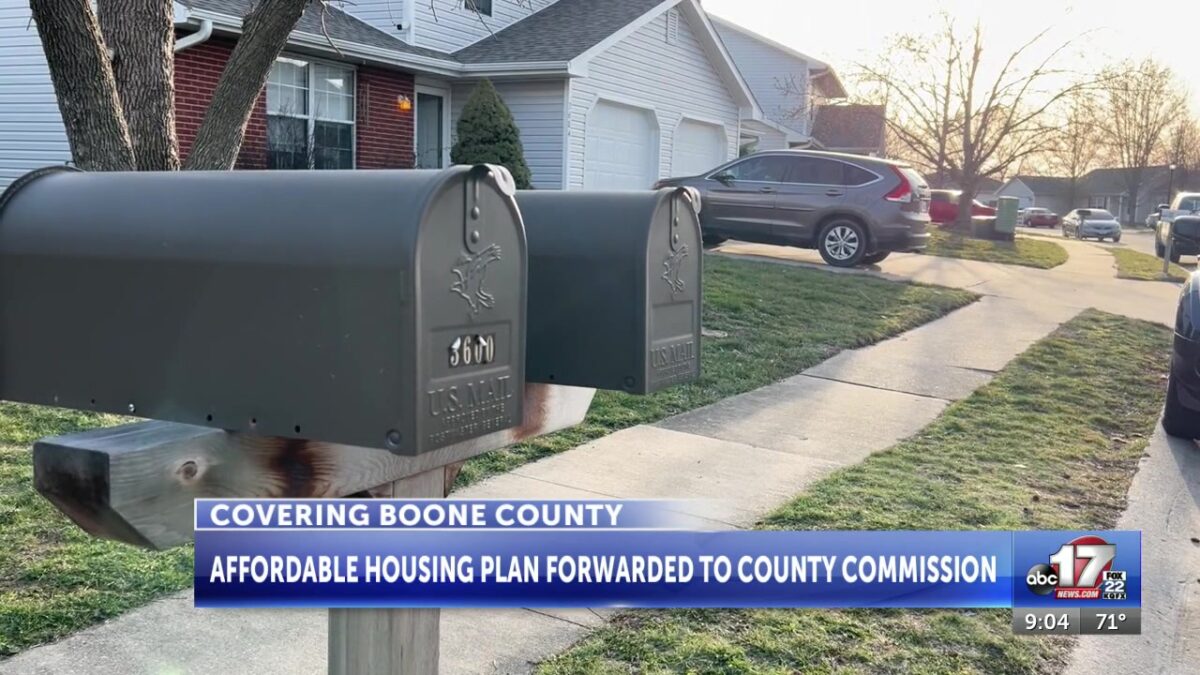
The Boone County Commission voted to move forward with the updated affordable housing plan Thursday following changes made earlier this month.
Bill Florea with Boone County spoke with ABC 17 after the meeting.
“It went great and I expected that it would.” Florea said. “We had worked closely with the Planning and Zoning Commission on this and at or last work session of Mar. 5, when we discussed it more closely, they made some recommendations for some changes.”
The plan now heads to the County Commission at the end of the month for a final decision.
The Government Affairs Committee said it supports the proposed changes as a first step toward addressing the housing shortage in Mid-Missouri. The group’s Board of Directors may take an official position once final drafts are presented to the Columbia City Council and Boone County Commission.
According to a 2024 housing study conducted by Boone County and the City of Columbia, the area could see up to 37,000 new homes built by 2050.
Florea said the study is serving as a guiding policy document as the county moves forward with its affordable housing plan, according to Florea.
The county is currently behind on its housing goals.
“There are targets in the housing study that we’re supposed to meet every year. We just finished our first full year since that housing study was done, and I think we fell short of the targets.” Florea said.
To prepare for that growth, county leaders are considering three different development scenarios.
Scenario No. 1: Maintains current growth trendsThis approach continues the county’s existing development pattern, focusing on new construction in vacant, greenfield and edge-of-city areas. It also reflects the ongoing demand for rural living, particularly among residents seeking homes on five or more acres.
The plan emphasizes preserving agricultural land while maximizing the use of existing infrastructure and avoiding development in areas without access to essential services. A key priority is ensuring sewer and water systems can support growth, especially along the edges of the city.
Scenario No. 2: Prioritizing infill and redevelopmentThis scenario shifts the focus to development within existing city limits, emphasizing redevelopment and the reuse of underutilized properties.
It also encourages higher-density housing and would require changes to both city and county land-use policies. In unincorporated areas, policies would be adjusted to direct more growth into cities. The commission may also consider strategies used in other counties, such as transferring development rights.
Within city limits, policy changes would aim to support infill development and expand higher-density housing options.
Scenario No. 3: Expanding rural growthThis option focuses on increasing development in rural areas around the county. It would allow for smaller residential lot sizes in unincorporated areas and support expanded commercial opportunities, bringing more businesses and services to rural communities.
The study also outlines several key needs that must be addressed to support this housing growth, particularly for working families and long-term residents.
Affordability remains one of the biggest concerns. Officials said rising housing costs and a limited housing supply are pushing middle-income families out of the area, while low-income residents, young adults and first-time homebuyers are struggling to find affordable options.
The report also highlights the impact of student housing. While development continues to meet demand from University of Missouri students, there is a growing gap in housing options for full-time residents. County leaders claim there is a need for the university to take a more active role in addressing student housing.
A shortage of skilled labor is another issue slowing progress. Growth in industries like manufacturing and construction is being limited by a lack of workers, which in turn affects housing development and the local economy.
The study also points to a need for more diverse housing options. There is a gap between single-family homes and large apartment complexes, with limited availability of “middle-ground” housing such as townhomes, duplexes, and condos.
Some developers have attempted to introduce these types of housing in Columbia, but proposals have faced pushback from residents concerned about infrastructure and increased traffic.
Rising costs and infrastructure concerns
According to CNN, The cost of land, labor, and borrowing continues to rise, making housing less affordable. The average 30-year fixed mortgage rate recently climbed to 6.22%, the highest level since early December, after briefly dipping below 6% earlier this year.
Funding for affordable housing projects is also limited, according to the study.
Infrastructure remains another major barrier. Expanding housing options often requires costly upgrades to water and sewer systems.
Community members also raised concerns about sewer capacity, outdated regulations, and ongoing tensions between the city and county. While no specific regulatory barriers were identified, experts said long-term planning and investment in sewer infrastructure will be critical.
Limited sewer capacity is already impacting the ability to build accessory dwelling units, add duplexes and triplexes, and move forward with infill projects.
Transportation limitations impact access
Public transportation is also affecting housing access. Residents who rely on transit often struggle to reach jobs and essential services.
The study found that bus routes do not always align with job locations, and long wait times sometimes up to 90 minutes make public transportation an impractical option for many.