District 30 Rematch: Young Challenges Fuhriman Following Four-Vote Defeat

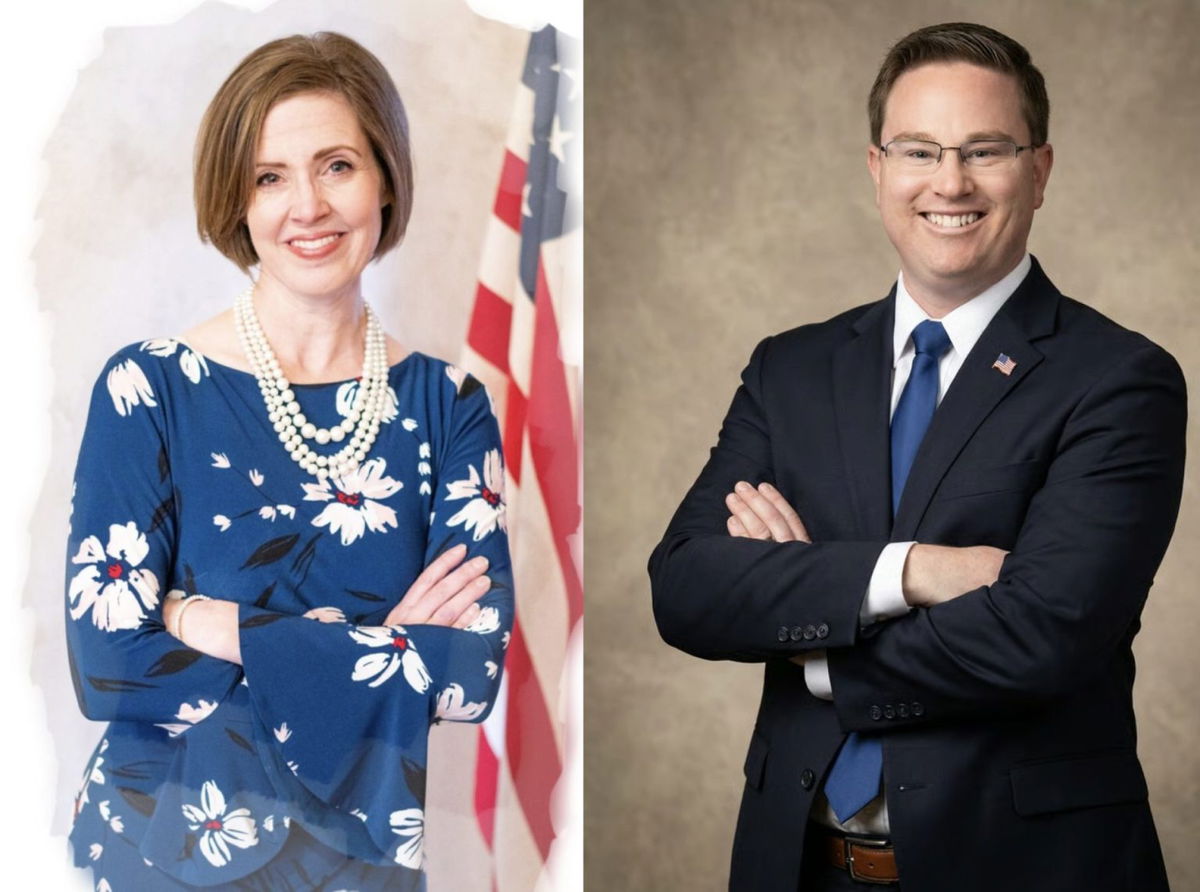
Sean Dolan
Originally posted on IdahoEdNews.org on March 18, 2026
By: Sean Dolan
Editor’s note: This story is part of a series of candidate profiles Idaho Education News will publish ahead of the May 19 primary election. We’re highlighting competitive races impacting education policy. Click here to see our Elections webpage featuring a list of all candidates and much more. Click here to see your voter information. Follow our elections blog for breaking news and insights.
BLACKFOOT, Idaho — A former legislator who sponsored a host of culture war bills on sex, gender and critical race theory wants a rematch in May after she was narrowly ousted two years ago in a Republican primary.
Julianne Young, first elected in 2018, served three terms in the House before freshman Rep. Ben Fuhriman, R-Shelley, won the 2024 primary by just four votes. They will face off again May 19 for District 30 House Seat B. The winner will face Democrat Bree Buckingham in November.
Fuhriman and Young have different opinions on the role government should play in hot-button social issues in Idaho.
“I think that government shapes culture, and culture shapes government,” Young told EdNews. “We really can’t afford to ignore these issues that impact people’s everyday lives in such personal ways.”
Fuhriman said that’s not what he’s heard from his constituents in the large, rural eastern Idaho district encompassing Butte and Bingham counties and the Fort Hall Reservation.
“For the vast majority of the people I talk to, it’s kind of like, ‘We’ve already hashed this stuff out. We’re ready to move on. We’re ready to live our lives and let other people live their lives,’” Fuhriman told EdNews.
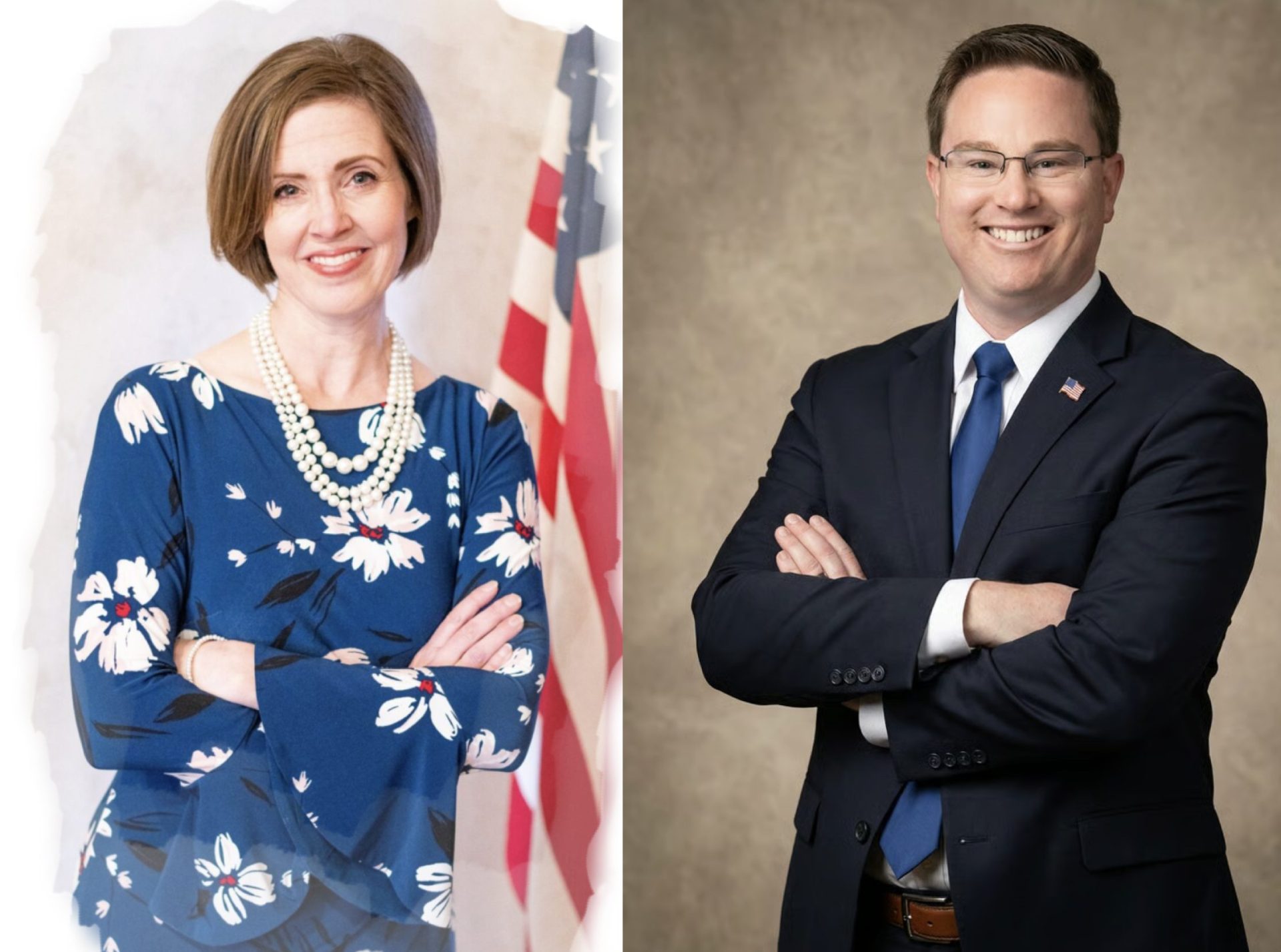 Julianne Young and Ben Fuhriman (campaign photos)
Young said she decided to run this year not because of who she is running against but because of her experiences and what she believes can be accomplished.
“I definitely will continue to advocate for children, for parents, for families,” Young said.
Fuhriman said he decided to run in 2024 because Young supported legislation targeting materials in libraries. His mother-in-law was the local librarian at the time.
“[Young] just ran off and started saying our library has porn in it, and the librarian should be punished,” Fuhriman said. “It just was a few steps too far for me. So, yeah, I decided it was time to do something about it.”
EdNews sent questionnaires to Young, Fuhriman and other legislative candidates we’ll profile. We’ll update this and other stories as we receive them.
Incumbent: Ben Fuhriman
Occupation: Financial planner
History of elected service: One term in Idaho House. Elected in 2024.
Campaign website: fuhrimanforidaho.com
Fuhriman wouldn’t wish a recount on his worst enemy.
It took a month for both counties in District 30 to complete their recounts after the May 2024 primary, which left him with a slim win over Young.
“It was one of the most stressful times of my life,” he said.
Now at the end of his second legislative session, Fuhriman has sponsored three pieces of legislation that target special education funding.
Last year he carried House Bill 291, which would have created a $3 million fund for high-needs special education students. It narrowly passed the House 36-34, but failed in the Senate 17-18.
This year he is co-sponsoring a similar bill, Senate Bill 1288, that aims to create a $5 million fund for the same purpose. It passed 22-12 in the Senate and was referred to the House on Feb. 27.
Fuhriman said kids with special needs offer a lot of value, and keeping them in classrooms is good for society. Parents deserve to have their kids treated with dignity, he said, but that can be expensive.
“I don’t want to go back to the ’50s and ’60s, where we take people who are different than us and we throw them in an institution and just forget about them,” Fuhriman said.
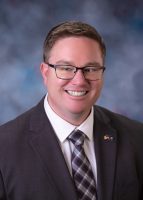
 Ben Fuhriman with his wife. (Photo courtesy Fuhriman for Idaho)
He was also the floor sponsor this year of House Joint Memorial 11, which calls on the U.S. Congress to fulfill its obligation to fully fund the Individuals with Disabilities Education Act.
“The expectation was always 40%,” he said. “We’re currently receiving around 12% of our total funding needs from the federal government.”
Fuhriman, a certified financial planner, last year opposed HB 93, which created the $50 million Parental Choice Tax Credit. He said there are no private schools in his district, so the tax credit is essentially sending money from his constituents to folks in Ada County.
He said he wouldn’t have a problem subsidizing private schools if the state fully funded public schools, but districts are behind in facility funding, teachers are underpaid and it’s hard to pass bonds.
“For me, it was more about priorities than it was about whether or not we should be subsidizing private schools at all,” he said.
Earlier this month, Fuhriman voted against HB 745, which would prohibit school districts from automatically deducting union dues from paychecks. He said the bill was “deceitful” in how it targeted teachers’ unions.
“I fought that bill in committee and I fought it on the floor,” he said.
As a parent of kids in public school, he said he wants teachers to be comfortable and treated with respect.
“I really felt like it was a deliberate target at teachers,” Fuhriman said. “I’m sick and tired of us treating our teachers like they’re second-rate citizens.”
Fundraising
Ben Fuhriman
Beginning cash balance: $15,989
Total contributions: $2,308
Total expenditures: $1,267
Ending cash balance: $17,031
Julianne Young
Beginning cash balance: $3,440
Total contributions: $8,640
Total expenditures: $5,595
Ending cash balance: $6,484
Source: Idaho Sunshine, as of March 17
On social issue bills, Fuhriman last year voted in support of HB 41 to ban certain flags and banners in schools, HB 264 on bathroom usage in certain state facilities and SB 1198 to prohibit diversity, equity and inclusion in higher education.
In an interview, he seemed to distance himself from these votes, saying he pays attention to social bills but does not focus on them.
“What I wish people understood is you sit there and you get a ‘Yes’ or you get a ‘No.’ You don’t get an in-between, or a, ‘Hey, I support this part, but I don’t support that part,’” he said. “And so oftentimes you have to hold your nose and you have to simply vote on something because it’s got a little more good than bad.”
In deciding how to place votes, Fuhriman said he has three main criteria: his constituents, the Constitution and his conscience.
“I’m not here to make headlines, I’m not here to make waves,” he said. “I’m not here to change the culture. That’s not my goal. My goal is to solve real problems and help my district.”

Challenger: Julianne Young
Occupation: Self-employed
History of elected service: Three terms in Idaho House. Elected 2018, 2020 and 2022.
Campaign website: youngforidahohouse.com
Young wanted to be a teacher when she was growing up, like her mom.
She studied education at Idaho State University and had several kids by the time she graduated, so she decided to homeschool. She is now a mother of 10 children, each of whom she taught at one point. Her three youngest attend a private microschool.
Due to her family’s experiences outside of public education, she said people often think she must be “on the other team,” but she doesn’t feel that way.
“I want every child to have a positive educational experience, including our public school students,” she said.
Looking back on her three terms in the House, she said she is most proud of her work on mental health access, improving adoptee access to birth records and on lots of cultural issues, such as defining male and female.
In 2024, she sponsored HB 421, which declared in human beings there are only two sexes: male and female. Every individual is either male or female, and that sex can be observed at birth.
Also that year she sponsored HB 668, which prohibits use of public funds for gender transition procedures. Gov. Brad Little signed both bills into law.
Young said there is a struggle in society over the question of what is the nature of a person: Is biological sex an inherent characteristic, or is it a preference or feeling? These are moral and ethical questions, she said, that are closely tied to people’s worldview and the nature of God.
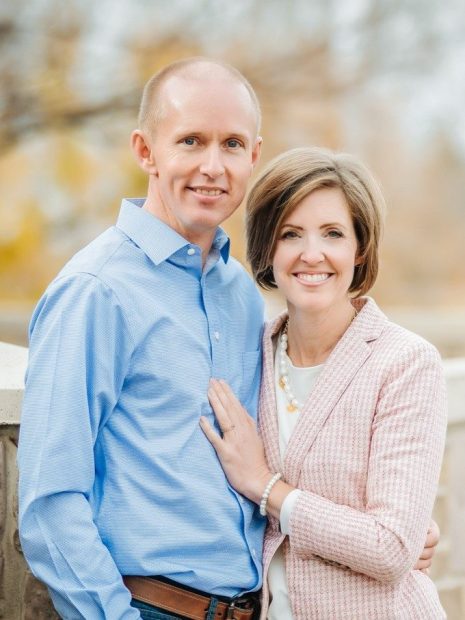 Julianne Young and her husband. (Photo courtesy of Young For Idaho House)
“When the state is using taxpayer dollars to do things that people find morally offensive, that offend their conscience, then there’s a question about whether that is an appropriate role of government,” Young said.
She declined to comment on bills this session targeting which bathrooms transgender people can use, but as a general principle she said she feels strongly that as a woman, she should not be confronted with a male in a private space.
“When you erode the definition of male and female, you also erode those protections,” she said.
In her time as a legislator, Young also focused on protecting children from “harmful” materials in libraries and on the internet.
She sponsored HB 498 in 2024, which established liability for adult websites that allow access to minors. The law led some adult websites to block access to all users in Idaho. Young said many lives have been negatively impacted by pornography addiction and exposure.
“When that exposure happens at a young age, it can really affect a child’s development,” she said.
In 2023, she supported HB 314, which would have required libraries and schools to limit children’s access to obscene or harmful material. Gov. Brad Little vetoed the bill. Young wrote a 2024 op-ed in the Idaho State Journal titled, “Porn should not be available to kids in libraries.”
In addition to questions on gender and sex, Young also addressed race.
Candidate scorecards
Idaho Freedom Foundation, “Freedom Index”
Fuhriman: 53.4% Freedom, 12.5% Spending
Young: 86% Freedom, 57.2% Spending
American Civil Liberties Union of Idaho, Legislative Scorecards
Fuhriman: 20% (2025 LGBTQ+ Rights Scorecard)
Young: 0% (2024 Overall Scorecard)
In 2021, Young sponsored HB 337, which prohibits critical race theory in public schools. She said people feel strongly that discrimination is wrong.
“It’s the idea that because you are white, that you are inherently racist and that you need to apologize,” she said. “That somehow, because of your race, you’re assumed to have certain privileges and assumed to be using those privileges to oppress and harm others, and that’s really what people find discriminatory and wrong.”
On school choice, she said the $50 million Parental Choice Tax Credit was a “strong, accountable” way to offer school choice in Idaho.
She said she supports tax credits, which require verifiable expenses, but does not support vouchers, which provide money up front. Parents are held accountable, she said, by signing a tax form and being liable.
Opponents of HB 93 say there is no accountability in what private schools must provide, but Young said parents provide the accountability in choosing where to send their kids.
Young also addressed political action committees, which have played an increasing role in Idaho’s elections.
In the 2024 primary, Young became the target of a federal PAC based in Virginia called “Make Liberty Win.” The PAC receives funding from the libertarian Young Americans for Liberty and typically supports hardline candidates. Make Liberty Win spent $8,639 to oppose Young two years ago.
“I could not say for certain why they opposed me, but what I can say for certain is that the information they distributed was completely false,” Young said.
Young said she considers herself a constitutional conservative, but that PAC is more libertarian.
No PACs have yet reported spending money this year to support or oppose legislative candidates, but that will soon change as campaigning picks up before the May 19 primary.
“I don’t see PACs going away,” Young said.