Update: Seriously injured, rescued bald eagle – the third in weeks – is doing well after a week of care at Think Wild

Barney Lerten
BEND, Ore. (KTVZ) — Think Wild Central Oregon is caring for its third seriously injured bald eagle already this year. But while the first two didn’t survive 24 hours after arriving at the Bend wildlife hospital, this bald eagle – America’s official symbol – has made it through a week of care and is doing well.
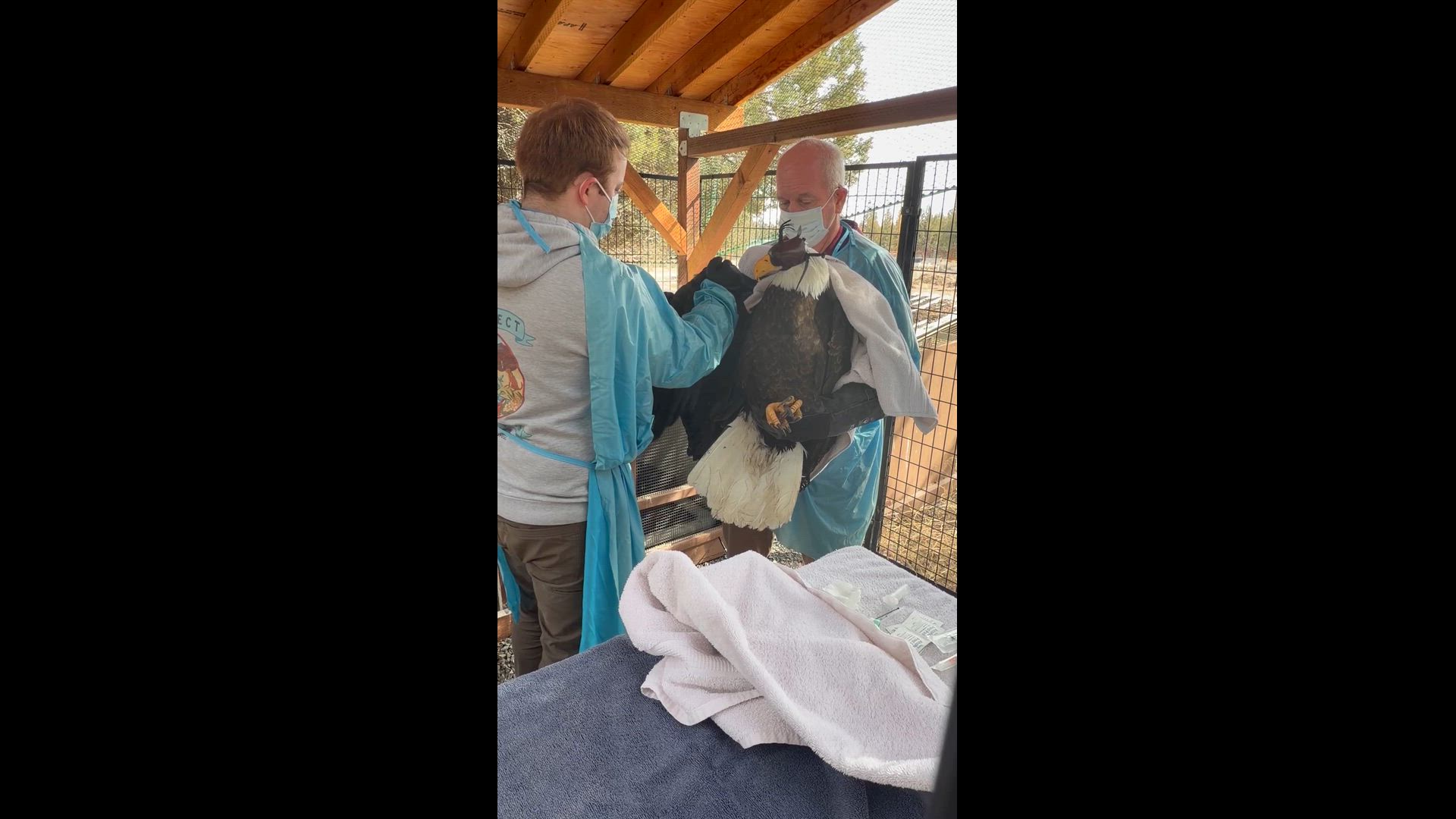
The adult female bald eagle was admitted to Think Wild on Monday, March 9, after being spotted on the ground and lethargic near a roadway near Prineville, officials said.
Think Wild volunteer Gary Lauder rescued and brought the eagle to Bend, where staff performed an intake exam under strict quarantine protocols.


 Think Wild has been caring for an injured bald eagle found near Prineville (Photos: Think Wild Central Oregon)
In a newsletter to supporters, Think Wild said the bald eagle’s prognosis was “extremely guarded, due to wing and bill trauma and neurological symptoms.”
But on Friday, Think Wild Development and Communications Manager Molly Honea told KTVZ News that she is the first of the three rescued eagles to survive their first 24 hours in care.
And even better news came in an update to KTVZ News on Monday.
“The bald eagle is still with us – a promising sign!” Honnea said.
“She is eating and casting well (like owls, most raptors cast bones and fur in pellets instead of digesting them), and we have recheck radiographs scheduled for Wednesday ,which will help inform her continued care.”
Honnea told us Friday that this bald eagle “was found on the ground in a pasture after being seen crawling through barbed wire and unable to fly.”
“On intake, she showed signs of trauma, including a drooping left wing, swelling and popping in the left shoulder, raspy breathing, and injuries to the bill and mouth,” Honea said.
She was treated with fluids, pain medication, anti-inflammatories and antifungal medication, and her wing was wrapped to stabilize the suspected shoulder injury.
Radiographs did not show a clear fracture, but indicated possible trauma and pulmonary contusions. Honnea said she is being closely monitored, supported with assisted feeding, and will have her shoulder rechecked under sedation, as she stabilizes.
“We suspect these injuries were caused by a car strike, since the eagle was first seen near a rural road between Prineville and Madras,” Honnea said.
“We’ve ruled out Avian Influenza (HPAI) as a cause for her neurologic symptoms, since there are obvious signs of trauma,” she added.