Women continue breaking barriers in science, but work remains to close gender gap

Tracee Tuesday
BEND, Ore. (KTVZ) — Each February, the world celebrates the International Day of Women and Girls in Science — a time to recognize the trailblazers and inspire the next generation of scientists. While more women are studying and working in scientific fields than ever before, men continue to outnumber them in many areas.
According to the Pew Research Center, women remain underrepresented in disciplines such as engineering, mechanics, astronomy, and physics. However, they’re seeing greater success in health and life sciences, including healthcare, psychology, and veterinary medicine.
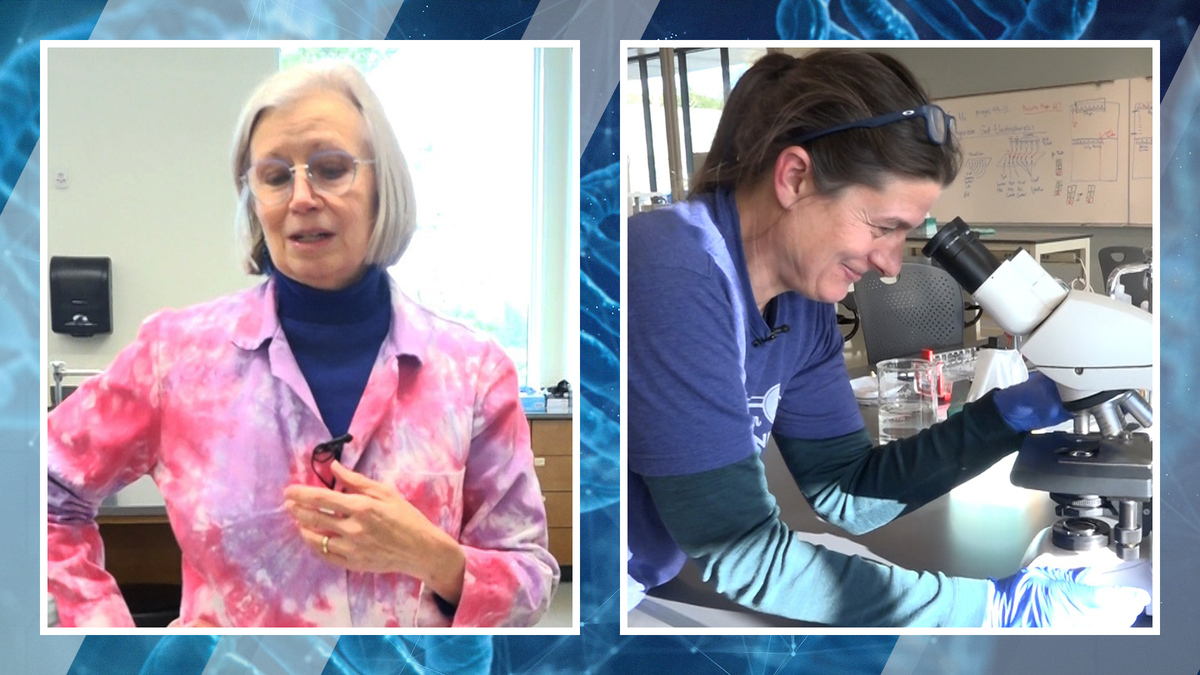
At Oregon State University–Cascades, chemistry instructor Dr. Maureen Johnson said beginning her career wasn’t easy. She recalls being one of the only women in her field — and one of the few in leadership.
“When I was first in industry, being a woman in engineering was a very lonely place,” Johnson said. “Even after a while, I really felt like it was something I couldn’t tolerate anymore.”
Central Oregon Community College biology professor Sarah Fuller said her passion for science started at a young age but came with hesitation.
“I remember being in the sixth‑grade science fair and having mixed messages about pursuing science,” Fuller said. “I loved it, but I was a little scared about whether I would fit in.”
Fuller noted that while the gender gap has narrowed, the imbalance persists in which science paths women choose. Men continue to dominate engineering and fieldwork roles, while women are more often found in education and healthcare. In her current microbiology class, she said, every student enrolled is a woman — a reflection of lingering career trends.
Johnson said perseverance was key to finding her place in science, and she hopes more young women will be encouraged to push forward.
“You have to make your own way and be yourself,” she said. “The more women that are in industry and leadership positions, the easier it will be. There just need to be more of us — that’s all.”
Both professors agree that mentorship and visibility make a difference. The more young women see others thriving in science, the more likely they are to believe they belong there too.