Missouri man pulls mammoth femur from Missouri waterway

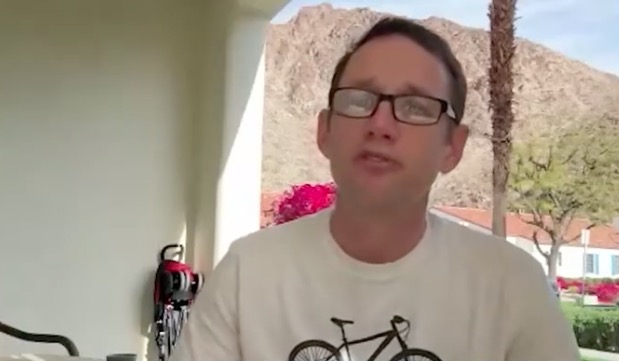
By Eric Graves
Click here for updates on this story
KANSAS CITY, Missouri (KMBC) — It was a chilly February day when Jason Howery spotted what he thought could be the biggest discovery of his life in a northwest Missouri waterway.
Howery, a self-described independent researcher in archaeology and anthropology, has spent two decades combing Missouri for ancient remains thousands of years old.
“I’ve spent the last 20 years of my life searching for the first North American inhabitants,” Howery said.
On Feb. 13, Howery was exploring an area in northwest Missouri where he had already found pieces he believed to be the remains of mammoth and mastodon.
In about shin-deep water, Howery spotted what he believed to be the femur of a Colombian Mammoth.
“I thought, ‘Man, that really looks like ice age bone, that looks like what I’m looking for,'” Howery said. “But the water was so cold, there was ice on the edge and ice floating down, that I didn’t really want to get in the water right then.”
Howery said after searching around the site for half an hour, he took off his shoes and stepped into the cold water to try to confirm his suspicions. He said he knew as soon as he touched it.
“As soon as you feel ice age bone, especially when it’s still wet, it has this texture that is sticky and glassy at the same time,” Howery said. “And it’s unlike anything else in the world that I’ve ever felt.”
Howery struggled to pull it from the lake. The bone itself weighs 92 pounds.
“When you’re looking at that type of staining that’s on there, and the mineralization of it, it’s definitely an authentic piece that hasn’t been seen in 10,000-plus-years,” Howery said.
Howery considers this find a manifestation of the work throughout his life.
“It’s all of the hard work coming together over 20 years of doing the research, doing the analysis, doing the fieldwork, and being there and being the first person to, you know, have permission to go in and find the right places to look,” Howery said.
The femur joins his extensive collection of artifacts already found from across Missouri.
Howery is now raising money to preserve the mammoth femur. He said the next steps are a CT scan and getting the bone radiocarbon dated.
He also hopes to use the money to help inspire the next generation through his Paleo Outreach Program.
“To inspire them into, first of all, getting out, putting your phone down, get out into nature, get reconnected,” Howery said. “Because you never know, there’s so much history out here that is all around us.”
Please note: This story was provided to CNN Wire by an affiliate and does not contain original CNN reporting. This content carries a strict local market embargo. If you share the same market as the contributor of this article, you may not use it on any platform.