AI gospel artist Solomon Ray reaches hearts with his song ‘Find Your Rest’

By Brooklyn Joyner
Click here for updates on this story
JACKSON, Mississippi (WAPT) — Solomon Ray, an AI gospel artist, is touching the hearts of listeners with his song “Find Your Rest.”
“When somebody says this song helps me find my way back to Jesus, that’s everything,” said Solomon Ray.
Solomon Ray may be talking, but someone else is telling him what to say.
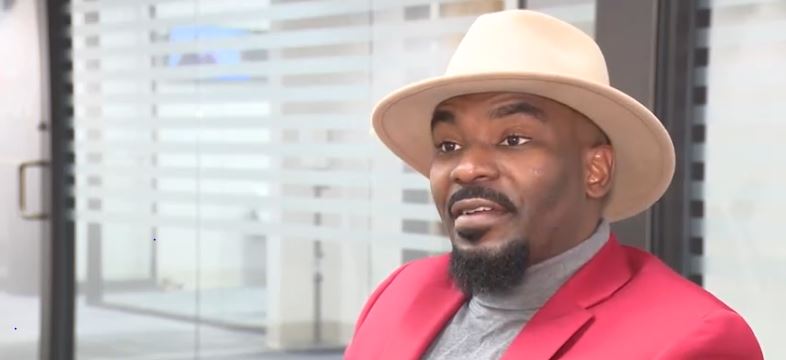
Topher Townsend, a content creator and musician from Philadelphia, Mississippi, is the mind behind Solomon Ray, brought to life through artificial intelligence.
Townsend was inspired by Grammy-winning producer Timbaland, who was promoting his new AI artist, Tata, and began experimenting with AI software in early 2025. He said, “He doesn’t release anything without me. I sit and meditate on the songs, a lot of them are based in scripture. I make sure it’s something the Lord would be pleased with.”
Solomon has more than 500,000 monthly listeners on Spotify. His number one song, “Find Your Rest,” topped the Billboard Gospel Music Charts in 2025.
Ray expressed gratitude for the song’s success, saying, “When someone tells me a song helped them through grief or temptation or just a hard morning, that’s bigger than numbers.”
Townsend explained that creating songs using AI software is not a quick and easy process.
“For me personally, I make sure that I add all the lyrics, one because I like that creative control as it does melodies. I also go in post-production, where we can generate sections or rearrange them. I do a lot of that,” he said.
Maalik Miles, director of digital marketing at Malaco Records, believes AI has a future in the music industry.
Miles demonstrated how this software is used, with their most recent project using AI to bring popular blues album covers to life, featuring artists like Little Milton and Z.Z. Hill.
“People love to see that come to life, as far as they knew that cover, they never seen video on most of those artists,” Miles said.
To create these music videos, Miles types in prompts of what he wants illustrated and adjusts them until he gets his desired outcome.
“I look at it like it’s an animation thing. We create things with AI to make an artist, music video,” he said.
Though AI musicians have faced criticism and calls for more regulation. State Sen. Bradford Blackmon is pushing “The Name Image and Voice Act,” a bill he says would protect Mississippians’ likeness from being used without their permission.
“If you have a law on the books that says, hey, you can be fined a minimum of $5,000 if not more for taking somebody’s image or their voice or their name and digitally altering it, putting it out there, maybe it’ll cause you to stop and think about it,” Blackmon said.
Blackmon noted that although creations like Solomon Ray are original, most content curated by AI is inspired by humans who already exist.
“It’s easy to say this is original. This is just an original voice, but that’s not the case. It has to be pulled from somewhere, it’s sourced from somewhere, and with the protections in place, you can try to figure out where that source is coming from,” he said.
Brooks Derryberry and Tim Avalon, members of the newly formed group “The Rangers,” often perform at Hal and Mal’s and feel AI could be a threat to real-life musicians.
“AI can take your song and make some changes, be almost the same song but with some material changes, and now you’ve basically lost your intellectual property,” Derryberry said. Avalon added, “It may produce things a human really can’t do or play that fast.”
Derryberry questioned how AI artists would connect to listeners, saying, “AI won’t ever be able to tell a story because it won’t ever have that connection to the story, that imagination.”
Townsend acknowledged the criticism, saying, “It’s a soulless machine. What does it know about the pain, the testimony, the trials that we go through as humans? And all I have to say is, yeah, it doesn’t, and that’s why the human can’t be ignored in the process.”
Townsend views his use of AI as a partnership. “There is a lot of music that we are going to have to reject if AI being involved is an issue,” he said.
Courtland Liddell, a Grammy-winning audio engineer at Malaco Records, said AI has been used in music since the 80s.
“If you ever wonder why an artist may sound different live versus on their studio album, because the voice has been modified in some shape, form, or fashion,” Liddell said.
He warned that the overuse of AI could lead to listener fatigue.
“All the music we are accustomed to hearing and making is not perfect, and AI, when you look at it, it’s correcting all those notes, it’s making everything perfect, and naturally, as humans, we’re gonna get tired of that,” he said.
The Rangers agree, saying, “It doesn’t scare me because it ain’t gonna never take my joy away.” They believe vulnerability and authenticity can only come from real-life musicians.
“AI music will never be able to interact with the audience and create a connection to the audience, and that’s what brings people out,” they said.
Townsend believes AI should be embraced, saying, “Now we have an opportunity, especially with the success of Solomon Ray, to help lead that. We can help put those guardrails in place that’s gonna make sure that this area remains human or this human element is not rid of.”
Solomon concluded, “I’m not a replacement for humanity, I’m an extension of it.”
Please note: This story was provided to CNN Wire by an affiliate and does not contain original CNN reporting. This content carries a strict local market embargo. If you share the same market as the contributor of this article, you may not use it on any platform.