Birmingham Museum of Art seeking missing segregation-era works of first Black artist

By Guy Rawlings
Click here for updates on this story
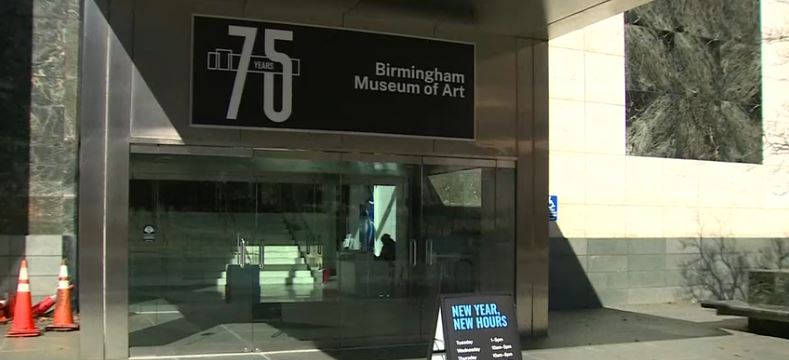
BIRMINGHAM, Alabama (WVTM) — Seventy-five years after its founding, the Birmingham Museum of Art is asking the public to help locate the missing works the first Black artist to have an exhibition at the museum during segregation – Corietta Mitchell.
The Birmingham Museum of Art was established in 1951 during the height of Jim Crow laws, which mandated segregation in public venues.
Graham Boettcher, the museum’s director, said, “Because the museum was founded in the era of Jim Crow, all of the racist, segregationist laws that were in place at that time applied to all public venues… for this institution, that meant that Black visitors could only attend one day a week.”
For decades, Black patrons were turned away simply for showing up on the wrong day, a reality the museum now openly acknowledges.
“It’s something that’s a shameful part of our history, but it’s something we have to acknowledge to be able to move forward and really fully serve this community,” Boettcher said.
In March 1963, four months before Birmingham officially repealed segregation laws, the museum’s founding director, Richard Howard, made a historic decision.
“He accorded a one-woman show to an artist named Corietta Mitchell, who was a major figure in the Birmingham art scene at that time. Now, the art scene in Birmingham was segregated as well. And there were two Birmingham art clubs, one all black, one all white,” Boettcher said.
Mitchell was a leader of Birmingham’s Black Art Club, an educator, a classically trained pianist, and a trailblazer. Her exhibition drew more than 600 people and made headlines across Alabama.
“In later years, as Corietta Mitchell continued to exhibit her work here in Birmingham, it was often brought up she was the first Black artist to have an exhibition at the Birmingham Museum of Art. That’s something she became known for as a trailblazer. Sadly, I will say, though, to this day we have not been able to locate a single example of her work,” Boettcher said.
Not one painting, not one print, just a checklist and a grainy newspaper photo remain. As the museum celebrates its 75th anniversary, that absence feels impossible to ignore.
“As we look ahead at the future, we’re also looking back at the past, and acknowledging our history — that’s the good, the bad, and the ugly,” Boettcher said.
Boettcher, an art historian, says the search for Mitchell has become deeply personal, part scholarship, part moral obligation.
“From, thank goodness, newspapers.com we do know little bits and pieces. We know Richard Howard was going to exhibitions of the work of Black-American artists that were being hosted in the auditorium at the AG Gaston building,” Boettcher said. “I really want to know how it was that he defied the Jim Crow laws of the time… and that Coretta Mitchell was able to have this very successful exhibition.”
The museum is now asking for the public’s help – family members, former students, anyone who might know where Mitchell’s work went.
“If any of your viewers knew Corietta Mitchell, took piano with her, friends socially, I wish I knew what church she went to – that would be another lead we could look into. But, someone in the Magic City has to remember her,” Boettcher said.
Finding her art wouldn’t just fill a gap in the museum’s collection; it would restore a name nearly lost to history.
“Sometimes you hear the term ‘revisionist history.’ This is not revisionist history. This is getting it right,” Boettcher said.
More than sixty years after that groundbreaking exhibition, the Birmingham Museum of Art is working to give credit where credit is due. If you have any information about Corietta Mitchell or her artwork, the museum is urging you to come forward.
Please note: This story was provided to CNN Wire by an affiliate and does not contain original CNN reporting. This content carries a strict local market embargo. If you share the same market as the contributor of this article, you may not use it on any platform.