Plane makes emergency landing after striking multiple deer during takeoff at Florida airport

By Rachael Perry
Click here for updates on this story
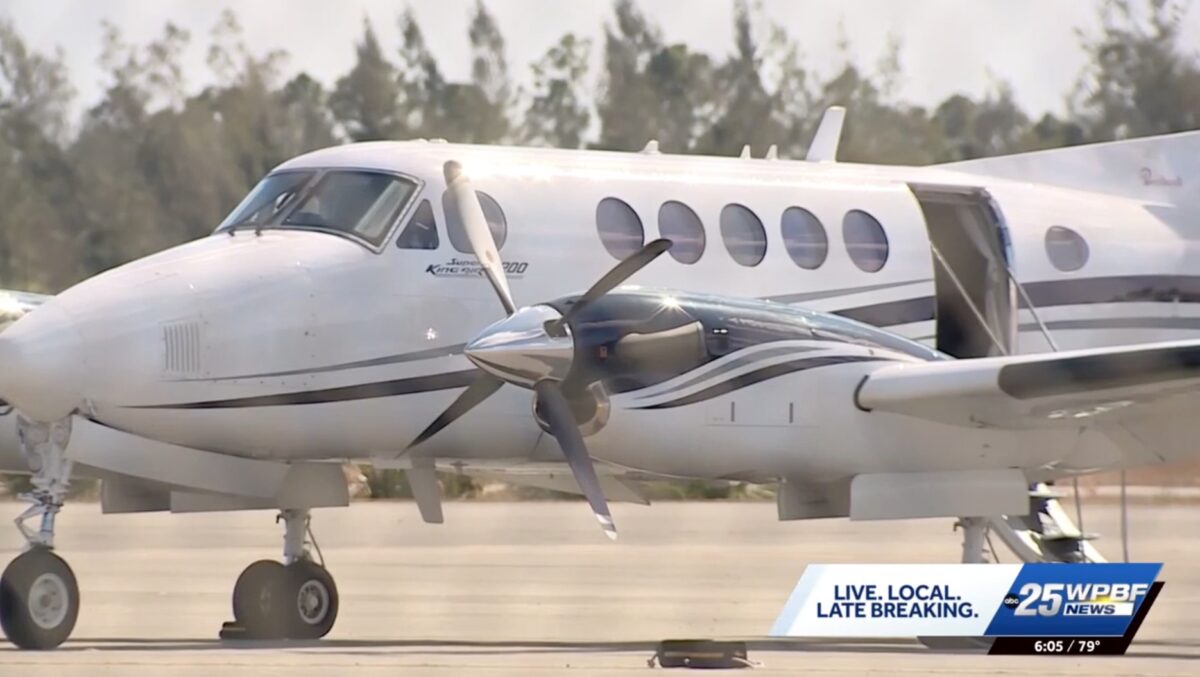
WEST PALM BEACH, Florida (WPBF) — A private jet was forced to make an emergency landing after striking multiple deer during takeoff.
It happened Tuesday evening at North Palm Beach County Aviation Airport. According to the Federal Aviation Administration, the plane struck several deer while taking off from the airport. The pilot eventually landed safely at Palm Beach International Airport, where first responders were staged. The FAA is now investigating the crash.
WPBF 25 News obtained the dispatch audio from the incident, where one person can be heard saying the plane had minor damage but would need to be towed off the airfield.
No injuries were reported.
The FAA maintains a database where it records each collision between aircraft and wildlife, more commonly referred to as wildlife strikes.
Their data shows from 1990 to 2024, 656 species of birds, 57 species of terrestrial mammals, 52 species of bats, and 45 species of reptiles were identified as struck by an aircraft. According to the FAA, deer and coyotes are the terrestrial mammals with the most damaging strikes.
The FAA data shows the number of damaging strikes has declined over the years.
WPBF 25 News spoke with a local pilot, Michael Leighton, to better understand how rare these incidents are.
“It is an extremely, extremely rare event, like getting hit by lightning or getting bit by a shark. It’s not something that happens. You could fly your whole life, your entire life. I’ve got 16,000 flight hours, that’s two full years off the surface of the Earth, and I’ve never hit an animal with an airplane. Can it happen? Sure. Is it likely to happen? Probably not,” Leighton said.
Leighton said airports do a good job of keeping wildlife off the runways, but when they do get inside, he said, oftentimes it’s safer for a pilot to hit the animal.
“Clearly, you don’t want to do anything that’s going to cause you to crash. Sometimes it’s better to hit the animal and not be in the air when you do it, than to try and lift the plane off early, for example, to miss it, and then create a flight hazard to yourself because the plane wasn’t ready to fly,” he said.
As a flight instructor, he said he teaches his students that their safety is the priority.
“I tell my students, look, whatever you hit, whether it’s a bird or deer, it may damage the plane. I don’t care. We can fix the plane. I just don’t want you to get hurt,” Leighton said.
He said that after a certain speed, it’s nearly impossible for a plane to safely avoid hitting an animal.
“You’re not able to swerve left or right like you can with a car. With an airplane, your range of motion is much smaller because the plane only has three wheels, so it’s not made for that. It’s not made to turn quickly at high speed on the ground,” Leighton said.
However, when it’s safe, Leighton said he teaches his students to go around.
“It’s a very rare event, and it’s almost impossible to train for. We routinely teach that if there’s a creature on the runway while we’re approaching, we go around. When I’m out with my students, for example, and I want them to execute a go-around, I’ll say, Oh, cow on the runway, go around. It could be a cow or another airplane or a coyote or whatever, but the point is wildlife on the runway, we go around,” he said.
According to the FAA, from 1990 through 2024, they received reports of 88 aircraft destroyed or damaged beyond repair due to wildlife strikes. Their data shows terrestrial mammals, primarily white-tailed deer, were responsible for about 40 percent of the incidents.
Please note: This story was provided to CNN Wire by an affiliate and does not contain original CNN reporting. This content carries a strict local market embargo. If you share the same market as the contributor of this article, you may not use it on any platform.