Inside a high-tech sawmill powering the state’s forest economy

By Scott McDonnell
Click here for updates on this story
ENFIELD, Maine (WMTW) — “Everything you see in back of us here is new,” said Jason Brochu of Pleasant River Lumber.
Between this mill in Enfield and another in Dover-Foxcroft, Pleasant River Lumber produces about 130 million board feet of lumber each year. The operation employs around 300 Mainers with jobs tied to logging, trucking, cabinet-making and log home businesses.
Reaching that level of production required a major investment.
“Since 2018, we’ve put in about 100 now, probably $80 million on this site alone,” said Chris Brochu of Pleasant River Lumber.
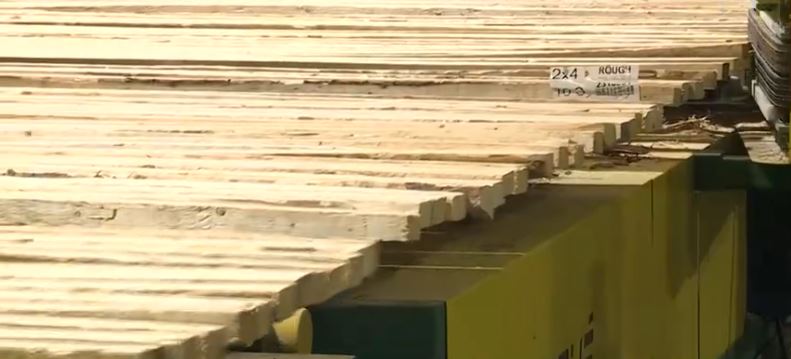
Inside the mill, the results are hard to miss. Advanced technology now drives nearly every step of the process.
“There’s a machine control, there’s computers, there’s cameras that are, that are basically taking visual images,” said Burley Higgins of Pleasant River Lumber.
Every single board is analyzed, measured and mapped down to the last knot.
“Right now, we’re running at approximately 100 boards per minute,” Higgins said.
The mill produces enough lumber to build roughly two houses every hour. Precision is key in an industry where margins matter.
Mills like this are a major driver of Maine’s forest products industry, which contributed $8.3 billion to the state’s economy in 2024, according to the Maine Forest Products Council.
“Sawmills, you know, in particular the way that they feed the forest economy, you know, every part of the forest economy is important, right? From the land all the way to the paper mills and all the different aspects of it,” Jason Brochu said. “Sawmills are right in the middle of it. And the, you know, 100% of the raw material we get comes locally.”
That raw material is plentiful.
“It’s around 22 billion trees that are growing right now,” said Krysta West of the Maine Forest Products Council.
Maine is the most forested state in the nation, with 88% of the state covered by trees.
“Maine has an abundance of wood. We have proximity to some of the wealthiest and most dense populations in the world, and we’ve got a workforce that is used to working,” West said.
Protecting that resource has been a priority.
For nearly two decades in Maine, the number of trees growing has outpaced the number being cut. For every tree harvested, about one and a half trees grow back.
For Pleasant River Lumber, owners say protection comes not just from forest management, but from trade policy.
“Canada produces way more lumber than they need, so they’ve got to dump it somewhere. And we can’t compete with that,” Jason Brochu said.
U.S. producers argue that Canada subsidizes its lumber industry and sells wood at unfairly low prices. Duties and tariffs imposed on Canadian lumber, they say, help level the playing field.
“That one thing gave us the confidence to add the second shift here and put the investment in the over. Yeah, of it’s going to be a $7.5 million investment,” Chris Brochu said.
From the forest floor to finished lumber, investment, innovation and protection are shaping the future of Maine’s forest economy.
“Our goal is to keep logs that are cut in Maine, in Maine, process and get all the economic benefit of them, grow our mills,” Jason Brochu said. “There’s a lot of capacity for Maine to grow.”
Please note: This story was provided to CNN Wire by an affiliate and does not contain original CNN reporting. This content carries a strict local market embargo. If you share the same market as the contributor of this article, you may not use it on any platform.