2025 data finds thousands euthanized at Riverside County shelters, while ‘life-saving’ progress is made

Athena Jreij
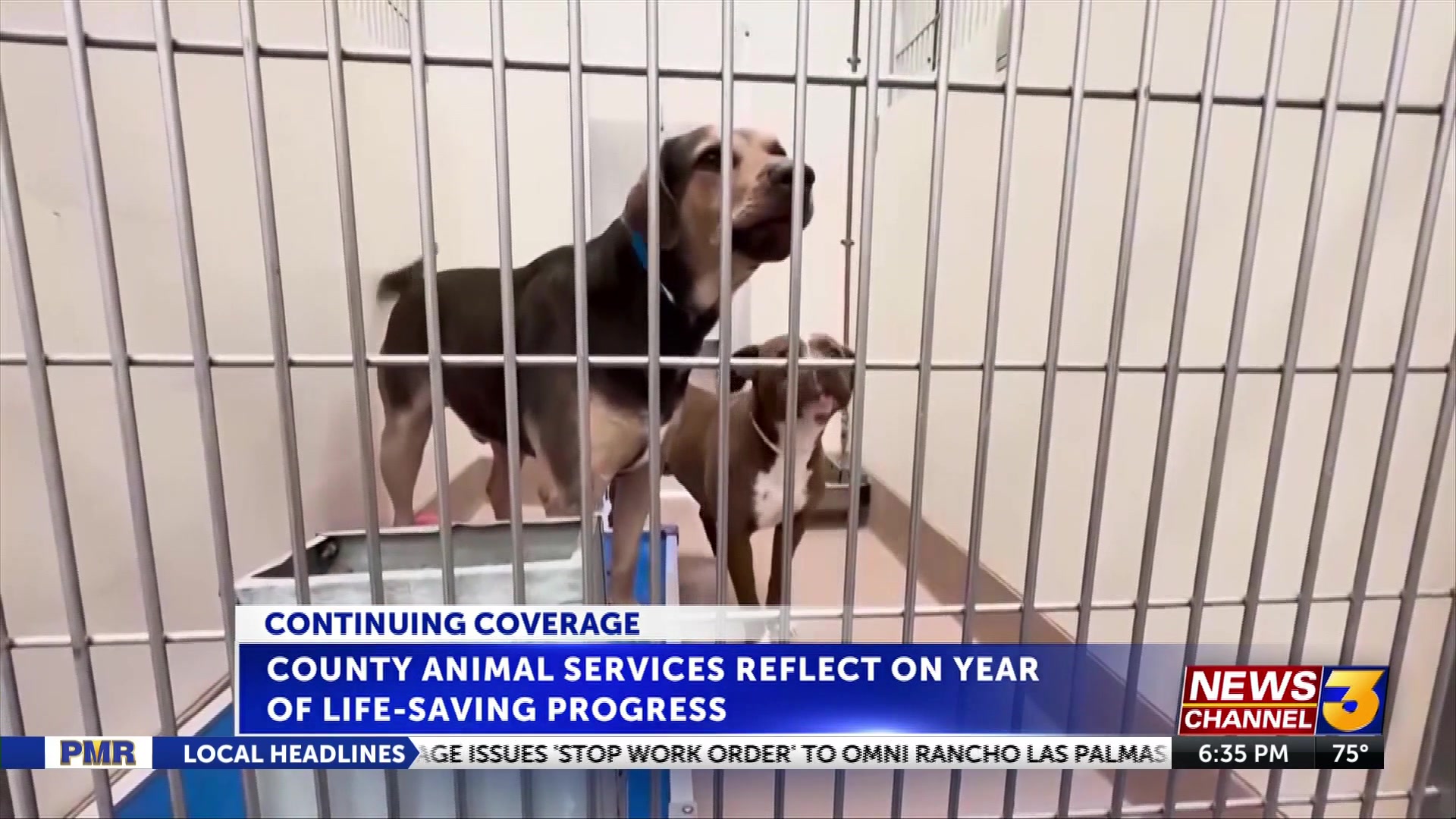
RIVERSIDE COUNTY, Calif. (KESQ) – Reflecting on the past year, Riverside County says progress has been made in life-saving efforts.
In their bi-monthly animal commission meeting, officials say live-release rates increased in 2025, from 71.2% to 78.5%, along with adoption and foster rates.
However, they say a lot of work still needs to be done, with a focus on reducing length of stay in shelters for large dogs and elderly cats.
News Channel 3 dug into the figures, and found while life-saving efforts increased, thousands of animals were still euthanized, died in care or lost.
According to data, total non-live outcomes for the year was 4,733, a 35% decrease from 7,232 in 2024.
Officials say it’s a sign that programs like ‘Dibs’ and ‘Ticket to Ride’ are working, but advocates say it’s not satisfactory.
“They are very into a metric and number to be ‘no kill.’ We want the shelter to do the right thing. Yes, if you have to euthanize for medical reasons, for behavior, but not for space, and then you refuse to build any space,” Lisa Fein-Blodgett said.
Blodgett is a defendant in a lawsuit against the county’s euthanasia practices. A recent injunction has asked the county to build more space for shelter pets.
In response to the question if that’s feasible, Veronica Perez with the county said, “We have to look at where we are right now every single day, and right now we are overcrowded for the amount of dogs compared to kennel space. We have to also look at where can we make an impact and move the needle, whether it’s more fosters, more volunteers, increasing those adoptions, partnering at the local level.”
For 2026, officials say they have two mottos.
“One is ‘getting to yes,’ so saying yes to everyone that comes in wants to help. There is a way for virtually everyone to help us save more lives. The other one is that ‘it takes a village.’ So anyone that can help should be invited and welcomed in the doors,” Kristen Hassen said.
She says the priorities for 2026 are, “We’re looking at what is within our control, which is bigger adoption programs, bigger volunteer programs, larger foster programs, getting more animals out and then trying to help people keep their pets whenever possible.”