Engineers monitor rare ice buildup on Pittsburgh’s three rivers

By Felicity Taylor
Click here for updates on this story
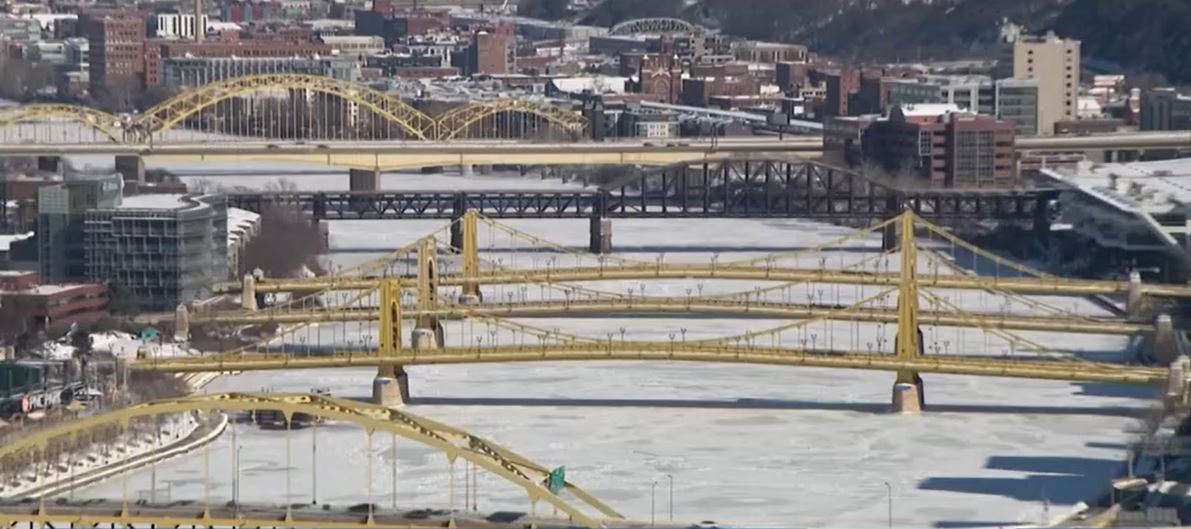
PITTSBURGH (WTAE) — Ice covering Pittsburgh’s three rivers causes extra work for the Army Corps of Engineers as they try to keep barge traffic moving. Most years, folks only expect the Allegheny River to look the way all three do.
“This is exceptional. We are seeing ice formation on the Monongahela River, which, of course, flows south to north, so typically it’s warmer than the Allegheny,” Col. Nicholas Melin said. “But even on the Ohio, we’re seeing freezing temperatures and ice formation that we’ve not seen in quite a number of years.”
Barges are still moving on the Monongahela and Ohio rivers, though less frequently than usual. That is because the Army Corps of Engineers has kept all 22 locks and dams across the three rivers open. There is still ice on the river.
“Ice buildup on the gates, ice buildup on the dam can cause excess weight on the gates, which can cause issues and breakages,” Sean Myers, a maintenance mechanic supervisor at the Emsworth Lock and Dam, said. “We have to be able to respond to that when it does happen.”
Officials stressed that while the rivers may look frozen solid, the water beneath the ice is still moving and dangerous. They are warning people against walking out onto the ice, noting that falling into water this cold can be deadly.
“The river is still flowing. Even if you don’t see the water, it is still moving underneath the ice,” Melin said. “The ice is under pressure, so it’s shifting and reforming. Even though it might look as though the river is solid ice, there could be cracks and fissures, and ice could be moving without you knowing it.”
Eventually, the ice will melt, and how that happens will decide their next steps for the river.
“If the temperatures rise gradually, the ice will melt, and we’ll move it through our locks and dams and move it down the Ohio River,” Melin said. “If we see a rapid rise in temperature and a lot of rain, that’s when we would potentially see high water conditions on our rivers.”
Please note: This story was provided to CNN Wire by an affiliate and does not contain original CNN reporting. This content carries a strict local market embargo. If you share the same market as the contributor of this article, you may not use it on any platform.