Kansas Supreme Court hears arguments in death row appeal

By Lily O’Brien
Click here for updates on this story
TOPEKA, Kansas (KAKE) — Almost two decades after the kidnapping, rape, and murder of an Arkansas City woman, the man convicted of her death is once again looking to appeal his sentence.
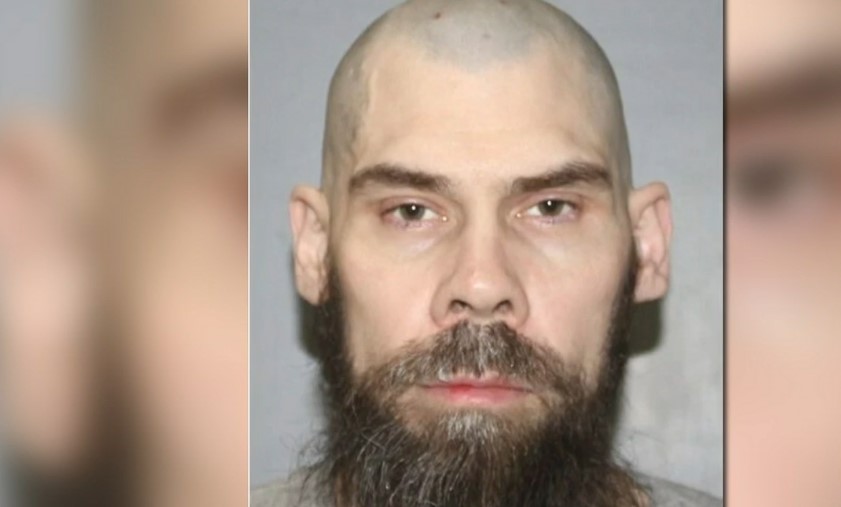
Justin Thurber is on death row for killing 19-year-old Jodi Sanderholm, a Cowley County student and dance team member, in 2007.
He is appealing his sentence, with attorneys arguing for a reduction due to a potential intellectual disability.
Issues on review are whether 1) the district court correctly ruled there was insufficient evidence to believe that Thurber is a person who is intellectually disabled; and 2) the district court violated Kansas law and Thurber’s Fifth, Sixth, and Eighth Amendment rights when it required the defense to disclose its confidential investigation to the State.
Sanderholm’s sister, Jennifer Aldridge, says she’s tired after watching Thurber appeal his sentence over and over again.
He brought the case before the Kansas Supreme Court in 2018, where it upheld his conviction but left the intellectual disability determination up to the district court.
“They came back and they said he’s not intellectually disabled, and the death penalty stands,” said Aldridge.
Thurber’s attorneys brought that challenge back to the Kansas Supreme Court.
“Justin Thurber knows that if he is not intellectually disabled, he’s facing the death penalty, said Kris Ailslieger, Deputy Solicitor General. “If he is intellectually disabled, he’s not facing the death penalty.”
Kansas has not executed an inmate on death row since 1965.
“This is just his way of just fighting the inevitable,” said Aldridge. “However, I don’t know if Kansas will ever execute anybody. That is a huge failure on our governor.”
Thurber’s appeals come as Kansas state law says those with intellectual disabilities cannot be executed.
Each appeal, Aldridge says, bring back the horror her family faced with Jodi’s death.
“I just want people to remember her smiling face, and that she deserves justice and her life meant something,” she said. “I feel like we have been just completely let down by our court system.”
Aldridge’s daughter was just two days old when an investigator found her Aunt Jodi’s body near the Kansas/Oklahoma state line.
“I’m never going to have any peace, regardless, but his ability to just keep messing with us is exhausting. It feels like nobody cares about our feelings, and what I’ve had to go through, how I’ve had to raise my children knowing the things that I know, seeing the things that I’ve seen, and hearing the things that I heard happened to my sister that day,” said Aldridge.
In Tuesday’s hearing, the court heard disputes over the district court’s process, with debate over whether or not Thurber shows signs of intellectual disability.
“His own experts testify that he was not intellectually disabled. We only have one actual IQ score, one actual test,” said Ailslieger. “You’re never going to get another reliable report ever, it’s not going to happen because Thurber knows what’s on the line.
“A person with a 73 IQ could be diagnosed with an intellectual disability,” argued Thurber’s representation. “Moreover, the fact that he went to college and had a girlfriend and lived independently, those are all stereotypes about what intellectually disabled people can and can’t do, and they’re frankly offensive.”
Aldridge says she does not expect a conclusion to the appeal within the next year.
Meanwhile, other death penalty appeals are taking place in Kansas, as the Carr brothers are set for a hearing on Wednesday, January 28.
Please note: This story was provided to CNN Wire by an affiliate and does not contain original CNN reporting. This content carries a strict local market embargo. If you share the same market as the contributor of this article, you may not use it on any platform.