Keeping yourself, your home and more safe during extreme cold

Jazsmin Halliburton
COLUMBIA, Mo. (KMIZ)
The ABC 17 Stormtrack Weather Team is tracking intense cold beginning on Friday, while snow can accumulate throughout the area. Roughly 8 inches of snow could fall in Columbia on Saturday, with more snow expected south of I-70.
The impending weather led Gov. Mike Kehoe to declare a state of emergency. An ABC 17 Stormtrack Weather Alert Day is in effect through Monday.
Public works departments in Columbia, Jefferson City, Audrain County, and California said they are ready for the snow and frigid conditions.
MoDOT Deputy Director Ed Hassinger said in a press conference Tuesday afternoon that the department started coordinating preparations Wednesday and will have 3,000 MoDOT crews working 12 hour shifts to treat the roads before, during and after the storm.
According to Columbia Utilities spokesperson Matt Nestor, crews will be on standby in case of power outages.
The winter storm warning in Mid-Missouri remains in effect through Monday, and people need to stay safe during this extreme cold.
With the extreme weather across Mid-Missouri, it’s advisable to stay indoors. However, if you must leave, itis essential to dress appropriately for the weather. According to the National Weather Service, when dressing for extreme cold, you need:
Three or more layers, an insulated coat, along with an outer layer that blocks the wind
Two or more pairs of pants
Warm hats
Gloves
Face mask
Waterproof boots
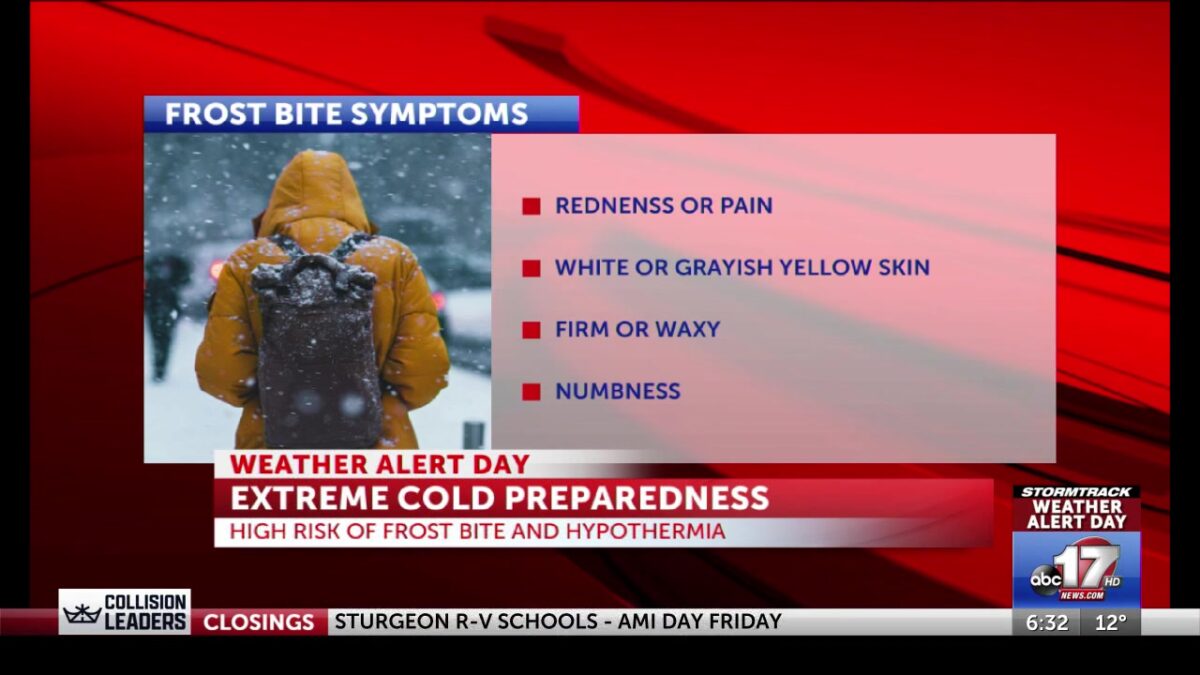
It’s also recommended to be aware of the signs of frostbite, which can set in within minutes. Redness or pain in any skin may be the first sign of frostbite. Other symptoms include:
White or grayish skin area
Unusually waxy or firm skin
Numbness.
If you have any of these symptoms, move to a warm area and use warm water or body heat to warm yourself back up. Do not use hot water or radiant heat, such as a fireplace, due to the affected areas being at a higher risk of burning.
The longer someone is outside and suffering from frostbite, the chance of hypothermia becomes more likely. There are multiple warning signs that you may be suffering from hypothermia, such as:
Shivering
Exhaustion
Confusion
Fumbling hands
Memory loss
Slurred speech
Drowsiness
If someone is experiencing the symptoms, it is crucial to get to a warm place immediately, cover them with extra blankets and seek medical help as soon as possible.
There are several warming centers throughout Mid-Missouri where people can go to get away from the frigid cold temperatures.
Warming centers available in Columbia include:
Columbia Public Library
City Hall
The Salvation Army Harbor House on North Ann Street
Salvation Army on West Ash Street
The Arc
Columbia Boone County Health Department
Jefferson City options include:
The Salvation Army on Jefferson Street
Clark Senior Center
The Missouri Regional Library
Other warming center locations across Missouri can be found here.
This storm is extreme, but even moderate winter storms can knock out electricity, especially when ice or heavy snow is involved. A battery-powered or hand-crank radio can provide weather updates if cell service and internet go down.
Keep phones and power banks charged. Make sure flashlights, radios and extra batteries are easy to find.
Refill prescriptions early. Make sure baby formula, diapers, pet food and medications are stocked. If anyone relies on powered medical equipment, have a backup plan in place before the storm.
Pull out blankets, hats and warm layers now so you’re not scrambling later. Even short-lived storms can disrupt travel and services for days.
If your home loses heating abilities, there’s a risk that water could freeze in the pipes and crack them. Open cabinet doors under sinks, so warmer indoor air can circulate around pipes. This matters most for single-family homes and older buildings, but those who live in apartments should do it too, especially for sinks along exterior walls.
In very cold conditions — overnight lows in the 20s or colder for several hours — let faucets drip slowly. Start the drip before temperatures fall below freezing and keep it going until temperatures climb back above freezing.
For homes with outdoor plumbing, disconnect garden hoses ahead of the cold and, if possible, put an insulated cover on exterior spigots to reduce the risk of frozen or burst pipes.
If you might need to travel after the storm, make sure your gas tank is full and your vehicle has basics like blankets, extra clothing and a phone charger.
Park your vehicle away from trees or power lines that could fall under the weight of ice and snow, and make sure to leave your wipers in the down position. Once conditions deteriorate, driving may not be safe.