Deschutes National Forest will allow Class 1, pedal-assist e-bikes on over 160 miles of mountain bike trails

KTVZ
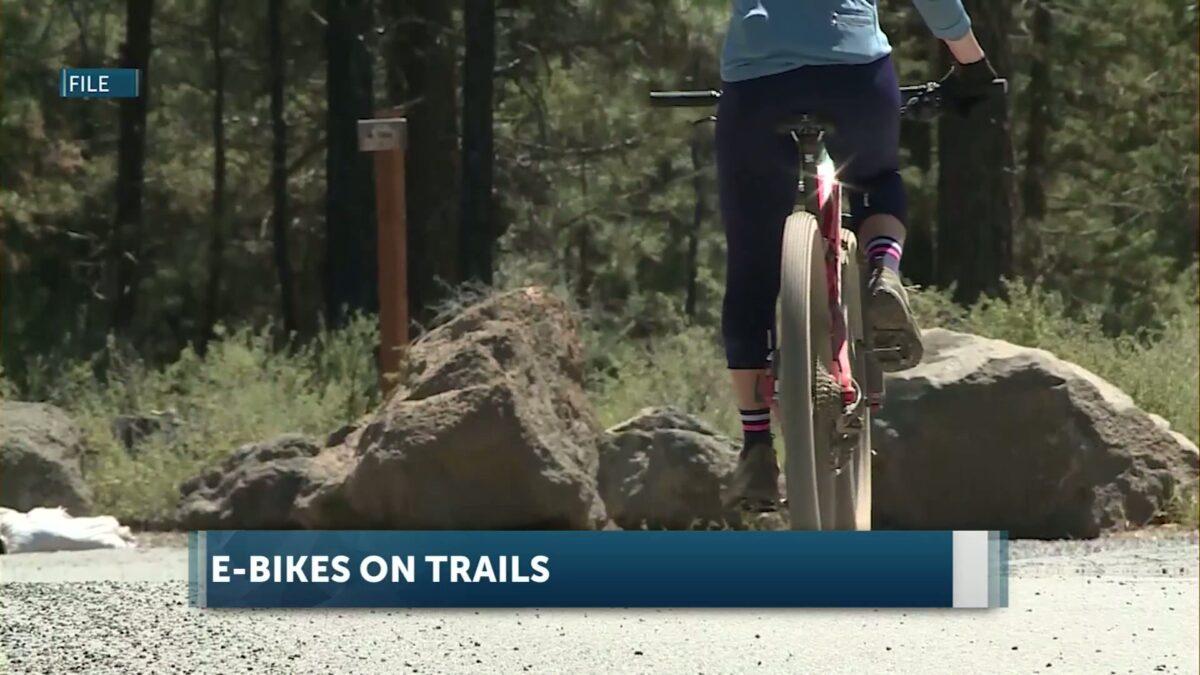
BEND, Ore. (KTVZ) — The Deschutes National Forest has finalized its plan to allow Class 1, pedal-assist e-bikes on most than 160 miles of mountain bike trails for much of the year, except for winter.
The forest announced Tuesday it has signed the final decision on the Class 1, Pedal Assist E-bikes on Select Trails located on select, existing, natural surface trails and paved paths located near Bend, Sisters and Sunriver, Oregon.
Recognizing the growing interest in e-bikes on public lands, the Forest Service said it assessed how these bikes fit into existing recreational activities.
“The Forest gave thoughtful consideration of the ecological and social impacts of this decision, balanced with providing increased access for class 1 e-bike users” the announcement said.
The final decision authorizes Class 1, pedal assist e-bikes on about 161.4 miles of 67 existing soft-surface and paved path trails. Existing trails selected for the inclusion of Class 1 pedal assist e-bikes are currently designed for bike use.
But e-bike users will have to wait until next spring to make use of the trails. That’s because the trails identified for Class 1 pedal assist e-bikes also adhere to Winter Range Closure Season, which prohibits e-bike usage December 1 through March 31 in support of critical deer and elk habitat. Routes identified will open for e-bike use on April 1, 2026.
The Central Oregon Trail Alliance said it supported the move, “based on extensive research, consultations with trail alliances across the country, and feedback gathered from local riders.”
It said the ruling came after completion of an environmental review process, significant research, collaboration with user groups and public comment. COTA said it will “assist with implementation by updating signage, supporting rider education, and helping ensure a smooth, safe transition for all trail users.”
“Evidence from similar trail systems, including the Tahoe National Forest, Jakes Rocks, Fruita, and local examples such as Madras East Hills and Redmond Radlands, shows no significant increase in trail damage or user conflict after allowing Class 1 pedal-assist e-bikes,” COTA said.
“For many riders in our community, including older adults and those with physical limitations, Class 1 pedal-assist e-bike access can make the difference between enjoying mountain biking with friends and family or sitting out entirely.”
Class 1 pedal-assist e-bikes only provide assistance while the rider is pedaling and only up to 20mph. This class of e-mountain bikes or e-gravel bikes are trail-capable with things like proper tires, suspension, and brakes. These types of bikes are not the same as commuter e-bikes commonly seen in Central Oregon. Those types of bikes often have throttles (i.e., no pedal-assist) and higher speeds and remain illegal for trail use.
Class 1, pedal assist e-bikes provide assistance only when the rider pedals. Assistance stops when the bike reaches 20 miles per hour. E-bikes that are modified and no longer fit the criteria described above are no longer considered Class 1, pedal-assist e-bikes and therefore would not be authorized for use on trails.
Visitors can expect to see updated signage, including information on education and etiquette, as the decision is implemented in the spring, officials said.
“The Forest has conducted compliance monitoring prior to the decision and will continue monitoring to inform ongoing education efforts,” it added.
Project documents, including the signed Decision Notice and Finding of No Significant Impact (FONSI), can be viewed on the Deschutes National Forest website here: fs.usda.gov/r06/deschutes/projects/66475
To view an online project map, visit: usfs.maps.arcgis.com/apps/mapviewer/index.html?webmap=5080ef7e7f2d45ac96788cf1a2447a86
For questions about the project, contact Alicia Bergschneider, Forest Environmental Coordinator, at alicia.bergschneider@usda.gov