Equine virus concerns rise as major Desert show-jumping event continues, no cases confirmed in California

Garrett Hottle
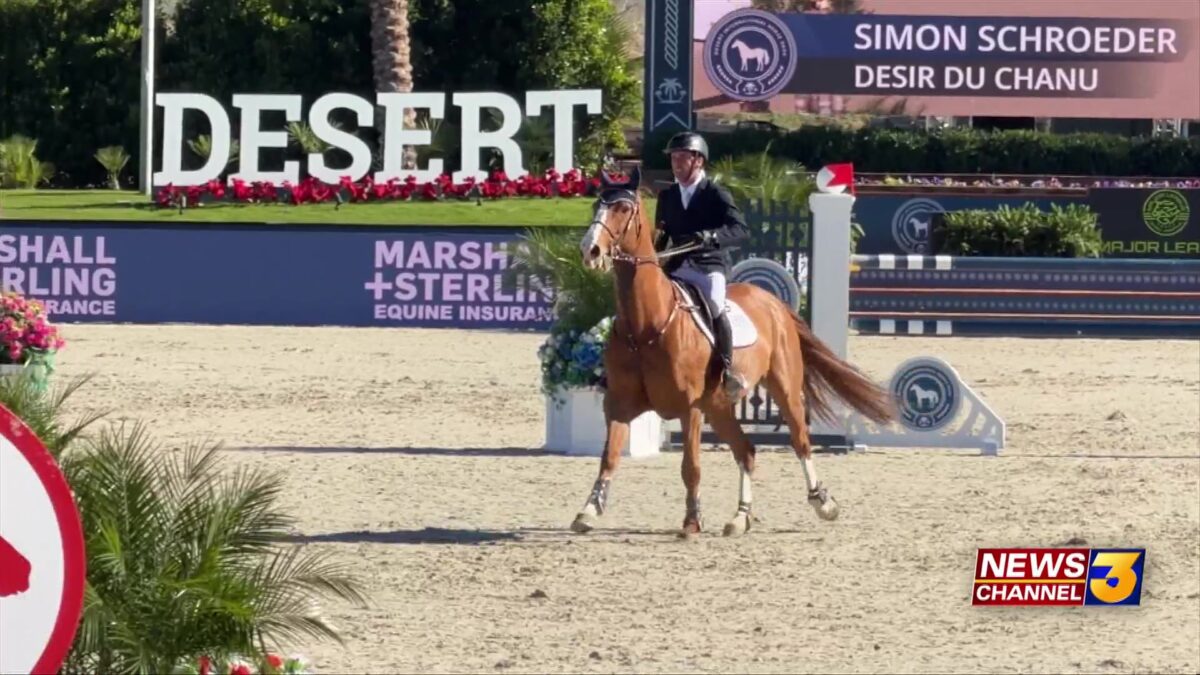
THERMAL, Calif. (KESQ) One of the world’s largest winter show-jumping competitions is underway in the Coachella Valley as riders, trainers and veterinarians take added precautions following an equine herpesvirus outbreak traced to an event in Waco, Texas.
The Desert International Horse Park’s Desert Holiday Series draws competitors from around the world. Marketing director Emily Randolph said this week’s show features everything from youth riders to elite professionals.
“We have all levels of jumping competition going on all day, from pony kids competing under ten to… some of the top 20 riders in the world out here right now,” Randolph said.
She added that the venue’s main arena hosts the biggest classes, where riders compete under the lights and crowds swell on weekend evenings.
With increased attention on equine herpesvirus type 1,. or EHV-1, competitors say they are staying vigilant. Irish rider Conor Swail, who returns to the park each winter, said biosecurity is a shared responsibility.
“It’s very important that we… make sure that the regulations are keeping it all enclosed, and everyone does their part to make sure that it doesn’t spread,” Swail said.
He noted that many riders travel the same competitive circuit throughout the winter season, meaning any outbreak can quickly affect multiple events.
Organizers at the horse park say horses arriving from states where cases have been confirmed are being housed in separate stabling areas and monitored closely. Staff have not reported any symptomatic horses on site.
Veterinarians at the event are watching for signs of both respiratory and neurologic disease. Dr. David Runk,the horse parks biosecurity officer, and the attending veterinarian overseeing screening on the grounds, said the neurologic strain can be severe.
“In most cases the horses will go down and not be able to move… a lot of times they’re euthanized,” he said, calling the circulating strain’s mortality rate “very high.”
He urged owners to coordinate with their regular veterinarians when traveling or returning from shows.
“Just working with your veterinarian and making sure… they understand what you’re doing and can give you guidance,” he said.
State officials say no EHV-1 or neurologic EHM cases have been confirmed in California in connection with the current outbreak. They recommend a 21-day isolation period, twice-daily temperature checks and avoiding shared equipment for horses that recently traveled to affected states.
The Desert Holiday Series continues through the month, with organizers maintaining heightened precautions until the national outbreak stabilizes.
The series is also free to the public to attend,
Local veterinarians say that while the virus remains a concern elsewhere, the horse park has not reported any suspected cases in the Coachella Valley.