Sportsbooks see ‘pent-up demand’ in Missouri’s betting debut

Mitchell Kaminski
COLUMBIA, Mo. (KMIZ)
Legal sports betting went live in Missouri on Monday, with more than 2 million people attempting to access sportsbook apps on launch day.
Circa Sports, one of the first two companies in Missouri to receive an online betting license, now operates in six states. The first bet placed on Circa was a $15 wager on the St. Louis Blues to beat the Anaheim Ducks in regulation. While the Ducks took down the Blues 4-1, Derek Stevens, Circa’s owner and chief operating officer, described the moment as a relief.
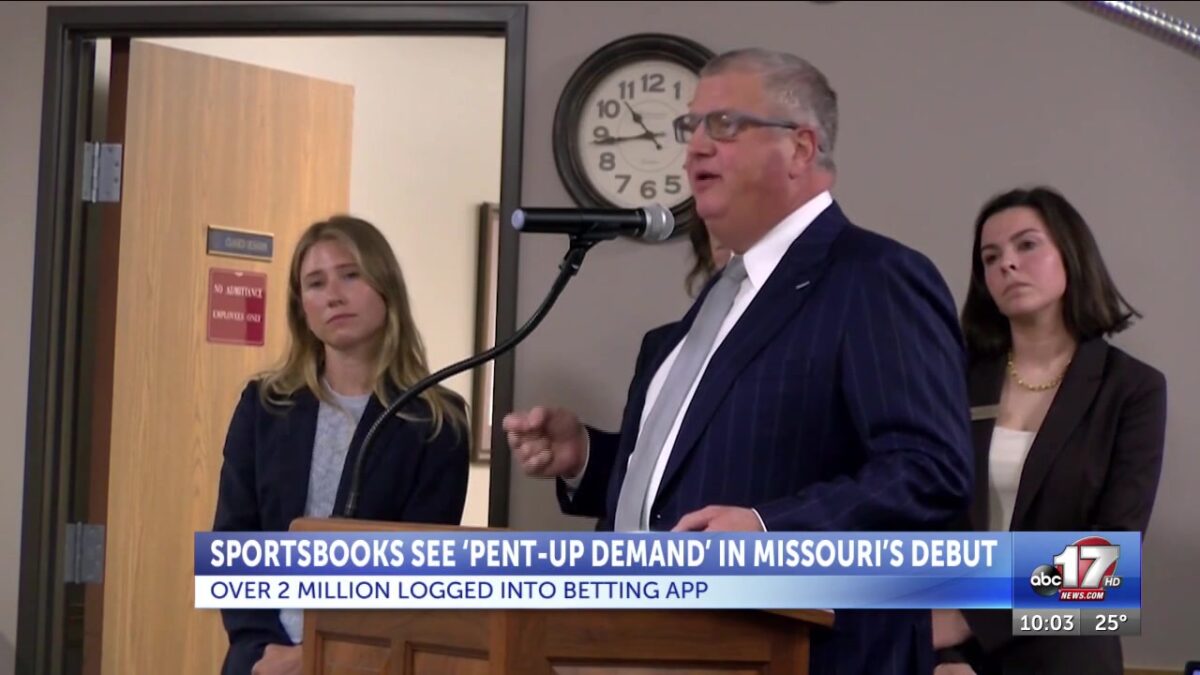
“We had dinner Sunday night at a great place in suburban Saint Louis, and when the dinner was over, we all got back to the hotel, we all immediately were on the phones with our I.T. department and customer service department,” Stevens said. “Our customer service department had been fielding a lot of phone calls and emails throughout the day, and we just kind of waited for the clock to strike 12. And then, that moment when the first bet came in, we all had like a little sigh of relief. Everything worked out perfectly.”
Ryan Butler, Senior News Analyst at Covers.com, was in St. Louis for the launch and said he observed strong interest from bettors.
“I talked to multiple sportsbook operators who were impressed. They use terms like ‘they saw a lot of pent-up demand; for bettors who have been wanting to for a long time,” Butler said. “I think part of it might show that they were familiar with it. They would go across state lines. I talked to people who do that every Sunday for NFL games, things like that, and now that they have an opportunity to do it from home, I think we’re seeing those numbers already show results.”
According to Butler, geolocation data showed 2.6 million people logged into a sportsbook or attempted to log in on launch day. About 250,000 accounts were active on Dec. 1, with 188,000 accounts created prior to the launch.
Stevens declined to give an exact number of wagers placed, but said Circa was pleased with the activity.
“We were positively enthused with the number of bets. I was happy with the average size of the bets we took. We took a lot of four-figure bets. So I was real happy with that. Lots of bets over $1,000,” Stevens said. “We had a pretty diversified set of bets. It wasn’t just the Blues game because that was the opening event, effectively. But it kind of covered the gamut from NBA to pro football futures, college basketball, a good amount of English Premier League soccer. So it was really diverse, I really liked that as well.”
Circa is one of just two companies in the state to receive an untethered license, which allows operators to take bets without sharing revenue with a casino or sports team.
Circa, DraftKings, and FanDuel had pitched the Missouri Gaming Commission in August for an untethered license. The commission ultimately chose Circa and DraftKings, citing Circa’s business model as a way to attract different types of high-dollar bettors.
Missouri was an attractive state for Circa’s low-hold model. Stevens said that they won’t invest in states with a high tax rate because a low-hold model would not be able to make a return.
“As an example, we really don’t want to get into the state of New York, I know the volume is huge, but we want to be able to overcome those taxes,” Stevens said. “When we saw the regulatory framework that was going to come out in the state of Missouri, we felt that Missouri set themselves up to be really a leader in the sports betting industry for a long time. We thought they did a real good job from a tax perspective as well as the regulatory perspective, so we determined we wanted to get into Missouri.”
Because Circa received an untethered license, it did not have to negotiate a revenue-sharing deal with a sports franchise to operate, unlike other sportsbooks such as FanDuel, which partnered with St. Louis City SC.
“We just went directly to the state initially, and then we never subsequently had to negotiate a skin deal with one of the sports franchises. Of course, we’re going to work with all the sports teams, but more on a marketing relationship type of thing,” Stevens said.
Butler also highlighted the advantage of Missouri’s low tax rates, which make the state attractive to sportsbooks.
“This absolutely helps the business aspect of it. The sportsbooks are very excited. That’s why you saw eight sportsbooks jump in and invest a lot of money in here,” Bulter said. “Illinois has some of the highest tax rates. Now it’s only $0.25 or $0.50, depending on the book, but it’s just annoying that it’s there. So you see that it would definitely encourage me to maybe go over to Missouri or the Missouri side with it. So that absolutely helps with it.”
While the state’s low tax rate is beneficial for operators, it could impact how much revenue Missouri brings in.
“Your downside is the state might be missing out on some tax revenue,” Butler said. “Ten percent of gross gaming revenue is one of the lower rates in the country.”
The Missouri Gaming Commission called Monday’s launch “successful and largely uneventful,” crediting staff for implementing a fair, secure, and responsible sports wagering framework on time.
“Monday marked the successful and largely uneventful first day of legal sports wagering in Missouri—an important milestone made possible by the constitutional amendment narrowly approved by voters in the last general election,” the commission said in a statement. “This smooth launch reflects the tremendous effort and professionalism of our rules-writing staff, who worked tirelessly to meet the constitutional deadline of December 1, 2025. Their dedication ensured that Missouri could implement a fair, secure, and responsible sports wagering framework on time and with confidence.”
The commission said financials and overall wagering statistics will not be released until mid- to late January, but monthly reports will be available on the Gaming Commission’s website, similar to how casino financials are published.