Missing WWII Soldier from Wilder, Idaho, Identified Decades Later

Seth Ratliff
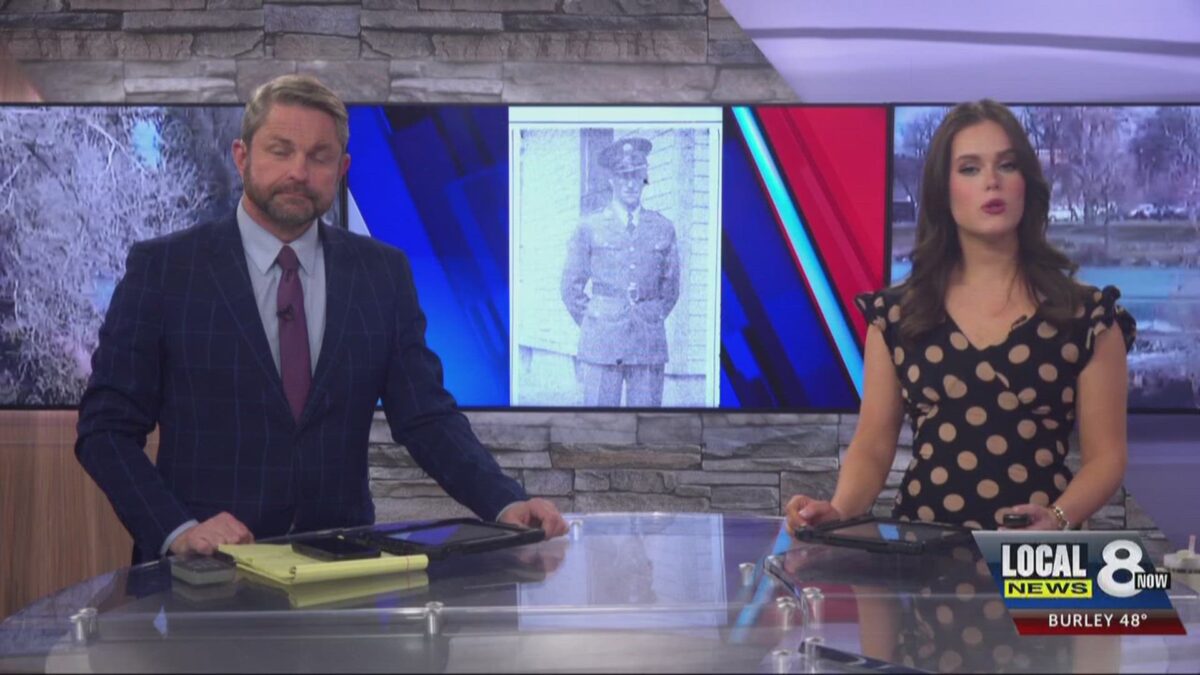
BOISE, Idaho (KIFI) — After nearly eighty years, an Idaho soldier is finally coming home. This June, the Defense POW/MIA Accounting Agency identified the body of U.S. Army 2nd Lt. Charles S. Atteberry, 26, of Wilder, Idaho, who was killed during World War II.
After delivering a full briefing to Lt. Atteberry’s family, the DPAA has released the full details on Atteberry’s service and how he was identified.
Who was Lt. Attebery?
After joining the war effort, Lt. Atteberry was assigned to the 31st Infantry Regiment, Philippine Army, on the Bataan Peninsula in the Philippines. While there, he was captured by the forces of the Empire of Japan and held in the Philippines as a Prisoner of War until late 1944.

 Japanese ‘Hell Ship’ the Enoura Maru, Courtesy DPAA
In December 1944, the Japanese military began moving POWs from Manila to Japan aboard the transport ship Oryoku Maru. This vessel, and others used for transport, were infamously known by Allied prisoners as ‘Hell Ships’ due to the inhumane conditions and treatment of prisoners aboard.
Unaware that Allied POWs were among the passengers, on December 14, 1944, a U.S. carrier-borne aircraft attacked the Oryoku Maru in Subic Bay. As the ship sank, historians estimate more than a thousand POWs fled into the water. Though the survivors swam toward land, they were quickly recaptured by Japanese forces.
Lt. Atteberry was then loaded onto a second Hell Ship, the Enoura Maru, bound for Takao, Formosa, known today as Taiwan. On Jan. 9, 1945, U.S. forces attacked the Enoura Maru while it was anchored at Takao, unknowingly killing an estimated 300 POWs.
Japanese authorities reported that Atteberry was transferred to a third ship, the Brazil Maru, headed for Moji, Japan, where he allegedly died days later. Surviving U.S. POWs reported that the casualties aboard the Brazil Maru were committed to the sea.


The Identification Challenge
Following the war, the American Graves Registration Service faced major challenges identifying the bodies of lost soldiers, noting that casualty reports provided by the Japanese government to the International Red Cross contained numerous errors. Lt. Atteberry was one of five individuals marked as “discrepancies” who the American Graves Registration Service believed died aboard the Enoura Maru.
In May 1946, AGRC Search and Recovery Team #9 exhumed a mass grave on a beach at Takao, Formosa, recovering 311 bodies. Among them were remains designated as X-546A Schofield Mausoleum #1, which the AGRS believed had died aboard the Enoura Maru. Following unsuccessful attempts to identify the remains, they were declared unidentifiable and buried at the National Memorial Cemetery of the Pacific in Honolulu, known as the Punchbowl.
Decades later, the DPAA’s final analysis brought closure to the families of unidentified soldiers. Between October 2022 and July 2023, the DPAA exhumed unidentified remains from the Punchbowl, including X-546A.
Using anthropological analysis, as well as circumstantial evidence, DPAA scientists were able to identify Atteberry’s remains. In addition, scientists from the Armed Forces Medical Examiner System confirmed their findings using DNA analysis.
Lt. Atteberry’s name is currently etched on the Walls of the Missing at the Manila American Cemetery and Memorial in the Philippines. The DPAA says a rosette will now be placed next to his name, indicating that he has been accounted for. Lt. Atteberry will be interred in Parma, Idaho, on a date to be determined.
Of the casualties aboard the Enoura Maru, 904 POWs remain unaccounted for. Of them, 5 are Idahoans. For more information on the Enoura Maru Project aiming to identify unaccounted for U.S. soldiers involved in the attack, click HERE.