Helene’s impact on homelessness in North Carolina will take time to resolve, advocate says

By Marc Liverman
Click here for updates on this story
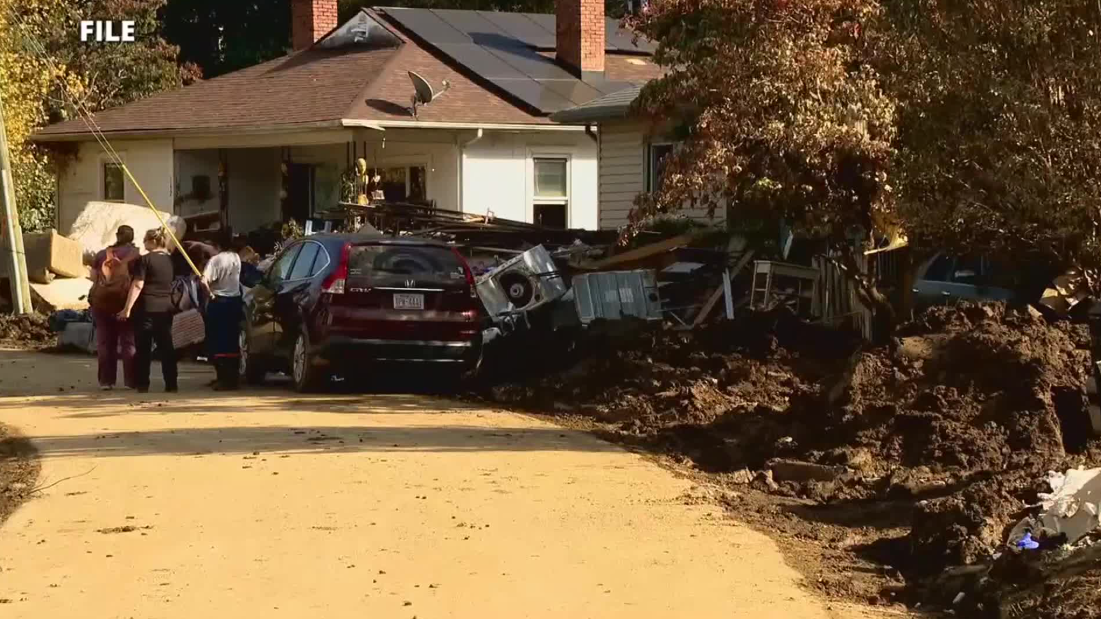
BUNCOMBE COUNTY, N.C. (WLOS) — After a new federal report found that Helene contributed to a 33% increase in North Carolina’s homeless population, western North Carolina advocates say the problem could persist for years.
According to the annual Homeless Assessment Report released by the US Department of Housing and Urban Development (HUD), North Carolina experienced a 33% increase in homelessness year-over-year in 2025, the highest annual jump of any state in the country. That alarming increase comes as the nationwide number of people experiencing homelessness experienced a slight decrease.
The report cited Helene as a major reason for the statewide increase.
Buncombe County was just one of the many western counties that were hit especially hard by the September 2024 storm.
“Our unsheltered population increased 50%. That’s still taking time to resolve itself,” said Eric Jackson with the Asheville-Buncombe Continuum of Care, adding that the most vulnerable to homelessness were certainly not spared by the storm.
“Anybody who is already on the edge, that is a devastating blow, and so we’ll see that playing out over years,” he said. In Buncombe County, Jackson said that more than 30% of residents are cost-burdened, spending more than 30% of their income on housing.
“You’re talking about people who are already on the edge,” he said.
As for a solution, Jackson explained that the first part is prevention: catching people before they fall.
Number two is how a community and its social programs respond after a major event like Helene.
“There are assistance kinds of things that we can do to keep people from becoming unhoused and to make sure that we’re able to help them get rehoused as quickly as possible if we can’t catch them,” Jackson said.
But he added that that’s more of a reactive remedy. Instead, he’d still rather see a substantial focus on solving the real problem.
“Which is to try to have more affordable housing,” Jackson said.
Please note: This story was provided to CNN Wire by an affiliate and does not contain original CNN reporting. This content carries a strict local market embargo. If you share the same market as the contributor of this article, you may not use it on any platform.