Columbia teenager charged as adult in Dick’s Sporting Goods shooting, carjacking

Ryan Shiner

COLUMBIA, Mo. (KMIZ)

A Columbia man who was underage at the time of a shooting and alleged carjacking earlier this year has been certified as an adult in the case.

Darius Lamb, 18, was certified as an adult on Thursday during a hearing in the juvenile court. He is now charged with two counts of unlawful use of a weapon, two counts of armed criminal action, one count of carjacking and first-degree property damage. His next court date in that case has not been set.

He was already charged as an adult in a case where he was charged with fourth-degree assault in March. He is listed on the Boone County Jail’s online roster.

Previous reporting shows Lamb was charged in juvenile court earlier this year with unlawful use of a weapon, carjacking and armed criminal action after he was accused of firing shots inside the Columbia store on Jan. 4. Lamb was 17 at the time.

Lamb was then accused of stealing a car at the scene and was arrested by troopers in Pettis County. He led troopers on a chase after troopers tried to initiate a traffic stop near Sedalia, previous reporting shows. The juvenile was arrested after crashing the vehicle on Route V near Bahner Road, previous reporting shows. No injuries were reported in the shooting.

The probable cause statement says that Lamb allegedly fired a gun in the store and stole someone’s vehicle at gunpoint.

One of the employees allegedly told police that three males walked into the bathroom of the store while wearing ski masks, the statement says. The employee also claimed to have smelled weed coming from the bathroom. The employee then heard about four or five gunshots after the males walked out of the bathroom.

That employee “grabbed two customers and then ran to the back of the store,” the statement says.

Police noted finding 10 shell casings in the middle of the store and bullet holes on the western wall. Different brands of shell casings were described by police.

“I did not observe any other damage anywhere else in the store, leading me to believe that the shooter was not also being assaulted,” the officer wrote.

The officer wrote that video showed Lamb walking into the store with “another unknown male” and fourth other males walking into the store. The statement alleges that roughly $900 worth of damage was done to the store.

When Lamb was arrested by troopers in Pettis County, law enforcement allegedly found a .40 caliber gun.

“Inside the magazine I observed several rounds to be missing as if they were discharged from the firearm. I observed several different brands of 40 caliber ammunition inside the magazine consistent with the different brands of shell casings that were located inside Dick Sporting Goods,” the statement says.

In his assault case from March, court documents say he assaulted a victim on March 3 while in custody at the juvenile center. A case review is scheduled in that case for 1 p.m. Tuesday, June 30.

He also pleaded guilty on Jan. 21 to driving without a license, a misdemeanor, and was ordered to pay a fine.

Click here to follow the original article.

Exclusive: Justice Department launches a criminal investigation into Trump accuser E. Jean Carroll

By Hannah Rabinowitz CNN, Kara Scannell CNN, Paula Reid CNN

Click here for updates on this story

    May 28, 2026 (Houston Style Magazine) — The Justice Department has launched a criminal investigation into E. Jean Carroll, the former magazine columnist who accused President Donald Trump of sexual assault, according to multiple sources familiar with the matter.

The investigation is focused on whether Carroll committed perjury in testimony tied to her two civil lawsuits against the president – one alleging he sexually abused Carroll in a New York department store in the mid-1990s, and a second for defaming her when in 2019 he repeatedly denied the assault, said she wasn’t his type and claimed she made it up to boost sales of a book.

Prosecutors’ theory hinges on a 2022 deposition statement by Carroll, 82, that she received no outside funding for her lawsuit, though it was later revealed that billionaire Reid Hoffman had paid some legal fees and expenses.

Carroll’s team declined to comment for this story. Attempts to reach Hoffman on Wednesday were unsuccessful.

One day after CNN published this story, US Attorney Andrew Boutros said in a statement that the Northern District of Illinois “has not opened—and has never opened—a criminal investigation into E. Jean Carroll.”

After Boutros’ statement was issued, sources reaffirmed the investigation to CNN.

The probe is the latest move in the department’s ceaseless, and somewhat strained, efforts to meet Trump’s demands to target his long-standing personal foes.

Under acting Attorney General Todd Blanche, the department has pushed to speed up Trump’s campaign of retribution. But the cases he’s brought since taking the reins of the department in April have been heavily criticized and are likely to face challenges in court over allegations of politicization.

But Blanche has been recused from this matter because he worked as one of Trump’s personal attorneys on the Carroll appeals, according to a source familiar with the matter. Blanche has not attended meetings or been involved in discussions about the investigations, and the investigation is being overseen by other officials in the deputy attorney general’s office.

Senior leaders at the Justice Department referred the investigation to federal prosecutors in Chicago, according to two sources familiar with the matter. While Carroll’s deposition took place in New York, one of the individuals who helped cover some of Carroll’s legal fees, Hoffman, has a nonprofit based in Chicago.

Hoffman’s support of the case caught Trump’s attorneys off guard when it came to light on the eve of trial.

In a 2022 videotaped deposition, Carroll told then-Trump attorney Alina Habba that no one else was paying for her legal fees. But two weeks before the trial Carroll’s attorneys informed the judge and Trump’s lawyers that they secured funding from Hoffman’s nonprofit.

Carroll’s lawyers said she never met nor had conversations with anyone associated with the nonprofit. Habba said in court at the time that Carroll’s team “conspired to conceal the truth for nearly six months.”

The judge permitted Trump’s attorneys to question Carroll again in a deposition, which has not been made public.

When the trial began two weeks later Judge Lewis Kaplan said he saw no issue with Carroll’s credibility and blocked the lawyers from asking about Hoffman’s funding.

Caroll is still embroiled in multiple legal battles with the president. Juries awarded Carroll millions of dollars in damages, which the president is appealing. Trump has appealed the $5 million sexual abuse case judgement to the Supreme Court and has pledged to do the same with the $83 million defamation case.

The Supreme Court has deferred its decision on whether to take up Trump’s appeal twelve times. The most recent deferral was made Wednesday morning.

In a different case, the president unsuccessfully asked for the Justice Department to join the case as a defendant so that he could argue he is immune from liability. An appeals court panel of judges said the argument was raised too late in the legal process.

This story was updated Thursday to include a statement issued by the US attorney for the Northern District of Illinois one day after the story was published. This story was previously updated to remove a statement errantly provided by the Justice Department.

CNN’s John Fritze contributed to this report.

Please note: This story was provided to CNN Wire by an affiliate and does not contain original CNN reporting. This content carries a strict local market embargo. If you share the same market as the contributor of this article, you may not use it on any platform.

Kierra Lee
KIELEESTYLE@GMAIL.COM
4096658446

I tried to turn my phone off for a week. Why it didn’t work

By Antoinette Radford, CNN

Click here for updates on this story

    May 28, 2026 (Houston Style Magazine) — I have a gym class this evening, Pilates on Tuesday and an interview on Wednesday. I write them in my planner — a new purchase — as I won’t get a reminder on my smartphone.

I send my parents an email with a phone number for my burner phone — another new purchase — and tell them I’ll be in touch in five days.

I’m not going off the grid. In fact, I’m not going anywhere. I’m just giving up my smartphone for a week.

After receiving one too many targeted ads, ironically on Instagram, about how our phones and social media are leading to burnout — a state in which one feels a lack of energy, a decline in sense of belonging and a plummeting self-esteem — I decided to switch off for a working week.

Before I started my experiment, I spoke with neuroscientist Tj Power, who specializes in phone addiction, to get some advice on how to put my phone away — and keep it away.

“Our brains are extremely overstimulated, and it’s burning out our dopamine receptors,” Power tells me.

Dopamine is a neurotransmitter in our brains that makes us feel joy or excitement. It’s been linked to pleasure, reward and motivation, Dr. Anna Lembke, professor of psychiatry and behavioral sciences at Stanford University School of Medicine, previously told CNN.

“I always warn people, they’re going to feel worse before they feel better,” Lembke, the author of “Dopamine Nation,” said when asked about her suggestion of abstaining from items that trigger our dopamine.

My decision to put down my phone came at the same time as a landmark social media trial was underway in Los Angeles, with Big Tech companies facing questions about whether their platforms could cause addiction in some people. Ultimately, a jury found Meta and YouTube, which is owned by Google, were negligent in the design of their platforms, knew their design was dangerous and failed to warn of those risks, and caused substantial harm to the plaintiff.

Meta and YouTube, which both denied the lawsuit’s allegations and contested the idea that their platforms could be addictive, said they planned to appeal the verdict.

I didn’t consider myself a phone addict — I thought I used the phone as much as any other person. Which means that by noon on a recent Friday before I started my experiment, I had picked up my device 88 times according to its “pick up” tracker.

But once I put it down for the 88th time, I realized the rectangular piece of metal I carry with me at all times has become my second brain. It really was time to do a personal digital detox. I pitched the story to my bosses, promising I would still use technology for my job (just my laptop without any social media access) and started looking for experts to help me begin.

Starting my phone-free experiment

It’s Monday morning, and I have physical therapy a half-hour drive away. I hop in a cab — phone locked away in the depths of my bag — and start my drive unplugged from the music I would usually play in my earphones. Maybe keeping my phone with me is cheating, but I do it just in case I need it.

For the first time in four months since moving to a new city, I notice a park that I had been meaning to visit. I’m also aware that the cabdriver keeps scratching his head — an observation I would usually miss with my head buried in my phone.

After leaving physical therapy, I cave quickly to my phone. Despite bringing my physical cards to pay — I didn’t check my bank account balance. My payment bounces, and reluctantly I pull the phone out to check my account and move money into it.

photo

I put my phone back away, determined to stay off it for the rest of the day. Successfully.

Starting over the next day

The following day, I promise to try and not look at my phone.

Tuesday morning starts strong. I go to the gym — with no headphones to play music or smartphone to track my workout. Fortunately for me, I run into my colleague Ivana and hope to chat. But unfortunately for me, Ivana is wearing headphones and is ready to work out on her own.

I get a ride into work with another colleague in my apartment building and start my day. I’m working just fine until midafternoon.

I’m living in a majority Muslim country during my experiment, and Ramadan starts this Tuesday evening. Many shops across the country close during the monthlong holiday. I haven’t bought nearly enough supplies, so I hop online to purchase some essentials before the evening.

Doing so is allowed, as part of the digital detox, my colleagues said. I can use my laptop for work. I just need to stay off my smartphone and social media accounts.

I add my items to my online cart, go to check out and remember that my bank account emails a two-factor authentication code to my personal phone. I try to log into my personal email on my work laptop, so I don’t have to open my phone again. But I get the password wrong. Then I get the password wrong a second time.

The only solution? An email sent to my trusted device to confirm it’s me trying to log in. My trusted device is, no surprise, my phone.

Perhaps I should just stay logged out of my email for the remainder of the week? But I decide against it. I do need some groceries after all. Reluctantly, I switch the phone off airplane mode and enter the two-factor authentication code for my grocery order.

Maybe tomorrow will be my day.

I finally hit my stride

Wednesday proves my most successful day yet. I head to the gym in the morning, hop in my friend’s carshare and leave my phone in its drawer at home. Even if I wanted it, I couldn’t use it.

Power, the neuroscientist, had warned me I would experience withdrawal symptoms, including possibly feeling anxious, having a low mood and being tired without the stimulation from my phone.

He’s right. It’s only been three days, and I am absolutely exhausted. Every morning I feel like I haven’t slept enough, with the only noticeable change being without my phone.

Lembke recommends a 30-day abstinence trial — also known as a “dopamine fast,” as it takes around four weeks to reset reward pathways in the brain.

I check back in with Power and ask him whether my exhaustion could be linked to being without my phone.

“Dopamine … it has a cousin in our system called adrenaline,” he tells me.

Adrenaline is a hormone and a neurotransmitter. It’s responsible for the body’s fight-or-flight response and helps transmit messages across the body.

“It might not be that you’re suddenly more exhausted, it might be that you actually were pretty exhausted, but the phone was masking it,” he tells me. “We don’t realize how exhausted we are until some of the external stimulation stops.”

My job takes up my day

Thursday is show day on CNN Creators, and I’m really busy, so I don’t miss my phone so much. Four days in, and I’m getting more used to it not being around.

But I am still exhausted. My team is talking about the recent movie “Wuthering Heights,” and the social media discourse around it. (“Wuthering Heights” is distributed by Warner Bros. Pictures, which is owned by CNN’s parent company, Warner Bros. Discovery.) Without my phone, I have completely missed the online chatter around it.

I’m also missing my friends in London and my family in Australia. I want to switch back on to connect with them.

But I’ve yet to face the biggest hurdle of my week.

It’s time to fly on Friday

Have you ever thought what it would be like to travel through an international airport without your phone?

Neither had I.

But once I realized my flight fell within my detox week, I knew I’d have to prepare for the adventure.

I order a taxi to take me to the airport, but the price I’m quoted is different from the one I’m charged, and without my phone I can’t really argue the point.

At the airport, I need to check in manually, which involves getting past a checkpoint where the staff requires you to show your booking confirmation. The one I hadn’t printed.

I explain the situation and make it to the check-in counter. Once through, I grab a coffee and sit in front of the departures board — conscious that I won’t get a push alert on my phone notifying me about my gate.

I board my flight and sit with no headphones or music, but with a note with all my important numbers. I text my friend on my burner phone to confirm her address. Then I sleep for the duration of the flight. When I land and head to ground transportation, I tell the cabdriver my friend’s address, hop in the cab and arrive.

A few hours later, and the detox is over.

I remain exhausted, but my memory feels much improved. I almost forgot I wasn’t using it, and staying off my phone has reactivated remembering things without constantly looking at the device.

I like that part of the experiment. I also relish that once I made a plan — I was committed to it. Having realized I can get around without my phone and function perfectly well — I’m going to try to make a point of committing things to memory going forward.

I know my reliance on my phone could creep back. So, I make myself a promise: I’ll do this again next month.

Please note: This story was provided to CNN Wire by an affiliate and does not contain original CNN reporting. This content carries a strict local market embargo. If you share the same market as the contributor of this article, you may not use it on any platform.

Kierra Lee
KIELEESTYLE@GMAIL.COM
4096658446

New bus routes and extended hours coming to Redmond, Bend, and Madras in 2026

Madeline Clark

BEND, Ore. (KTVZ) – Cascades East Transit (CET) will implement service updates across Redmond, Bend and Madras beginning Monday, June 15, 2026. The changes include modifications to Redmond’s A and B Flex routes, additional service runs, expanded community connections and a new stop at the Downtown Redmond Library.

The service updates affect Redmond’s A and B Flex routes, as well as add new runs to Community Connector Routes 22 and 24. These modifications aim to improve commuter transfers and strengthen regional transit options for riders across Central Oregon. Cascades East Transit is operated by the Central Oregon Intergovernmental Council (COIC).

Redmond’s A and B Routes will be adjusted to a new set schedule while continuing flex-route service, meaning flexible pick-up and drop-off service within one-quarter mile of the route. These routes will feature extended service hours from 6:00 a.m. to 6:45 p.m. along with adjusted frequency.

The new stop at the Downtown Redmond Library addresses a long-planned effort to improve access to downtown destinations and community resources. The Transit Hub, located off Canal Boulevard behind Fred Meyer, will remain the primary transfer point for Community Connector routes and other local transportation providers. Cascades East Transit is adding new bus runs to improve commuter access, reduce transfer gaps and better connect riders to employment and regional transit options.

SCHEDULE CHANGES

Route 24 (Redmond to Bend) Monday-Friday
– 5:30 a.m.
– 6:30 a.m.
– 10:00 a.m.

These early morning trips are designed to enhance transfer opportunities for commuters traveling into Bend, including connections to early shifts and regional routes at Hawthorne Station.

Route 22 (Redmond to Madras)
– 11:30 a.m. departure from the Redmond Transit Hub.
– 11:30 a.m. pickup from the Madras DMV.

This improvement enhances access for commuters traveling to destinations such as Kah-Nee-Ta Hot Springs Resort and strengthens connections to the new Route 21 service from Madras to Warm Springs and Simnasho.

ROUTE CLOSURES

The Terrebonne stop on Route 22 will remain temporarily closed due to ongoing construction at Oliver Lemon’s in Terrebonne.

Updated schedules and route information are available at Hawthorne Station, The Redmond Hub, Cascades East Transit, the Passio Go app, or by calling CET Customer Service at 541-385-8680.

Click here to follow the original article.

Emergency officials urge caution as severe weather threatens Central Oregon

Claire Elmer

(Update: adding video, comments from Oregon Emergency Management)

BEND, Ore. (KTVZ) — On Thursday, a severe weather warning in Central Oregon, with the potential for high winds, lightning, hail, and even a low risk of tornadoes across the region. KTVZ’s Weather Team has enacted a Local Alert Weather Day.

In La Pine on Wednesday, strong winds brought down a large tree, blocking a roadway until the Deschutes County Sheriff’s Office cleared the scene. The incident highlights the kind of hazards possible as storms move through the area.

Oregon Emergency Management (OEM) urges residents to stay alert and prepare ahead of changing conditions. Shirley Blake, Public Information Officer for OEM, spoke with KTVZ News about the potential impacts across our region during the weather warning.

“Folks in Central Oregon should stay weather aware. Parts of Central Oregon could experience some storms, lightning or windstorms, possibly even localized flooding,” Blake said.

“Definitely check the weather and be up to date. Also a good time to check your preparedness,” Blake added.

Officials recommend checking road conditions before traveling, keeping an emergency kit in your vehicle, and reconsidering outdoor plans during severe weather.

If you’re driving when conditions worsen, slow down, turn on your headlights, and move to a safe location away from trees, power lines, and flood-prone areas.

“Be extra cautious of bridges or exposed roads if there is some flooding. We always push the message of ‘turn around, don’t drown’. Don’t risk it and avoid traveling on any flooded roads,” Blake said.

At home, residents are advised to stay indoors during high winds or hail and keep away from windows.

If you encounter downed trees or power lines, keep your distance and immediately contact authorities, your utility company, or both.

“Always assume that a downed power line is energized and dangerous. Stay far away from downed power lines and of course, keep children and pets away as well,” Blake said.

Emergency officials emphasize the importance of preparing before severe weather arrives, not after warnings are issued. You can sign up for OR-Alert for emergency notifications in Oregon. Resources and tips to prepare for emergencies are also available at Ready.Gov.

Click here to follow the original article.

Forest Service releases draft decision for Grand Targhee Resort expansion

Par Kermani

DRIGGS, Idaho (KIFI) — The U.S. Forest Service has issued a draft decision for the proposed Grand Targhee Resort expansion and is now opening a formal objection period for the project.

According to the Caribou-Targhee National Forest, the agency will publish notices in the Federal Register announcing the availability of the final environmental impact statement for the Grand Targhee Resort Master Development Proposal.

A legal notice published in the Post Register will begin a 45-day objection period for the project and its five project-specific amendments. A separate 60-day objection period will also begin for the programmatic amendment connected to the proposal.

The proposed decision would expand the resort’s special use permit boundary by 694 acres, bringing the total permitted area to about 3,000 acres. Forest officials say the expansion and facility upgrades are intended to support year-round recreation opportunities and boost local jobs and businesses in surrounding communities.

The Forest Service says it received more than 2,100 substantive public comments before the draft environmental impact statement comment period ended in June 2025. Agency officials reviewed those comments while refining the proposal and evaluating potential environmental impacts and alternatives.

“The Caribou-Targhee National Forest reviewed all comments received to help refine the final environmental impact statement and draft record of decision,” Forest Supervisor Kim Pierson said in a statement. “These comments provided specific information about the proposal, suggested corrections, and identified information that assisted in reaching my draft record of decision.”

According to the Forest Service, only individuals or organizations that previously submitted timely written comments during the public comment process are eligible to file objections.

Objections can be submitted electronically through the project website, by mail, or by email to the Caribou-Targhee National Forest.

Click here to follow the original article.

Deadly explosion in Las Cruces duplex ruled accidental

Gabrielle Lopez

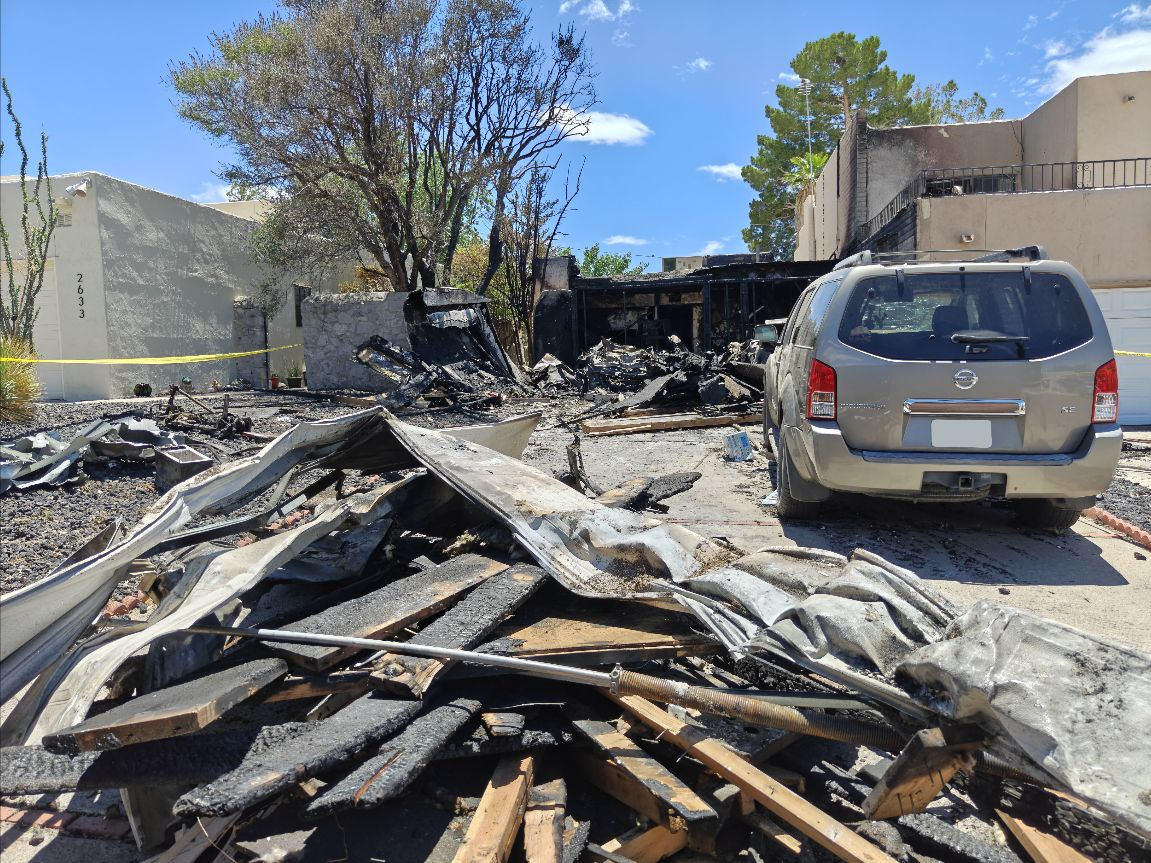
UPDATE (June 1, 2026) — Investigation revealed the explosion and fire was an accident, according to the Las Cruces Fire Department.

The explosion came from the trunk of a car in the garage, LCFD and the Bureau of Alcohol, Tobacco, Firearms and Explosives learned.

An acetylene cylinder in the trunk fueled the explosion, LCFD said. Acetylene is a highly flammable gas used for welding, LCFD said.

The cylinder was in the car because it was being borrowed, Las Cruces fire reported.

Carbon monoxide alarms in the garage activated earlier the morning of the explosion, LCFD said. Investigators can’t determine if the alarms were tied to the acetylene leak. Some combustible gases can cause carbon monoxide alarms to go off, according to the fire department.

LCFD said compressed gas cylinders should be stored and moved in accordance with manufacturer recommendations and industry safety standards. Acetylene cylinders should stay upright, in well-ventilated areas and away from heat and ignition sources.

The person who died after the explosion hasn’t been identified, according to LCFD. Their remains went to the New Mexico Office of the Medical Investigator, which will look into the official cause of death.

Residents who lived in the neighborhood are able to go back to their homes, LCFD said.

The aftermath of the explosion and fire at the duplex.(Courtesy: LCFD)

UPDATE (2:25 p.m.) — Las Cruces police said firefighters found a body inside the duplex.

Police said the victim’s body will go to the New Mexico Medical Investigator’s Office in Albuquerque for an autopsy. The victim hasn’t been identified.

Firefighters are looking through the debris from the fire to look for other possible victims, police said.

Investigators are helping find out what caused the fire.

Police said part of the duplex’s garage collapsed because of the fire. Two cars were inside.

Besides smoke damage, police said there was little damage done to the other half of the duplex. Residents who lived in the other half are getting help from the American Red Cross while they’re temporarily displaced, police said.

ABC-7 is sending a reporter to the scene to learn more.

(Courtesy: Las Cruces Police via Facebook)


LAS CRUCES, N.M. (KVIA) — Las Cruces firefighters are putting out what the department called a “sudden” fire at a duplex home after a reported explosion Thursday.

The Las Cruces Fire Department said it happened on the 2600 block of Fairway Drive near CanAm Highway. Someone reported the explosion after 11 a.m., according to LCFD on Facebook.

Firefighters don’t know what caused the explosion. The fire that happened after damaged part of the duplex.

A part of the duplex collapsed.

LCFD said Fairway Drive between Telshor Boulevard and Don Roser Drive closed.

Click here to follow the original article.

Protesters confront Box Elder County commissioners who approved Stratos Project data center

Fox13

Originally Published: 28 MAY 26 12:11 ET

By Jeremy Tombs

Click here for updates on this story

    BRIGHAM CITY, Utah (KSTU) — More than three weeks after the Box Elder County Commission decided to green-light a massive data center, hundreds came to Brigham City to voice their continued frustration over the Stratos Project.

Those opposed to the proposed data center showed up on Wednesday from across northern Utah.

“I’m a single mother from Eagle Mountain. I made a rant [on social media] to meet up here at one of their meetings, and it just kind of exploded!” said protest organizer Tiffany Larson.

Many of those who protested outside the courthouse were from diverging ideological backgrounds.

“I look around here, this is probably not my type of crowd. So what do we all have in common? We don’t like being treated poorly,” shared former Utah State Rep. Phil Lyman.

The protesters coalesced around a general feeling of being unheard.

“Together, we can make them listen,” shouted Brigette Cottam to a cheering crowd.

Having grown up in nearby Willard, Cottam is part of the Box Elder Accountability Referendum group (BEAR), and hopes the listening happens through the possibility of a referendum that currently hangs in the balance of county officials.

“Tomorrow, we should be hearing back on approval or denial of the referendum,” said Cottam. “Tomorrow, no matter what they say, we hit the ground running.”

At the rally, protestors took their concerns into the county commission chambers, where many first learned of the 40,000-acre plan.

“Every year we pray for rain… we’re worried about our water. We live it in the desert. Utah’s a special place, and we need to treat it with the love and respect it deserves,” said Box Elder County resident Elizabeth Hulbert.

As the commissioners listened to an hour’s worth of comments without reply, the angry locals made sure their message got across to county leaders and those behind the project.

“I didn’t see any buses. I’m trusting none of you got paid to show up,” BEAR organizer Farrah Pliley asked the crowd. “You woke up all the ‘BEARS’. An entire state of them. All these angry BEARS against one shark. Good luck, you’ve got quite the fight ahead of you.”

Earlier Wednesday, a water rights change application for the Stratos Project had been pulled for the second time. Murray Hollow L.C. withdrew the application that had about 700 official protests written against it. All of that money will again go to the state’s general fund, and none will be refunded to the protesters who filed them.

Please note: This story was provided to CNN Wire by an affiliate and does not contain original CNN reporting. This content carries a strict local market embargo. If you share the same market as the contributor of this article, you may not use it on any platform.

The-CNN-Wire™ & © 2026 Cable News Network, Inc., a Warner Bros. Discovery Company. All rights reserved.

Click here to follow the original article.

Kansas City prepares public transit for thousands of visitors ahead of FIFA World Cup

Alison Patton

COLUMBIA, MO. (KMIZ)

The FIFA World Cup is about two weeks away, and Kansas City is preparing public transit for hundreds of thousands of visitors from across the world, the nation and Missouri.

KC2026 is the nonprofit that is planning events and preparing Kansas City to host the World Cup, which has matches from June 11 through July 11 with semifinals and finals in the latter half of July.

Kansas City will host free watch parties for most matches at the National WWI Museum and Memorial, located at 2 Memorial Drive. People who want to attend Fan Fest must reserve tickets on the KC2026 website.

For those traveling to Kansas City from Mid-Missouri, there are several park-and-ride options available through ConnectKC26 to get to and from surrounding areas like the Kansas City International Airport, Lee’s Summit, Liberty, and attractions such as the Kansas City Zoo and Oak Park Mall for a daily rate.

“We want to make it easy. We want to make it affordable, and we’re definitely looking forward to welcoming visitors, but we also want people here to engage, to participate, to celebrate and to be a part of the World Cup,” Pam Kramer, KC2026 CEO, said during an online call with reporters Thursday.

The World Cup is expected to bring more than 650,000 people to Kansas City, according to a press release from KC2026. It’s also anticipated to generate over $650 million in the local economy.

Cities in Mid-Missouri also hope to cash in on the World Cup. Columbia has started a campaign to attract World Cup-related visitors to the city.

Kramer said safety is a top priority, and KC2026 has a large regional team that has been planning for the past two years in anticipation of the World Cup. The team has more than 50 agencies and has been working with the local Kansas City Police Department, along with state and federal departments.

“I’m very proud of the region and the way that they’ve come together. We are very unique as a host city in that we have a state line running down the middle of our host city,” Kramer said. “So, there’s much cross-jurisdiction, collaboration and support.”

With hantavirus and Ebola virus flare-ups, Kramer said there’s a medical committee that is monitoring infectious diseases.

“There are plans in place for all of that, and a large part of that is communication, and making sure that we’re passing along that information,” Kramer said. “We’ve been working with embassies to communicate to folks before they arrive. So I feel really good about the plans we have in place.”

Earlier this month, three people from Kansas were being monitored after having high-risk exposure to a person who was infected with Andes hantavirus, according to the Kansas Department of Health and Environment.

Click here to follow the original article.

Lane of Interstate 70 at St. Charles Road to again close for emergency repairs

Matthew Sanders

COLUMBIA, Mo. (KMIZ)

A spot on eastbound Interstate 70 that has caused road crews repeated issues will require emergency repair again Thursday afternoon, the Missouri Department of Transportation said in a news release.

The right lane of eastbound I-70 will be closed near mile marker 131 at St. Charles Road starting at 5 p.m. Thursday and continuing into early Friday morning, MoDOT stated. Drivers are asked to avoid the area during the emergency repairs.

The frequent closures, including one earlier this month, stretch back to last year. MoDOT has said excess moisture is causing the repeated issues.

The stretch of road is also part of the Improve I-70 project to widen Interstate 70 across the state.

Click here to follow the original article.