‘Not an easy decision’: Man sentenced to prison 26 years ago in death of 4-month-old has case dismissed


By Óscar Contreras

Click here for updates on this story

    DENVER (KMGH) — A Denver man who has been serving a life sentence for almost three decades after being convicted of killing a 4-month-old baby in 1998 had his case dismissed Tuesday following new evidence presented by the Korey Wise Innocence Project that determined the infant died of severe lung disease.

Stephen Martinez, 58, was sentenced in early 2000 to life in prison when prosecutors made the case that 4-month-old Heather Mares died after she was violently shaken by Martinez to stop the child from crying. Speaking before a judge Tuesday, a family member of the victim said Martinez inflicted a “complex skull fracture” that led to Heather’s death.

Our partners at The Denver Post report that further investigation into Heather’s death showed that the baby had ruptured blood vessels in her eyes, brain bleeding and swelling. Martinez would later confess to shaking Heather and slamming her into a crib — a confession he later recanted and which his attorneys say was false.

But doctors who recently reviewed Heather’s case found her lungs were severely damaged to the point that “she had almost no air,” according to a petition from the defense reviewed by the Post. Those findings could have caused the symptoms that were previously attributed to abuse, the experts told the defense.

“I understand that today is a difficult day and that decisions made in this courtroom are decisions you’ll have to carry with you the rest of your life,” Denver District Court Judge Andrew Luxen told family members in court Tuesday. “This is not an easy decision,” he reiterated, as he extended his sympathies for the family.

Luxen said the court was guided by Rule 35(c), a criminal procedure that allows a person convicted of a crime to challenge their conviction if they can show their sentence was fundamentally flawed. The judge said Martinez exercised his rights under Rule 35(c) “a number of times” but those prior motions were denied.

The judge went on to say that new evidence discovered in the case “would have likely changed the result” of Martinez’s trial in early 2000, before ordering that his conviction be vacated.

Tuesday’s development in Martinez’s case follows years of extensive investigation and advocacy led by the Korey Wise Innocence Project at the University of Colorado Boulder Law School, his defense said in a news release prior to the announcement. The project provides free legal services to people serving time in Colorado prisons for crimes they didn’t commit.

“This case is a tragedy on every front. A 4-month-old girl died. A grieving family thought they found justice for their loss, but the system failed them, and it failed Stephen Martinez,” said Jeanne Segil, an assistant director at the Korey Wise Innocence Project. “We now know he did not cause the baby’s death, yet he lost over 27 years of his life imprisoned for a crime he did not commit.”

In a statement, Denver District Attorney John Walsh said his office was obliged to dismiss the case after retaining independent experts whose opinion largely confirmed those of the defense experts and after the Denver medical examiner who conducted Heather’s autopsy in 1998 recently acknowledged a reasonable doubt about Heather’s cause of death.

“I want to emphasize that there was no misconduct on the part of the prosecutors or detectives who worked on the case in the late 1990s,” he said. “This is simply an example of the criminal justice system being willing and able to reassess a case when necessary.”

Speaking before the court Tuesday, several of Heather’s relatives took to the podium to plead with the judge to not vacate Martinez’s conviction.

Andre Mares, one of Heather’s relatives, told Judge Luxen that releasing Martinez “sends a dangerous message that violence against the most vulnerable can eventually be forgiven.”

Kim Estrada, Heather’s mother, said her life was stopped 27 years ago when she lost Heather and that Martinez has “shown no remorse… about taking our daughter.”

“Your Honor, please, I beg you, don’t let him out; we don’t deserve that. I don’t deserve that,” Estrada said. “From our family to yours — if you have one — please don’t let this animal out on the street. He doesn’t deserve it, and neither do we.”

Martinez’s case is the latest in a number of defendants whose convictions have been overturned over the past 30 years due to evolving scientific understanding on Shaken Baby Syndrome.

Per the National Registry of Exonerations, at least 41 parents and caregivers in 18 states convicted based on evidence of SBS, also commonly known as Abusive Head Trauma, have been exonerated since 1989.

Last year, New Jersey became the first state in the U.S. to bar expert testimony on SBS/AHT from the courtroom when there is no other evidence of trauma.

Speaking to Denver7 after the ruling, Andre said Tuesday’s decision has weakened the family’s belief in the judicial system, especially because prior findings in the case against Martinez showed Heather suffered a skull fracture.

“There are many things that can happen in medical terms, but how does a pneumonia cause a fracture on a baby’s head?” asked Andre. “How does Stephen admitting that he hit Heather’s head on the crib, how does pneumonia take all that stuff away? It doesn’t make sense.”

Please note: This story was provided to CNN Wire by an affiliate and does not contain original CNN reporting. This content carries a strict local market embargo. If you share the same market as the contributor of this article, you may not use it on any platform.


Brighton City Council votes to demolish century-old historic landmark despite community pushback

By Maggie Bryan

Click here for updates on this story

    BRIGHTON, Colorado (KMGH) — Brighton City Council voted Tuesday night to move forward with the demolition of the old town hall building, citing nearly $2 million in renovation costs, despite strong pushback from neighbors fighting to save the century-old landmark.

The building on Bush Street first served as the Brighton Town Hall, then later became the public library, and most recently was used as a senior center from 1976 to 2012.

The building was designated as a historic landmark in 2014, but has sat vacant for the past 14 years.

Brighton resident Gail McGaugh, who lives across the street from the historic landmark, said she has been going door to door to garner support from neighbors to keep the building standing.

“A woman across the street went here as a child to the library with her sisters. Another guy up the street had the first house here, and he remembers when it was city hall. There’s so many people that feel so passionate, they’re in love with this building,” McGaugh said.

The City of Brighton’s Budget and Innovation Department said because of financial and safety reasons, the city can longer preserve the building. The department said the building has been subject to environmental and health hazards, like asbestos, significant deterioration, and multiple break ins since it became vacant.

The city said a 2025 historic structure assessment estimated the cost to rehabilitate the building into office or non-profit space would cost $1,987,124, which does not include ongoing maintenance costs.

In February, Brighton’s Historic Preservation Commission denied the city’s application to demolish the building after determining the application did not meet its criteria as a structural hazard. The city appealed the denial, which pushed the final decision into the hands of Brighton City Council on Tuesday night.

Council members voted 7-2 to approve the appeal and move forward with plans to demolish the building after discussing concerns about the cost of improvements and the lack of interest in the building over the past 14 years.

“Nothing has happened since 2014 because nobody wants this building. There’s nothing to do with this building,” Brighton City Council member Tom Green, who represents Ward 1, said. “I think there’s better uses for our city dollars. We’ve got a rec center, we’ve got a museum, we’ve got historic city hall, we’ve got a library, and we have a wonderful senior center. I just don’t see the need to preserve this building.”

“We haven’t found a good use for this facility. And when I look at the list of potential uses, we’ve invested in the other buildings for those uses,” Brightont Mayor Pro Tem Peter Padilla, who represents Ward 4, said.

Council members said they are still open to hearing ideas from companies or nonprofits who may be interested in taking over the building before demolition happens.

Sonja Brown, the vice president of the nonprofit Brighton Cultural Arts Connection, said while the organization does not have the financial means to transform the building, it is looking for ways to support its survival.

“It’d be great to have all different people connecting. So whether that’s not for profits connecting in the building, if that means, you know, children in here, classroom space for arts, or if it’s like a museum, or somebody had mentioned a bed and breakfast,” Brown said.

“So many people want our history to stay. The fabric of their life is tied to this building as part of the thread of who they are,” McGaugh said. “So when the city does not recognize that we want this for the community it really sends a poor message from our elected officials.”

Brighton’s Budget and Innovation Department said from March 2023 to May 2025, city staff engaged in discussions with five groups from Brighton and the Denver metro area about the potential to sell the building. The city said those talks fell through because of the cost to rehabilitate and operate the building.

Please note: This story was provided to CNN Wire by an affiliate and does not contain original CNN reporting. This content carries a strict local market embargo. If you share the same market as the contributor of this article, you may not use it on any platform.
Her daughter was a domestic violence victim. Now she hopes her story saves others

By Kenny Darr

Click here for updates on this story

    SANTA CRUZ COUNTY, Arizona (KGUN) — A domestic violence tragedy in Louisiana is drawing national attention after a 31-year-old father shot and killed his seven children and an eighth child related to him.

For one Southern Arizona mother, the case hits especially close to home.

“Eight of them… I don’t know how anyone can survive that… I could not survive that… that’s too much,” said Susan Stemper.

In 2019, Stemper’s 25-year-old daughter, Marilynn Pacheco, was shot and killed. Her ex-boyfriend was later arrested and sentenced in connection with her death.

Stemper says the loss is something her family continues to live with every day.

“I have a piece of her. She was just… she loved her family. She loved her friends,” Stemper said. “We miss that love. We really do. It’s really hard not to talk to her because she was my best friend.”

She describes her daughter as selfless, someone who would give anything to help others. But she says that same kindness also made her vulnerable.

“Her weakness was, she had a really big heart. So that stepped on a lot,” she said.

Looking back, Stemper says there were warning signs in the relationship, but they were not always clear in the moment.

“Yeah, there was always signs,” she said.

Stemper also says she understands the situation from personal experience. She says she was once a victim of domestic violence herself, something she believes influenced how her daughter handled her own situation.

“I went through it myself,” she said. “I understood it.”

Now, she is urging others to act sooner if they recognize similar signs.

“I would say to them to please get out as quickly as they can… get the help… it’s there,” she said.

She also encourages people not to ignore emotional or verbal abuse.

“If that person is mean in any way, name calling, belittling… that’s not love,” she said.

The impact of Marilynn’s death extends beyond Stemper. Her daughter left behind a child who was just 7 years old at the time and is now growing up without her mother. Today, that child is preparing to enter high school.

Stemper says that reality is what drives her to keep sharing her daughter’s story. In the years since Marilynn’s death, she has continued speaking out in hopes of helping others recognize the warning signs of abuse.

“If I can share her story and talk about her, I will,” she said. “She’s still my everything… and I live today to tell her story… and for my granddaughter because she doesn’t have a mom anymore.”

She hopes speaking out will help prevent other families from experiencing the same loss.

“I don’t want anyone to feel what we feel,” she said. “Nobody deserves to feel what we feel.”

When she sees stories like the one in Louisiana, Stemper says she thinks about the families left behind.

“That nightmare… that family… the ones left behind are going to go through,” she said. “I can’t imagine seeing eight coffins… small coffins.”

If you or someone you know needs help, you can call the National Domestic Violence Hotline at 1-800-799-7233 or text 88788.

In Southern Arizona, local support is also available through Emerge! Center Against Domestic Abuse, the largest domestic abuse shelter and provider of prevention and support programs in the region.

Please note: This story was provided to CNN Wire by an affiliate and does not contain original CNN reporting. This content carries a strict local market embargo. If you share the same market as the contributor of this article, you may not use it on any platform.

Minnesota counties push Legislature to shore up support for software upgrades decades overdue

By Caroline Cummings

Click here for updates on this story

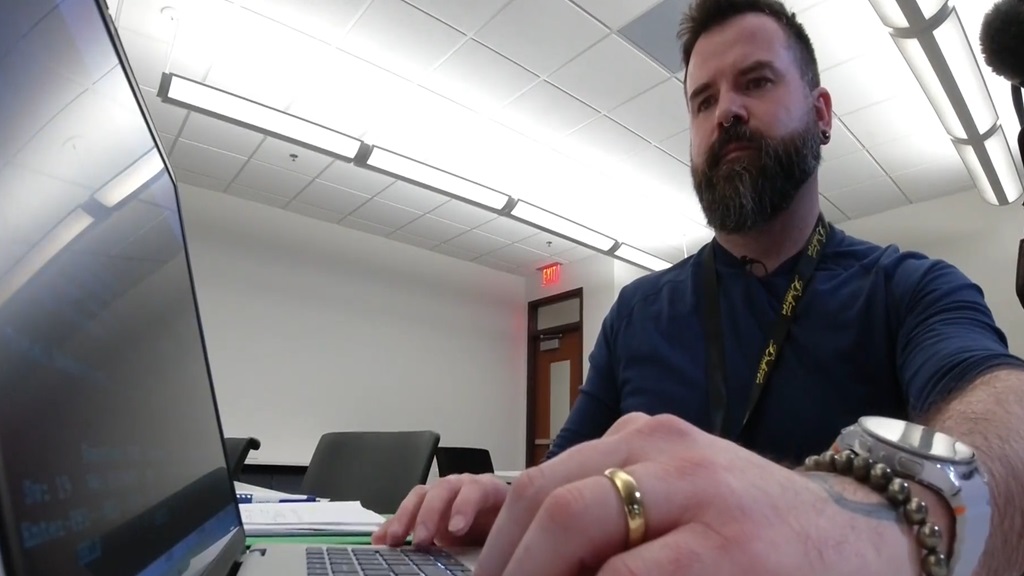
    Minnesota (WCCO) — To watch Zach Wegner work is like taking a trip back in time.

When he powers up his laptop and opens software used to enroll thousands of Dakota County, Minnesota, residents for food assistance, there is a reminder on screen of how long it’s been since there was an upgrade: “Copyright 1994.”

But the program MAXIS is even older than that, first launching in 1989, only a few years after the “Oregon Trail” game was widely available.

Upgrading this software and other outdated programs used to administer critical social services is a top priority for all of Minnesota’s 87 counties, which manage enrollment and case management for Medicaid, SNAP and other assistance. Local officials are pushing the Legislature this year to shore up support to bring these IT systems into the 21st century.

“You start out really getting into human services work wanting to help people, and you end up seeing a black screen, a green screen. And it’s a shock,” said Wegner, a program trainer specialist with Dakota County.

He has worked in the county for five years and in that time he has become more adept at using the software that is not compatible with a mouse, the backspace key or the “copy and paste” function that anyone with a computer is familiar with navigating.

It takes him an hour to fill out all the necessary information to check their eligibility and enroll someone in SNAP, but the expectation for a new employee, he said, is one application per day.

“We’re all trying to make the lives of Minnesotans better, and we are having to use outdated systems to do that,” Wegner told WCCO. “We’re doing our best, but we would really love to have just some better tools to be able to do it better and more efficiently.”

And other states are doing this more efficiently, said Matt Hilgart with the Minnesota Association of Counties. In Wisconsin, one person doing human services work can handle 900 cases. In Minnesota, that same person can only manage 300 cases.

“At a certain point, the ship has too many holes in it to keep afloat. We need to replace it, instead of just patching our way through this,” Hilgart said.

Bipartisan agreement at the Capitol that upgrades are essential It’s hard to unite all of Minnesota’s geographically, politically and economically diverse counties on much of anything, but on this issue, there is no daylight between them, Hilgart said. And in a politically divided Legislature, Republicans and Democrats alike hear the need loud and clear.

“We know that these systems aren’t just IT systems up in the cloud. They actually are impacting people’s day-to-day lives. And so they deserve better, the workers deserve better, and frankly, the property taxpayers deserve better,” Hilgart said.

MAXIS is not the only outdated system, either. Among the other programs needing upgrades include PRISM for child support that dates back to 1997 and SSIS from 1994, which is used for social services. The newest system launched in 2013 for health care benefits.

How much it will cost remains to be seen — Higart estimated a total system replacement could cost hundreds of millions of dollars — but there are more immediate needs that would have a lower price tag.

Rep. Paul Torkelson, the Republican Ways and Means chair in the House, said recently he puts the initial figure at $15 million to keep things afloat in the near term while allocating more money down the road. He agrees with Hilgart that many of the investments in the IT area could see a federal match, meaning the state would have to spend fewer funds to maximize the impact.

“Some of it is kind of unknown because this technology is changing so fast that the needs in the future are much harder to put a dollar amount on. That’s why setting up a fund that’s available in the future to fund these efforts at technology modernization is so important,” he said.

A proposal moving through the DFL-led Senate would earmark $70 million over four years for these upgrades. A separate measure backed by Sen. Scott Dibble, a Democrat from Minneapolis, is a constitutional amendment that would allow the state to borrow money like it can for infrastructure projects, known as “bonding,” for this IT modernization. If passed by the Legislature, voters would need to approve the changes this fall on the ballot.

“Just to wait for the one-off appropriation every year from the general fund of a few million dollars, $50 million, even $100 million — that’s just not enough to really get ahead of the game, which is what we need to do,” Dibble told WCCO. “It will take us another 50 years to improve the 50-year-old legacy system that we have.”

In the final weeks of session, legislative leaders and the governor are beginning negotiations about what a supplemental budget will look like. The backdrop is the state’s finances are tight and state budget officials are urging caution when it comes to spending additional money this year in order to stave off a potential deficit in the future.

But Hilgart said if lawmakers don’t throw counties a lifeline this year, there could be costly consequences.

As a result, counties would need to shift more cost burdens to local homeowners who have already seen their county levies soar by 7.6% on average this year, according to an analysis by the Minnesota Department of Revenue.

“[The systems] are to a tipping point to where functionally, they are unworkable at a certain point,” he said.

Federal changes coming will have impact, exacerbate need for upgrades Changes coming soon from the federal government that Congress approved in H.R. 1, the so-called “one big beautiful bill,” will compound the problems if the issue is left unresolved, Hilgart explained.

Among the provisions in that new law include more frequent eligibility checks for SNAP and more people in the program having to meet work requirements. There are also new work, education or community service prerequisites in order to qualify for Medicaid

All of this means more information for workers to keep track of and more time spent on the outdated systems. Wegner with Dakota County said switching from an annual to a biannual eligibility screening for some on Medicaid will double his workload.

Another federal change to SNAP specifically would shift more administrative costs to states — or, in Minnesota’s case, counties tasked with delivering these services — and hit them with a penalty of 6% of payments made in error. Minnesota’s error rate in 2024 was nearly 9%.

“As long as you have humans doing human work, you will have human errors. It’s just honest mistakes that can be made to cause this,” Wegner said.

He showed WCCO just how easy it is to accidentally overpay someone’s benefits, leaving them on the hook to pay back hundreds of dollars. Because the software is so clunky and workers have to input information many times over, it’s easy to type in the wrong data, which will miscalculate payments.

Both Republicans and Democrats at the capitol believe investing in upgrades will also make the programs vulnerable to fraud, a top priority for all four caucuses in both chambers this year.

“We’ve already talked about the bad situation that we’re in now that’s going to be further exacerbated in terms of additional wait times for clients, in terms of more levy dollars to spend on staffing up for the new mandates in these laws, and just bad outcomes in terms of the programs themselves — in terms of program integrity and in terms of the shortcomings that we know a 1980s system inherently has,” said Hilgart.

Please note: This story was provided to CNN Wire by an affiliate and does not contain original CNN reporting. This content carries a strict local market embargo. If you share the same market as the contributor of this article, you may not use it on any platform.

$500K Michigan Lottery winner, 63, says he was inspired by TikTok videos of lottery players

By Paula Wethington

Click here for updates on this story

    Michigan (WWJ) — A 63-year-old Michigan Lottery winner said he was inspired by players sharing their winning moments on the TikTok social media app and bought some instant lottery games for himself.

“I saw some TikTok videos of people scratching lottery tickets and winning big, and I thought to myself how that would never happen to me,” Grosjieon Moore, of Detroit, told lottery officials when he claimed his prize.

“A few days later, my wife and I were scratching Lottery tickets when she yelled: ‘We got a winner!’ She thought we’d won $50,000, but when I looked it over, I saw we’d actually won $500,000. It was amazing!”

Moore bought his winning $500,000 Bonus Scratch Multiplier instant game ticket at New Quick Stop Market on West Grand River Avenue in Detroit. Moore told lottery officials that he plans to save his winnings.

The $500,000 Bonus Scratch Multiplier instant game launched in February.

Please note: This story was provided to CNN Wire by an affiliate and does not contain original CNN reporting. This content carries a strict local market embargo. If you share the same market as the contributor of this article, you may not use it on any platform.

Federal appeals court upholds Texas law requiring Ten Commandments in classrooms

By S.E. Jenkins

Click here for updates on this story

    Texas (KTVT) — The Texas law requiring public schools to display the Ten Commandments in each classroom has been upheld by the Fifth Circuit Court of Appeals, according to an opinion released by the court on Tuesday.

In June 2025, the Texas Legislature enacted Senate Bill 10, which requires public elementary and secondary schools to display in each classroom a “durable poster or framed copy of the Ten Commandments.” The poster or copy must measure “at least 16 inches wide and 20 inches tall,” use an easily readable typeface, and be “display[ed] in a conspicuous place.”

A lawsuit filed in early December 2025 claimed that the law violates the First Amendment. The American Civil Liberties Union and religious freedom organizations filed the lawsuit in the U.S. District Court in San Antonio on behalf of 18 families with children in public school across the state. Sixteen school districts were named as defendants, including seven from North Texas.

Court says Ten Commandments displays are not “engines of coercive indoctrination”

The court found the law to be legally compliant with the First Amendment, meaning it does not improperly establish or endorse a religion nor does it prevent individuals from practicing their faith.

In its opinion, the court said in part:

“S.B. 10 … does not tell churches or synagogues or mosques what to believe or how to worship or whom to employ as priests, rabbis, or imams. It punishes no one who rejects the Ten Commandments, no matter the reason. It levies no taxes to support any clergy. It does not co-opt churches to perform civic functions. These are the kinds of things ‘establishments of religion’ did at the founding. S.B. 10 does none of them.”

The plaintiff’s lawsuit argued they didn’t “want their children to be forced to observe and venerate a state-mandated version of the Ten Commandments each school day, in violation of their religious freedom,” according to a news release from the ACLU.

The court disagreed, saying that SB 10 requires no religious exercise or observance.

“Students are neither catechized on the Commandments nor taught to adopt them,” the court document reads. “Nor are teachers commanded to proselytize students who ask about the displays or contradict students who disagree with them. Most importantly, the ‘coercion’ characteristic of religious establishments was government pressure to engage in religious worship. That’s why establishments prescribed liturgies and punished those who skipped them. S.B. 10 is far from that. It puts a poster on a classroom wall. Yes, Plaintiffs have sincere religious disagreements with its content. But that does not transform the poster into a summons to prayer.”

The court also said that exposing children to religious language is not enough to make the displays “engines of coercive indoctrination.”

“S.B. 10 authorizes no religious instruction and gives teachers no license to contradict children’s religious beliefs (or their parents’). No child is made to recite the Commandments, believe them, or affirm their divine origin.”

The ACLU released a statement on Tuesday saying it is disappointed in the court’s ruling.

“We are extremely disappointed in today’s decision,” the statement reads. “The Court’s ruling goes against fundamental First Amendment principles and binding U.S. Supreme Court authority. The First Amendment safeguards the separation of church and state, and the freedom of families to choose how, when and if to provide their children with religious instruction. This decision tramples those rights.”

The Senate author of the bill, Sen. Phil King, R-Weatherford, called the court’s ruling a great day for the state.

“As I have said all along, few documents in the history of Western civilization and in American history have had a larger impact on our moral and legal code, and our culture, than the Ten Commandments,” King said in a statement. “Returning this historical document to public school classrooms will provide moral clarity and allow students to better understand the foundation for much of American history and law. This is a great day for Texas!”

The case could ultimately end up in front of the Supreme Court.

Please note: This story was provided to CNN Wire by an affiliate and does not contain original CNN reporting. This content carries a strict local market embargo. If you share the same market as the contributor of this article, you may not use it on any platform.

Newly released 911 logs detail law enforcement response to Minnesota lawmaker shootings

By Conor Wight

Click here for updates on this story

    Minnesota (WCCO) — Recently released 911 logs provide new insight into how police responded to the assassination of state Rep. Melissa Hortman, including the fact that officers did not recover her body for nearly an hour after the initial shooting at her home.

Documents obtained by WCCO show that Brooklyn Park police first arrived at the Hortman’s residence at about 3:35 a.m. on June 14, 2025. They were doing a proactive check on the state lawmaker and her family after Sen. John Hoffman and his family were targeted earlier that morning in a violent shooting that left Hoffman and his wife, Yvette, injured; their daughter, Hope, narrowly avoided physical injury in the attack.

Officers instantly witnessed someone shoot a man in the doorway of the home. One of the officers fired his gun, and the suspect ran inside. It’s two minutes later, 3:37 a.m., that they “rescue” the first shooting victim. This was Mark Hortman, Melissa Hortman’s husband, who died from his injuries.

From there, police evidently proceeded with caution. They weren’t sure where the shooter was and did not know how many other people were in the home. The first two officers called for back-up and a drone was deployed to investigate the home. At 4:09 a.m., the drone observes a woman down on the stairwell, according to the 911 log. It’s unclear to first responders if she is still breathing.

By about 4:37 a.m., it’s still unclear to law enforcement if anyone else is still inside, including the shooter, but a team enters the property. It’s not until 4:40 a.m. that they successfully recover Melissa Hortman’s body.

By about 5 a.m., these documents also reveal that officers had a name; they knew they were looking for Vance Boelter. But that name wasn’t released to the public until later that afternoon; he was brought into custody on June 15 after a 43-hour manhunt.

Brooklyn Park Police Chief Mark Bruley declined to speak with WCCO-TV on Tuesday, but he called in to WCCO Radio on Monday to discuss the issue at hand. Bruley said that there’s important context missing from the 911 logs; the primary variable at play for the officers was that everything went quiet after the initial gunfire at the front door. It meant that there was no clear indication of an active threat to others, Bruley said, given they didn’t know about other victims in the house.

“There’s no other information about where anybody is in that house, there’s no other shooting, there’s no other ‘active killing’ indication,” Bruley said.

He said investigators would later learn that Melissa Hortman was likely struck by the same gunfire that hit her husband.

“When you actually hear the gunfire, that is very quick; it is not until long after that we’re able to piece it together that he essentially shoots Mark into Melissa simultaneously,” Bruley said.

Peter Johnson, a use-of-force expert who trains other members of law enforcement in firearm use, said that officers likely followed protocol here.

“Because the report does not indicate that officers heard continued gunfire, the situation would not have warranted an ‘active shooter’ response, which is reserved for situations involving ongoing, observable violence,” Johnson said in a statement. “Instead, officers appropriately contained the residence, called for additional personnel, activated SWAT, and worked to develop an operational plan despite having very limited information about the suspect’s exact location.”

Please note: This story was provided to CNN Wire by an affiliate and does not contain original CNN reporting. This content carries a strict local market embargo. If you share the same market as the contributor of this article, you may not use it on any platform.

Operation Metro Surge drained more than $600 million from Minnesota’s economy, court filing says

By Ubah Ali

Click here for updates on this story

    Minnesota (WCCO) — Operation Metro Surge ended just about two months ago. Now, an amended court filing is tallying the cost of the immigration crackdown.

Minnesota Attorney General Keith Ellison, along with Minneapolis and St. Paul, filed an amended version of their lawsuit against the federal government. State and local agencies say they were forced to spend big and fast without any warning.

The U.S. Immigration Policy Center at the University of California, San Diego surveyed more than 1,300 people living in both Twin Cities and found the operation not only disrupted daily life, but it also drained the local economy to the tune of millions of dollars, according to a new survey.

The new court filing claims a combined $610 million in business losses for both cities; more than $440 million in Minneapolis and just over $165 million in St. Paul.

That survey found encounters with federal agents caused many people not to go to work. Researchers estimate about $240 million in lost wages for residents. In Minneapolis, the total was nearly $190 million, and just under $50 million in St. Paul.

The surge strained police resources in both Twin Cities and across the metro. Minneapolis police, for example, extended 500 shifts and canceled 1,000 vacation days while they dealt with the calls for help.

According to a survey from January through the end of March, the Minneapolis Police Department racked up over $6 million in overtime.

The St. Paul Police Department spent nearly $5 million directly tied to federal immigration activity between November 2025 and February 2026.

The surge led to canceled conventions during those three months. The Minneapolis Convention Center brings in millions of dollars into the city, which is used to help pay for the city’s hospitality infrastructure.

The study also found people who encountered federal agents were far more likely to skip medical appointments. In Minneapolis, 66% of those needing urgent care avoided going to the hospital, the study found.

City leaders believe the damage left behind should not fall on local taxpayers.

Please note: This story was provided to CNN Wire by an affiliate and does not contain original CNN reporting. This content carries a strict local market embargo. If you share the same market as the contributor of this article, you may not use it on any platform.

University Park residents to be compensated for years of dealing with unhealthy drinking water

By Jermont Terry

Click here for updates on this story

    Illinois (WBBM) — A far south suburban community continues to deal with unhealthy drinking water.

The issue in University Park goes back nearly seven years. Now, residents could be eligible for a huge paycheck for their troubles.

From lead to nitrate in the water, residents have experienced it all. However, this week, the village is sending out letters informing them that they have settled a huge class action lawsuit against the water company and large compensations are coming.

For most residents in the village, water bottles serve as a constant reminder of what they can’t use from the faucet, including Keith Lynch.

Back in 2019, Lynch and those living in University Park were told by the water company, Aqua Illinois, that there was a major lead contamination. Bottled water was supplied back then and even now.

“Six years and we can’t resolve this? Something is wrong somewhere,” he said.

Pam Kedrouske, owner of Twins Lounge, has the same woes. Trying to run a bar without any water is costing them around $500 a month—that’s an extra $6,000 annually, and there was still a water bill to be paid.

A far south suburban community continues to deal with unhealthy drinking water.

The issue in University Park goes back nearly seven years. Now, residents could be eligible for a huge paycheck for their troubles.

From lead to nitrate in the water, residents have experienced it all. However, this week, the village is sending out letters informing them that they have settled a huge class action lawsuit against the water company and large compensations are coming.

For most residents in the village, water bottles serve as a constant reminder of what they can’t use from the faucet, including Keith Lynch.

Back in 2019, Lynch and those living in University Park were told by the water company, Aqua Illinois, that there was a major lead contamination. Bottled water was supplied back then and even now.

“Six years and we can’t resolve this? Something is wrong somewhere,” he said.

Pam Kedrouske, owner of Twins Lounge, has the same woes. Trying to run a bar without any water is costing them around $500 a month—that’s an extra $6,000 annually, and there was still a water bill to be paid.

“There’s going to be a monetary reward to all the residents who were on the lead advisory, and the do not consume list, but better than that, all residents of the great village of University Park will receive a monetary award,” he said.

“Gives me some relief,” Lynch said.

“Anything that any of the people in this town can get, they deserve it,” Kedrouske said.

Village leaders say the compensation will be retroactive to include people who even moved out of University Park but were impacted at the time.

“No amount right now can erase what we went through, but it will definitely help us feel better about our future,” said Trustee Gina Williams. “Whether you are a business, a church … everyone will be able to get compensated in some form or fashion.”

Residents will be eligible for compensation by this fall. Despite the pending compensation, the money doesn’t solve the ongoing water woes.

The money is said to be the first step. The mayor says next he’s working on getting federal funds so they can take the 12 miles of water pipe, switch the current water company, and move to a new water supply.

Please note: This story was provided to CNN Wire by an affiliate and does not contain original CNN reporting. This content carries a strict local market embargo. If you share the same market as the contributor of this article, you may not use it on any platform.

Oklahoma couple recreates quarter-century-old trip on Route 66 at Navy Pier

By Noel Brennan

Click here for updates on this story

    CHICAGO (WBBM) — A couple from Tulsa, Oklahoma, is recreating a trip they made a quarter-century ago in a century-old car.

Kicking things off at the symbolic start of Route 66 at Navy Pier, they didn’t have to travel very far for the adventure.

Where Route 66 begins, so, too, does a love story. Ed and Jackie Fogle got married and immediately put in the miles.

“Let’s just do Route 66. We grew up on it, didn’t we?” Ed said.

They hit the road for their honeymoon from Chicago to Santa Monica in their 1959 Cadillac convertible, with the top down every inch of the way, Ed said.

As Route 66 celebrates 100 years, the Fogles mark a milestone of their own — 25 years of marriage this June. Now, they’re ready for Route 66 again.

“But this time, let’s do it in a 100-year-old, what’s called an orphan car,” Ed said. “It’s a 1926 Hupmobile.”

So, how many miles does the car have on it? Well, that’s a mystery, as, according to Ed, the speedometer, odometer, and fuel gauge don’t work.

The Fogles towed it in a trailer from Tulsa, Oklahoma, to Chicago with help from a friend and mechanic, Tom Lord.

Lord doesn’t feel like a third wheel if the fogles didn’t really need him. The 100-year-old Hupmobile had the hiccups.

“It was okay right down to idle, and then it went over,” Ed said.

Lord tinkers and consults with a fellow mechanic on the phone, and the carburetor that appeared to be the culprit. Ed arranges an Uber trip for car parts, and Jackie tries to enjoy this first unexpected bump in the road.

“The mechanics didn’t need my help, so I’ll just look at the beautiful scenery here at Navy Pier,” she said, jokingly.

The adventure didn’t start the way they planned, but whether it’s thousands of miles or just a few feet, they push through it together.

“That’s going to be good enough.”

The good news is that despite the setback, the Fogles finally got the car started and have hit the road on Route 66.

Please note: This story was provided to CNN Wire by an affiliate and does not contain original CNN reporting. This content carries a strict local market embargo. If you share the same market as the contributor of this article, you may not use it on any platform.