Campaign launched to save SF Golden Gate Park’s last public pianos from vandalism, weather

By Suzanne Phan

Click here for updates on this story

    SAN FRANCISCO (KGO) — Golden Gate Park is down to its last public piano, after vandalism and weather damage rendered nearly all the instruments along JFK Drive unplayable, according to the nonprofit group that maintains them.

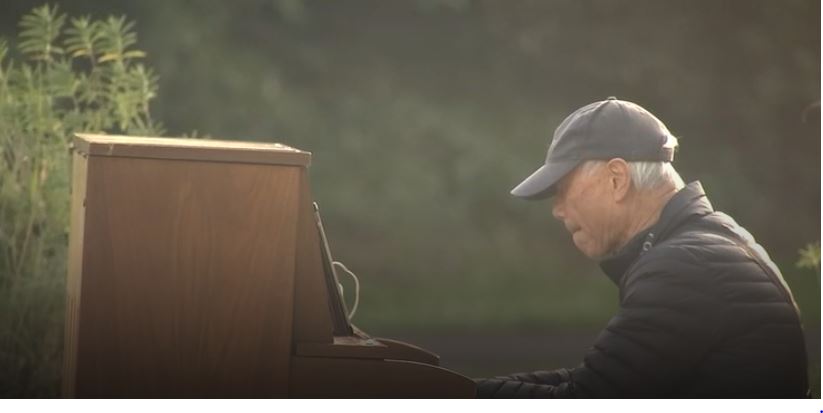
For 80-year-old Edward Young of San Francisco, the loss hits close to home, as one of his greatest joys is playing the public pianos.

One of his favorite pianos sits near Blue Heron Lake and JFK Drive, where he regularly stops to play.

“It cheers me up,” said Edward Young of San Francisco. “I try to slow down my dementia.”

For the past four years, the art nonprofit Illuminate has restored donated pianos and placed them along the JFK Promenade as part of a public art and music initiative.

“This is a beautiful last hurrah for people’s pianos. Instead of being tossed, they come here, get loved on very hard,” said Ben Davis, founder of Illuminate. “It’s amazing to see how much community forms around these pianos, how much joy centers around them.”

That effort has faced repeated setbacks. On April 18, someone flipped over the piano that stood in front of the Conservatory of Flowers, leaving it unusable.

“Somehow someone vandalized it. It’s not playable,” said Young.

“Three of the 12 (pianos) put on Golden Mile- three of them have been destroyed by vandals,” said Patricia Wilson of Illuminate.

Even when vandals spare the instruments, exposure to the elements often does not. The aging pianos are particularly vulnerable to moisture and changing conditions.

“Putting a piano outdoors is very harsh,” said Young.

Davis said the damage has steadily reduced the number of working instruments available to the public.

“We often have three on JFK Promenade. Right now, we are down to one,” said Davis.

In response, Illuminate has launched an online campaign aimed at restoring more donated pianos and building stronger protective covers.

The group is also exploring the possibility of purchasing a piano designed to better withstand outdoor conditions.

“The rain, the fog, the constant moisture,” said Davis.

For Young, the presence of public pianos in the park represents more than music. For the instruments themselves, Davis said, it offers a meaningful final chapter.

“We’re learning how to bring these pianos out and have them last and endure,” said Davis. “This is a beautiful way for a piano to end its life.”

Please note: This story was provided to CNN Wire by an affiliate and does not contain original CNN reporting. This content carries a strict local market embargo. If you share the same market as the contributor of this article, you may not use it on any platform.


Lawmakers push to bring back ‘dog court’ amid rise in canine bites

By Tara Campbell

Click here for updates on this story

    SAN FRANCISCO (KGO) — Dog bites are on the rise in San Francisco and local leaders want owners held accountable.

San Francisco Supervisor Stephen Sherrill is making a push to get what’s dubbed “dog court” back up and running.

It’s been on pause for nearly a year without an administrative hearing officer, a position the supervisor says must be filled.

“This is part of the board’s oversight responsibilities. We’re responsible for overseeing and making sure things get done. The money is there, the position is there. Like, let’s get this built. Let’s get this going,” said Sherrill.

The SFPD’s Vicious and Dangerous Dog Unit is still investigating reports of dogs biting people and other dogs, but without the court the accountability is missing.

Requirements like muzzling, mandatory obedience training and, in some cases, putting a dog down go by the wayside.

“At the end of the day, when dog bites are on the rise and we don’t have a hearings officer to deal with that, that is a massive problem. And I don’t think it’s appropriate,” said Sherrill.

ABC7 Eyewitness News spoke with dog owners and asked what they think of the city dragging its feet on filling the position.

“Well, that’s hard to understand because there are dogs that are vicious. And if there’s no accountability for him, then the owners have no reason to do anything about it. And somebody like me, who’s got a little dog, you know, so be a dog treat for some of those big dogs,” said Tony Sheakley, adding he’s witnessed several incidents involving aggressive dogs.

“There’s all kinds of things and we try to, you know, ask people to control their dogs or put them on a leash. But after a while it becomes like, well, we can’t be the dog park police,” said Sheakley.

One owner said there is an incident that stands out as particularly disturbing.

“I’ve seen it bite a person in the leg, bite another person’s dog,” said Alexi Calvo. “And, then basically the owner of the pit bull would just leave, so I could understand the value of a court because people are just like, you know, the owners are crying. The one guy was bleeding; he went to the hospital, and there’s really no accountability.”

Supervisor Sherrill brought these concerns to the Board of Supervisors this week, and expects the topic of hiring a hearing officer to be taken up next month.

Please note: This story was provided to CNN Wire by an affiliate and does not contain original CNN reporting. This content carries a strict local market embargo. If you share the same market as the contributor of this article, you may not use it on any platform.

Richard Allen’s attorneys file new brief to overturn Delphi murders conviction

By Ashley Fowler

Click here for updates on this story

    INDIANAPOLIS (WISH) — Attorneys for Richard Allen have filed a new brief in the Indiana Court of Appeals, continuing their effort to overturn his conviction in the Delphi murders case.

On Nov. 11, 2024, Allen was found guilty of two counts of murder and two counts of felony murder for the 2017 deaths of 13-year-old Abigail “Abby” Williams and 14-year-old Liberty “Libby” German near the Monon High Bridge near Delphi. He was sentenced to 130 years in prison.

In December, Allen’s attorneys appealed his conviction.

In a reply brief filed Monday, Allen’s legal team argues that the trial court made serious mistakes and reiterates claims made in Allen’s initial appeal, including:

The search of Allen’s home was unconstitutional and the resulting evidence inadmissible because law enforcement omitted or altered key facts when applying for a warrant; The statements Allen made while “gravely disabled” during solitary confinement were involuntary, the product of unconstitutional detention, and inadmissible; The trial court denied Allen his right to a fair trial, prevented his attorneys from presenting a complete defense.

In a motion filed along with the appellate brief, Allen’s attorneys say they need to argue the case before a judge because it involves complex legal issues and constitutional questions, including whether statements made during a mental health crisis can be considered voluntary.

Allen’s attorneys argue that the trial court’s decisions violated his constitutional rights and warrant a new trial.

The Indiana Court of Appeals will now determine whether to grant oral argument and will ultimately rule on Allen’s appeal.

Allen will wait for a decision from the court while serving his sentence in an out-of-state facility. As a precaution, the Indiana Department of Correction last year moved Allen from a state prison to the Lexington Assessment and Reception Center, a maximum-security state prison in Lexington, Oklahoma.

Please note: This story was provided to CNN Wire by an affiliate and does not contain original CNN reporting. This content carries a strict local market embargo. If you share the same market as the contributor of this article, you may not use it on any platform.

Inmates receive $1.2M after suffering abuse at Miami Correctional Facility

By Ashley Fowler

Click here for updates on this story

    INDIANAPOLIS (WISH) — The American Civil Liberties Union of Indiana has finalized settlements totaling more than $1.2 million on behalf of 31 people who were subjected to abusive conditions at Miami Correctional Facility.

The lawsuits were filed against the Indiana Department of Correction over the placement of inmates in cells with metal-covered windows and no working lights, leaving people in total or near-total darkness. In some cells, live wires hung from the ceiling, shocking people as they moved through the dark. Some inmates endured these conditions for months and were rarely permitted to leave their cells.

The first lawsuit was filed in 2021 on behalf of Jeremy Blanchard. Thirty more cases followed as additional individuals came forward.

Court papers say inmates suffered physical and psychological harm, including injuries, panic attacks, hallucinations, and self-harm.

“After more than five years of litigation, these settlements bring some measure of justice to people who have endured horrific abuse at Miami Correctional Facility,” Ken Falk, legal director at the ACLU of Indiana, said in a release. “The Eighth Amendment protects people in state custody from cruel and unconstitutional conditions, and our clients showed enormous courage in coming forward with their experiences.”

The ACLU of Indiana says it will “continue working to protect the constitutional rights of incarcerated people and hold the state accountable when those rights are violated.”

This story was formatted for WISHTV.com using AI-assisted tools. WISH’s editorial team reviews and edits all content published to ensure it meets our standards for accuracy and fairness.

Please note: This story was provided to CNN Wire by an affiliate and does not contain original CNN reporting. This content carries a strict local market embargo. If you share the same market as the contributor of this article, you may not use it on any platform.
Farmers face tough choices to keep permanent crops alive during the statewide drought emergency

By Leslie Solis

Click here for updates on this story

    CALDWELL, Idaho (KIVI) — With Idaho under a statewide drought emergency, farmers face tough decisions heading into this year’s crop season.

At Williamson Orchards and Vineyard in Sunnyslope, co-owner Mike Williamson said the biggest concern is simple but critical.

“How are we going to keep our vines and trees alive through the end of the summer?” Williamson said.

Drought conditions are not new to Idaho’s agricultural industry, but they pose unique challenges for farmers who rely on permanent crops like grapevines and fruit trees. These crops take years to establish and cannot be easily replaced or rotated.

“Our crops out here are permanent, that meaning they’re gonna stay here year in and year out, and as a farmer, it’s my job to guide my employees to care for these that includes applying the right amount of water,” Williamson said.

Unlike other farms that can pivot to shorter-season crops such as beans or peas, Williamson said vineyards and orchards require consistent care and water throughout the entire growing season. He noted the long-term investment makes water management even more critical.

“These vines behind us, they’re over 20 years old,” Williamson said.

To stretch limited water supplies, Williamson said his team will adjust by pruning their grapevines more heavily this season. The strategy reduces the plant’s need for water but also lowers overall production.

“If we use the strategy to reduce our crop through pruning to help mitigate water usage and reduce our water usage, that can reduce our yield, our overall yield, and it does affect our bottom line,” Williamson said.

Earlier this season, Williamson said farmers were warned water access could be cut off as early as August or September, a scenario that could have devastating consequences.

Recent rain helped improve conditions slightly, but uncertainty remains about how long water supplies will last.

Idaho’s agriculture depends heavily on snowpack in the mountains, which feeds reservoir and canal systems used for irrigation throughout the year.

To adapt, Williamson said his family’s century-old farm invested in water-efficient practices and technology.

“We use water-thrifty practices, including drip irrigation. The emitters put the water right where the plant is. We use technology out in the field as well. We have water sensors that go four feet down in the ground… to measure and monitor how the water table in our fields are doing, so that we can more precisely water. And water right when we need to and not overwater,” Williamson said.

Those systems allow farmers to deliver water directly to plant roots and avoid waste, a crucial strategy during drought conditions.

“Water’s a treasure, and we have to spend it wisely,” Williamson said.

Williamson said each farm faces different challenges depending on crop type, water access, and long-term investments. Many are working through the same uncertainty as they try to protect both their harvest and their livelihood.

This story was initially reported by a journalist and has been, in part, converted to this platform with the assistance of AI. KIVI verifies all reporting on all platforms for fairness and accuracy.

Please note: This story was provided to CNN Wire by an affiliate and does not contain original CNN reporting. This content carries a strict local market embargo. If you share the same market as the contributor of this article, you may not use it on any platform.

DNR begins stocking 20 million fish across more than 1,000 Michigan lakes and streams

By WXYZ Staff

Click here for updates on this story

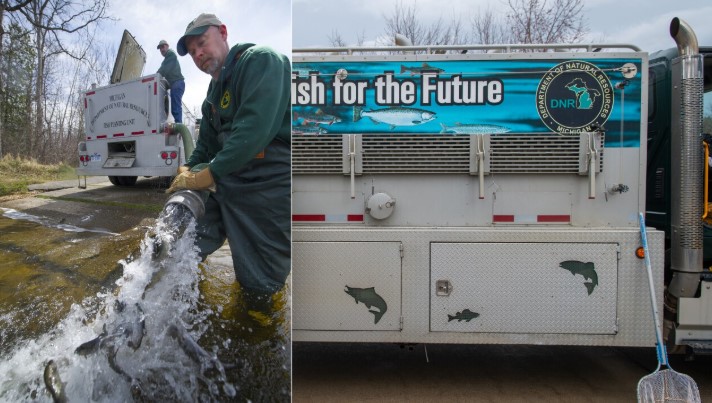
    Michigan (WXYZ) — The Michigan Department of Natural Resources said fish stocking is taking place in hundreds of lakes and streams across the state.

According to the DNR, there is a fleet of 18 specialist fish-stocking vehicles that are used to stock more than 20 million fish annually, weighing more than 350 tons.

Species stocked include: steelhead; Atlantic, Chinook and coho salmon; splake (a hybrid of brook and lake trout) and brown, brook, lake and rainbow trout; muskellunge and walleye.

The stocking begins in mid-March and ends in early June, and officials say the stocking trucks will travel over 100,000 miles to stock more than 1,000 locations.

According to the department, fish stocking is a valuable tool for fisheries managers, and can be used to provide a range of fishing opportunities, restore balance to ecosystems, rehabilitate fish populations and more.

“In some cases, stocking would be unnecessary or even detrimental to a lake or stream or to fish populations,” Jeremiah Blaauw, DNR fish marking and stocking biologist, said. “If a fish population is producing well naturally and in alignment with angling demand and management goals for that species, we don’t stock on top of those wild populations.”

Please note: This story was provided to CNN Wire by an affiliate and does not contain original CNN reporting. This content carries a strict local market embargo. If you share the same market as the contributor of this article, you may not use it on any platform.

Extinct butterfly at San Francisco Presidio being replaced with close relative

By Itay Hod

Click here for updates on this story

    SAN FRANCISCO (KPIX) — On a cool April morning in the Presidio, a team of volunteers fans out across the dunes, cameras in hand, and lenses ready. At first glance, it looks like they’ve come to capture something. But on this particular day, they were here to set something free.

For the past three years, Durrell Kapan, a senior research fellow at the California Academy of Sciences, has been trying to right what he calls an 80-year-old wrong.

“The Xerces blue is sort of a black spot on our record,” he said.

The story began in the late 19th century, when San Francisco paved over its coastal dunes for development, taking with it a tiny, iridescent butterfly known as the Xerces blue. By the early 1940s, it was gone, widely recognized as the first butterfly in North America driven to extinction by human activity.

Decades later, conservationists brought the dunes back, the sand, the native plants, and the ecosystem. But not the butterfly. So, Kapan and his team turned to the Xerces Blue’s closest living relative: the silvery blue butterfly.

Collected near Big Sur, the butterflies have been transported north and released under small mesh enclosures placed over deerweed, their host plant. The idea is simple: let them discover the habitat before they have a chance to leave it.

Restoring habitats isn’t new. But using one species to stand in for another, hoping it can fill the same ecological role, is a more unusual approach.

“Butterflies are an important part of the ecosystem,” says Phoebe Parker-Shames, a wildlife ecologist with the Presidio Trust.

And there are early signs it’s working. Researchers have already spotted unmarked Silvery Blues, an indication that some are being born here, not just brought in. So far, 46 butterflies have been released at the Presidio this spring, 167 in total.

“That’s the proof of all these little improbable pieces coming together,” Parker-Shames said.

By the end of the day, 14 more butterflies have a new home. For Kapan, the work is about more than restoration.

“By changing this, we’re learning how to repair nature,” he said.

Please note: This story was provided to CNN Wire by an affiliate and does not contain original CNN reporting. This content carries a strict local market embargo. If you share the same market as the contributor of this article, you may not use it on any platform.

Deputy fatally shoots armed man who threatened father

By Carli Petrus

Click here for updates on this story

    FRENCHTOWN TOWNSHIP, Michigan (WXYZ) — A Monroe County Sheriff’s deputy shot and killed a man armed with a knife Sunday morning after officials say the man threatened a citizen while soliciting money.

The incident happened just after 11 a.m. near the I-75 off-ramp at North Dixie Highway in Frenchtown Township, near the TownePlace Suites hotel.

Kris Blanchett said he had just exited I-75 with his 9-year-old daughter when they spotted a man near the off-ramp holding a sign. Blanchett said the sign was explicit, asking for money in exchange for a sexual act.

“When she read it out loud to me, I was just totally stunned, like what did you just, what did you say? And then I looked and he’s just standing there with a grin on his face,” Blanchett said.

“And it kind of blew my mind, so I opened my door and I had words with him and told him that he probably shouldn’t be out here. There’s kids out here. My concern for my daughter and everyone else’s kid that reads that,” Blanchett said.

The interaction quickly escalated.

“And he started to approach me and had something in his hand, I can’t say if it was exactly a knife or if it wasn’t, but I locked my door and he kept threatening me. I just drove off and called central dispatch,” Blanchett said.

The Monroe County Sheriff’s Office said a deputy was dispatched to the area after reports of a man soliciting money, threatening a citizen, and armed with a knife.

When the deputy arrived, officials say he tried to use a Taser twice, but it was ineffective. The deputy then fired his weapon, striking and killing the man.

The scene shut down the nearby TownePlace Suites hotel for hours. Philip Patel, TownePlace Suites by Marriott developer and operator, said the closure impacted guests.

“My hotel is closed, and it’s a part of major hotel and customer complaints are piling up, and some customers are stuck. They want to go home, or new customers want to come in, but we cannot allow that,” Patel said.

Blanchett said he regrets opening his door and never imagined his 911 call would end this way.

“I was actually, I didn’t think about it at first when I opened my door but it was a stupid move. Nowadays you never know what you’re going to get out of people,” Blanchett said.

“I’m really sorry that it escalated to this, you know, my thoughts are with his family and with the officers involved and I really hope that in the future these things can get handled without violence,” Blanchett said.

The deputy involved was not injured and has been placed on administrative leave. The Monroe County Sheriff’s Office asks anyone who witnessed the incident to contact them as the investigation continues.

This story was reported on-air by a journalist and has been converted to this platform with the assistance of AI. WXYZ’s editorial team verifies all reporting on all platforms for fairness and accuracy.

Please note: This story was provided to CNN Wire by an affiliate and does not contain original CNN reporting. This content carries a strict local market embargo. If you share the same market as the contributor of this article, you may not use it on any platform.
Digital checkouts surpass traditional books at libraries as funding questions loom

By James Taylor, CBS13 Photojournalist

Click here for updates on this story

    SACRAMENTO, California (KOVR) — Last year, more people checked out digital books and media in Sacramento libraries than traditional books, and that’s causing the city to re-evaluate funding.

“We don’t just have books. We have way more than that. We have community,” Donna Vega said.

Vega is a librarian in the Fair Oaks branch of the Sacramento Public Library, where patrons can check out some more unusual items, like an electric guitar.

“It’s a great way to test out things that maybe you don’t want to spend that much money on,” she said.

The Fair Oaks branch even has power tools.

“Our pressure washers are very, very popular,” Vega said.

The library also offers programs, classes and reading clubs. But Vega said the best part of her job is still helping kids find just the right thing to read.

“There’s no greater feeling because their eyes light up and they’re so excited to get that book,” Vega said.

Last year, the Sacramento Public Library added more than 90,000 new cardholders and saw an 18% increase in visits.

The growing popularity comes at a time when future funding for public libraries is uncertain.

The library gets 20% of its annual budget from the City of Sacramento, which is facing a multi-million-dollar deficit. And there could be impacts from proposed cuts to federal grants, too.

Patrons like Tony Brisbane say libraries serve a crucial role in the community.

“The library is needed. The kids come in and enjoy it,” Brisbane said.

Volunteers have been raising money to keep programs running.

“We have our Friends of the Library that work really hard at this branch to make sure that we get the help to shore up funding where we need it,” Vega said.

So it’s not the final chapter for these walls filled with books, so long as customers keep coming in and taking advantage of the free community benefit.

“It feels good to be able to provide that service,” Vega said.

Library officials say there are no planned closures or reduced hours, but final budget discussions are coming up later this spring.

Please note: This story was provided to CNN Wire by an affiliate and does not contain original CNN reporting. This content carries a strict local market embargo. If you share the same market as the contributor of this article, you may not use it on any platform.

83-year-old pilot breaks barriers, awarded FAA’s highest honor

By Rina Nakano

Click here for updates on this story

    THOUSAND OAKS, California (KCAL, KCBS) — A Thousand Oaks woman in her 80s is the latest recipient of the most prestigious aviation award in America, breaking gender stereotypes and inspiring other women to join the field.

Most people her age are giving up their driver’s licenses, but 83-year-old Cecilia Stratford is still in the cockpit.

“Well, there’s nothing like going up in the air and controlling the machine that you’re flying in and seeing the Earth,” Stratford said.

She still remembers feeling that thrill, 51 years ago, when she took her first solo flight.

“Well, I was dating a fellow who had an airplane, and he invited me to use his airplane to learn to fly. How could I say no?” Stratford said.

The boyfriend didn’t stick, but her love of flying endures. Over the last 50 years, she’s created seven giant scrapbooks highlighting her aviation career, most as a volunteer.

“I wasn’t interested in being paid to fly. Like to for the airlines. It did not interest me at all,” Stratford said.

Her passion is to share her love and skills with others. She’s flown medical supplies for relief organizations, given 900 introductory flights to kids, and mentored dozens, mostly women, to become instructors, commercial, and military pilots. One of them is Captain Genevieve Anonsen of the Air National Guard.

“Your impact reaches much further than any one airplane or any one career. It lives in the hundreds of young people who you have introduced to flying and the pilots you have helped along the way,” Anonsen said to Stratford during the award ceremony.

Before becoming a fighter pilot, Anonsen was Stratford’s mentee. Last month, she presented Stratford with the FAA’s highest honor, the Wright Brothers Master Pilot Award. Something awarded only to licensed pilots with a perfect safety record of 50 years, and less than one percent of airline pilots — only a handful of women — have received it.

“I am so privileged to reach that milestone,” Stratford said, noting that she does not plan to stop flying any time soon.

“I think it’s really important that we keep doing it — and the sky is not the limit!” Stratford said.

Please note: This story was provided to CNN Wire by an affiliate and does not contain original CNN reporting. This content carries a strict local market embargo. If you share the same market as the contributor of this article, you may not use it on any platform.