‘It was an execution:’ Cellphone video shows LAPD officers shooting man in back, family says

By Leo Stallworth

Click here for updates on this story

    LOS ANGELES (KABC) — The family of a 45-year-old man who was shot and killed by Los Angeles officers is demanding answers and releasing a video which they say contradicts what police say lead up to the deadly encounter.

Grief-stricken loved ones of Elias Real released cellphone video that they say captured the moment two LAPD officers opened fire as his back was turned and he appeared to be walking away.

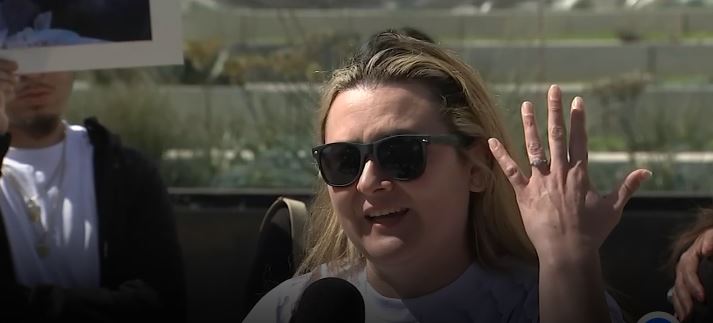
“They shot him from the back, and they kept shooting him after he was down,” his sister, Alejandra Barragan, said during a press conference Tuesday. “It was an execution, that’s what it was.”

The shooting unfolded just after 1 a.m. Friday near 111th Street and Van Buren Avenue in the Westmont area of South Los Angeles.

“At that time, they observed a suspect armed with a handgun. They gave him commands, but he refused to comply, at which point an officer-involved shooting occurred,” Capt. Mike Bland said at the scene just hours after the shooting.

Attorneys for Real’s family say the cellphone video directly contradicts the LAPD’s version of events.

Authorities say officers were responding to reports of a victim struck by gunfire near Vermont Avenue and 115th Street. The shooter was described as a 45-year-old man wearing a black sweater and pants. While canvassing the area, police spotted Real, who they say fit the description of the suspected shooter.

Police claim he was walking along the sidewalk, holding a handgun pointed to his head and that when he turned toward them, officers opened fire.

His fiancée, Patty Venegas, says she was on the phone with him the entire time leading up to the deadly shooting. She said if anything, police misconstrued the phone that was at his ear as a weapon.

“All he told me was ‘I just want you to know whatever happens, I love you, okay, I love you, but they’re gonna kill me.’ I heard the officers in the background saying ‘don’t reach for that weapon, don’t reach for that weapon’… And then I heard five to six shots and I heard him grunting every shot that he got.”

Please note: This story was provided to CNN Wire by an affiliate and does not contain original CNN reporting. This content carries a strict local market embargo. If you share the same market as the contributor of this article, you may not use it on any platform.
Nonprofit’s shop at undisclosed location is a haven for survivors of sex trafficking

By Leanne Suter

Click here for updates on this story

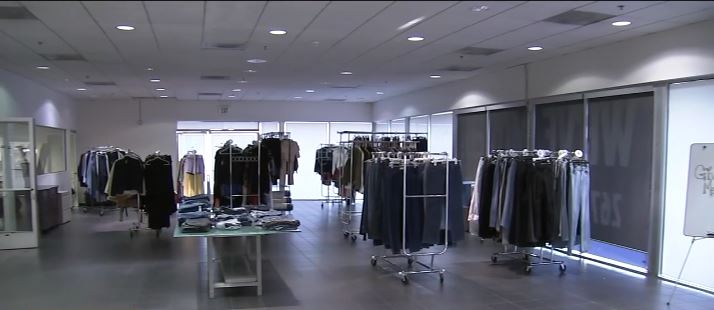
    LOS ANGELES (KABC) — Hidden in an undisclosed building is a nonprofit’s secret shop that serves as a haven for sex trafficking survivors in Los Angeles County.

Run by the organization Give-Mentor-Love, the shop offers much more than just a new wardrobe; it is a lifeline for those who have escaped the unimaginable.

For Veronica, it began at just eight years old.

“I thought I was gonna die at least 16, didn’t think I was gonna make it to 20,” she said. “It means a lot to me. I feel like it’s not only saved my life, but it’s helped me find a path.”

Veronica now wants to join the FBI and use her experiences to help others.

GML helps more than 1000 girls a year. A small fraction is trafficked in Southern California.

“It’s so common in all the areas all over L.A. County. It could be in your neighbor’s house, it could be down the street. It’s not just the highly populated areas,” said Ashley Westbrooks with GML.

For 20-year-old Keke, GML’s support was the key to breaking free and getting her life back.

“I was 13 years old and a boy said, ‘Oh you want to make money, yeah, let’s get some money.’ Didn’t know it would be him pimping me out,” Keke said.

The foundation helped with financial support and mental and physical safety.

It builds a sisterhood sanctuary to house female victims between 18 to 21 years old, a time when many have been kicked out of the foster care system. “We want to support them create a sustainable change, rebuilding this life that was taken from them,” said Westbrooks.

GML gives victims, who are often forgotten, the focus and attention they need to thrive.

“It’s like family once you’re in here you’re in here and there’s no leaving,” said Keke.

Last month, thieves raided GML’s warehouse, but the foundation was able to replace most of the items. However, the financial need is great as they work to save as many girls as possible from the streets.

To learn more about Give-Mentor-Love, visit the nonprofit’s website at givementorlove.org.

Please note: This story was provided to CNN Wire by an affiliate and does not contain original CNN reporting. This content carries a strict local market embargo. If you share the same market as the contributor of this article, you may not use it on any platform.
Teen with autism defies early diagnosis, thrives in college and athletics

By Pete Cuddihy

Click here for updates on this story

    COUNCIL BLUFFS, Iowa (KETV) — April is Autism Awareness Month, and one local teenager is showing what’s possible when determination meets the right support.

His name is Noah Houston, and he’s excelling at Iowa Western Community College.

“I’m doing sports media for my major. And I’m also a track and field athlete,” Houston said.

But his success today doesn’t tell the full story of the hurdles he’s overcome.

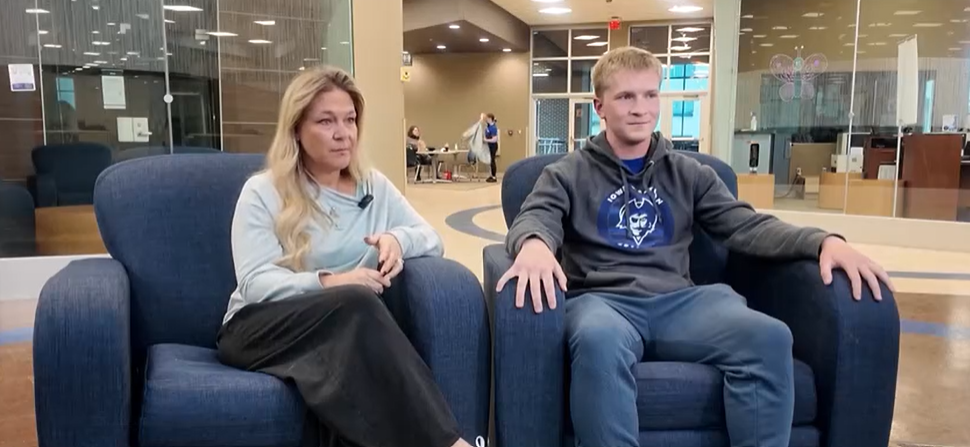
“When he was diagnosed shortly after 2, it was pretty heavy,” said his mother, Lynn Haver.

Noah’s mom, Lynn Haver, was told her son had autism and might never be able to speak.

“He had patterns and behaviors and things that just weren’t typical,” Haver said.

Not sure what to do, she followed guidance from professionals who recommended early schooling.

“It was monumental in his development. And it’s really six hours a day, four days a week. He was around peer models,” Haver said.

With support from Elkhorn Public Schools and a mindset focused on possibility, Noah pushed past the expectations doctors once set.

“I’m not going to put limits on it. So, if we start talking more, that’s great. If we start driving someday, that’s great. I didn’t say he will never do these things,” Haver said.

Now 18 years old, Noah is doing all of that and more, even discovering a passion along the way when he joined his high school track team.

“Every race, he just kept getting faster and faster and faster,” Haver said.

His success landed him a place in Elkhorn High School’s record books.

“It was 4×4 school record, 3:24.56, and that was set in conference,” Houston said.

Those accomplishments helped earn him a spot on the Iowa Western track team.

“Giving track a try really paid off,” Houston said.

When he’s not running or in class, Noah is gaining hands-on experience in media. He interns on Jimmie Allen’s radio show.

“I basically control the entire show. I work the audio board, and I have to cut out the audio. I have to serve the streams,” Houston said.

Through sports media, he’s looking to use his voice for his career.

“At one time, we were told he wasn’t going to talk. We were unsure if he was going to live on his own,” he said.

Now, Noah continues to prove that expectations are not limitations.

“I’m just kind of watching in awe. The sky is the limit with him,” Haver said.

Please note: This story was provided to CNN Wire by an affiliate and does not contain original CNN reporting. This content carries a strict local market embargo. If you share the same market as the contributor of this article, you may not use it on any platform.
Man gets 134 years after jury convicts him on 14 child sex abuse material counts

By Madison Taylor, Adam Roberts, DMM

Click here for updates on this story

    GREENWOOD, Arkansas (KHBS, KHOG) — A jury found a Greenwood man guilty on 14 counts of distributing, possessing, or viewing a matter depicting sexually explicit conduct involving a child.

Joel Nathan Newberry was sentenced to 134 years in prison.

The investigation began when the messaging app Kik flagged images of child sexual abuse material in December 2024 and notified the National Center for Missing and Exploited Children.

The center passed the tip along to state police, who linked the IP addresses of Newberry’s phone to the images. They also found that the email address for the Kik account matched Newberry’s.

He told police no one else in his home had access to the account, but said he did not upload the images.

The jury was seated on Apr. 6, 2026, and it convicted Newberry the next day.

Please note: This story was provided to CNN Wire by an affiliate and does not contain original CNN reporting. This content carries a strict local market embargo. If you share the same market as the contributor of this article, you may not use it on any platform.
AI helps uncover ancient history on display at Utah Valley University

By Jeremy Tombs

Click here for updates on this story

    OREM, Utah (KSTU) — Researchers and professors at Utah Valley University are using AI to help uncover ancient history from what they call The Buried Library.

“It’s a complete game changer for what papyrology can do,” said UVU philosophy student Orpheus Isom.

Isom never foresaw herself delving into the world of ancient papyrus scrolls.

“For a while, I wanted to be a political science major… and then I wanted to be an illustrator,” she admitted.

That led her on a study abroad trip to Italy, where she learned about the neighboring civilizations of Pompeii and Herculaneum.

“That’s where we first encountered the Herculaneum papyri,” Isom explained.

The relationships built with the people at the archaeological sites in Europe have helped the school bring an exceedingly rare sight to Utah.

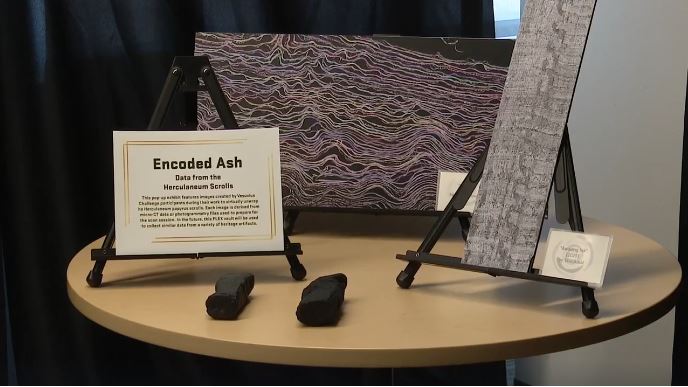
The four scrolls, 2,000 years old and never before seen in the United States, sit behind glass at the UVU conference this week, where scholars from around the world are gathering. They’re all paying attention as University of Kentucky researchers show how they’ve pioneered the art of ‘virtually unrolling’ the scrolls with AI.

“We started thinking… that we didn’t want things to be left behind in the digital age. Things that are damaged and fragile are really hard to digitize,” said computer science professor Brent Seales with the University of Kentucky.

Seales soon realized that in some cases, it’s about being able to see anything at all.

“The Herculaneum scrolls are quite unique,” explained University of Kentucky research assistant Seth Parker. “They’re basically pure charcoal. But in another sense, that’s what preserves them.”

Because the pages are so brittle, researchers came up with a way to non-invasively recover the text.

“The basic idea is that we CT scan them, which shows the internal structure of the scrolls,” explained Parker.

The group then puts that data into custom software to unfold the wraps of the scrolls and see their texts.

“The recent discovery was an extended passage on Epicureanism and, in particular, a discussion of scarcity and abundance,” said Seales.

“We’ve scanned about 50 or 70 scrolls, and of those, we’ve only recovered text from maybe two or three,” added Parker.

The task remains daunting, but they’re driven by what they’ve uncovered so far.

“There’s going to be more in this library about what we didn’t know about the ancient world,” Seales said. “We’re standing on the edge of a future that we can hardly even imagine.”

The Buried Library Conference is being held in Utah Valley University’s Clarke Building through Friday. Anyone wanting to see the scrolls can do so for free, but you must first register on the university’s website.

Please note: This story was provided to CNN Wire by an affiliate and does not contain original CNN reporting. This content carries a strict local market embargo. If you share the same market as the contributor of this article, you may not use it on any platform.
Weber State students show local residents innovative ways to cut energy use, lower bills

By Mythili Gubbi

Click here for updates on this story

    OGDEN, Utah (KSTU) — Students at Weber State University are taking what they learned in the classroom out into a neighborhood in Ogden. Their goal is to help families be energy-efficient and save money with lower bills.

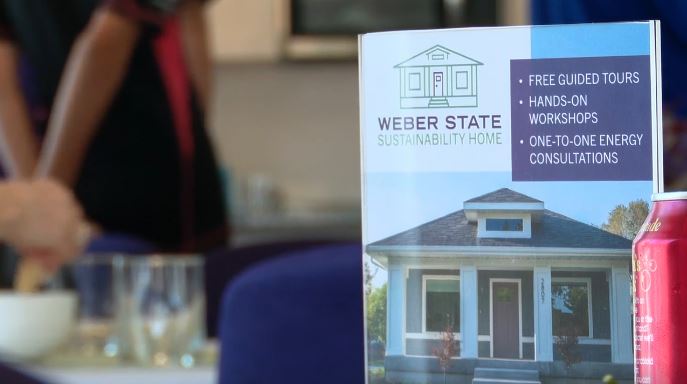
At the corner of 28th Street and Quincy Avenue in Ogden is the Weber State Sustainability home.

“It’s a net-zero, 100 percent electric home,” explained Adriana Van Vliet, a student who helped work on it. “We have 39 solar panels. Our heating and cooling is run through a heat pump system.”

The home demonstrates what living solely on solar power can look like. Students and staff will also host free workshops to give people ideas about what they can do in their homes, and provide supplies and consultations for free.

“You can still install door sweeps, you can use caulking tubes to seal the cracks by windows, and that alone is making your house a lot more airtight,” explained Van Vliet. She has lived in Ogden for most of her life and is looking forward to the opportunity to help her neighbors.

The home officially opened on Tuesday with a ribbon-cutting ceremony.

“We’re really excited to finally have our doors open and start working with the community more,” Van Vliet said.

Weber State construction students built the sustainable home in 2020 for a competition. A family bought the home, has lived in it for the past five years, and has kept their energy bills low. They sold the house back to Weber State, and it is now a playground for students to show what they’ve learned and for neighbors to come by and take free classes to try to implement some of these ways.

“This is our ventilation system that pulls fresh air from the outside and then heats or cools that air with the energy already inside,” staff member Joshua Taylor explained while giving a tour of the home to show people how it functions.

Kaylee Anderson is a Weber State alumna and is now a homeowner in Roy. She came by to see how she can make her own home more energy efficient.

“Taking care of our planet is the biggest thing to me,” Anderson said. “You can see pictures and diagrams all day long, but as soon as you see it actually implemented somewhere and see the data and the energy savings that’s actually happening, it helps be like, ‘This is actually an opportunity for me.'”

After the tour, Anderson said she already learned something to take home with her.

“They talked about just lowering the automatic water heater temperature from 140 — which is the standard — to 120,” she said. “You don’t ever really need 140 degrees, so 120 is great, and that’s a really easy way to reduce your energy consumption.”

Anderson was grateful that she and others got a chance to see how it all works.

Please note: This story was provided to CNN Wire by an affiliate and does not contain original CNN reporting. This content carries a strict local market embargo. If you share the same market as the contributor of this article, you may not use it on any platform.

Doctor sues surgery center after patient dies following “tummy-tuck” procedure

By Emily Sanderson

Click here for updates on this story

    CINCINNATI (WLWT) — A doctor has filed a lawsuit against a surgery center, claiming negligence and underqualified staff led to the death of his patient following a “tummy-tuck” procedure.

The civil lawsuit was filed by Dr. Shahryar Tork, a plastic surgeon practicing in Cincinnati, Ohio.

Tork is suing JourneyLite Surgery and its anesthesia partner Associated Anesthesiologists of Springfield, Inc., claiming the company’s lack of care led to the death of his patient, Rachel Tussey.

Tussey’s death made headlines after she went in for an abdominoplasty, commonly known as a “tummy-tuck” procedure at JourneyLite Surgery, but while recovering she was found to be unresponsive and was rushed to the hospital where she was found to be “brain dead.”

Her family said in videos online that Tussey died over two weeks later.

Tussey’s husband took to TikTok to share the story, alleging “incompetence.” The video quickly went viral on the social media platform.

In the suit, Tork claims he performed a nearly nine-hour surgery on Tussey, saying it went smoothly and she had “minimal blood loss” and required “very low doses of pain medication throughout the procedure.”

The suit claims Tussey was alert and talking post surgery and Tork left thinking she would be in good hands.

He alleges two of the nurses at the surgery center administered a 150 micrograms of fentanyl and .5 mg of Dilaudid, saying it led to her fatal overdose.

JourneyLite responded to the suit, saying its staff acted within the standard of care, that state auditors found no wrongdoing, and that the family refused an autopsy that could have determined the cause of death.

“It is unfortunate and somewhat shocking that Dr.Tork claims to be the victim here due apparently to the loss of his reputation in a case where the Tussey family tragically lost Rachel,” a law firm representing the surgery center stated.

The firm refuted the claim Tussey was given more opioids than needed, saying an independent review found the medications given were appropriate and within the standard of care and that her sudden unresponsiveness was not opioid related, claiming multiple doses of Narcan were administered and had no effect.

The suit claims the nurses did not call 911 until four minutes after telling Tork the call had been made. It also alleges one of the nurses improperly used a bag mask, leading Tussey to go without oxygen to her brain for six minutes.

In its response to the lawsuit, the surgery center claims it urged the family to allow an autopsy to determine the cause of death, but says the request was refused.

Tork is alleging the surgery center has a history of this kind of behavior with “over-sedating” patients and that one of the nurses had previously been fired for “incompetence” but was later rehired and another employee was fired for raising concerns about the nurse.

Tork also alleges the anesthesia team left the surgery center during post-anesthesia care violating Ohio administrative code.

The lawsuit also alleges the surgery center tried to cover up what happened by altering records, hiding the identity of the nurse involved and pressuring Tork to change his notes.

“I expressed my concerns to the facility regarding the orders that had been placed and the dosage that had been administered,” Tork said. “The following week, the phase one order sheet had become completely different.

JourneyLite denies any record tampering or cover-up and that any allegations that they attempted to are “false and defamatory.”

Tork is demanding a trial against those named in the suit, seeking compensatory and punitive damages.

The attorney representing the family of Rachel Tussey said a temporary restraining order is being filed against JourneyLite, to stop them from “further destroying, fabricating, or deleting evidence.”

Please note: This story was provided to CNN Wire by an affiliate and does not contain original CNN reporting. This content carries a strict local market embargo. If you share the same market as the contributor of this article, you may not use it on any platform.

Reclaiming the Range: Northern Colorado’s 11-year journey to restore the west’s most iconic species

By Maggy Wolanske

Click here for updates on this story

    LARIMER COUNTY, Colorado (KMGH) — The American bison’s story could have ended in extinction — but the species endures, and in northern Colorado, one herd is proving bison can flourish once again.

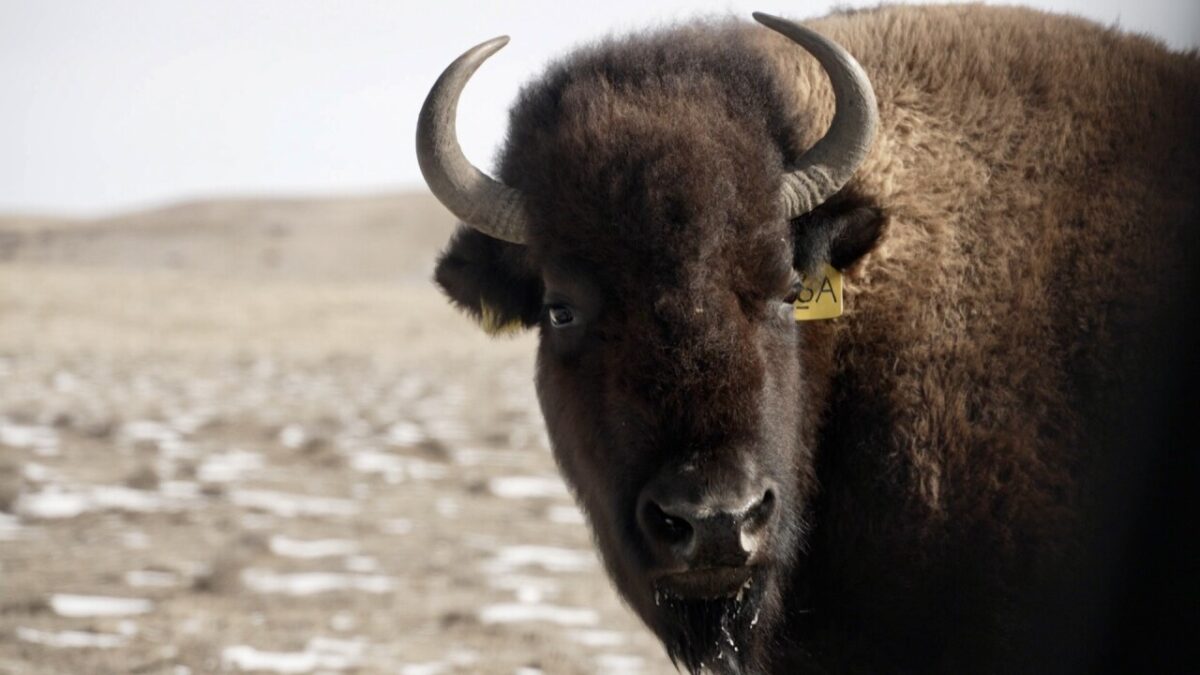
A partnership between Colorado State University, Fort Collins and Larimer County is proving that collaboration can bring back America’s most iconic species. In 2015, 10 bison with ancestry from Yellowstone herds arrived at Soapstone Prairie Natural Area. Over the years, the Laramie Foothills Bison Conservation Herd has grown in size and currently has three adult females and 29 calves on the land.

CSU associate professor Jennifer Barfield has been with the original herd since the beginning. She explained the cultural significance of this herd coming from the Yellowstone lineage, as they are known to be the more free-ranging of the animals.

“The idea is that this herd will be here for the foreseeable future, which does mean that the generations will pass through this herd here and that they will continue to live here and be bison,” Barfield said.

This marks the 11th year of the herd out on the prairie, with Barfield seeing the animals thrive from “beginning to end.” Her reproduction research benefits directly from the herd, which provides invaluable data and learning experiences for students back in the laboratory.

“It’s really special to see them out here on the prairie where they should be and should remain, and it’s great to know that we have a project where the community is engaged,” Barfield said. “We have the support of the city and the county to keep this herd here for the indefinite future to have bison on the landscape, to be the ecological engineers. They are to be the cultural connection that they can be for our community, and all of those things make this project really special.”

CSU offers a one-year master’s program in assisted reproductive technology, with Barfield serving as the director. The program teaches students how to become an embryologist while studying techniques and technology used in reproductive clinics for humans.

“There is no other program really like it in the U.S. that gives you as much hands-on experience in the lab, making embryos, freezing them, and thawing them out and doing all of those things, that you can find in reproductive clinics and labs across the world,” said Barfield. “So it’s a really special program, and yeah, it’s housed right here at CSU.”

A poster of a bison and calf is visible outside one of the labs. Barfield explained they have used reproductive technologies to support the bison herd and ensure the species exists for a long time. Specifically, they have embryos that are frozen, which can be used “decades or hundreds of years from now.”

“We have a few animals in the herd that have been produced by these technologies,” said Barfield. “Now, all of the bison out at Soapstone in the Laramie Foothills herd, they are all breeding naturally, and when we do the reproductive technologies, we do them here on the campus of the university and then introduce those animals back into the herd.”

For students in the program, like Jacob Cook, he was excited to have the opportunity to work with bison embryos and learn from Barfield.

“Anybody who comes here truly cares and loves the bison,” Cook said.

“It’s inspirational to see what we can do here and how it truly impacts other national parks and herds and other science programs that could start their own program one day,” he added.

The program has transferred more than 200 bison to Native American Tribes and to conservation programs like the Bronx Zoo and the Crane Trust. Being out in the prairie surrounded by this herd, Barfield sees her life’s work in action, a thriving conservation story that she helped create.

“I have known these animals, many of them, for more than 10 years now, and so just to see them living our lives out here is probably the best part,” Barfield said.

Please note: This story was provided to CNN Wire by an affiliate and does not contain original CNN reporting. This content carries a strict local market embargo. If you share the same market as the contributor of this article, you may not use it on any platform.

Man reunites with the heroes who saved him from a widowmaker heart attack 4 months later

By Deiah Riley

Click here for updates on this story

    PASCO COUNTY, Florida (WFTS) — Four months after suffering a “widowmaker” heart attack while driving, Randy Yingling reunited with the people who saved his life at HCA Florida Bayonet Point Hospital.

Tampa Bay 28 anchor Deiah Riley was invited to celebrate this emotional reunion. She sat down with Randy Yingling and his son, Lucas Yingling, to learn about the incredible chain of events that led to this reunion.

In December 2025, Randy was driving with his 13-year-old son, Lucas, when his heart suddenly stopped.

Randy’s wife, Patty Yingling, was on the phone with Lucas at the time of the medical emergency.

“I heard Randy say, ‘I feel like I’m going to pass out.’ And then Lucas said, ‘Dad,’ and then he screamed, um, call 911, and the phone went dead,” Patty said.

Lucas sprang into action, grabbing the steering wheel and guiding the car off the road.

“I screamed his name because I didn’t know if he was just like messing with me, so then I screamed it, and I knew something was wrong,” Lucas said.

Former Hillsborough County Deputy Gianfranco Tascione was driving behind them, saw the crash, and ran to help.

“He was slumped over the wheel and Lucas was asking for help. So I immediately just jumped into action, try to get him out of the car, um, and I started chest compressions on him,” Tascione said.

First responders arrived and transported Randy to the hospital, where doctors and nurses were ready. Dr. Rami Akel, chief of staff and one of the cardiologists who treated Randy, noted the collaborative effort required to save his life.

“Every person played a role. Every interaction mattered. And together we help guide Randy and the family through these darkest days,” Akel said.

During the reunion, Pasco County Fire Rescue presented Lucas with a Lifesaver award.

“For his heroic efforts, we would like to give Lucas our Lifesaver award. Nothing I can say can carry the weight of what you did by seeing him here today, so I’m just going to hand you this,” a Pasco County Fire Rescue representative said.

HCA Florida Bayonet Point Hospital honored Tascione with a Hero’s award. Hospital CEO Sally Seymour emphasized the teamwork involved in the rescue.

“We often talk about the chain of survival, and today we get to see that chain in real life,” Seymour said.

“It’s about a life saved. Not by one person, but a chain of people who did exactly the right thing at exactly the right time,” Seymour said.

For Randy and his family, the reunion represented courage, quick thinking, and second chances. Without Tascione’s courageous actions, Randy would not have survived.

“It’s overwhelming. I can’t thank them enough. I just can’t thank them enough,” Randy said.

Everyone in the hospital conference room echoed the importance of knowing CPR, noting that people never know when they will need it to save a life.

This story was reported on air by a journalist and has been converted to this platform with the assistance of AI. WFTS’s editorial team verifies all reporting on all platforms for fairness and accuracy.

Please note: This story was provided to CNN Wire by an affiliate and does not contain original CNN reporting. This content carries a strict local market embargo. If you share the same market as the contributor of this article, you may not use it on any platform.

Americans are changing end of life traditions and Tucson funeral homes are looking to adapt

By Alex Dowd

Click here for updates on this story

    TUCSON, Arizona (KGUN) — Very few things are certain, and while death is one of them, after-death rituals are not. They’re constantly changing and embracing new traditions.

In the past two decades, that trend has been cremation. The National Funeral Directors Association says the U.S. burial rate has been declining. In 2025, over 60% of bodies were cremated instead of a traditional burial.

At nearly a century old, Bring’s Broadway Chapel and Funeral Home on Tucson’s Eastside has lived through decades of trends and traditions.

In the past few years, Funeral Director Joseph Stone says he’s seen cremations outnumber burials in Tucson as well.

“People who live here in Tucson—particularly the Western United States— didn’t grow up here, don’t have roots here,” he said. “So, cremation affords them the opportunity to take their loved one either back to a place that’s home for them, or a place that’s with other family members, or a place where they might be permanently.”

Increasingly, families who choose cremation are asking to stay with their loved one’s body until the final goodbye. Though it’s common in Buddhist and Hindu practices, the trend seems to be spreading.

Faitha Bailey is the first point of contact when families call Bring’s or other Foundation Partners group homes.

“The first time I heard about someone asking to witness a cremation was my first week here at FPG,” she said.

Quickly, she realized those calls came in at least once a week, sometimes more, from a range of religious and cultural practices.

“From spiritual, to atheists, to Hindus, to Buddhists, to Sikhs, to Baptists,” she said. “There’s something about humans, we need to see, touch and feel that our loved one is gone.”

Bring’s has on-site cremation, allowing about 50 families and friends to stay in the room with the cremator, sometimes even letting them press the button that starts the process. Though Stone says not everyone is comfortable with that option, so they also offer rooms where loved ones can sit nearby and pay their respects.

“It’s like watching someone being laid to rest in a cemetery,” he said. “It is a very beneficial thing for families to be able to be part of the process, to know that it is their loved one who is being cremated, that those cremated remains that they’re getting back are their loved one. These are all important things, and families have conveyed that to us.”

Stone says Bring’s is eyeing new renovations to their facility to accommodate this growing trend.

Please note: This story was provided to CNN Wire by an affiliate and does not contain original CNN reporting. This content carries a strict local market embargo. If you share the same market as the contributor of this article, you may not use it on any platform.