Toy drive honors memory of Baby Lucas

Lauren Duffel

YUMA, Ariz. (KYMA) – Saturday is a very special day in the community, honoring the memory of Baby Lucas with a toy drive.

Everyone is welcome to join for a morning of honor, crafts, treats, face painting, and a special visit from the Easter Bunny.

The event will be held from 10 a.m. to 1 p.m. at Cafecito in Downtown Yuma.

“Lucas’s toy drive is in honor of my son Lucas. I had a full placenta rupture on April 7, 2015 and Lucas was stillborn, and we hold a toy drive in honor of him and all of the toys that are donated will be donated to Amberly’s Place,” Cynthia Crabtree, Lucas’s mother said.

If you are unable to attend, there is an Amazon link to make toy donations on Amazon. All proceeds will go directly to Amberly’s Place.

Click here to follow the original article.

New Online School Program Coming to District 91

David Pace

IDAHO FALLS, Idaho (KIFI) – Idaho Falls School District 91 will be expanding its online school offerings this fall to help meet growing demand for more flexible education options.

Students and parents looking to customize their education experience will have additional virtual tools available in August. 

The district will initially offer seven main courses online to students in middle school and high school.

“This fall we will be offering all of the core classes online – so English, Math, Science, Social Studies, Speech and Health,” said District 91 Superintendent Karla LaOrange. “Then second trimester, which starts right after Thanksgiving, we will be offering our full array of courses online.”

After the first trimester, it plans to expand to add Advanced Placement and other elective digital classes to the mix.

“We’ve recognized a need that our parents and community have expressed to just provide more flexibility and options for credits, for learning, and to address the unique needs of some of our students,” said Dr. Thomas Kennedy, District 91’s federal programs director.

Students in online courses will still be enrolled at their local high school or middle school, and can participate in extracurricular activities, dances, sports and clubs.

“The advantages of an online course are that students maybe might be experiencing anxiety, or some other health factors that really it’s best for them to step away from school for a trimester,” LaOrange explained. “There are other students that might want to accelerate or take more classes and earn additional credits, and they can do that. It offers some flexibility in their schedules so that they can work around scheduling conflicts or other internships.”

Middle school students can apply for the whole day online, while high schoolers can customize their schedule to take one or more digital classes at a time.

Students interested in enrolling can contact the counseling office at their high school or middle school for more information.

Click here to follow the original article.

First Wave of Layoffs Ensue at LA Semiconductor Facility in Pocatello

News Team

POCATELLO, Idaho (KIFI) – After years of financial and legal issues, LA Semiconductor LLC is letting go a total of 342 employees over the next several weeks. The first wave of layoffs occured April 10 with the second set for May 1.

The semiconductor industry is responsible for over 12,000 jobs statewide, with Idaho ranking among the top ten states for semiconductor workforce. The company’s financial trouble has been documented since 2024, when they fell behind in major equipment lease payments. Semiconductor components agencies, including global chipmaker Onsemi, filed a lawsuit on this alleged breach of contract. The company was placed into a recievership in December 2024.

Court records show Onsemi has provided funding to keep the facility running. The company is still looking for a buyer amidst these substantial layoffs.

Pocatello Mayor Mark Dahlquist commented on the situation, stating “I continue to remain cautiously optimistic that a buyer will eventually be secured. The situation is the result of a contract dispute between two semiconductor companies, not a reflection of the city or our efforts.”

The mayor also explained the city has been actively working to resolve many consequential issues. “We’ve been actively working through the Idaho Department of Commerce on the seller’s behalf to explore potential tax incentives,” he said. “We still believe in the long-term viability of this facility. The city of Pocatello stands by to assist in any way.”

According to Idaho Commerce, Idaho’s semiconductor industry, including LA Semiconductor LLC, accounts for 4 percent of the national industry employment. Local News 8 spoke with Brandon Duong, an economist at the Pocatello Idaho Department of Labor, who told us they know very little about the effect of the layoffs at this time.

“They had their planned layoffs, they were sending out their WARN notice,” Duong said. “That’s something that we publish publically on our website. As far as local impact goes, if the layoffs continue, we’ll just see how it pans out in our quarterly and annual data.”

WARN stands for Worker Adjustment and Retraining Notice, a mandatory 60-day notification of termination for employees. The State of Idaho WARN Notices show LA Semiconductor LLC sent notices to their employees on February 9 of this year, with the first effective release date set for April 10.

The 342 employees affected tops the number of laid-off workers at Intermountain Packing, a company in Idaho Falls who let go 150 employees on April 3 of this year.

Local News 8 has reached out to employees affected by the layoffs and await comment. We have also contacted LA Semiconductor LLC for direct comment and await their response. This is a developing story and we will continue updating our audience as more information becomes available.

Click here to follow the original article.

Celebration honors 25th anniversary of Carrizo Plain National Monument designation

Dave Alley

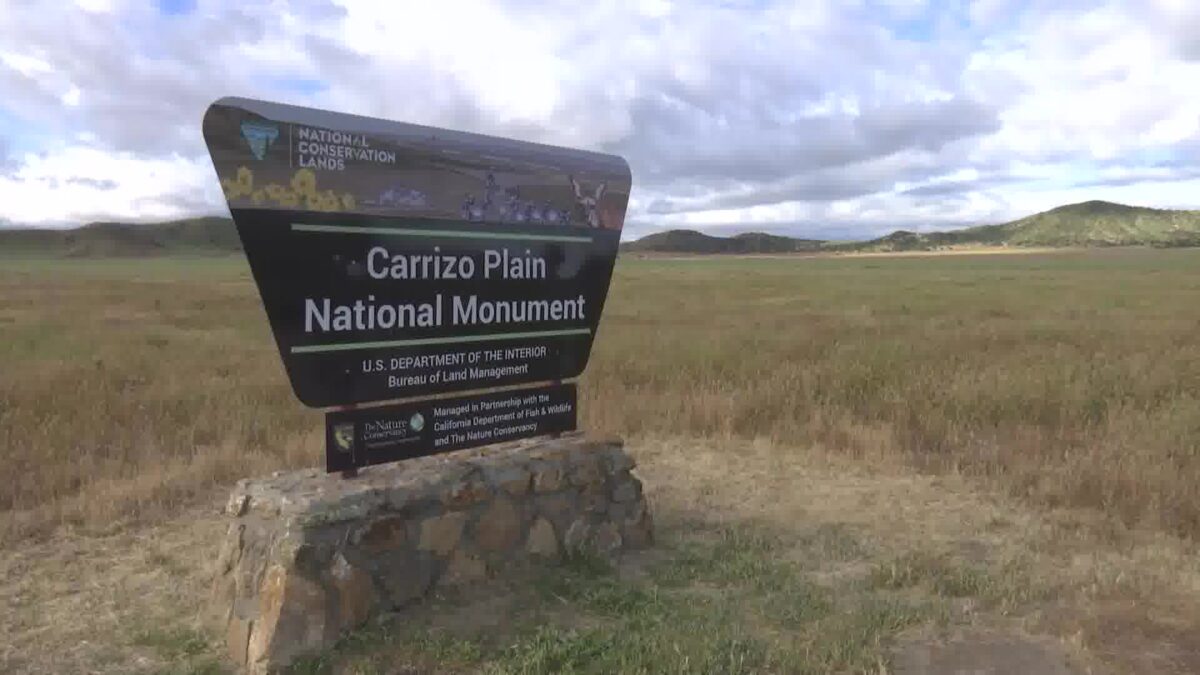
CARRIZO PLAIN NATIONAL MONUMENT, Calif. (KEYT) – A gathering was held Friday morning to celebrate the 25th anniversary of the Carrizo Plain National Monument designation.

In January 2001 during his final days in office, President Bill Clinton officially proclaimed the vast wilderness in remote Eastern San Luis Obispo County as a national monument, helping ensure the site remains as nearly untouched as it has for thousands of years prior.

“This is one of the truly last great places in California,” said Scott Butterfield, The Nature Conservancy Land Program Lead Scientist. “When the Nature Conservancy and partners, including the Bureau of Land Management and California Department of Fish and Wildlife came up with a plan to protect, connect, restore and steward this landscape for 40 years ago, I don’t think anybody could have thought that we’d be this successful.”

Spanning 250,000 acres, the Carrizo Plain is an important ecological and historical site that is managed jointly by the Bureau of Land Management (BLM), California Department of Fish and Wildlife and The Land Conservancy.

Sometimes referred to as “California’s Serengeti,” the Carrizo Plain is California’s largest native grassland and is home to the highest concentration of threatened and endangered species in the state.

“This area here is significant because it’s one of the last remnants, of the ecosystem that that was here thousands of years ago,” said Gabe Garcia, BLM Central California District Land Manager. “Many of these these areas have been converted to farmland. Many of them are now big cities, so this is the last remnant and kind of a conduit to the past.”

Garcia, who grew up only about 40 miles away from the National Monument in Buttonwillow, further explained why the National Monument designation has been so important to the area.

“There’s just more significance put on these places to protect them and conserve them for the ways that they’ve been used historically, out here,” said Garcia. “It’s a historically, an area that was used, in recent times, as a ranching area, so some of that is still prevalent, but before then, it was a very culturally significant place for our Native American, community. It’s a place where multiple tribes would meet. They would trade and there’s a lot of things that would happen here from a religious perspective for those groups and so we continue those traditions here on the monument, working through our Native American Advisory Council. There’s a number of research projects that go on with local, universities, who come out and do population research. We do research from a government perspective as well, to make sure that we’re doing what we can to preserve the ecosystems here so that these, animals that are listed as endangered species and may one day may be delisted.”

Butterfield, who has worked in the Carrizo Plain for more than 20 years, pointed out, as many did on Friday during the celebration held at the Guy L. Goodwin Education Center, the success of the ongoing conservation has been through a productive group effort that includes federal, state, local, private and tribal entities.

“The National Monument status allowed us to really focus our efforts in a collaborative way on how do we steward this landscape, how do we restore this landscape, how do we put in place the practices across this landscape that will lead to these species not only being able to survive and prosper here, but hopefully a vision in the future that these species could be doing well enough that they can go to other habitat, reclaim other habitat and become recovered species,” said Butterfield. “It’s a big deal that the designation was not only a representation of how important this place is, and how unique this place is, but it recognizes the importance of making sure we protect this place, manage this place and restore this place.”

Over the past 25 years, the Carrizo Plain National Monument has developed into a popular destination, attracting, according to Garcia, more than 2 million visitors.

“A lot of different things that pull visitors out to the to the Carrizo Plain,” said Garcia. “During the spring, we typically have a wildflower bloom. This year, the bloom was a little bit earlier in the season, compared to to most years, but typically during those that wildflower months, we’ll get 100,000 people out. We get lots of folks that come from all over the world.”

For those who do make the trek out to the Carrizo Plain, Garcia also offered some advice when traveling to a place where the closet gas station or store is about one hour away.

“Please plan ahead,” said Garcia. “Plan for a long day. There’s lots of things to see out here. There are no gas stations and no places to get food or water. Make sure you’re bringing all you need. Make sure you fill up and make sure if you use an electric vehicle, make sure you charge before you come out, and just really enjoy. Enjoy the day. Enjoy the solitude. There’s many days out here during the off-season you’ll go a whole day without seeing another car out here or another person, so it’s a place where you can come out and have solitude. We do have two campgrounds. It’s a first come, first serve basis, and if you come out and enjoy that, the nights are just beautiful here on a clear night.”

With the 25th anniversary celebration now finished, Garcia, along with the rest of the Carrizo Plain partners are now looking ahead at the next 25 years and beyond.

“We really set a really good foundation with our partnerships,” said Garcia. “We’re going to work collaboratively on projects moving forward. We’re always looking at ways to improve things out here and I think what we’re going to focus on is trying to improve visitor experience for the people that do come out. We’ve expanded our our visitor center over the last year here. We’ve it’s actually doubled in size and so that was a great addition to the national monument.”

For more information on the Carrizo Plain National Monument, click here to visit the Carrizo Plain webpage at the official BLM website.

Click here to follow the original article.

UCSB Athletics is leaving Big West to join WCC

Mike Klan

UC SANTA BARBARA, Calif. -(KEYT) – UC Santa Barbara has called a Monday press conference to announce that the Gauchos are accepting an invitation to join the West Coast Conference.

UCSB will play one more season in the Big West and begin competition in the WCC beginning in the 2027-’28 season.

“UC Santa Barbara is recognized as one of the nation’s leading public research universities, delivering an academically rigorous and socially rewarding experience, and committed to excellence,” said Chancellor Dennis Assanis. “We are thrilled to join the West Coast Conference, creating broader exposure and visibility for our athletics and academic programs. Sharing our story of success with new audiences will provide expanded opportunities for world-class academic and athletics experiences for our Gaucho community.”

West Coast Conference Commissioner Stu Jackson, UC Santa Barbara Chancellor Dennis Assanis and UC Santa Barbara Arnhold Director of Athletics Kelly Barsky will be at the press conference at 11 a.m. inside the ICA Building.

“This is a transformative moment for UC Santa Barbara Athletics, one that will bring together and excite our campus and community,” said Kelly Barsky, The Arnhold Director of Athletics. ” We are appreciative of the invitation from the West Coast Conference, and believe this is the right time to join with their expanded West Coast Regional profile and demonstrated academic and athletic excellence. We are grateful for our longstanding history with The Big West Conference, and as we enter into this new chapter both celebrate the history of our Gaucho programs as well as look forward to elevating our exposure, growing our programs and deepening our service to our student-athletes and community.”

“We are delighted and honored to welcome UC Santa Barbara into the West Coast Conference,” said Christopher Callahan, President of University of the Pacific and Chair of the West Coast Conference Presidents’ Council. “UC Santa Barbara brings to the conference athletic excellence and superb academics while preserving our geographic profile, enabling our schools to stay true to the mission of providing superior student-athlete experiences in all of our sports.”

“This is a monumental moment for the West Coast Conference as we grow our membership to 12 institutions for the first time in our history and enhance our national profile with the addition of UC Santa Barbara, ” said West Coast Conference Commissioner Stu Jackson. “We have been energized to expand our full membership to 12, a stated goal of the West Coast Conference Presidents’ Council, while bringing in a valued pattern that aligns with the conference mission. Our regional expansion has been guided by strengthening our competitive excellence and national exposure, with a continued focus on providing an enriching student-athlete experience. UC Santa Barbara Chancellor Dennis Assanis and Director of Athletics Kelly Barsky have demonstrated a strong commitment to supporting athletics and positioning their programs for success in today’s NCAA environment. UC Santa Barbara augments the West Coast Conference as an esteemed partner as We Rise in the West.”

(UCSB Athletics provided quotes for this story).

Click here to follow the original article.

St. Charles Road bridge closure prompts traffic changes for Columbia Public Schools

Euphenie Andre

COLUMBIA, Mo. (KMIZ)

Columbia Public Schools is preparing for major traffic changes following the closure of a bridge in northeast Columbia.

The St. Charles Road bridge closed Friday evening as part of a construction project expected to last about five months, bringing traffic challenges for families and commuters across the area.

The project began with a four-day demolition phase, scheduled to continue through 6 a.m. Monday. Officials with the Missouri Department of Transportation warn drivers to expect increased congestion—especially during morning arrivals and afternoon school dismissals.

As construction gets underway, Columbia Public Schools is urging parents to plan ahead and follow alternate routes provided by MoDOT to help keep traffic moving and ensure students arrive on time.

Traffic is expected to increase along several major corridors, including Route Z, Paris Road and Rangeline Street. Drivers are encouraged to leave earlier than usual, as bus routes may also experience minor delays during the initial adjustment period.

For those traveling from Interstate 70, officials recommend using Exit 133 at Route Z instead of Exit 131, then following Route Z to reach nearby schools such as Battle High School and Two Mile Prairie Elementary.

Those traveling southbound on Highway 63 are encouraged to take Paris Road, then connect through Mexico Gravel Road to Lake of the Woods Road. This route provides access to schools including Blue Ridge Elementary, Lange Middle School and Frederick Douglass High School.

Those traveling northbound on Highway 63 should exit at Discovery Parkway, continue to Rolling Hills Road, then use Richland Road and Rangeline Street to reconnect with Route Z.

A spokesperson for DS Bus Lines, which provides transportation for Columbia Public Schools, said bus pickup times will remain the same. However, the district is asking families for patience, noting delays are possible during the first few weeks of the closure.

Columbia resident Kate Boes, the closure hits close to home. She said she both commutes across the bridge for work and lives along Mexico Gravel Road—one of the suggested alternate routes.

“It’s definitely going to cause a lot of holdup until people get into a rhythm,” Boes said. “Then I feel like it’ll smooth out until the bridge reopens.”

Construction is expected to continue through the summer.

Check back for updates.

Click here to follow the original article.

Experts warn increased pressure during tax season fuels rise in scams

Mitchell Kaminski

COLUMBIA, Mo. (KMIZ)

As Tax Day approaches, experts are warning about a rise in scams, with scammers exploiting deadline pressure and new technology to trick victims.

According to an analysis by the Better Business Bureau Scam Tracker, tax scams resulted in more than $5.7 million in reported losses in 2025. While only about 13% of cases involved financial losses, the average loss per victim topped $32,000.

MJ Awwadi, owner of Right at Home Central Missouri, said scammers often target seniors, especially during tax season.

“They usually pressure seniors to pay and acquire an immediate payment for the seniors. And sometimes we instruct our caregivers to monitor for any signs of any calls from the scammers and to help out the seniors to avoid those scams,” Awwadi said.

Caregivers at Right at Home often help seniors identify suspicious calls, emails and payment requests. Awwadi said many scams now happen over the phone.

“The most common types we are seeing now it’s over the phone. Scammers know seniors are under extra pressure around tax time. They use what we call ‘Fear Factor.’ They scare people into acting fast before they think clearly,” Awwadi said.

He encourages families to watch for warning signs.

“I would encourage the adult children, for the seniors, to look for parents who suddenly seem stressed, hide emails or mention the need to buy a gift card for officials. Also watch if they are getting lost or unexpected calls,” Awwadi said.

However, experts say scams are not just limited to older adults.

Khesha Duncan, regional director for the Better Business Bureau, said advances in technology have made scams more convincing and more widespread.

“They wait for a particular season or time of year to decide they’re going to strike because they figure people are more emotional,” Duncan said. “However, they are getting better at it because of the technology. AI of course, spoofing websites, making fake websites that look really believable. And if you’re not careful, you can be fooled.”

Because of the new technology being deployed by scammers, Duncan says younger people are now just as susceptible to scams. 

“There used to be a time when seniors were scammed more or at least perceived to be for a lot of them. The truth of the matter is, again, because of the technology, it’s really interesting, the data we’ve found has kind of caught up in terms of age. It really doesn’t matter,” Duncan said. “The seniors are sometimes more likely to get scammed because of not having as much familiarity with computers, the Internet, what have you, or they just don’t like it. So they don’t pay as close attention. But with the younger people, they’re digital natives. They’ve always been on computers and plugged in and connected, and so they will sometimes think something is real or legitimate or believable simply because so much of what they do that is legitimate is on a device.” 

Scammers are also expanding how they reach victims.

“They’ve really dialed up the phishing scams via text and on social media platforms where they’ll pop up with a message or an ad saying, big tax refund, click here or I can prepare your taxes in one day or whatever the case may be,” Duncan said. “They’re getting your attention with some sort of urgent message or call to action, something that sounds like it’s good,  but if something sounds too good to be true, as we know it usually is.” 

Experts say one of the most important steps is slowing down and verifying information.

“The best way to approach it, as with any scam, is to put yourself in the driver’s seat. If you get a weird text message or email, particularly one with links or attachments that they’re trying to get you to open,  delete those if you get a phone call that sounds like it’s somebody from the IRS, because some of these scammers are really sophisticated. They’ll go so far as to have a fake badge number or something to make the caller believe or make the person that they’re calling believe that they’re legitimate,” Duncan said. 

Duncan emphasized that the Internal Revenue Service will not contact taxpayers through unsolicited calls, texts or emails.

“The IRS is not going to reach out to you via text, email or even a phone call. If it’s really legitimately the IRS, you’re going to get something in the mail in your mailbox,” she said.

She also warned about payment red flags.

“If you have a payment, if you’re not getting a refund, but you instead would need to pay the IRS,  please do it with a credit card,” Duncan said. “That’s a huge red flag if someone says, I can prepare your taxes and pay me with a gift card or cryptocurrency or that kind of thing, that’s not legit. We don’t encourage people to do that.  So just make sure that you’re taking those precautions.” 

Beyond immediate financial losses, scammers are often after personal data, something Duncan says is as valuable to the scammers as money itself because identity theft can lead to fraudulent tax filings in a victim’s name. The Better Business Bureau says filing taxes early can help reduce that risk.

For those using a tax preparer, Duncan said to be cautious of so-called “ghost preparers.”

“A ghost tax preparer, as we call them, is one who will prepare your taxes for you, but then ask you to sign at the end. And that’s why they get around the IRS is loophole,” Duncan warned. “You want to make sure that your tax preparer they’re preparing the taxes they need to sign off on that and have that responsibility and liability attached to them.”

Click here to follow the original article.

U.S. Forest Service helicopter rappel training returns to site west of Bend next week

Barney Lerten

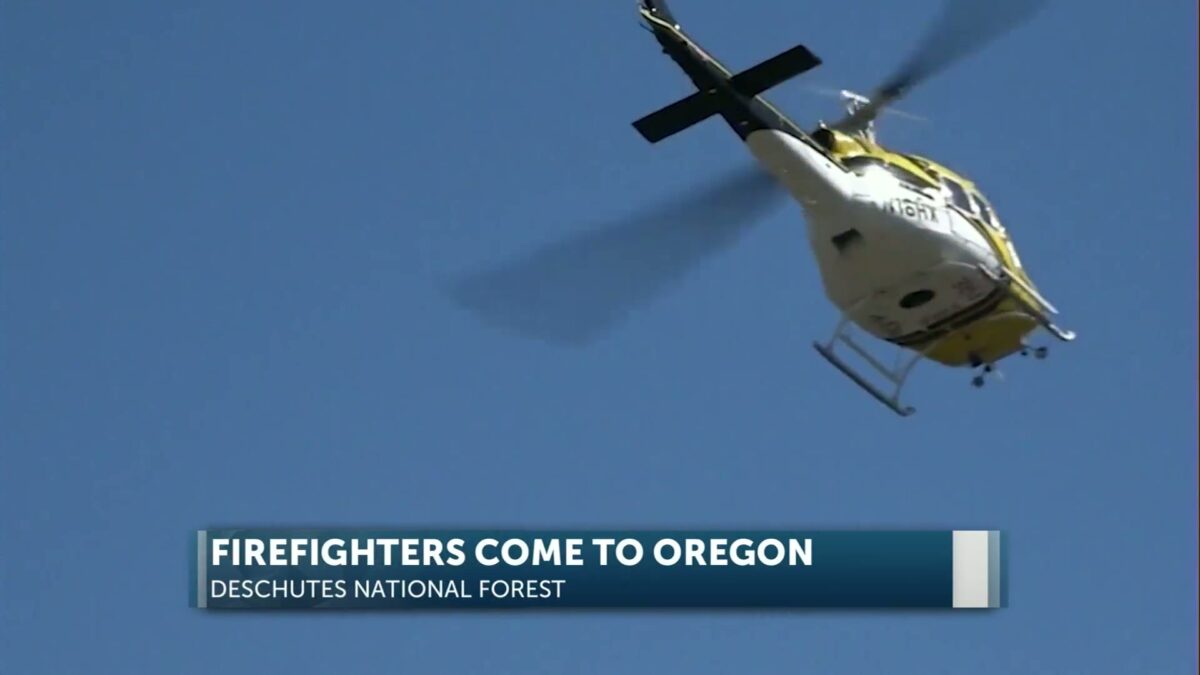
BEND, Ore. (KTVZ) — The annual national recertification event for the U.S. Forest Service Helicopter Rappel Program is planned next week west of Bend, adjacent to Forest Service Road 41.

The event is scheduled to start next Monday, April 13, and run through April 21, officials said Friday. Additional days are possible if weather impacts helicopter operations.

During the training dates, the public can expect to see up to six helicopters hovering in the air west of Forest Service Road 41 and south of the Cascade Lakes Highway at any given time between the hours of 8 a.m. and 6 p.m., including on weekends. 

While no trail or road closures are anticipated, officials say those recreating along Forest Service Road 41 and adjacent trails should adhere to any posted signage and avoid closed areas for their safety and the safety of training participants.

The national rappel event will provide certification for 65 spotters and 185 veteran rappellers. 

Rappellers are aerial-delivered wildland firefighters who rappel out of a helicopter to fight wildfires that are often in remote, difficult-to-reach locations.

In addition to initial attack, rappel crews also respond to large fires, all-hazard incident operations, and resource management objectives.

For further questions, contact the Deschutes National Forest at (541) 383-5300.

Click here to follow the original article.
Columbia organization is asking MoDOT for emergency vehicle road during I-70 construction

Alison Patton

COLUBMIA, Mo. (KMIZ)

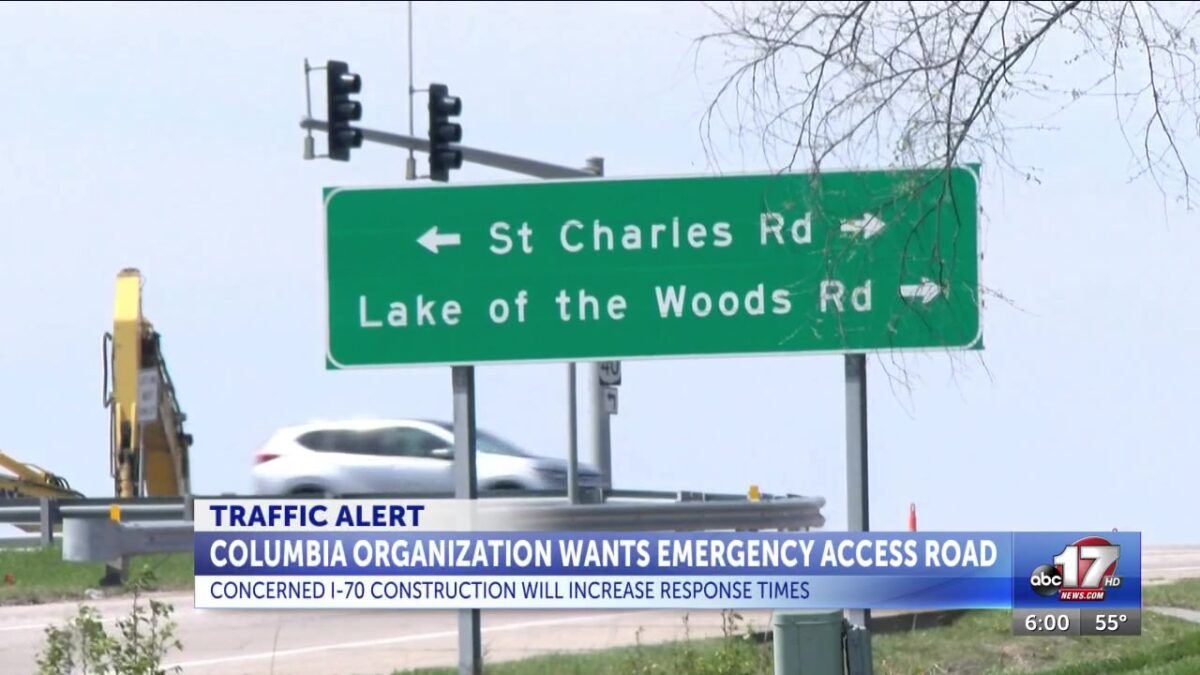
The U.S. Exercise Tiger Foundation is worried that the demolition of the St. Charles Road overpass and closure of a surrounding outer road could increase response times for emergency services.

Executive Director Susan Haines is proposing that the Missouri Department of Transportation construct a road that is only for emergency-vehicle access.

“We’re advocating that they build a 70-foot what we call emergency vehicle only bypass that would allow emergency vehicles to the I-70 corridor here for all the residents and businesses in this particular area,” Haines said.

Haines is concerned that emergency response times will increase because drivers will have to navigate around the closed I-70 Drive Southeast and avoid the St. Charles overpass, which will be closed for about four months once demolished.

At a press conference Thursday, Project Director Jeff Gander said MoDOT has been in touch with emergency response agencies.

“I know that there’s a concern that we have the southeast outer road closed at the same time that we are closing the St. Charles bridge, and while that will add response time to our EMS, it’s kind of a necessary evil,” Gander said.

ABC 17 News spoke with the Columbia Fire Chief Brian Schaefer on Thursday. He said the department is confident the closures and construction won’t disrupt responses.

“Everybody feels confident that we are going to be able to meet our goals to all of the areas without any significant change,” Schaeffer said.

Also said he would be willing to speak with MoDOT should they want to address accessibility and increase public safety.

Click here to follow the original article.

Idaho Warns of Tight Irrigation Season, Depleted Reservoirs and Water Shortages

Par Kermani

Idaho Falls, Idaho (KIFI) — Idaho could be heading into a tight water year after what experts say may be one of the lowest snowpack seasons on record.

The Idaho Department of Water Resources say a warmer-than-normal winter caused much of the state’s precipitation to fall as rain instead of snow, significantly reducing the region’s natural water storage.

“Probably the lowest snowpack in the history of Idaho,” said David Hoekema, a hydrologist with the agency. “We don’t have much snowpack, we’re not going to get a lot of runoff out of the mountains,”

Hoekema said the Boise Basin faces about a 50% chance of water shortages this season. In the Upper Snake River, the current supply is about 11% below typical demand, and a hot, dry summer would deepen the shortfall.

He stressed that 2026 is not yet one of Idaho’s worst drought years on record, thanks largely to stored water in reservoirs. But with limited snowmelt to refill those systems, the real concern is going into next year, when many reservoirs could be heavily depleted.

Some regions are already bracing for severe cutbacks. The Big Wood Canal Company is projected to have roughly half of its normal water supply, Hoekema said. In the Salmon Falls Tract south of Twin Falls, poor runoff and a reservoir sitting around 13% of capacity mean irrigation deliveries may have to be shut off as early as late May or mid‑June.

Around Idaho Falls and Pocatello, Hoekema expects growers to feel the squeeze as the season advances.

“We’ll get through the year, but it’s going to be really tight, especially if the summer gets hot,” Hoekema said.

Hoekema noted that recent years have already pushed Idaho’s temperatures toward record territory and said this water year may challenge a long‑standing 1934 temperature record.

At higher elevations, an intense heat wave at the end of March accelerated snowmelt by nearly two months, Snow that typically starts melting around mid‑May began disappearing in March, erasing a key buffer that usually carries irrigators into early summer before reservoirs are tapped.

Farmers are already adjusting. The irrigation season officially began April 1, but many canals are delaying diversions or working to deliver water as efficiently as possible. As natural flows drop and irrigators switch to using stored water, Hoekema said producers will need to watch their “storage accounts” closely and prioritize their most valuable crops.

“They’re going to have to really start watching that, and make sure they get the water to the high‑value crops,” he said. “They might have to cut off water supplies to alfalfa earlier this year than they typically would, or maybe have some other low‑value crops or fallow land… so they can stretch their water supplies.”

The picture is bleak across much of the West. Hoekema said Idaho has fared somewhat better than many neighboring states because of its high‑elevation mountain ranges, which captured at least some snow. But he described the broader region as facing “one of the worst droughts” in recent memory, with Oregon, Washington, Utah, Nevada and parts of California and Colorado struggling under low snowpack and heat.

“Besides Montana, we’re doing the best in a bad deal,” Hoekema said.

Residents, he added, have a role to play in stretching supplies — especially in a year when water managers want to keep as much water as possible available for agriculture, a major driver of Idaho’s economy.

In normal years, lawn irrigation supplied by canals can help recharge the aquifer. In a drought, though, Hoekema urged homeowners to cut back.

“In a drought year, you want to do everything you can to reduce irrigation to the minimum so that we can get it to the farms,” he said. “It’s probably not a bad idea to let your lawn brown out a little this year and just get water to where we need it for the economy.”

The drought is also expected to affect hydropower. Hoekema said Idaho typically relies heavily on hydroelectric dams for electricity — roughly three‑quarters of the state’s power in a typical year — but reduced river flows mean utilities will likely need to lean more on alternative sources, especially if the summer is hotter than normal.

Water officials are now watching the skies, hoping for a cooler, wetter pattern and a stronger snow year to follow. Without it, they warn, the tight water supplies facing East Idaho this season could turn into more severe shortages next year.

Click here to follow the original article.