The Switchbacks beat Sporting KC


Rob Namnoum
The Colorado Springs Switchbacks defeated Sporting KC in the U.S. Open Cup on Tuesday night three to nothing. As the Switchbacks advance in the U.S. Open Cup.
Rob Namnoum
The Colorado Springs Switchbacks defeated Sporting KC in the U.S. Open Cup on Tuesday night three to nothing. As the Switchbacks advance in the U.S. Open Cup.
By Richard Ramos
Click here for updates on this story
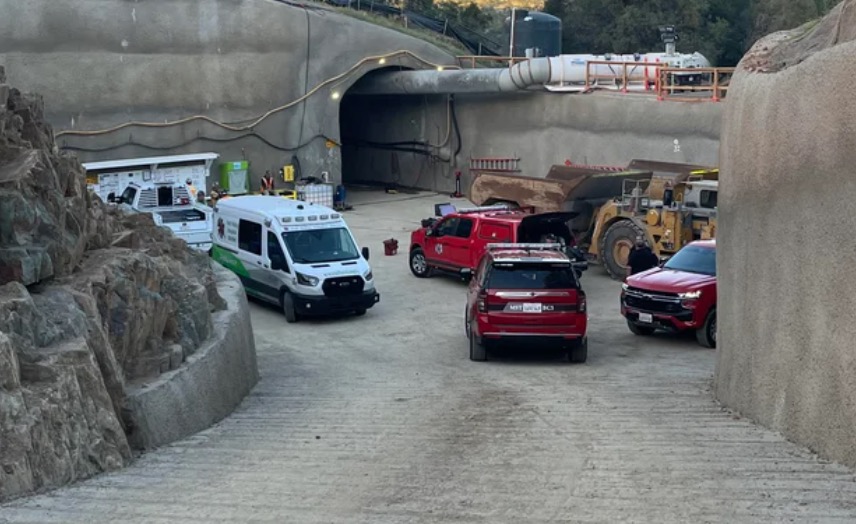
STANISLAUS COUNTY, California (KMAX, KOVR) — One person died and another was hospitalized after a construction site collapse in Stanislaus County on Tuesday, officials said.
It happened just before 3:45 p.m. at the Canyon Tunnel Project site, located northeast of Knights Ferry near Sonora and Schell roads, the South San Joaquin Irrigation District said.
Upon receiving the call about the incident, Modesto Fire officials said two people were believed to be trapped at the remote site.
The department said Tuesday evening that, when they arrived, one person was found injured outside the tunnel with minor to moderate injuries. A second person was still inside the tunnel and has been declared dead.
“Right now, we are formulating plans to recover that person,” said Captain Joe Spani with Modesto Fire.
Modesto Fire said the collapse happened about 200 feet into the tunnel. The site is on private property, an irrigation district spokesperson confirmed.
Stanislaus Consolidated Fire District crews responded along with Cal Fire, and officials from the Stanislaus and Calaveras sheriff’s offices also assisted.
The Canyon Tunnel Project is a joint effort between the Oakdale Irrigation District and the South San Joaquin Irrigation District. In a Spring 2026 update on the project posted to the South San Joaquin Irrigation District’s YouTube channel just hours before the collapse, footage shows some of the tunneling work being done inside.
At this time, it is unclear what may have caused the collapse at the site.
Officials say the situation remains evolving and additional updates will be provided as they become available.
Please note: This story was provided to CNN Wire by an affiliate and does not contain original CNN reporting. This content carries a strict local market embargo. If you share the same market as the contributor of this article, you may not use it on any platform.
By Mike Sullivan
Click here for updates on this story
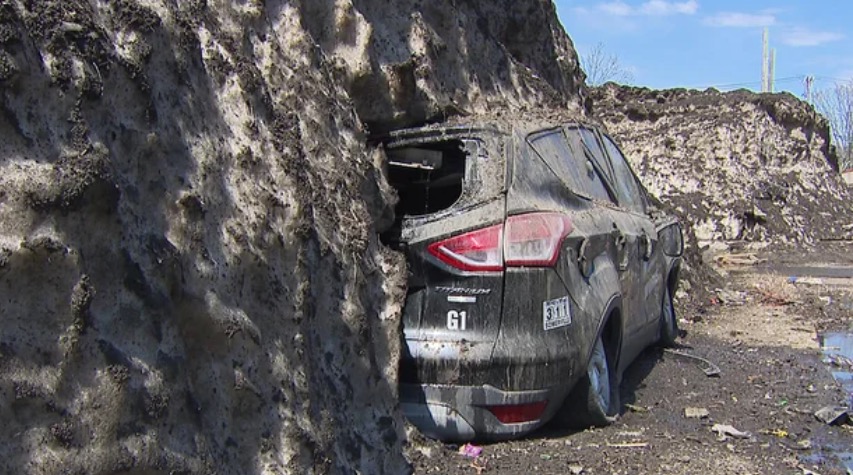
SOMERVILLE, Massachusetts (WBZ) — Neighbors and Reddit enthusiasts are making their way to Somerville, Massachusetts to check out a city vehicle crushed under a mountain of dirty snow in a lot on Washington Street. The city says the car is one of six under the snowpack, and it was done on purpose.
“I spotted it on Reddit, on a Boston subreddit post, and it hit pretty quick and furious,” said Ian Greenhalgh. He wasn’t sure if the image he saw online was AI, so he came to the lot to confirm its legitimacy. “Hopefully I have done my due diligence for the community here,” he said.
City says cars were inoperable The Somerville Department of Public Works says these cars are inoperable and awaiting disposal. With back-to-back major snow storms this year, they didn’t want to divert storm resources to move the cars. With dwindling places to put snow, burying them was their best choice.
“I don’t think they are going to drive that thing again. I mean, I think those are gone,” said John Neely, who came to take a photo of the car stuck in the snow pile. “It’s an interesting science experiment to have in your neighborhood, so I am just going to keep watching it.”
How long until snow pile melts? So how long will this spectacle stay with temperatures rising?
“We have seen snow piles last into June, and even July in some years,” said WBZ Weather Executive Producer Terry Eliasen. “That top layer of snow acts as a cold dome over the top of it, so you need a lot of heat energy to melt something like that.”
Eliasen says white snow will melt slower because it reflects the sun. The snow pile in the junk lot is extremely dark and covered in filth and debris.
“If you have dirtier snow, dark colors absorb sunlight, so the sunlight would actually melt it quicker, but you’re talking about 10 feet of dark snow densely packed in one giant cube of ice,” said Eliasen.
When he and the WBZ weather team talk about snowpacks on rooftops, they say there’s roughly three pickup trucks worth of weight for two feet of wet snow. If there is 10 feet of snow on top of these cars, that could be 15 pickup trucks worth of weight.
“That car has 50,000 to 60,000 lbs. (of snow) at least on top of it, so it may be so encased in ice. Once it starts melting, it will just collapse,” said Eliasen. “The amount of weight on that car is colossal.”
“It’s free Boston entertainment basically,” said Neely.
Please note: This story was provided to CNN Wire by an affiliate and does not contain original CNN reporting. This content carries a strict local market embargo. If you share the same market as the contributor of this article, you may not use it on any platform.
KPIX
By Loureen Ayyoub
Click here for updates on this story
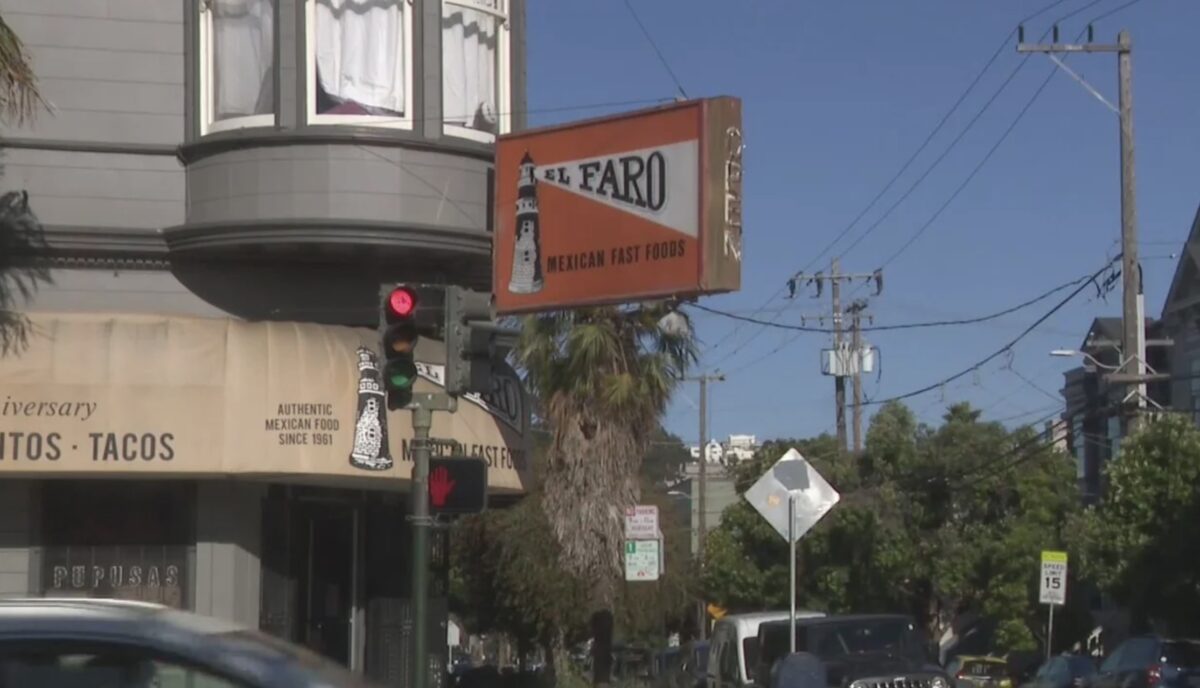
SAN FRANCISCO, California (KPIX) — San Francisco taqueria El Faro, credited with inventing the super burrito, may be forced to sell its restaurant, citing an extreme rent increase.
Esther Harkreader has lived in the Mission District neighborhood for 20 years. For her, it’s like home.
“I don’t even have to say anything. I just walk in and say, ‘Hi.’ And they say, ‘How many?’ And they make my food. They know me. They are good neighbors,” Harkreader said.
El Faro has been in the Mission since 1961, known for its famous super burrito. But as the economy booms in San Francisco, so does the rent. The daughter of the family-owned business says her mother was caught off guard by the rent increase.
“To our surprise, it was almost a double raise, so it was like 73% increase after we did some math,” Patricia Kocourek. “(My mother) spent her adult life coming from Mexico here. She’s very attached sentimentally.”
Customers, like Harkreader, can feel that community connection firsthand.
“She has given me free burritos on my birthday before, and they’ve become good friends, I feel like, you know? I read the story last night, and I almost cried,” Harkreader said.
Ce’Myah Bacchus attends a nearby school in the neighborhood and says the owners always take care of her, even when she is short on cash.
“I’m pretty sad, honestly, because it’s been here for so long. The burritos are so great. And the people there are just so nice. Any time I don’t have enough, they give me a discount,” Bacchus said.
The restaurant was able to pay rent for the month of April, but they say the future remains uncertain.
Currently, El Faro is listed on Facebook Marketplace for $225,000. They say so far, they haven’t gotten any offers close to their asking price.
Please note: This story was provided to CNN Wire by an affiliate and does not contain original CNN reporting. This content carries a strict local market embargo. If you share the same market as the contributor of this article, you may not use it on any platform.
By Loureen Ayyoub
Click here for updates on this story
SAN FRANCISCO, California (KPIX) — San Francisco taqueria El Faro, credited with inventing the super burrito, may be forced to sell its restaurant, citing an extreme rent increase.
Esther Harkreader has lived in the Mission District neighborhood for 20 years. For her, it’s like home.
“I don’t even have to say anything. I just walk in and say, ‘Hi.’ And they say, ‘How many?’ And they make my food. They know me. They are good neighbors,” Harkreader said.
El Faro has been in the Mission since 1961, known for its famous super burrito. But as the economy booms in San Francisco, so does the rent. The daughter of the family-owned business says her mother was caught off guard by the rent increase.
“To our surprise, it was almost a double raise, so it was like 73% increase after we did some math,” Patricia Kocourek. “(My mother) spent her adult life coming from Mexico here. She’s very attached sentimentally.”
Customers, like Harkreader, can feel that community connection firsthand.
“She has given me free burritos on my birthday before, and they’ve become good friends, I feel like, you know? I read the story last night, and I almost cried,” Harkreader said.
Ce’Myah Bacchus attends a nearby school in the neighborhood and says the owners always take care of her, even when she is short on cash.
“I’m pretty sad, honestly, because it’s been here for so long. The burritos are so great. And the people there are just so nice. Any time I don’t have enough, they give me a discount,” Bacchus said.
The restaurant was able to pay rent for the month of April, but they say the future remains uncertain.
Currently, El Faro is listed on Facebook Marketplace for $225,000. They say so far, they haven’t gotten any offers close to their asking price.
Please note: This story was provided to CNN Wire by an affiliate and does not contain original CNN reporting. This content carries a strict local market embargo. If you share the same market as the contributor of this article, you may not use it on any platform.
By Beret Leone
Click here for updates on this story
TRUMAN, Minnesota (WCCO) — Most people run to their basement during severe weather, but Melanie Metz instead runs toward the storm.
The National Weather Service confirms three tornadoes hit southern Minnesota Monday night in Amboy, Matawan and Elmore. That’s on top of dozens of hail reports and even some gusts of wind nearing 60 MPH in southern parts of the state.
The weather allowed Champlin based meteorologist and storm chaser Metz to capture some seriously captivating footage. Metz has been chasing storms for 25 years.
“I can’t believe it, honestly. I mean, that’s a long time when I started chasing it was before we even had smartphones, so I couldn’t see radar when I was on the road. It’s been a long time,” she said.
Monday night, her vantage point was from Truman, Minnesota — near Fairmont. She met up with a fellow meteorologist and friend to stake out the storm. She captured some incredible videos, including one which depicted an intact, super cell tornado. Metz believes it the tornado NWS pegged in Amboy.
“We ended up chasing this storm for quite a while until it finally started to organize and became a supercell and produced a couple of tornadoes right in front of us,” she said.
Metz says the chase is thrilling, fascinating and combines her love of storms and photography. But—it’s not something to try without experience.
“There’s so much passion and excitement and energy in it, it’s also very dangerous, and we have to remember that, because we can tend to forget that, especially now, with just so much video out there, tornadoes and people trying to get really close, it’s important to remember how dangerous it can be,” Metz said. “If you get in just the wrong spot, it can happen quickly.”
Metz describes Monday night’s storms as “potent” and “explosive.” She says this kind of weather is typical in Iowa and Kansas this time of year, but it’s a bit unusual for Minnesota in April.
Please note: This story was provided to CNN Wire by an affiliate and does not contain original CNN reporting. This content carries a strict local market embargo. If you share the same market as the contributor of this article, you may not use it on any platform.
By Olivia Young
Click here for updates on this story
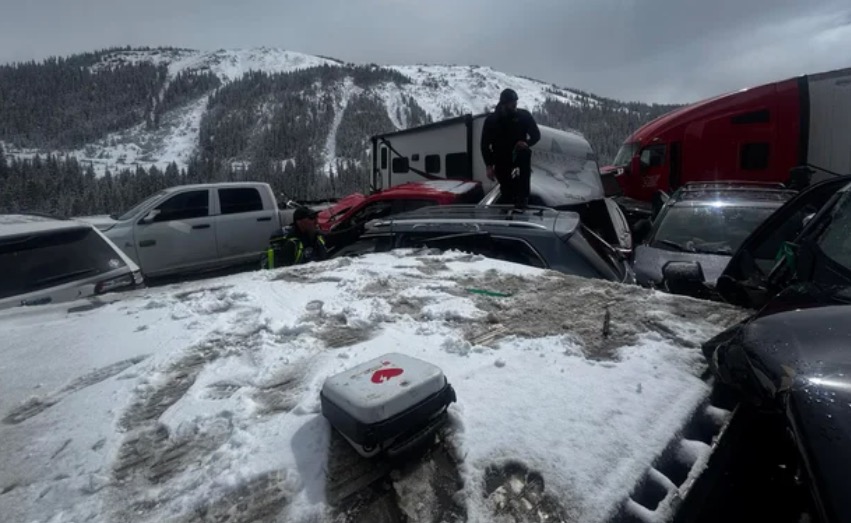
GEORGETOWN, Colorado (KCNC) — The small mountain community of Georgetown in the Colorado mountains stepped up to offer aid to people impacted by the 70-car pileup on I-70 on Tuesday.
“I didn’t see it coming,” said Emily Medina.
By the time Medina realized there was a pileup involving ten vehicles in front of her, she was the 11th car.
“I was just exiting the tunnel, and everything looked pitch black. It was snowing heavily. When I went to brake, because I could see cars that had already crashed, I was trying to slow down, and that’s when I crashed,” said Medina.
The vehicles continued to pile up behind her.
“I think I was actually one of the last people to crash in that pileup. Then, right at the end, another truck cut across the road, and there were even more crashes, and people were injured,” said Medina. “The person I hit, because, yes, I did crash into someone, they were quite badly injured.”
“Terrible. Yeah, that’s big. It’s terrible,” said Ron Grady, the owner of a restaurant in Georgetown called 511 ROSE.
As first responders jumped into action, so did the Georgetown community, opening the community center as an emergency shelter.
Loveland Ski Resort shuttles transported some people from near the crash site to the Georgetown Community Center, which became a warming shelter for both people and pets involved in the pileup. It was somewhere they could decompress while they waited for a ride.
“You just think about people stranded on the highway,” said Grady.
Grady was enjoying a day off when he got a call from the town’s mayor, telling him about the crash and the need for the town to step up.
“Lounging around in our pajamas, just kind of enjoying a day off, watching it snow. We’re closed Tuesday, Wednesday,” said Grady. “We decided that we would come down and just open up and see if people needed a place to sit or eat or just relax.”
Grady quickly called his staff, and opened 511 Rose with a limited menu — on a day they’re usually closed — to offer shelter and a warm meal to any impacted travelers.
“It could be a friendly face or a cup of coffee, just something that we can do to try to help,” said Grady.
As the traffic slowly cleared, and tow trucks hauled cars away one by one, the small mountain town welcomed those during a tough time.
“If there’s people that need help, we want to help,” said Grady. “It’s just a really nice, small Colorado community.”
511 Rose ended up mostly being a warm place for some cold journalists, and others from the community who had jumped in to help. It doesn’t appear anyone impacted by the crash came to the restaurant.
A Georgetown representative said by 8 p.m. Tuesday everyone was out of the community center shelter, most of them got rides, and one found a hotel.
Please note: This story was provided to CNN Wire by an affiliate and does not contain original CNN reporting. This content carries a strict local market embargo. If you share the same market as the contributor of this article, you may not use it on any platform.
By Lesley Marin, Dean Fioresi
Click here for updates on this story
REDLANDS, California (KCAL, KCBS) — The Redlands Unified School District voted on Tuesday to keep the King James Version of the Bible in school libraries during a school board meeting.
The complaint, which put the Bible ban in the spotlight at Tuesday’s meeting, was made after RUSD officials passed a controversial policy that allows the removal of books deemed inappropriate for students. The rule calls for challenged books to be temporarily removed from library shelves and reviewed by a committee that grades them for their content and its appropriateness for school-age children. After the review, the final decision is left with the RUSD board members.
Of the nearly two dozen people who spoke during the meeting, none agreed that it should be banned, but people noted the clear divide in beliefs.
“This is no accident,” said one speaker. “Promoting your own perspective, while banning stories that represent other communities, that is hypocrisy.”
“To ban the Bible takes intellectual dishonesty,” said another.
Pat Molnar, a teacher at Redlands High School for three decades, is one of many critics of the district’s new policy and whether it is being implemented fairly.
“I don’t want the Bible banned, but I sure don’t want classic books like ‘Handmaid’s Tale’ to be banned either,” Molnar said. “I just want them to consistently apply rules and not take away works of great literature.”
So far under the new policy, RUSD has opted to ban “Push” by Sapphire, and “The Bluest Eye” by Toni Morrison has been restricted to students over 18 with parental consent.
Ultimately, after some deliberation, officials decided to keep the King James Version at their high schools.
The King James Version was first commissioned in 1604 and then published and sponsored by King James six years later.
Please note: This story was provided to CNN Wire by an affiliate and does not contain original CNN reporting. This content carries a strict local market embargo. If you share the same market as the contributor of this article, you may not use it on any platform.
By DeJanay Booth-Singleton
Click here for updates on this story
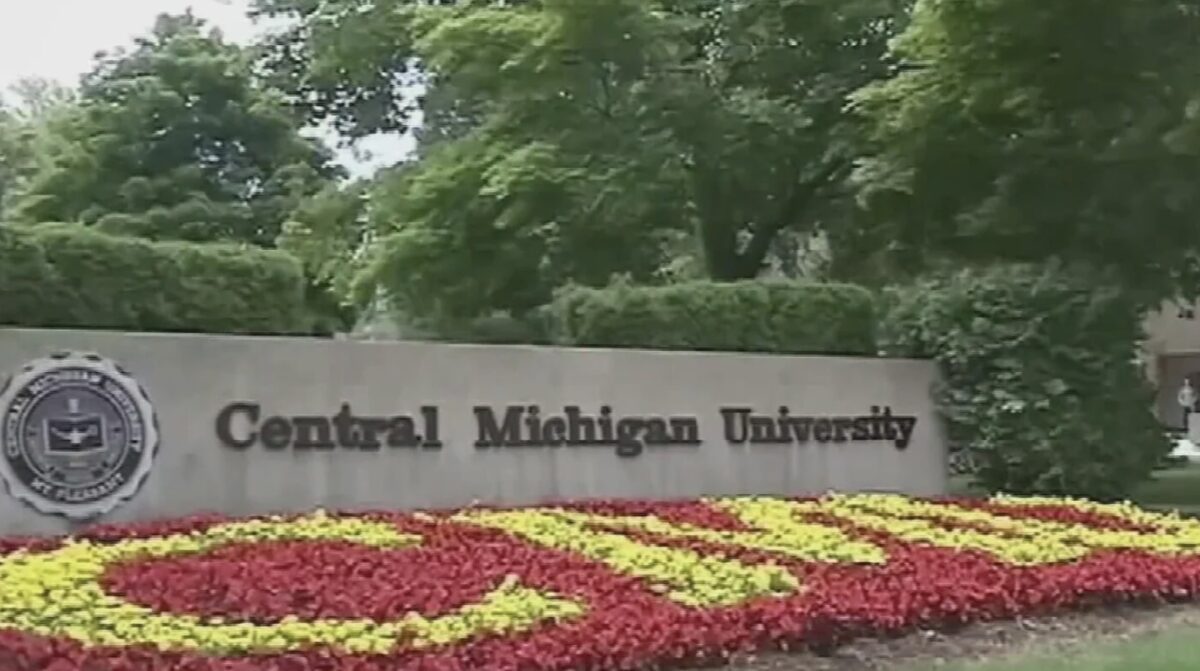
MOUNT PLEASANT, Michigan (WWJ) — A Central Michigan University student, who officials said posted “concerning” messages on social media, has been banned from campus.
In a note to students and faculty on Tuesday, CMU officials confirmed that the student would be arrested if they returned on campus. University officials did not provide details on the messages, but said they were posted on the university’s accounts and police had been tracking them.
Officials said police had been in contact with the student.
“Law enforcement and others have been in touch with the individual, and there is no immediate threat to our campus community. While still ongoing, the investigation has been referred to the Isabella County Prosecutor’s Office for review,” the university said.
This comes a day after university police said on Monday they were aware of the messages. Officials acknowledged concerns from students and staff, admitting that there was a lack of information provided by the university that led to confusion.
CBS-affiliate WNEM in Saginaw reported that while CMU operated normally, some students did not go on campus, and some professors held classes virtually.
“Those fears and concerns are understandable, and we should have addressed them more appropriately. We learned a great deal from this incident, and we are revising our communications protocols so we can respond more effectively in the future,” the university said.
Police asked that anyone with information contact their non-emergency number at 989-774-3081.
Please note: This story was provided to CNN Wire by an affiliate and does not contain original CNN reporting. This content carries a strict local market embargo. If you share the same market as the contributor of this article, you may not use it on any platform.
By Nick Lunemann
Click here for updates on this story
MINNEAPOLIS, Minnesota (WCCO) — At 5 years old, William Staley Olesen is a ball of energy. He loves Nintendo, NASCAR, Minnesota sports and talking about becoming a firefighter someday. Watching him run around, laugh and play, it would be hard to know just how much he has already been through.
William received a heart transplant when he was 10 months old after doctors discovered, before he was born, that he had a rare condition called heterotaxy syndrome, which caused severe abnormalities in his heart and other organs.
His parents, Katie Staley and Betsy Olesen, said their journey began during a 20-week anatomy scan while they were living in Fargo.
“We were so ecstatic that we were having a little boy,” Olesen said. “And then just when our midwife came in, and you could tell something was up, and she just told us right away.”
Further testing in the Twin Cities confirmed William had heterotaxy syndrome, a condition that can cause organs in the chest and abdomen to form abnormally or be misplaced.
Staley said William’s condition was complex. In addition to problems with his heart, he was born with malrotation in his intestines, webbing in his intestines that required surgery when he was 7 days old, and a tethered spinal cord that later required surgery.
William was delivered at Abbott Northwestern Hospital and then transferred to Children’s Minnesota for specialized care.
Staley said one of the moments she remembers most from the day he was born came when she first saw him.
“What really I remember is the moment I got to see him, and they rolled me back into the room, and he just grabbed my finger, and he looked directly in my eyes, and he just, like, was completely calm,” she said.
Soon after William’s birth, doctors determined his heart defects were too severe to repair through a series of surgeries and that the best long-term option would be a transplant.
Holly Thompson, a nurse practitioner with the Heart Failure and Transplant Program at Children’s Minnesota, said William had complex congenital heart disease affecting the valves, chambers and major vessels of his heart.
“He was initially a patient with congenital heart defect, and was found to not be an optimal surgical candidate,” Thompson said. “We knew that his heart configuration would not last his lifetime, and eventually, some point, he would need a transplant.”
For William’s parents, the news came with both relief and heartbreak.
“It was like excitement at the idea of, we’re just gonna start fresh, if you will, and not have to have all the surgeries over his lifetime to correct things that were wrong with his heart,” Staley said. “But it was also absolutely terrifying at the thought of not only him receiving a new heart, the fact that that heart has to come from another child, which means there’s a family who has to have a loss.”
That tension is one transplant families often carry, Thompson said.
“They can be simultaneously happy that their child gets a second chance at life, while devastated for another family that they are having to make the ultimate decision,” she said.
April is Transplant Awareness Month, and Thompson said pediatric heart transplants remain rare. She said there are about 2,300 people in Minnesota waiting for organ transplants overall, including 23 children waiting for pediatric hearts.
“It’s an extremely rare event,” Thompson said. “And it’s very much considered a gift.”
William waited 305 days for that gift.
During that time, Staley and Olesen said they worked to make life in the hospital feel as normal as possible. They brought items from the nursery they had planned for him at home, filled his room with toys and celebrated every milestone they could.
“We had toys coming out of our ears, and every day was just a day of celebrating whatever new milestone he was going to hit that day,” Staley said.
They also took him on stroller walks and even let him play in a small blow up pool outside during the summer.
Then came the moment they had been waiting for.
Staley said they were outside with William, watching traffic, one of his favorite activities, when their nurse practitioner came running toward them.
“We just accepted the perfect heart for William,” Staley recalled being told.
The transplant surgery went smoothly, his parents said. Less than a day later, William was alert, extubated and looking for a toy to play with.
Today, Thompson sees him every three months at Children’s Minnesota, where he continues to be monitored by his transplant team. She said a transplant is not a cure and William will need lifelong follow-up care, but his progress is exactly what doctors hope for.
“William is exactly what we hope for when we pursue organ transplantation,” Thompson said. “He is happy. He is healthy.”
For William’s family, the joy of watching him grow is never separated from the reality of how he got here.
“When we are having a moment of excitement and a moment of William thriving, it’s because of a person, and that person has a name versus just a theory,” Staley said.
Now 5, William is thriving in ways his parents once only imagined. He is in pre-K, loves math, talks football and rarely slows down.
His parents said that is exactly how they want him to live.
“We live really big,” Staley said. “We try to give him as many experiences as he can have.”
Please note: This story was provided to CNN Wire by an affiliate and does not contain original CNN reporting. This content carries a strict local market embargo. If you share the same market as the contributor of this article, you may not use it on any platform.