Bend town hall reflects broader divide over managing Oregon’s forests

Harley Coldiron
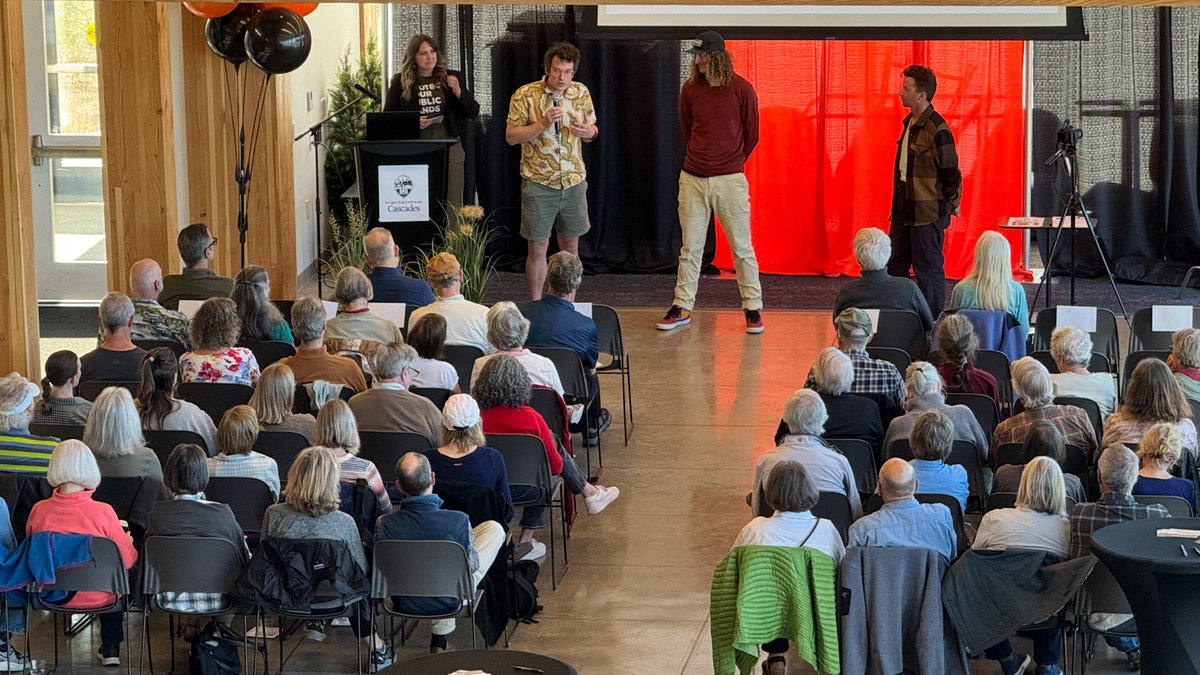
BEND, Ore. (KTVZ) — A crowd of community members, environmental advocates, and local leaders filled the atrium at Oregon State University–Cascades Monday evening, weighing in on the future of some of Oregon’s most untouched public lands.
The town hall, held April 6, focused on the Roadless Area Conservation Rule, a federal policy that has limited logging and road construction in designated forest areas for more than two decades. The meeting comes as efforts continue at the federal level to roll back those protections.
Hosted by a coalition of groups including the Sierra Club Oregon Chapter, Central Oregon LandWatch and Oregon Wild, the Bend event was part of a broader national push to gather public input after a previous federal comment period lasted just three weeks, far shorter than is typical.
What the meeting focused on
The evening began with a “Roadless 101” presentation, giving attendees a breakdown of how the rule works and what could change if it’s repealed.
From there, the event shifted into what organizers called an “Action Hour.” Attendees gathered in small groups and sat down at writing stations to draft public comments ahead of an expected federal comment period.
Organizers said the goal was simple: make it easy for people to understand the issue and speak up while there’s still time.
Why the Roadless Rule matters
First put in place in 2001, the Roadless Rule protects nearly 45 million acres of national forest land across the country. In Oregon, it covers more than two million acres, including over 200,000 acres in Central Oregon that could be affected by changes.
In Bend, the rule helps safeguard the city’s municipal watershed, about 15,000 acres that serve as the primary source of drinking water. By limiting logging and road construction in that area, the rule plays a key role in maintaining water quality.
Advocates also point to wildlife and recreation. Roadless areas provide habitat for species like elk, mule deer, salmon, and wolves, while also offering backcountry access for hunting, fishing, and hiking.
When it was first introduced, more than 600 public hearings were held nationwide, generating roughly 1.6 million comments, about 95% in favor of protecting roadless areas.
More recently, when a repeal was proposed last fall, more than 200,000 comments were submitted despite the shortened three-week window. According to advocacy groups, more than 99% opposed the rollback.
Opposition from timber and logging
Critics say the policy limits access to millions of acres of forest that could otherwise support logging jobs and local economies. In areas where timber has historically been a major employer, like Eastern Oregon, some argue the rule has contributed to mill closures and fewer opportunities for workers tied to the industry. They see roadless restrictions as a barrier to responsibly harvesting wood products that are still in demand.
Others in opposition focus on forest management, arguing that limiting road access makes it harder to carry out thinning projects meant to reduce wildfire risk. They say being able to build temporary roads and remove excess timber could help prevent large, catastrophic fires, something that has become a growing concern across the West.
Supporters of rolling back the rule also argue that more active management could improve overall forest health, while giving local and state leaders more say in how nearby public lands are used.
What’s at stake
Advocates say removing the rule could open currently protected lands to logging, mining, and oil and gas development.
Those lands include some of the last remaining undeveloped forest areas in the country, places that provide critical habitat and migration corridors for wildlife, along with clean water sources and recreation opportunities.
With another federal comment period expected, organizers say they hope the turnout in Bend is a sign that people are paying attention and ready to weigh in.