Gov. Little honors fallen Idaho firefighters and police, signs bill increasing support for their families

David Pace

BOISE, Idaho (KIFI) – Idaho is boosting its support for families of public safety officials who are killed or catastrophically injured in the line of duty.

“These events really never get easier,” said Gov. Brad Little. “But that’s all right. We are here to remember people.”

Less than one year ago, two Idaho firefighters were killed on Canfield Mountain, and others seriously injured when they were ambushed while responding to a fire in Coeur d’Alene.

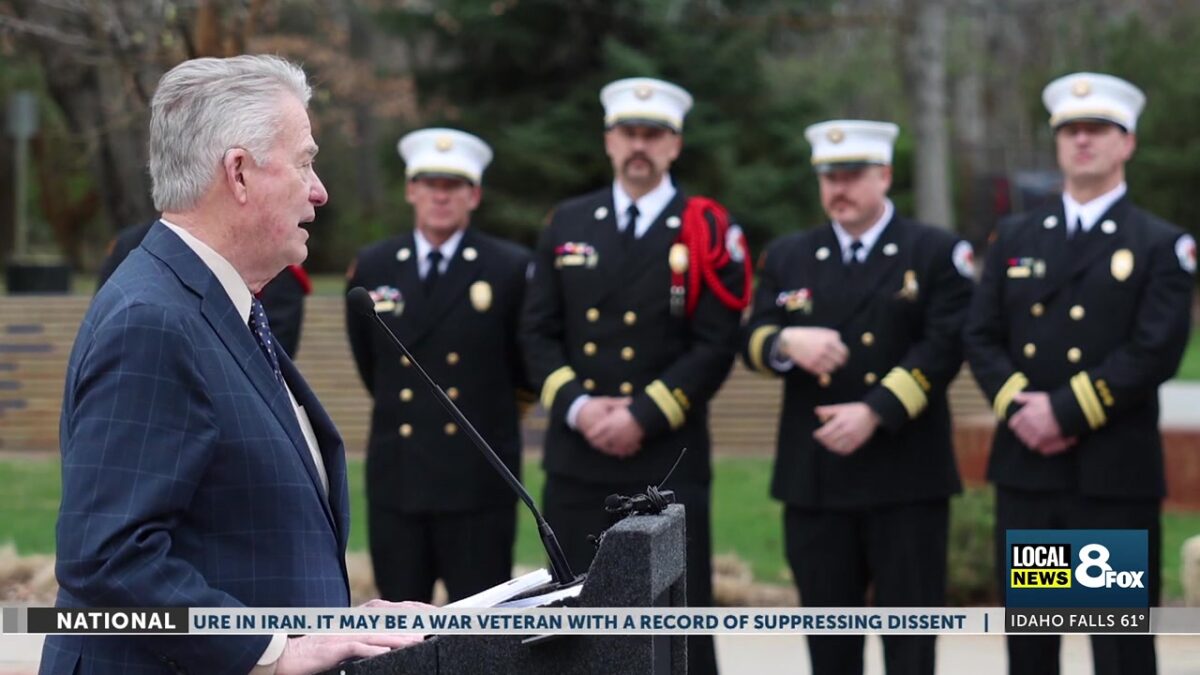
Gov. Brad Little signed a new law today providing additional benefits to the families of Idaho public safety officers who are killed or severely injured in the line of duty.

Family members of multiple fallen public safety officers attended the ceremony.

The Governor affixed his signature to House Bill 642 at the five-acre Idaho Fallen Firefighters Memorial Park in Boise.

“We are here to remember people, and in this particular piece of legislation – their families – [at] this hallowed piece of real estate here, where we remember those people that have sacrificed in the past,” Little said. “But more importantly, [we honor] the people that put their lives on the line every day.”

The law covers police and firefighters and ensures that the “spouse of a public safety officer who sustained a catastrophic injury that results in death” will receive a $75,000 annual pension and a one-time $500,000 payment.

If there is no surviving spouse, the one-time payment will be distributed evenly among the officer’s dependent children.

“Today’s bill signing represents an important step forward for Idaho’s public safety officers and their community,” said Professional Firefighters of Idaho Vice President Matthew Smith. “House Bill 642 addresses the gap between catastrophic line of duty injury and catastrophic line of duty death benefits for public safety officers. This legislation helps correct that imbalance and provides meaningful support and peace to the families who have given everything in service of Idaho and their people.”

The bill passed the Idaho Legislature with unanimous support.

The benefit will be funded by public safety officer pension contributions. Each employee will pay $110 every year per $100,000 in annual earnings.

“It reflects a simple but powerful commitment that when tragedy strikes, those left behind will not stand alone,” Smith said. “This legislation ensures their legacy will endure. It stands as a lasting promise written into law that their families will be cared for and that we as a community, as a brotherhood and sisterhood, will continue to stand together in their memory and in their honor.”

Gov. Brad Little joins Idaho first responders to honor fallen firefighters and police officers Tuesday in Boise. | Courtesy Joan Varsek


Click here to follow the original article.

Nightly lane closures announced for Paris Road in Columbia

Ryan Shiner

COLUMBIA, Mo. (KMIZ)

Beginning this week, nightly lane closures will occur around Columbia to upgrade pavement markings, according to a Tuesday press release from the Missouri Department of Transportation.

Lane closures will begin Wednesday along Paris Road between Whitegate Drive and Waco Road, the release says. Closures will last from 7 p.m.-6 a.m. each day until around mid-April, according to the release.

At a January 2026 meeting, MoDOT awarded a $490,881.74 contract to Road Runner Safety Services, Inc. to upgrade crosswalk markings at:

Paris Road from Range Line Street/College Avenue to Waco Road.

Business Loop 70 from west of Interstate 70 to Range Line Street/College Avenue.

Route AC (Grindstone Parkway) from Providence Road to Highway 63.

Range Line Street/College Avenue from Brown School Road to Stadium Boulevard.

Providence Road from Interstate 70 to Route K.

Stadium Boulevard from north of Interstate 70 to east of Highway 63.

The order of work has not yet been determined, but it is set to be completed by Oct. 15.

Click here to follow the original article.

Art Walk on Coast Village Road Paints a Welcoming Start to Spring

John Palminteri

SANTA BARBARA, Calif. (KEYT) – It’s going to be an evening of artwork and entertainment this Thursday in Santa Barbara.

Businesses on Coast Village Road will be hosting shoppers and those who are out strolling for the evening.

It’s the Coast Village “Beyond the Canvas” Spring Art Walk from 4:00 pm to 7:00 pm.

With the clocks changing recently and the weather more welcoming, the businesses will keep their doors open later and offer live entertainment, sips, and bites.

Some artists and photographers will be on hand in-person to showcase their work.

There will also be a raffle for prizes including a one-night stay at the Rosewood Miramar Beach.

The Latest Breaking News, Weather Alerts, Sports and More Anytime On Our Mobile Apps. Keep Up With the Latest Articles by Signing Up for the News Channel 3-12 Newsletter.

Click here to follow the original article.

Petition of Ongoing Downtown Concerns Hopes to Reach Santa Barbara City Hall

John Palminteri

SANTA BARBARA, Calif. (KEYT) – With a list of concerns that comes with an ongoing debate about what’s being done in downtown Santa Barbara, a business owner has a petition out seeking signatures.

Dylan Mancuso who owns Cuso’s Creamery is reaching out to the public.

Signatures are being collected at the Farmers Market.

Cuso’s is in the eye of the downtown evolution in Santa Barbara with a bike and creamery business on the 600 block between Cota Street and Ortega Street.

Three years into life in this prime downtown spot, multiple concerns have come up, leading to the petition.

It is written by “Concerned Residents, Business Owners, and Community Members” followed by MancusoforSB.com. A letter about the effort says in part, “State Street is the heart of downtown Santa Barbara and an essential part of the city’s economy, culture, and tourism. Families, visitors, and local residents rely on this area being safe and welcoming. In recent months, however, many in our community have observed an increase in safety concerns including aggressive or disruptive behavior, theft, vandalism, harassment of customers and staff, and drug-related activity.”The petition lists key concerns as:

Aggressive or disruptive behavior

Theft and vandalism

Harassment of customers and staff

Drug-related activity

Groups of minors riding high-speed electric bicycles recklessly through pedestrian areas

It goes on to ask the City of Santa Barbara and the Santa Barbara Police Department to:

Increase uniformed patrol presence along State Street

Implement consistent foot patrols in pedestrian areas

Enforce safety regulations related to electric bicycles

Increase visibility during peak business and evening hours

regulate unlicensed street vendors

The goal is 250 signatures.

As of Tuesday morning the site has received 96 signatures.

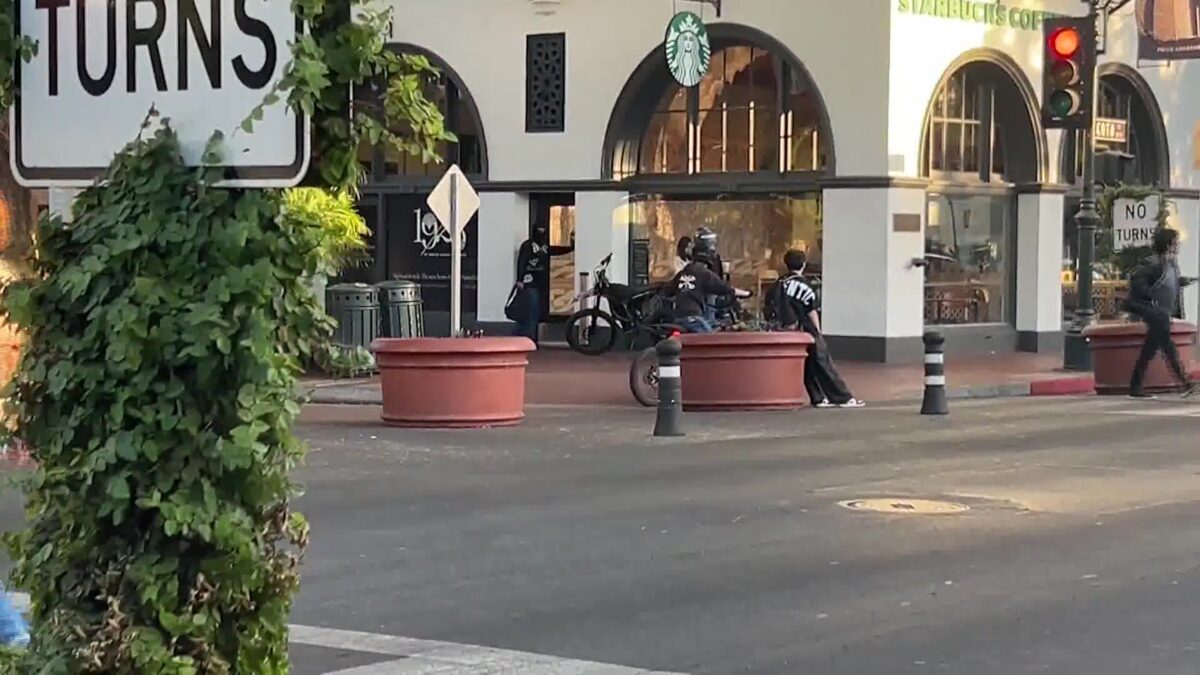
In recent weeks the Santa Barbara Police Department has increased its enforcement of vehicle and municipal code violations in the area including the crack down on reckless bike riders. That includes impounding e-motorcycle-type bikes that are illegal on the street. Fines for bike violations start at $100. Teens can clear their tickets by passing an in person two hours safety class.

The Chief of Police Kelly Gordon and her staff report regularly to the council on the analytics of their efforts which are up over 2024 and often rely on adequate staffing.

The Downtown Santa Barbara Improvement Association has been in the forefront of cleaning up the core downtown area, adding security cameras and looking into more safety features. That also includes a rapid response to graffiti, trash and vandalism issues. Workers are out seven days a week.

The city also has an ambassador foot patrol team to document health and safety concerns, contact police when necessary and interact with business owners.

(More details, photos and video will be added here later today)

The Latest Breaking News, Weather Alerts, Sports and More Anytime On Our Mobile Apps. Keep Up With the Latest Articles by Signing Up for the News Channel 3-12 Newsletter.

Click here to follow the original article.

New law allows store to round up or down to the nearest five cent increment

Madeline Murray

YUMA, Ariz. (KYMA) – You may be losing some change at the register when you pay in cash.

Gov. Katie Hobbs (D-Ariz.) has signed new legislation, House Bill 2938, in Arizona about cash payments, into law and in now in effect.

“I don’t like that. Stores need to adjust accordingly,” says Nancy Ripp, Yuma local.

The law says retailers that take cash and do not have pennies or accept them, can round the final sale to the nearest five-cent increment.

If the total ends in one, two, six, or seven, the bill will be rounded down to the nearest nickel.

If the bill ends in three, four, eight, or nine the total will be rounded up.

“I personally hate going to the bank when we run out of pennies. It’s just not the biggest convenience at all to be honest with you, but yeah, I will be rounding up. When I’m out of pennies, I’m out of pennies, so I’m pretty happy about this,” says Nicole Millis, local business owner.

The decision comes after the government decided last November that making pennies was causing businesses to lose money.

“It costs more money to mint one, than it is worth so,” says Marlo Foss, local.

According to the United States Mint, it costs 3.69 cents to make a one cent penny, making it more expensive to produce a penny than it’s actually worth.

Locals we spoke to say they dont mind this new legislations and say pennies were a waste anyways.

Candice Foss, another Yuma local, states, “I think it’s fine. I mean it really was misleading anyway, it really was $10, but they just made it $9.99 to catch your eye or $79.99 to catch your eye, so let’s just get rid of it.”

The law does not apply to customer paying with credit ot debit cards and merchant still have to charge the exact amount.

Click here to follow the original article.

Local gas prices affected by crude oil, location and competition

Marie Moyer

COLUMBIA, Mo. (KMIZ)

As the war in Iran continues, gas prices have been climbing, with ABC reporting that costs are now at their highest level in nearly two and a half years.

According to AAA, the average cost of a gallon of regular unleaded gas in Missouri is $3.43, about 10 cents more than last week. The group also reported that a gallon of gas cost around $2.54 the month prior.

In Missouri however, gas reportedly ranges from $3.13 to $3.78 per gallon, with gas typically being on the lower end on the western side of the state.

Oil prices have been fluctuating since war broke out with Iran, with the Iranian government closing the Strait of Hormuz.

Locally, Columbia is seeing some prices range from $3.39-$3.49 per gallon. Jefferson City is seeing costs from $3.26-$3.29 per gallon in some locations. Boonville is seeing the lowest prices, ranging from $3.14-$3.19 per gallon at some stations.

According to the National Association of Convenience Stores, 90% of the price of gas is determined before the retailers put a cost on the gallon. The U.S. Energy Information Administration broke down gas retail costs. They found that crude oil dictates the majority of costs, affecting 51% of the final price.

The NACS reported seeing the cost of oil per barrel even spiking by around $17 dollars in a single day.

“Retailers who may have bought fuel in a two-hour time difference might find that their wholesale cost is $0.15 different, and that’s what we’re seeing right now across the landscape,” said Jeff Lenard, who is the vice president of NACS Media & Strategic Communications.

Lenard added because gas stations receive fuel deliveries at different times, prices can change from station to station, even in the same town.

Federal and local taxes, as well as refining costs, play a major role. While distribution and marketing sit at around 18%, this can vary depending on whether the station is an individual gasoline retailer and where the gasoline fueling station is located.

“The typical markup on a gallon of gas over the last five years is about $0.38,” Lenard said.” From that, they pay about $0.20 in expenses, credit card fees, etc., so on a gallon of gas, they’re looking at maybe $0.15-to-$0.20 profit.”

Local competition and real estate costs can also affect the cost of gas from station to station.

“They [gas stations] know that somebody will drive 5 minutes out of their way to say $0.05 a gallon. They want to be as competitive as they can because if they’re not selling that gallon of gas or that fill up to that customer, the customer is also not going inside the store and buying anything else,” Lenard said.

Lenard described why rural areas tend to see lower prices.

“That’s because there’s less competition, it’s also because the real estate is lower, you don’t have those pricy four-way intersections where every retailer that wants that real estate is bidding upon that and it’s more expensive,” Lenard said.

ABC 17 News spoke with around a dozen gas customers getting gas at local stations, and all residents reported not having many alternatives in terms of price.

“What else am I going to do? I did notice that it went up, but, you know, I still need gas,” customer Chellen Logan said.

AAA reports the current national average for a gallon of regular unleaded gas is $3.97 per gallon. Missouri ranks in the top 10 states with the lowest average cost at $3.43 per gallon.

Click here to follow the original article.

Cole County Commission discusses funding for victim advocates after federal cuts

ABC 17 News Team

COLUMBIA, Mo. (KMIZ)

The Cole County Commission is trying to figure out how to pay for victims’ advocates.

Right now, the county pays about $27,000 for two advocates and the rest is paid for by a federal grant.

County Prosecutor Locke Thompson says cuts at the federal level means less money in Missouri for those jobs. He’s asking the county to take on the full cost of those spots, which could be more than $100,000 Crime victim notifications and rights are a mandated function of Missouri courts.

Presiding Commissioner Sam Bushman said Cole County will decide what to do during budget discussions in the fall.

Click here to follow the original article.

ACLU launches hotline for federal agent misconduct in Imperial County

Adrik Vargas

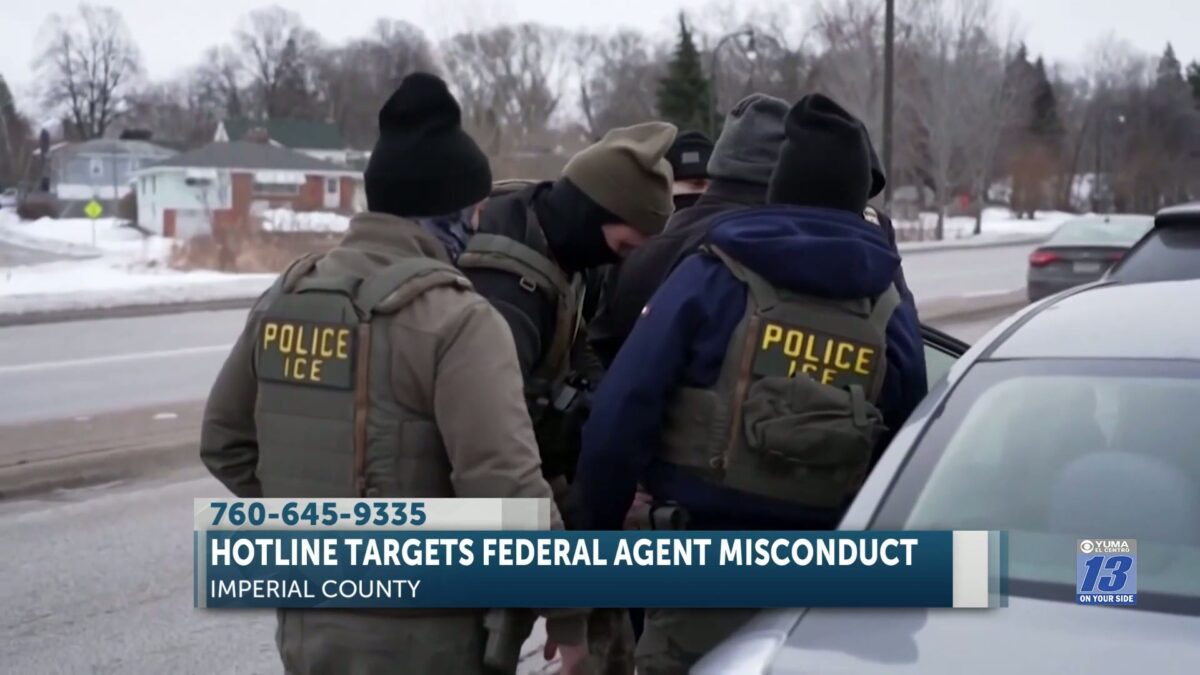
IMPERIAL COUNTY, Cali. (KYMA) – The ACLU Foundation of San Diego and Imperial Counties has introduced a new hotline for residents to report misconduct by federal law enforcement officers.

The hotline is intended to document, track, and report potential abuses. Reports are divided into two categories: First Amendment violations and Fourth Amendment violations.

Frederick, the affiliate’s legal director, said, “We are our own court reporters right now, so to speak. We are documenting what’s happening. We are our historians.”

Officials say it’s not always clear when a person’s rights may have been violated, and they don’t expect people to know the law. That’s where the hotline comes in.

“What we will do with that then is track, monitor and observe what’s going on. We will have the data so that should litigation become appropriate, we will have been gathering it early on and we can respond appropriately,” Frederick said.

Residents in Imperial County can call the hotline at 760‑645‑9335. Callers leave a message, and someone from the office will return the call within 24 hours. Reports can also be filed online.

Click here to follow the original article.

Seattle SuperSonics comeback gains momentum as NBA owners meet

Triton Notary

SEATTLE, Wa. (KTVZ) NBA owners are set to meet this week, and expansion, including possible new teams in Las Vegas and Seattle, is on the agenda.

That raises hopes in the Pacific Northwest that the Seattle SuperSonics could finally return, nearly two decades after the franchise left for Oklahoma City in 2008. The Sonics’ departure has long been a sore spot for fans, and momentum appears to be building for their comeback.

Washington Governor Bob Ferguson recently met with NBA Commissioner Adam Silver to talk about the idea, which Ferguson has strongly supported. “I’ll leave it to the NBA and the commissioners to share what they want to share, but it was important conversation, a valuable one and I just appreciate his chatting with me,” Ferguson said.

The final decision rests with NBA team owners. Any expansion move would require approval from 23 of the league’s 30 owners, and those conversations are taking place over the next few days. Owners are also expected to discuss the possible completion of the Portland Trail Blazers’ sale, which could be finalized by the end of the month.

Click here to follow the original article.

Missouri Supreme Court strikes down law restricting voter registration efforts

Mitchell Kaminski

JEFFERSON CITY, Mo. (KMIZ) 

The Missouri Supreme Court on Tuesday struck down parts of a 2022 elections law that restricted how organizations and individuals conduct voter registration drives, ruling the provisions unconstitutional limits on political speech.

The decision affirms lower court rulings that permanently block enforcement of the restrictions, which were part of House Bill 1878, a sweeping elections measure passed by Missouri lawmakers in 2022.

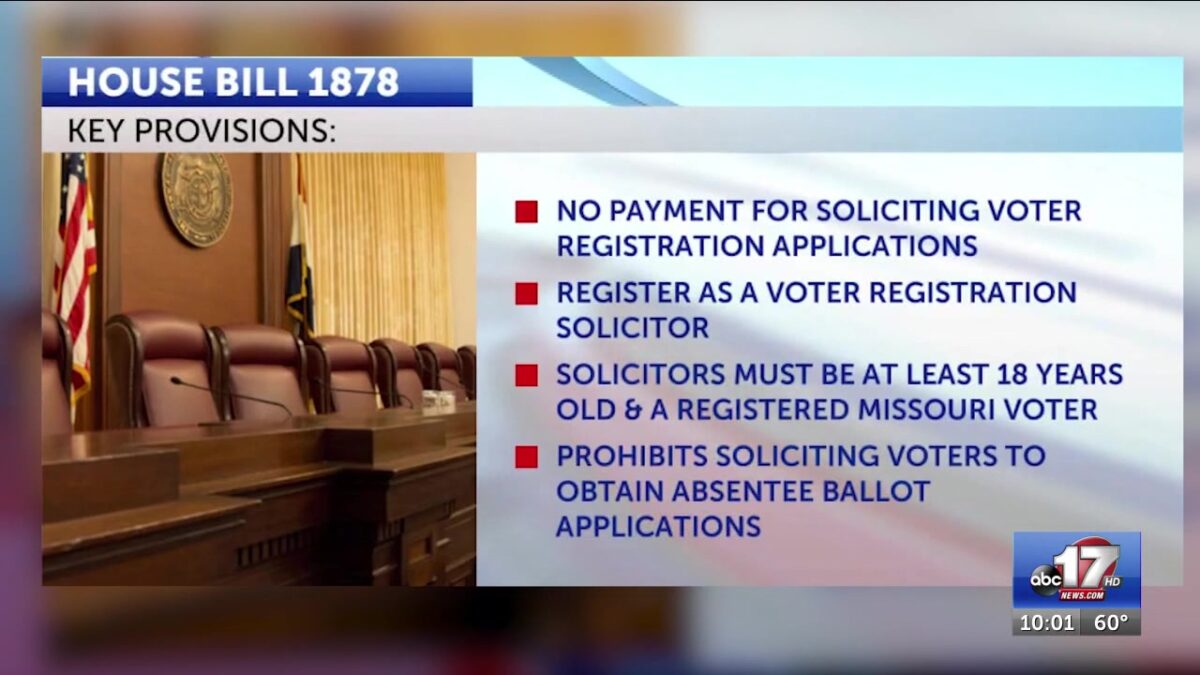
The law prohibited paying people to help register voters, required those collecting more than 10 voter registration applications to register with the state, limited who could assist with registrations to people who were at least 18 years old and a registered Missouri voter, and prohibited encouraging voters to request absentee ballots.

A coalition that included the League of Women Voters of Missouri and the Missouri NAACP challenged the law, arguing it violated constitutional protections for free speech and political participation in a lawsuit. 

A Cole County circuit court agreed in 2024, forcing the state to appeal the decision to the state’s supreme court. 

In its ruling, the high court found the provisions were “facially unconstitutional restrictions on core political speech,” leaving in place the lower court’s permanent injunction.

In a statement, the ACLU of Missouri and its partners said:

“The court rightfully rejected the portion of House Bill 1878 that imposed criminal penalties for political speech, voter registration, and civic engagement efforts by organizations like the League of Women Voters and the NAACP. Third-party voter registration activities blocked by the challenged legislation are critical, constitute core political speech, and are necessary to ensure that voters can get on the rolls and participate in elections. Legislation like HB 1878 was designed to block access for Missouri voters and halt the ability of civic engagement organizations to engage their fellow citizens.”

Boone County Clerk Brianna Lennon says the ruling will have little immediate impact on voters, saying that since the circuit court placed an injunction on HB 1878, it could not be enforced. 

“Nobody has been signing up as a voter registration solicitor for the entire time that this lawsuit has existed,” Lennon told ABC 17 News.  “People can be free to register voters. It really only had to do with people that were volunteering or working in the voter registration space. It never affected individual voters.”

Legal experts say the ruling highlights a broader disagreement over how election laws should be evaluated.

“What’s really interesting about this is there was a sharp disagreement about which side had to prove their case. Did the people challenging these restrictions have to prove their case or did the government have to prove its case? And that’s why the judges disagreed with each other,” Dave Roland,  senior legal adviser with the Freedom Center of Missouri, said. “Now, all of the judges agreed that the part of this challenge that dealt with  restrictions on  soliciting absentee ballot applications those were unconstitutional because they were really, really broad.” 

Roland noted that while the court was divided on some issues, there was agreement on others.

“Now, all of the judges agreed that the part of this challenge that dealt with restrictions on soliciting absentee ballot applications those were unconstitutional because they were really, really broad,” he said.

Supporters of the law had argued the restrictions were necessary to protect election integrity and ensure accountability among those handling voter registration materials. But Roland said the state faced an uphill battle justifying some of those requirements, particularly the age limit.

“For example,  a couple of the restrictions that they were focused on was that you had to be 18 years old and you had to be a registered voter in order to take this one particular type of paper, piece of paper, and give it to somebody else. And so the government was saying, well, you’ve got to be 18  because you’ve got to demonstrate a certain level of responsibility. Also, you’ve got to be a registered voter because that somehow indicates some level of responsibility,” Roland said “ I don’t know exactly what one of those things has to do with the other. And if it was a different kind of information, it would be perfectly legal.  And so in a circumstance like that,  the government’s got to be able to show, there’s a reason to believe problems will result if we don’t have these restrictions.” 

The ruling is final under state law, as it was decided on Missouri constitutional grounds, meaning it cannot be appealed to the U.S. Supreme Court.

“The ACLU, which represented the challengers here,  made the decision not to bring this as a First Amendment challenge.  They brought it as a free speech challenge under the Missouri Constitution. Now, Missouri’s protections for free speech are similar to the First Amendment, but they are markedly different,” Roland explained. So the ACLU is arguing that under this Missouri-specific language, this is protected speech and therefore the restrictions can’t be enforced. So because the Missouri Supreme Court was deciding this as a matter of Missouri constitutional law instead of a matter of the First Amendment,  there’s no way to appeal it to the U.S. Supreme Court.” 

In a separate decision issued the same day, the Missouri Supreme Court also ruled that challengers to the state’s photo voter ID law lacked standing to sue, leaving that law in place without addressing its constitutionality.

Click here to follow the original article.