Too young for cancer: Colorectal cases surge to become top killer of younger adults

Gabrielle Teiner

COLUMBIA, Mo. (KMIZ)

It can happen to anyone.

Forty-eight-year-old Jennifer Brooks didn’t think being out of breath would lead to a Stage 4 cancer diagnosis.

“I was a little out of breath, my heart was racing a little bit, so I was thinking maybe it was perimenopause or menopause,” said Brooks. “It just didn’t seem like anything too bad.”

In 2021, Brooks had an allergic reaction and doctors came to find out her blood count was severely low. In the midst of figuring that out, while at home, her little dog jumped on her lap, giving her terrible pain in her abdomen.

This is when she knew something really wasn’t right.

“We started thinking maybe, either it was uterine or ovarian cancer, or something of that nature, but it ended up being colon cancer that had already unfortunately spread,” said Brooks.

Now she is stable, but has metastases (spots where cancer has spread throughout the body) in her lungs. Brooks has to do chemotherapy once every three weeks to keep them at bay and gets a CT scan once every three months.

“Once you have Stage 4, the possibility of it coming back is just always there,” said Brooks.

Sadly, Brooks’ diagnosis is becoming more and more common in adults under 50.

“I knew nothing about colon cancer as far as, like, at 48, I wasn’t thinking anything about that because I’d always heard you get screened at 50,” said Brooks. “For me, I wasn’t looking at it because I didn’t think it applied to me.”

Once considered to be a disease more common in older people, colorectal cancer has now been designated as the No. 1 cause of cancer-related deaths in adults under 50 in the United States, leaving doctors and researchers stumped as to why this is happening.

“Honestly, we really don’t know”, said Dr. Nick Davidson, professor and chief of the Division of Gastroenterology at Washington University Medicine. “The answer is not one single reason that this is happening, it’s multiple.”

What is colorectal cancer?

Colorectal cancer starts in polyps, which are clusters of abnormal cells that grow in the lining of the colon or rectum and typically are non-cancerous at first, but can turn malignant.

Symptoms include:

Blood in stool

Rectal bleeding

Changes in bowel movements (constipation or diarrhea)

Unintentional weight loss

Low blood count

Intense fatigue

But sometimes, there are no symptoms at all. That means the cancer is often caught later, when it’s harder to treat.

“Early colon cancer doesn’t cause any symptoms at all,” said Dr. Jean Wang, professor of medicine in the Division of Gastroenterology at Washington University Medicine. “Someone can be walking around with a large precancerous growth or even an early colon cancer and not feel anything at all.”

Wangs says if colon cancer is detected early in Stage 1, a person has a 95% chance of being cured, but the longer a person waits to get screened, the deadlier it becomes.

“The survival rate is only about 15% in people who have had metastatic colon cancer,” said Wang. Metastatic colon cancer means it has spread to other organs in the body, like the liver, lungs and large intestine.

More deaths at younger ages

Doctors and researchers noticed this trend in younger adults, and in May 2021, the United States Preventive Services Task Force lowered the screening recommendation for colorectal cancer from 50 years old to 45 years old.

Doctors say the most concerning thing right now isn’t just the cancer itself, but who it’s affecting.

“I was diagnosed in May of 2021, and three days after I found out, the colon cancer screening went down to 45. I was 48,” said Brooks. “It was three days after my diagnosis when I could have, and I would have gotten screened because I have a lot of cancer in my family.”

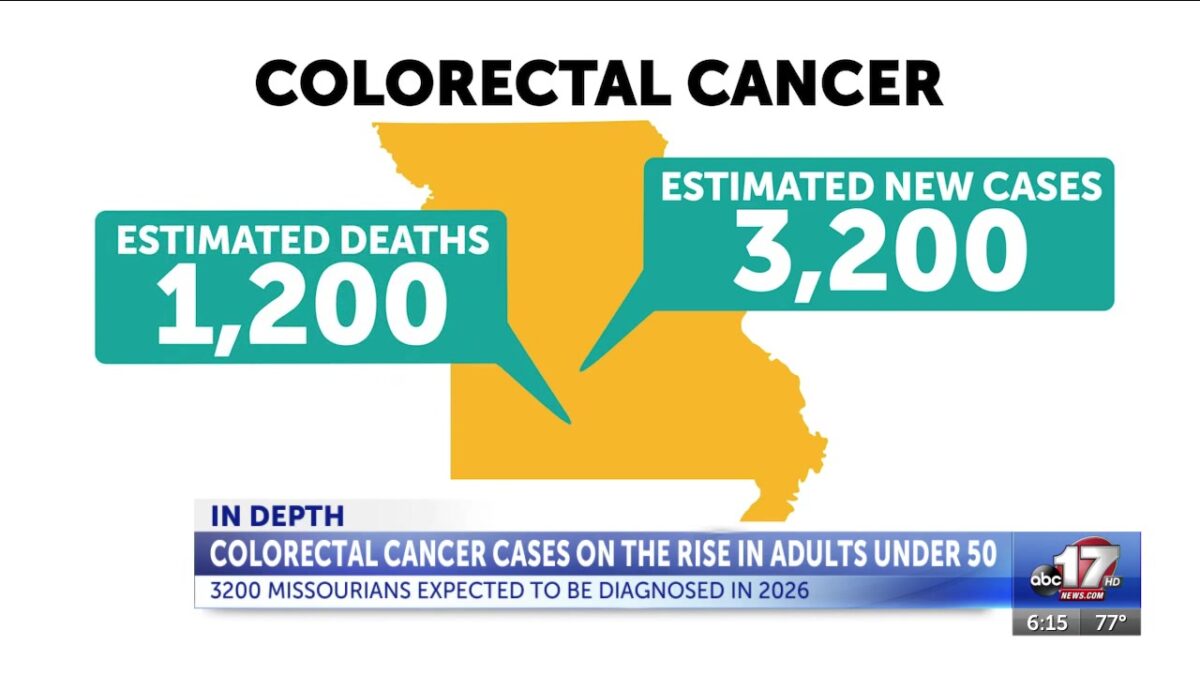
According to data from the American Cancer Society, more than 158,000 people are projected to be diagnosed with colorectal cancer this year, with 3,200 of those diagnoses being Missourians.

From 1970 to 2023, death rates from colorectal cancer declined about 1.5% a year for men and women for older adults, but death rates for people younger than 55 have gone up about 1% a year since the mid-2000s.

Today, 1-in-5 colorectal cancer diagnoses occur in a person under 55.

Nationwide new cases projected in 2025
Missouri new cases projected in 2025
Nationwide projected deaths in 2025
Missouri projected deaths in 2025

154,270
3,010
52,900
1,260

Men: 82,460
Men: N/A
Men: 28,900
Men: N/A

Women: 71,810
Women: N/A
Women: 24,000
Women: N/A

Source: American Cancer Society

While experts are trying to figure out the root cause of this epidemic in younger adults, they can partially attribute it to family history, smoking, excessive alcohol consumption, diabetes, lack of exercise, high intake of red meat and ultra-processed foods.

“The ironic part about it was I was kind of like in the best shape of my life when I got diagnosed,” said Brooks. “I was gluten-free, dairy-free, sugar-free, I did all of that, and I was just doing it because I thought it was the right thing to do.”

There is also research being done to see whether a microbe called colibactin, which can alter DNA in the colon and rectum, could be a factor in this increase among younger adults.

Davidson is part of a research team that looks at multiple factors to better understand this epidemic.

“We’re looking at the social factors, food consumption, lifestyle habits,” said Davidson. “We’re also part of a study that is taking patient samples, and transferring them into the research lab, and separating the cancer cells into small tissues called organoids that we can grow indefinitely.”

Naomi Sonneck, organoid core technical director at Washington University Medicine, is in charge of breaking down those cells. She is the only person tasked with doing this, as the work is tedious and must be precise.

“I’m essentially breaking them up to encourage them to expand, it’s kind of like lifting weights in a way, you’re causing minor muscle damage to encourage your muscles to grow bigger,” said Sonneck. “So it’s kind of like those muscles, you want to break them up just enough, but not so much that you’re actually insulting them and killing them.”

Sonneck says they receive samples from all around the world to study and research, and sees firsthand the unique way that each sample of cells grows and responds.

 “The shapes of these cells tell us whether these tumoroids are going to continue to proliferate or if they’re about to die,” said Davidson.

Sonneck breaks down the cells about every three to four days to encourage growth, but she has to be fast, or all that research goes down the toilet.

Once she gets the cells to grow, she sends them off to the lab to be studied.

 “We all have our roles to play, and it’s a very efficient use of expertise,” said Sonneck.

Davidson says the research allows them to characterize the genetic abnormalities and mutations found in those samples to find weak spots in the DNA to design personalized therapies for patients.

“There is something very distinctive about the growth properties of cancers in young people, and we think that that might be a clue to finding targeted vulnerabilities in those cancers,” said Davidson.

This also allows researchers to monitor how fast the cells grow. So far, the work has indicated malignant cells are growing more slowly in samples from younger adults than older ones.

“This tells us that we haven’t yet found the optimal conditions to make them grow fast, which is what they’re doing in the body, but that’s the process of trying to replicate cancer biology in a person to cancer biology in the lab,” said Davidson.

The Show-Me-State is at the forefront of not only trying to understand colorectal cancer better, but also multiple other cancers as well.

Every year, more than 75,000 people are treated at Siteman Cancer Center in St. Louis, including more than 12,000 who are newly diagnosed, making it one of the five largest cancer centers in the country. Siteman Cancer Center receives more than $185 million per year in basic and clinical oncology research grants, including $66 million in funding from the National Cancer Institute, which funds more than 1,400 research projects.

Wang says a team of researchers at Siteman Cancer Center at Barnes-Jewish and Washington University Medicine was recently awarded a $25 million from the United Kingdom and the National Cancer Institute to look at certain environmental factors that could play a role in a person developing colorectal cancer in their lifetime.

Siteman Cancer Center is also one of nine centers across the state leading the national Vanguard Study, which is a study looking at multi-cancer detection tests. One of those tests is a blood test that can detect more than 50 cancers, including colorectal cancer.

The Vanguard study is a five-year study and is in its early stages, having started about a year ago.

“We are focusing on the rural communities and Missouri with this study, so we think it’s going to be a great way to increase access to those rural communities for earlier cancer detection,” said Wang.

While this could change the game in terms of early cancer detection, Davidson’s true goal is to detect precancerous cells before they become cancer.

“They are less effective at detecting the precancerous lesions that we call adenomas,” said Davidson. “The real goal, in my view, is to be able to detect these precancerous tumors before they develop into cancers.”

As for Brooks, her doctors don’t have a concrete answer as to why she developed her cancer.

“I guess maybe I think I could have when I was having those sensitivities, which we talk about all the time, you know, gastro sensitivities or things, I think I did go to see a gastroenterologist at the time, but I don’t think there was anything significant,” said Brooks.

Many cases of colorectal cancer are preventable, but not always predictable.

Wang says most colorectal cancer patients don’t have a family history of it. Brooks had a couple of family members die from various cancers, but not colorectal.

For some people, like Brooks, who didn’t really have any symptoms, that’s why screening is so important, no matter the age.

“Screening really is the best way to prevent getting this deadly disease,” said Wang. “It’s thought that up to 85% of colorectal cancers could be preventable if people follow the screening guidelines.”

This cancer can target everyone. Big names in Hollywood like James Van Der Beek, 48, and Chadwick Boseman, 43, have lost their lives to colorectal cancer.

“These are young men who are in their 40s and in the prime of their lives, and they develop this deadly disease,” said Wang. “That definitely makes us surprised and makes us want to be motivated to find out the reasons behind this rise in colorectal cancer.”

Wang has even seen patients in their late 20s and early 30s be diagnosed with colorectal cancer. Wang says in those cases, the patient had thought, for example, that blood in their stool was just hemorrhoids, so they brushed it off.

“Even when they went to their primary care doctor, their primary care doctor thought they were too young to get cancer, so they also thought it was just due to hemorrhoids,” said Wang. “So it took a long time for these patients to actually come to see me and then have a colonoscopy done to get diagnosed.”

Screening

The gold standard in the medical field for screening patients with symptoms for colorectal cancer is a colonoscopy, no matter a person’s age or lifestyle.

“A colonoscopy really isn’t that hard to do, and it’s really a shame whenever I see someone come in with colon cancer who had not followed up with colon screenings, and you just know that if they had come in 10 years earlier, it could have all been prevented,” said Wang.

Wang says the hardest part of getting a colonoscopy is the preparation involved. A patient has to take a laxative the day before and the morning of the procedure to clean out the colon so doctors have a crisp look at exactly what’s going on inside.

From Brooks’ experience, she recommends using a good flavor of Gatorade to make the laxative taste better.

“Make it as best as you can,” said Brooks. “It’s only, like, 24, 48 hours of your life, so you can do it.”

The day of, a patient comes in, gets sedated so they don’t feel anything, and doctors put a tube with a camera on the tip inside the colon to see if there are any polyps. If they see one, doctors can remove it right then and there and send it off to a lab to see if it is cancerous. Wang says the colonoscopy takes about 30 minutes, and the patient can go home once they wake up.

“Some people are afraid of doing that colon cleanout the day before, but I tell people, you know, it’s really not a big deal, and it’s definitely easier to do that than to get colon cancer,” said Wang.

A colonoscopy is recommended to be done every 10 years.

There are other options for screening. Starting at 45, a person can do an at-home stool test. The fecal occult blood test looks for small amounts of hidden blood in the stool, which could be a sign of polyps in the colon or rectum. Then there is the multitargeted stool DNA test, which looks for hidden blood and cells in the stool. The cells are checked for DNA changes shed from the polyps or cancer. These tests should be done every three years.

Another test option is the fecal immunochemical test, which uses antibodies to find hemoglobin in the stool. The test specifically looks for blood from the lower digestive tract, but not the upper. This test is recommended to be done once a year.

Wang says if you do a stool test at home, it is critical to follow up and get a colonoscopy.

“It’s very important to follow up when we tell you the recommended time, usually in three years or five years or seven years, to come back for that follow-up colonoscopy,” said Wang. “We know that people who have pre-cancerous polyps at one point tend to grow them again in other areas of the colon later on.”

Wang says it takes about 10 years for a precancerous growth to turn into cancer, and by following up with your doctor, they can find the small growths and remove them before they turn into cancer.

“There is kind of a stigma that goes along with colon and all of that, but hey, it’s part of life, and we want to live,” said Brooks. “I have made it so that all my children have to get a colonoscopy a full 10 years before my diagnosis, so I was diagnosed at 48; they should be getting a colonoscopy by 38.”

If the cancer has spread to other organs, like in Brooks’ case, chemotherapy and surgery would be the next step. Brooks had a third of her colon, her uterus and other organs removed.

As simple as it may sound to get these screenings done, there are barriers.

Wang says she sees more late-stage colorectal cancer in patients from rural areas where people have to travel farther to get a colonoscopy. Siteman Cancer Center recently launched a community van that goes to rural communities and offers free at-home stool tests. If the results are abnormal, Siteman will guide the patient through the process of getting a colonoscopy.

The Missouri Colorectal Cancer Roundtable, a statewide organization partnered with the Missouri Department of Health, as well as nonprofit groups like the American Cancer Society and patient advocacy groups, is working with pharmacies in rural communities to give out home screening tests.

Experts expect 2026 to see a slight increase from 2025, when 3,010 new cases were projected across the state and 154,270 were projected nationwide. Men and women get the disease at about the same rate.

Nationwide, more than 55,000 colorectal cancer deaths are projected, representing around 30,000 men and around 25,000 women. In Missouri, 1,280 deaths are projected for 2026, according to the American Cancer Society.

But for patients like Brooks, those numbers are more than just statistics.

When she was told she had cancer, she was fearful, but she tried to take a look at it from a different perspective.

“I didn’t think fear would help me. I thought it would be better to just deal with it head-on and say, ‘Okay, ‘So what is the process? What do we have to do?” said Brooks. “I think that positive mental attitude helps a lot. I’m not saying you can’t get a diagnosis and not be a little scared; that’s normal, but I think what you do with it from there is really important.”

Brooks is not only a colorectal cancer patient, but she is also a mother, a wife, a daughter and a sister. She says her family, church friends, work colleagues, and more were all crucial in supporting her during her treatments. She also started a Facebook page detailing her colorectal cancer journey.

“I created that page to support people if they had questions because I felt like I’m not a medical doctor, but I can tell you what I’ve experienced and what I’ve done,” said Brooks.

After being on this cancer journey for nearly five years now, Brooks says she still has good days and bad days.

“This weekend wasn’t the greatest, but most of the time I can predict how I will feel, and then, going along on that journey where I’m looking for the clinical trials, I have been accepted to either three or four, I’m just waiting for a spot,” said Brooks.

Her best piece of advice to others going through what she has and is is to be in tune with their bodies and pay attention to anything that may seem abnormal.

Brooks has a genetic mutation that blocks immunotherapy cancer treatment from working, so she is looking into clinical trials to see if that could help keep the cancer at bay or eradicate it.

While her life has changed dramatically, her positive outlook on life hasn’t.

“I still have a good quality of life, I have bad days, I have good days, but everybody has those, so why not stay positive?” said Brooks. But she still has questions about what’s to come.

“Our life expectancy in the United States should be way, way higher than that, so we just got to figure out how to treat patients who have colorectal cancer. And what is it? What can they do? What can the medical professionals do?” said Brooks.

Patients, family members, doctors, researchers and more all want to figure out why this epidemic is happening. And while Brooks waits for these answers, she has a personal goal she wants to achieve.

“I’m hopeful to be the longest living colon cancer survivor. I hope I can be that person,” said Brooks.
Click here to follow the original article.

Alleged Boonville casino robber pleads not guilty in first court appearance

Marie Moyer

BOONVILLE, Mo. (KMIZ)

EDITOR’S NOTE: AI was used in background research for this article

One of the men accused of robbing the Isle of Capri Casino in Boonville last week pleaded not guilty at his first court appearance Tuesday.

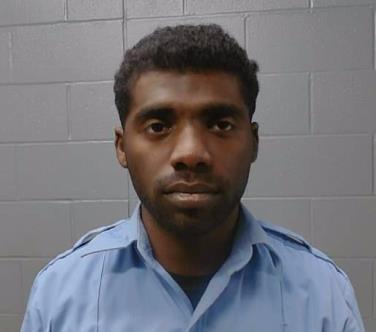
Benjamin Michael-Dass Charles, 21, of Columbia, appeared by video feed from the Cooper County Jail. Charles is charged with first-degree robbery, armed criminal action and tampering with evidence.

Authorities are still searching for a second suspect, 20-year-old Hollis Vanleer Jr. of Normal, Illinois, who faces charges of first-degree robbery, armed criminal action and first-degree assault.

Court documents state the robbery happened on March 25, when Charles and Vanleer entered the casino armed with guns. They allegedly took $1.28 million from the main bank drawer and placed the cash into a black duffel bag.

During the incident, a casino patron attempted to tackle one of the men who was carrying an AR-15-style rifle. The second suspect struck the patron, allowing both men to escape, the statement says.

The Missouri Gaming Commission identified Charles as an employee of the Isle of Capri Casino. Charles allegedly admitted to investigators that the robbery had been planned for one month. He also claimed to have purchased homemade explosives from an unidentified individual to use as a distraction during the heist. Authorities have not yet located the stolen $1.28 million.

Charles is being held in the Cooper County Jail on a $1.3 million bond.

Click here to follow the original article.

Attorneys for accused Charlie Kirk assassin file to delay key hearing following inconclusive ballistics report

News Team

PROVO, Utah (KIFI) — Attorneys for Tyler Robinson, the man accused of killing conservative activist Charlie Kirk, filed a motion Friday to postpone a key preliminary hearing scheduled for May. The defense argues they need more time to review evidence, specifically a federal bullet analysis that failed to link the bullet that killed Kirk to the weapon found near the scene.

The motion, filed March 27, contained a summary report from the Bureau of Alcohol, Tobacco, Firearms, and Explosives (ATF) saying they couldn’t conclusively connect a bullet fragment recovered during an autopsy to the rifle found near the scene, according to reports by CBS.

His lawyers argue that the analysis could contribute to Robinson’s defense.

“The defense may very well decide to offer the testimony of the ATF firearm analyst as exculpatory evidence,” the motion states. “It is necessary for the defense and its firearm expert to review the ATF case file and protocols… which have not yet been provided.”

The motion states that the FBI is running additional tests. Robinson’s attorneys argue that to continue the preliminary hearing scheduled for May would violate Robinson’s rights under Utah Rule of Criminal Procedure 7B(a) and the U.S. Constitution.

“Mr. Robinson has the right at a preliminary hearing to present evidence, to call his own witnesses, and to have a meaningful opportunity to cross-examine the state’s witnesses through the effective assistance of counsel,” states the motion.

Robinson has been charged with aggravated murder in the September shooting of the conservative activist on the Utah Valley University campus in Orem.

While prosecutors have stated they intend to seek the death penalty, Robinson’s defense has not yet entered a plea. He is still currently scheduled for a court appearance on April 17.

Click here to follow the original article.

Oregon Heritage Tree Committee seeks nominations for 2026 program

Matthew Draxton

SALEM, Ore. (KTVZ) — The Travel Information Council and its volunteer Oregon Heritage Tree Committee are inviting communities across the state to nominate and celebrate heritage trees for 2026.

The call for nominations coincides with the start of Arbor Month in April, which the committee uses to promote the educational and historical value of Oregon’s most significant trees. Individuals and heritage groups are encouraged to submit trees with documented historic significance to the state.

Established in 1996, Ore. became the first state in the nation to launch a state-sponsored heritage tree program. Since its inception 30 years ago, the committee has designated 85 trees across 26 of Oregon’s 36 counties, with 79 of those trees still living today at various historic sites, public gardens and hiking trails.

Oregon Heritage Tree Committee Chair Dave Hedberg said these designations offer a tangible link to the past. He encourages residents to visit state or local heritage trees to experience history firsthand. “Visiting an Oregon Heritage Tree is a chance to engage your senses and learn about local history in the real world – not just in books and on screens,” Hedberg said. “All of Oregon’s Heritage Trees are deeply connected to the people of the past. Enjoying these trees today connects us with our history.”

Several notable trees are already designated in the state, including the Big Tree at La Pine State Park. This tree is recognized as the largest circumference Ponderosa pine in the world. Other sites include the Williamson-Abbot Expedition Ponderosa, which marks a campsite for a government survey to bring the railroad west and the Huntington Wagon Road Junipers, which were blazed in 1864 along an ancient Native American trail.

The committee is specifically looking for nominations that reflect a more diverse range of Oregon’s history. Al Tocchini serves as the vice-chair of the Oregon Heritage Tree Committee and noted that the group wants to highlight stories that have historically been overlooked. “In particular, we are seeking underrepresented stories of Oregon’s diverse populations in places that are accessible to the general public,” Tocchini said.

The Oregon Travel Information Council, a semi-independent state agency created in the 1970s, administers the program. While originally formed to manage highway logo signs following the Highway Beautification Act, the agency now also oversees the Oregon Historical Marker program and 39 rest areas at 25 locations throughout the state. These rest areas are open 24 hours a day and are free for public use.

Individuals, cities, tourism organizations and heritage groups can nominate trees with documented historical significance through the program’s website. The committee also provides an interactive map for the public to locate currently designated trees across various counties.

The nomination form is available at oregontic.com/oregon-heritage-trees. The committee will review these submissions as they prepare for the 2026 spotlight.

Click here to follow the original article.

Deschutes County hosts open house for Terrebonne Community Plan update

Matthew Draxton

BEND, Ore. (KTVZ) — Deschutes County Community Development will host a public open house on April 7 to gather input for the update of the Terrebonne Community Plan. The event is scheduled from 5 to 7 p.m. at the Terrebonne Community School cafeteria, located at 1199 B Avenue in Terrebonne.

The open house serves as a primary opportunity for residents to help shape the document that guides growth and development in Terrebonne for the next 20 years. During the meeting, community members can share their priorities and discuss the future trajectory of the area with county officials.

The gathering is designed as a drop-in, family-friendly event. To accommodate residents attending with children, the county will provide snacks and a specific children’s activity during the two-hour window.

Participants can use the session to learn about current trends and existing conditions in Terrebonne. The information provided at the school is intended to help residents identify specific challenges and opportunities they believe should be addressed in the final planning document.

For community members who are unable to attend the school cafeteria meeting in person, a digital participation option is available. The county will host a mirrored version of the open house on its website to ensure broader community access to the planning process.

The online open house will be available from April 7 through April 30. Residents can participate and view project materials at www.deschutes.org/TCP.

Click here to follow the original article.

2026 tax season window closes in two weeks

Moses Femino

YUMA, Ariz. (KYMA) – With tax season closing on April 15, many are rushing to file on time, but some say changes this year are making the process more difficult.

The 2026 tax season window is closing in the next two weeks, leaving some struggling to get their returns filed in time.

“Elderly are struggling immensely, because of the technology. So when they retired, they didn’t have emails they didn’t have all of the electronics. So now…our seniors or super seniors, they’re having a lot of issues,” said Mary York Roberts with H&R Block.

Changes this year, including fewer IRS staff, the closures of some assistance centers and the end of free filing options, are making it harder for many taxpayers to get help.

Many are now turning to professional services for assistance.

“Just getting through to the government. IRS and…it’s been really bad…Just trying to get through to a person. And the government, everything is automated and you can’t even get through and talk to somebody,” said Janet Snyder, a Yuma local.

With people waiting until the final days to file, experts say it’s important to plan ahead, especially as some traditional options may no longer be available.

“We are reminding individuals that there was a change at the Post Office this year. The Post Office is now not going…you know how when they had the last…people would go in with their forms or their payments April 15? Well, now you can’t do that any longer,” York Roberts shared.

With the deadline quickly approaching, experts urge taxpayers to not wait until the last minute.

Click here to follow the original article.

Local farmers react to wet weather disturbance

Lauren Duffel

YUMA, Ariz. (KYMA) – A wet November caused some disturbance in local farming that highlights how farmers overcome weather challenges.

“It impacts us deeply because if we have product down, and we get a lot of rain, now we have to worry about the fungicide and mildews. We have to plant fungicides. We are battling other plagues like insect damage and things that are coming up after it dries up,” said Valentine Sierra with Amigo Farms.

Extensive rain can drown months of hard work and can cost local farmers a big price. Most people would assume rain is good for farmers, but sometimes it can cause big problems 

“Our cost did increase maybe like five or 10% in those three months that we had that extra rain,” Sierra shared.

Yuma’s rainy periods are notoriously unpredictable. Growers depend on weather updates to decide when to make changes to their fields.

“We just watch the weather as close as we can. It’s unpredictable. It’s hard to tell, but if we can see if the weather is kind of accurate, and we are following [it], we can prepare ourselves and just hope that it doesn’t change, so that we can just stay with our schedule, but once that rain comes we are already prepared with plan b to move crops to another ranch,” Sierra expressed.

A season of rain has the potential to drown months of labor within a few days. With proper planning and adaptability, the chance of crop survival is possible.

Click here to follow the original article.

‘This illusion that they’re working with us is a farce’: Idaho Senate advances ICE bill

KIVI Staff

By: Victoria Rodriguez , Ellie Sullivan

Posted 3:26 PM, Mar 30, 2026

BOISE, Idaho — A revived immigration bill that would require local law enforcement agencies to work with federal immigration officials is moving forward at the Idaho Statehouse — but not without continued pushback from local sheriffs.

PREVIOUS COVERAGE | “We don’t need a law to tell us to do so”: Idaho sheriffs oppose revived ICE partnership bill

On Monday, the Senate State Affairs Committee voted 6-3 to advance Senate Bill 1441, sending it to the Senate floor.

The proposal comes after a similar bill, House Bill 659, failed earlier this session. Lawmakers say the new version is intended to address concerns raised by law enforcement while still strengthening cooperation with federal agencies like Immigration and Customs Enforcement (ICE).

“You’ll recall that we had a similar bill to 1441 in the committee before which failed. And so when that failed because there was enough interest in my caucus, I began working on another piece of legislation…” said Republican Senator Kelly Anthon of District 27.

Like its predecessor, SB 1441 would require local law enforcement agencies to apply for participation in a federal 287(g) program, which allows local officers to assist with certain immigration enforcement duties.

The updated version includes new language allowing county commissioners or city councils to opt out of participation under specific conditions — particularly if it would interfere with their ability to provide essential services.

Despite those changes, local sheriffs say their concerns remain.

This marks the third time sheriffs have testified against legislation tied to immigration enforcement this session.

Canyon County Sheriff Kieran Donahue said the revised bill still gives too much authority to the federal government and raises questions about local control.

“This illusion that they’re working with us is absolutely a farce,” Donahue said. “It’s offensive for him to say that they have been, because they haven’t been.” Donahue also raised concerns about the role of local governing bodies in the decision-making process.

“There are many… things not known to the board of county commissioners,” he said. “So to have them decide whether we can participate or not is misleading, to be polite.”

He added that communication from the bill’s sponsor has been lacking.

“Let’s make no mistake — he has never asked us into a room to talk about this bill… prior to it being tabled a couple of weeks ago, nor since.”

Other law enforcement leaders warned about how the bill could play out under future federal administrations.

Ada County Sheriff Matt Clifford said the requirements could limit local flexibility depending on who is in power.

“What happens when Kamala Harris gets, if she gets elected here in 2 years, everybody in here is gonna be crying because now we have to comply by this law and I don’t have an inability to work with the 287G program”, Clifford said.

In a joint press release issued last week, the Idaho Sheriffs’ Association and its 44 elected county sheriffs said lawmakers may be moving too quickly without sufficient input from local law enforcement.

They also claimed federal officials, including the Department of Homeland Security, have been in contact with state leaders advocating for mandatory participation.

Idaho News 6 reached out to Senator Anthon for comment but has not yet received a response.

Supporters of the bill argue it is necessary to address illegal immigration and ensure local agencies are working proactively with federal partners.

“I want you guys to be proactive on this too,” said Senator Ben Adams, District 12. “If this legislation goes forward this year, you will be.”

With the committee’s approval, SB 1441 now heads to the Senate floor for further debate.

Click here to follow the original article.

Van Perry brings global leadership experience to Central Oregon nonprofit

Matthew Draxton

BEND, Ore. (KTVZ) — Van Perry has joined the Family Access Network Board of Directors, bringing more than 30 years of global leadership experience to the Central Oregon nonprofit. Perry has a background in scaling organizations across multiple industries, including technology, real estate and the public sector.

The Family Access Network, which began in 1993, employs 28 advocates at 66 sites across Deschutes, Crook and Jefferson counties. These advocates work within schools to connect families in need with essential resources to help break the cycle of poverty.

The Family Access Network Foundation was established in 2006 to raise funds and increase community awareness for the organization’s work. Board members serve as a core part of the foundation’s fundraising strategy to support advocates working in Central Oregon schools.

Perry’s professional background includes leading international rebranding initiatives for Fortune 50 companies and directing Olympic marketing programs for global sponsors. He previously served as the president of two adventure travel companies that managed expeditions to locations ranging from Antarctica to the Sahara.

Earlier in his career, Perry held leadership roles in city government and real estate development. He has worked across diverse industries including financial services, technology, hospitality and the outdoor sector.

Julie Lyche serves as the executive director of the Family Access Network. Lyche noted that Perry’s background in building high-performing teams and his commitment to service would benefit the organization’s leadership. “Van’s breadth of experience and strong commitment to community service make him a valuable addition to our Board of Directors,” Lyche said.

Perry lives in Bend with his wife and two daughters. He earned a Bachelor of Science with distinction from the University of Virginia, a Master of Public Administration from the University of Georgia and a Master of Business Administration from the University of North Carolina at Chapel Hill.

Click here to follow the original article.

Rimrock Trails launches youth behavioral health center in Prineville

Kelsey Merison

PRINEVILLE, Ore. (KTVZ) — Rimrock Trails launched a new program in Prineville to provide immediate behavioral health support for youth in Crook County. The Assessment and Resource Center (ARC) offers same-day assessments for young people and their families without the need for an appointment or referral.

The program is located at the Prineville Outpatient Clinic on Combs Flat Road and serves individuals ages 18 and under. It provides a low-barrier entry point for those facing emotional, behavioral health, or substance use challenges.

The center provides support for various needs, including behavioral health issues and situational challenges. In addition to assessments, the program offers skills groups. These groups focus on building coping strategies, communication and resilience.

Staffing for the center includes a dedicated care coordinator and a peer support worker. The peer support worker brings lived experience to the role to emphasize trust and understanding for families taking the first step toward care.

The program functions as a gateway to ongoing care and essential community resources. By providing immediate access, the center connects individuals to additional services based on their specific needs following the initial assessment.

Click here to follow the original article.