Hot dog! Giants fans can take on viral ‘9-9-9’ challenge at Oracle Park this season

By Christina Holiday

Click here for updates on this story

    SAN FRANCISCO (KSBW) — A hot dog and beer at the ballpark are something of a staple, but maybe not nine times in one game.

Unless you can “mustard” enough courage and have a strong stomach.

It’s one of the newest attractions at Oracle Park this season. It’s called the “9-9-9” challenge.

The 9-9-9 Challenge Box costs $54.99, plus tax and tip, while buying nine beers and nine full-size hot dogs separately would cost more than $180 with tax and tip included.

The box includes nine mini hot dogs, nine small glasses estimated at 3 to 4 ounces each, and one tall can of Coors Light. There is not enough beer to fill all nine glasses to what most people would consider a standard pour. Even with each glass filled only about two-thirds full, the Coors Light ran out after the eighth glass, according to the SF Gate.

To sum it up, you must consume nine beers and nine hot dogs during a nine-inning baseball game.

It’s a new collaboration between Aramark Sports + Entertainment and competitive eating star Joey Chestnut.

The food flight includes nine beers and nine hot dogs with custom team packaging. It should also be worth noting that neither the drinks nor the hot dogs are a standard size, so that may make it easier to finish.

If you “relish” such an opportunity, you can give it a go at the Doggie Diner concessions stand in Section 121.

In addition to Oracle Park, it will be sold at five other Major League Baseball ballparks this season.

Citi Field (Willets Point Brewery)

Citizens Bank Park (Section 128)

Coors Field (Fanfare, Section 139)

Daikin Park (Crawford Dogs, Sections 109, 418)

Kauffman Stadium (Double Dip Hoagies, Section 247)

The challenge itself was first introduced at Citizens Bank Park in Philadelphia during the 2025 postseason but has come under fire for only using only one can of beer, which some even claim doesn’t fill all nine cups.

Some are even calling it more of a “one-inning challenge.” Even Giants broadcaster Dave Flemming is questioning the legitimacy.

Furthermore, an Arizona Diamondbacks farm team has even created a more “accurate” version of the challenge for the truly brave souls.

But if you do plan to take on the challenge, you must be 21 and up with a valid ID.

And hopefully, you come out a “wiener.”

Please note: This story was provided to CNN Wire by an affiliate and does not contain original CNN reporting. This content carries a strict local market embargo. If you share the same market as the contributor of this article, you may not use it on any platform.

‘Zombie Lots’ are leaving residents in crisis

By Geneva Zoltek

Click here for updates on this story

    PAHRUMP, Nevada (KTNV) — It’s the land of the undead — or perhaps land that is undead — as dozens of Pahrump locals are stuck paying taxes on property they can’t legally use.

They’re dubbing it the “Zombie Lot” crisis.

“This was supposed to be our home, and instead it’s turned into our nightmare,” said Jack Schluneger, who owns property in Pahrump,

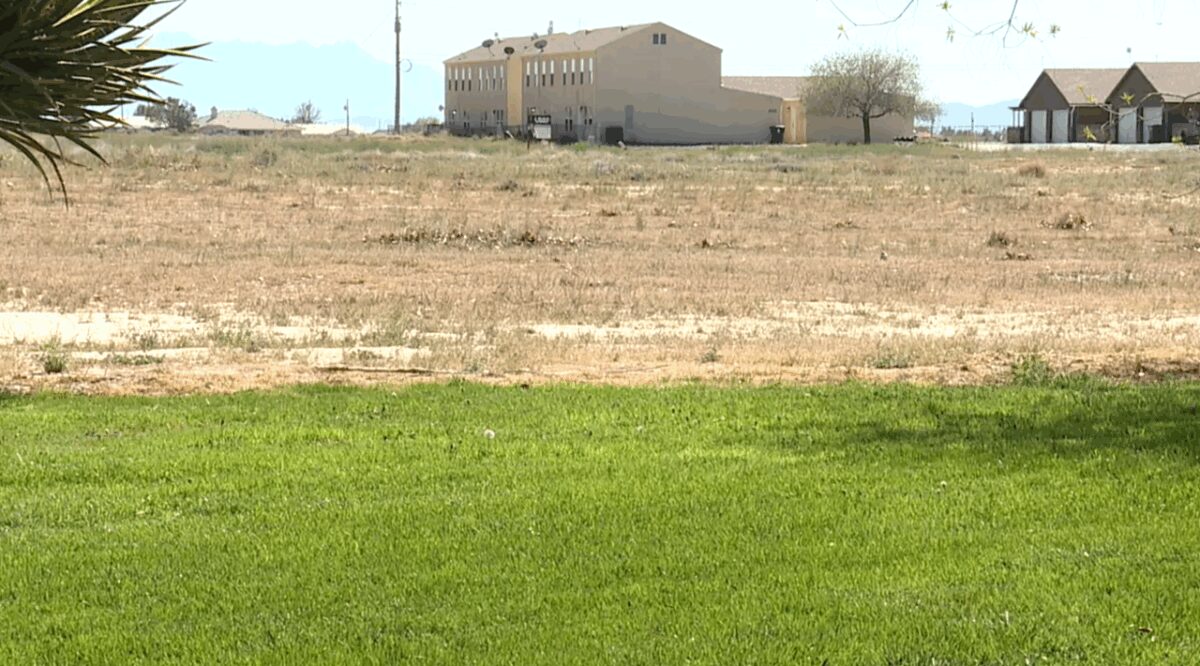
Schluneger’s place is a 5-acre empty plot off Z Street which he purchased from a real estate agent in 2019. He said, the hurdles are non-stop.

“We got over $200,000 invested in this property already,” Schluneger told Channel 13 that cost includes drilling a well over 200 feet deep to access the aquifer.

“This is going to be a zombie lot,” Schluneger said.

Schluneger said he cannot afford to move forward on the development, and is currently facing red tape and citations from Nye County — including for shipping containers he’s using to store his belongings.

“To tell you the truth, it’s hurt us a lot financially,” Schluneger said.

He’s not alone. According to sources Channel 13 spoke with, thousands of these “Zombie Lots” are scattered across the unincorporated community.

Over the weekend, dozens of people who are dealing with the problem took to the streets outside the Golden Nugget in Pahrump to raise awareness.

Here’s the crux of the problem: Those who own the plots are unable to build on their land because they aren’t connected to water or sewage lines. And according to state law, some of those lots are too small for wells.

That’s an expensive infrastructure problem.

And according to Nye County Commissioner Ron Boskovich, it’s a problem that’s decades old. He said the issue comes down to cost, not zoning.

“Where do you get money to fix a multi-million dollar problem that you didn’t create, and the taxpayers didn’t create, but another company 50 something years ago did and now, it’s providing a problem that no one ever wanted,” Boskovich said.

He said the company, Preferred Equities Corporation, has long-since been dissolved.

“I want them here. I want them to develop, but I also can’t have other taxpayers pay for that,” Boskovich said.

Until a solution is found, the lots remain in limbo, leaving buyers stuck paying taxes on land they once hoped to call home.

Channel 13 will continue to follow this story as it develops.

Please note: This story was provided to CNN Wire by an affiliate and does not contain original CNN reporting. This content carries a strict local market embargo. If you share the same market as the contributor of this article, you may not use it on any platform.

Denver International Airport adds first-of-its-kind barbershop kiosk on Concourse B

By Justin Adams

Click here for updates on this story

    DENVER (KCNC) — Travelers passing through Denver International Airport now have a new way to freshen up before takeoff.

“A Shaving Grace Hairport,” a barbershop kiosk located on Concourse B, is a first-of-its-kind concept designed specifically for an airport setting, offering grooming services in a fast, convenient format.

The shop is owned by Houston entrepreneur Vida Humphries, who relocated to Denver for the opportunity.

“So, we have a lot of foot traffic, a lot of people who are just interested in having a haircut before they fly or even when they land,” Humphries said.

The kiosk serves both passengers and airport employees, offering haircuts, beard trims, styling, and other grooming services, even during tight layovers or unexpected schedule changes.

Unlike traditional barbershops, the concept was engineered with airport safety in mind. Humphries developed a system that secures barber tools in a lockbox built into the back of the barber chair, ensuring compliance with Denver International Airport’s security requirements while still delivering a high-quality experience.

The business is part of the airport’s kiosk program, which aims to expand amenities for travelers. The goal is to provide a quick, efficient option for those looking to clean up before a flight or immediately after landing.

The shop offers a full menu of services, including men’s and children’s haircuts, beard trims, lineups, shampooing, and hair coloring. A variety of grooming products is also available for purchase.

The kiosk is currently operating under an 11-month contract with the airport. Early demand has been strong, and Humphries said he hopes to expand to Concourse A in the future.

He is also hiring as the business grows. Haircuts at the kiosk range from $45 to $70.

Please note: This story was provided to CNN Wire by an affiliate and does not contain original CNN reporting. This content carries a strict local market embargo. If you share the same market as the contributor of this article, you may not use it on any platform.

Robotic drone dogs powered by artificial intelligence aim to provide new security in crowded Las Vegas areas

By Shellye Leggett

Click here for updates on this story

    LAS VEGAS (KTNV) — Companies around the world are relying on artificial intelligence to provide added security in crowded places, including the Las Vegas Valley.

One new tool is a four-legged robotic drone dog. Thousands of robotic drone dogs are deployed around the country to provide an extra layer of security in high-volume areas.

The robots all have names, including one named Dan that operates on the Las Vegas Strip. The machines do not get tired, do not need coffee breaks, and do not get scared in dangerous situations.

Kurt George, the vice president of Asylon Robotics, showcased the robotic drone dog at the International Security Conference. He demonstrated how the machines can keep high-volume areas safe and said the company wants the robots embedded in local spots.

“His eyes and ears all being back to a security center where we have operators working 24/7 that are seeing what the dog sees,” George said.

The robots are designed to provide perimeter security for indoor and outdoor spaces, such as Allegiant Stadium, Harry Reid International Airport, music festivals, and the Strip. They work alongside human security teams and act like a moving camera with eyes and ears on the ground. The robots can walk around on their own, or a human can take control.

“Not a scary robot like in Terminator or AI, but what it does is it secures facilities and just keeps people from being where they’re not supposed to be. We like to say it protects the people from the property and it protects the property from the people,” George said.

Tourists visiting Las Vegas say the technology looks like something out of this world. Fred and Amy Kosier, who are visiting from Wisconsin, said the robot seems like a good way to keep civilians and law enforcement safe.

“This is kind of wild. This is a very futuristic,” Fred Kosier said.

“I would feel safe if, if it was walking around,” Amy Kosier said.

Asylon Robotics expects to roll out more of the robots every month. The company says the partnership between people and artificial intelligence will only continue to grow.

“AI not only is going to be able to detect abnormalities like that’s going to go in or detect threats, and then AI at that point again with human direction will be able to say call the police, call on-site security,” George said.

Over the next 10 to 15 years, the company says the technology will become even more advanced, keeping people out of harm’s way during dangerous situations.

This story was reported on-air by a journalist and has been converted to this platform with the assistance of AI. KTNV verifies all reporting on all platforms for fairness and accuracy.

Please note: This story was provided to CNN Wire by an affiliate and does not contain original CNN reporting. This content carries a strict local market embargo. If you share the same market as the contributor of this article, you may not use it on any platform.
Holy cow! This stuck heifer required heavy machinery to free it from cattle guard

By Spencer Burt

Click here for updates on this story

    GRAND COUNTY, Utah (KSTU) — It just couldn’t moooooo-ve.

Multiple police agencies and local volunteers stepped up Wednesday to save a cow whose lack of fear got the best of it.

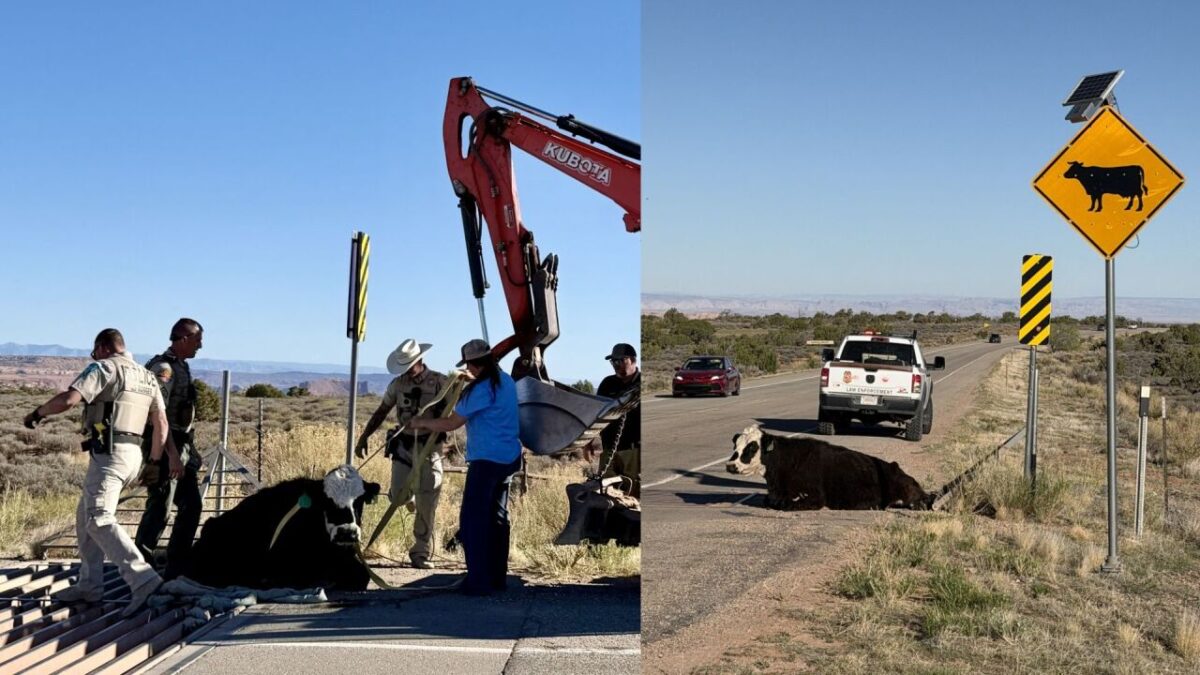
The animal stepped into a cattle guard and got stuck, according to the Grand County Sheriff’s Office. Cattle guards are metal grates that act as a barrier when a road goes through a fence on open range land. Cows and other hoofed animals tend to avoid the guards because the spaces between the bars are just wide enough for their hoof or foot to get stuck, while small enough to allow cars and trucks to drive over them.

However, the cow in question ignored that and apparently stepped on the grate with reckless abandon, falling in.

Sheriff’s deputies worked with Utah Highway Patrol and the Bureau of Land Management to rescue the stuck cow. Some ranchers even volunteered to help.

The crew took an excavator and attached a heavy-duty chain to its bucket. That chain was then connected to some towing straps and a long piece of cloth, which they roped around the animal to lift it out.

“Situations like this don’t always have a positive outcome, so we’re grateful this one ended well,” the sheriff’s office wrote in a social media post.

Please note: This story was provided to CNN Wire by an affiliate and does not contain original CNN reporting. This content carries a strict local market embargo. If you share the same market as the contributor of this article, you may not use it on any platform.

Lineworkers test their skills at the Arizona Lineman’s Rodeo

By Madison Thomas

Click here for updates on this story

    MARANA, Arizona (KGUN) — Dozens of electric cooperative lineworkers from across the state gathered in Marana on Wednesday to put their skills to the test in a day-long competition hosted by Trico Electric Cooperative.

“These results that we get at the banquet, they will be talked about the rest of the year until next year,” said Austin Barney, who is an Apprentice Lineman for Sulphur Springs Valley Electric Cooperative.

With bragging rights on the line, competitive spirits were on full display.

“We all try, and we’re all hard on ourselves a little bit if we don’t do exactly how we want,” Barney said.

However, for the nearly 50 apprentice linemen competing, camaraderie is what’s at the core of this event.

“These guys are all my friends, my co-workers and even people from other co-ops, we have good relationships because we’ve all competed,” Barney said.

“Being able to come together as a group, compete and build that relationship with one another helps us want to help each other out when they need our help,” Trico Operations Construction Manager, Jeremy Burnett, said.

Events ranged from an obstacle course to a ‘hurt man rescue.’

“A lot of things like the ‘hurt man rescue’, that’s something we have to qualify in every year,” Barney said. “It’s important to be efficient at it. So if the real-life situation happens where we need to help somebody from the top of a pole, we can.”

Please note: This story was provided to CNN Wire by an affiliate and does not contain original CNN reporting. This content carries a strict local market embargo. If you share the same market as the contributor of this article, you may not use it on any platform.

Hospital opens new teen lounge inspired by late patient’s vision

By Ethan Carlson

Click here for updates on this story

    DENVER (KMGH) — HCA HealthONE Rocky Mountain Children’s Hospital has opened a new, dedicated space for adolescent and young adult patients — a project inspired by a late 23-year-old patient’s vision.

Ryan Austin spent 50 weeks at the hospital battling alveolar rhabdomyosarcoma, a rare soft tissue sarcoma, before he died in April 2024. During his treatment, he voiced the need for a space where older patients could escape their rooms and feel normal.

“As a 22, 23-year old, it was hard for him to find and escape and get… out of his room while he was doing treatment and just feel a little normal,” Ryan’s mother Rachel Austin said. “I’m really incredibly proud of the fact that he saw a need for this room and that he voiced that to the team, and that his heart was big enough to share that.”

The new teen lounge features video games, jigsaw puzzles, a big screen for movies and a putting green, in honor of Ryan’s favorite sport. The room is also decorated in green, his favorite color.

“We have 4-year-olds, and we have spaces for them, but what we needed was a space where we could really cater to our adolescents and our young adults,” Kara Hellums, a child life specialist at the hospital, said. “I got to help dream this with Ryan. We walked the space with him, and he gave us ideas.”

Execute Director of the Rocky Mountain Children’s Health Foundation Cathy Sandoval helped partner with Shea’s Village Foundation to fund the project.

“If you’re a teenager and you’re stuck in the hospital, your life kind of got hijacked at a time when you’re making plans for your future,” Sandoval said. “You’re excited, and suddenly you’ve got to be in the hospital.

Sandoval said the room provides a place for teenagers to forget they are in a hospital and just focus on being teenagers.

“It’s going to make their experience so much more rich and rewarding,” Sandoval said. “I’ve worked on lots of great projects throughout my career, but this one is one of the absolute highlights. It just became this beautiful vision, and it turned out more beautifully than I could ever have imagined.”

Rachel Austin said the room is a great representation of who her son was, and she knows he is still a part of the space.

“He’s been a little MIA in my life lately, as a little angel following me around,” Rachel said. “I wondered, ‘where were you Ryan?’. And now I know he’s been here, monitoring the room and making sure that it comes to fruition.”

This story was reported on-air by a journalist and has been converted to this platform with the assistance of AI. KMGH verifies all reporting on all platforms for fairness and accuracy.

Please note: This story was provided to CNN Wire by an affiliate and does not contain original CNN reporting. This content carries a strict local market embargo. If you share the same market as the contributor of this article, you may not use it on any platform.

Unusually warm weather brings rattlesnakes out of hibernation early along the Colorado Front Range

By Adria Iraheta

Click here for updates on this story

    ADAMS COUNTY, Colorado (KMGH) — Unusually warm temperatures in the 90s are bringing rattlesnakes out of hibernation early along Colorado’s Front Range.

Dr. Stephen Mackessy, a biology professor at the University of Northern Colorado, said the abnormal weather is altering the snakes’ usual cycle.

“This kind of unusual weather is challenging for them, because they typically would be under cover in hibernation for another couple of weeks,” Mackessy said.

Mackessy noted that while snakes are emerging earlier than usual, they are not straying far from their dens just yet and prefer to avoid humans.

“There’s really no evidence to suggest that there would be any change in their attitude. And you know, in reality, people that are out hiking in the springtime have probably walked by rattlesnakes at close proximity many, many times and not even known it,” Mackessy said.

Ken Kapelke took his four grandsons on their first fishing trip of the year to enjoy the spring sunshine on Wednesday — yet another record-breaking heat day this March in Colorado.

“Gosh, I can’t believe this weather,” Kapelke said.

Kapelke made sure his family was prepared for the outdoors as they soaked up the sunshine at Barr Lake State Park.

“Plenty of sunscreen, and bug spray — bug spray, because all the bugs are out right now,” Kapelke said.

Not just bugs — it’s snakes, too.

“I just try to be aware of my surroundings and, like, try to see if I see any like, animals to get out of the way or, like, try to avoid them,” his grandson, Easton, said.

Experts say that’s your best defense against a snake bite.

Prairie rattlesnakes are the only venomous snakes across the Front Range. While all bites are venomous, the amount of venom in each bite could vary, according to clinical expert and Ophirex Chief Medical Officer Dr. Timothy Platts-Mills.

“If it just ate a meal, then it might have less venom in its glands, and so you might get less venom. Or if it’s maybe very angry, or you step on it and really hurt it, it might give you more venom, let’s say, than if it’s just sort of a warning bite,” said Platts-Mills. “You don’t really know how much venom was injected into you when you’re bitten, and so you kind of have to just assume that it could be bad.”

If you encounter a snake and get bitten, experts recommend carrying a marker outdoors. You should draw a circle around the snakebite, note the time, and use the marker to keep track of the edge of the swelling every few minutes.

Morgan Jared, director for emergency services at HCA HealthONE Swedish, said this helps doctors figure out how much the venom has spread once you get to the hospital.

“That allows us to not only see how quickly the venom is engaging with the tissue and causing problems, but whether or not our treatment is working,” Jared said.

Jared advised against cutting or sucking on the wound. Instead, he said victims should limit their movement and act fast.

“Biggest thing is isolate it and then just get it, get to get to an ER,” Jared said.

Rattlesnake deaths are rare, with fewer than 10 occurring each year nationwide.

Jared told Denver7 the hospital has not yet seen any snake bite patients needing treatment this season.

Still, residents are urged to be cautious as the weather warms up.

“Especially on these type of days. 90-degree weather and stuff,” Kapelke said.

This story was reported on-air by a journalist and has been converted to this platform with the assistance of AI. Scripps editorial team verifies all reporting on all platforms for fairness and accuracy.

Please note: This story was provided to CNN Wire by an affiliate and does not contain original CNN reporting. This content carries a strict local market embargo. If you share the same market as the contributor of this article, you may not use it on any platform.
Cooler conditions on Thursday as breezes gradually calm

Danielle Mullenix

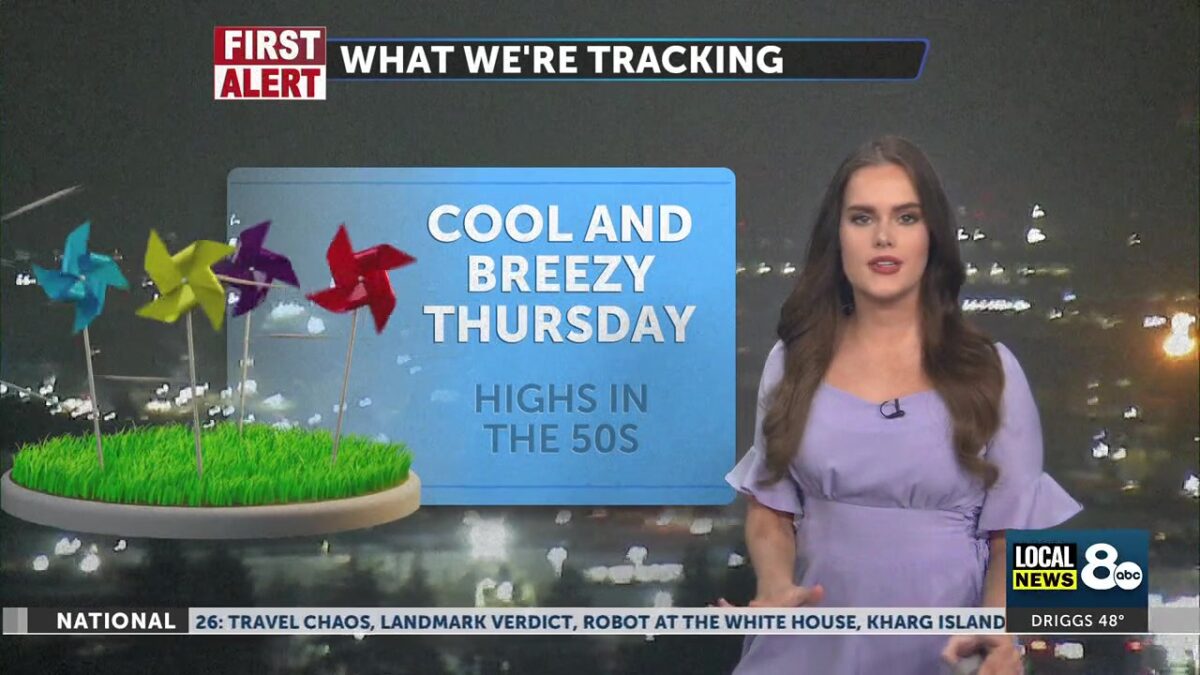
A dip in temperatures today will bring us the coldest day of spring so far, with a minor cold front pushing through Eastern Idaho and Western Wyoming this Thursday. Still experiencing early morning breezes across much of the region, but a dry weather pattern will carry over into today’s forecast, still making for ample opportunity to get outdoors.

Some high clouds are passing over the region in the early morning hours, typically associated with the cold front moving through. Skies will begin to clear up by this afternoon. A slight chance of rain could occur between Victor and the Island Park area this afternoon, with moisture moving to the North and east of us. High temperatures today are expected to be in the 50s around Eastern Idaho and Western Wyoming. Highest wind gusts are generally expected to be 25-35 mph, breezing through this morning behind the cold front. Hanging onto some stronger winds across the Magic Valley this afternoon, but the wind advisory from yesterday has been lifted. Mostly freezing for our lows this evening, with many places dipping back into the 20s.

Highs for Friday will remain in the upper 50s, some places working back into the 60s. A gradual warmup into the weekend is expected throughout the region, so we could see numbers returning to the 70s by Sunday. Chances of precipitation remain slim. Wind gusts will decrease, sitting in the teens for the weekend outlook.

Click here to follow the original article.

Denver Water enacts Stage 1 drought restrictions as snowpack hits historic lows

By Sophia Villalba , Robert Garrison , Maggie Bryan

Click here for updates on this story

    DENVER (KMGH) — Denver Water has enacted Stage 1 drought restrictions for all customers across the service area, effective immediately.

The Denver Water board approved the plan Wednesday morning, aiming to cut water use by 20% due to worsening drought. They warned that this year’s low snowpack could impact supply.

What does a Stage 1 drought declaration look like for you?

This summer, customers in single-family residential properties may water no more than two days per week and must follow a set schedule:

Addresses ending in even numbers: Sunday and Thursday.

Addresses ending in odd numbers: Wednesday and Saturday.

All other customers, including multifamily properties, commercial properties, homeowners associations, and government properties, may water only on Tuesdays and Fridays.

In addition, customers must follow Denver Water’s annual summer watering rules:

Water only during cooler times of the day, between 6 p.m. and 10 a.m.

Do not allow water to pool in gutters, streets and alleys.

Do not waste water by letting it spray on concrete and asphalt.

Repair leaking sprinkler systems within 10 days.

Do not irrigate while it is raining or during high winds.

Use a hose nozzle with a shut-off valve when washing your car.

Additionally, Denver Water is strongly urging customers to delay watering lawns until at least mid-May. The restrictions will remain in place through April of next year.

Denver Water has three levels of mandatory restrictions in its drought management plan, with Stage 3 being the most restrictive.

This is the first time a level of restriction this high has been in place since 2013, according to Denver Water. Other areas, such as Thornton, Erie, and the mountain communities of Fairplay, Bailey, and Shawnee, are also under restrictions.

The move comes as drought conditions deepen across Colorado.

Denver Water warns that snowpack levels in both the South Platte and Colorado River basins have plunged to historic lows, and supply reservoirs are only at 80% capacity, which is below the historic median for storage at this time of year.

Those numbers help explain why the utility is acting now, adding that its drought response aims to protect landscapes and ensure enough water for public health, safety, and the region’s economy.

Irene Andress, a Denver resident, said she believes the water restrictions are a responsible move. She recently started a low-water landscape in her backyard by removing turf and planting buffalo grass and blue grama grass instead.

“We wanted to lower our carbon footprint. Basically, we try to do that in everything that we do,” said Andress. “I think it’s something we have to do. Everybody has to become more conscious about our resources.”

Large water users are also preparing for changes. Denver Water said all customers are being asked to cut water by 20%, including commercial businesses. A spokesperson for the utility said staff will be bringing recommendations on drought pricing to board members on April 8, which would ultimately send a price signal on higher water use. Commercial and industrial customers can avoid that premium by finding efficiencies and reducing water use.

Denver International Airport has implemented several water-saving measures in recent years.

A DIA spokesperson reported that improvements in restrooms and low-flow fixtures reduced annual water use by 25% from 2022 to 2024, despite a 19% increase in passenger traffic.

The airport will implement irrigation restrictions soon.

“Denver Water has not communicated specific restrictions that will impact the airport’s day-to-day operations. DEN has a small irrigation system at our Aircraft Rescue and Firefighting Station 1 that will be put on restrictions,” a DIA spokesperson said.

Other businesses are also bracing for the ripple effects.

Hello Deluxe Car Wash manager Chris Heckle said the business uses 80% recycled water and recently made additional water-saving changes.

“We did reduce the amount of chemicals we’re putting on cars, so we are putting them on a little bit later and turning them off a little bit sooner just to conserve that water,” Heckle said. “But when we do let our customers clean their mats, they’re using fresh water, so we would ask them to use less.”

With restrictions now in place, the utility hopes early action will prevent deeper cuts later.

City Floral gardening center in Denver, which grows and sells plants, said it has always worked to conserve water by hand watering instead of using automated sprinklers. General Manager Trela Phelps said using mulch on top of soil can help retain water throughout the water restrictions. She said the business’ inventory has shifted to include more drought-resistant plants as science advances.

“Now there’s been a lot of changes in genetics in plants… and it’s for the best on a lot of things, you know, they’re stronger, they can tolerate heat. And so I think the plants are in better quality now,” said Phelps.

Denver Water said violating Stage 1 Drought restrictions as a single-family residential customer will land you a warning on the first violation, a $250 fine on the second warning, and a $500 fine on the third violation. A spokesperson for Denver Water said officials are developing an enforcement approach ahead of irrigation season in late May, but will rely on some personnel in the field and online reports from the public.

Please note: This story was provided to CNN Wire by an affiliate and does not contain original CNN reporting. This content carries a strict local market embargo. If you share the same market as the contributor of this article, you may not use it on any platform.