There’s Good News: Sprouts Montessori of Bend awarded $719,200 state grant

Silas Moreau

BEND, Ore. (KTVZ) — Sprouts Montessori of Bend has been awarded a $719,200 property acquisition grant to open a new licensed child care facility for infants and toddlers. The funding will support The Orchard Infant Nest on Northeast Revere Avenue in Bend.

The grant is mad possible through the Child Care Infrastructure Fund, which is administered by Business Oregon. This fund uses lottery-backed bonds authorized by the Oregon Legislature in 2023 as part of a $50 million statewide investment in child care facilities. Montessori was selected as a recipient in the third and final round of the program.

The new facility, located at 502 NE Revere Ave. in Bend, will be known as The Orchard Infant Nest, or Nido del huerto. It is designed to serve 24 infants and toddlers between the ages of 6 weeks and 24 months. The project involves property acquisition, the installation of a fenced infant play area and minor interior renovations to the existing building.

Sharon Richardson, the owner of Montessori of Bend, expressed gratitude for the state support and the chance to grow the school’s offerings. “We are honored to have been chosen to receive this extraordinary support and grateful for the opportunity to expand our infant and toddler program,” Richardson said.

Richardson also highlighted the school’s nutritional offerings as a strong component of the new center. “We are also excited to feed more children! Our food program is a core part of our school,” Richardson said. The facility plans to provide three meals and two snacks each day to the children in its care.

The center will operate as a Spanish immersion program, offering families an alternative educational environment. Operating hours are scheduled from 7:00 a.m. to 7:00 p.m. to accommodate various schedules. The facility will offer both flexible part-time and full-time options to meet the needs of families in Central Oregon.

The Orchard Infant Nest is scheduled to open later this spring. Families can find more information and a tentative rate sheet by visiting the Montessori website or by calling (541) 410-8045.

Click here to follow the original article.

Gov. Little signs privacy bill sheilding release of U of I crime scene photos; new video shows Kohberger discussing “Moscow thing”

Seth Ratliff

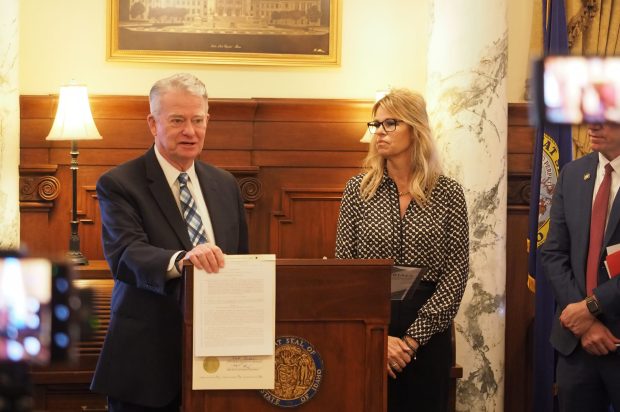
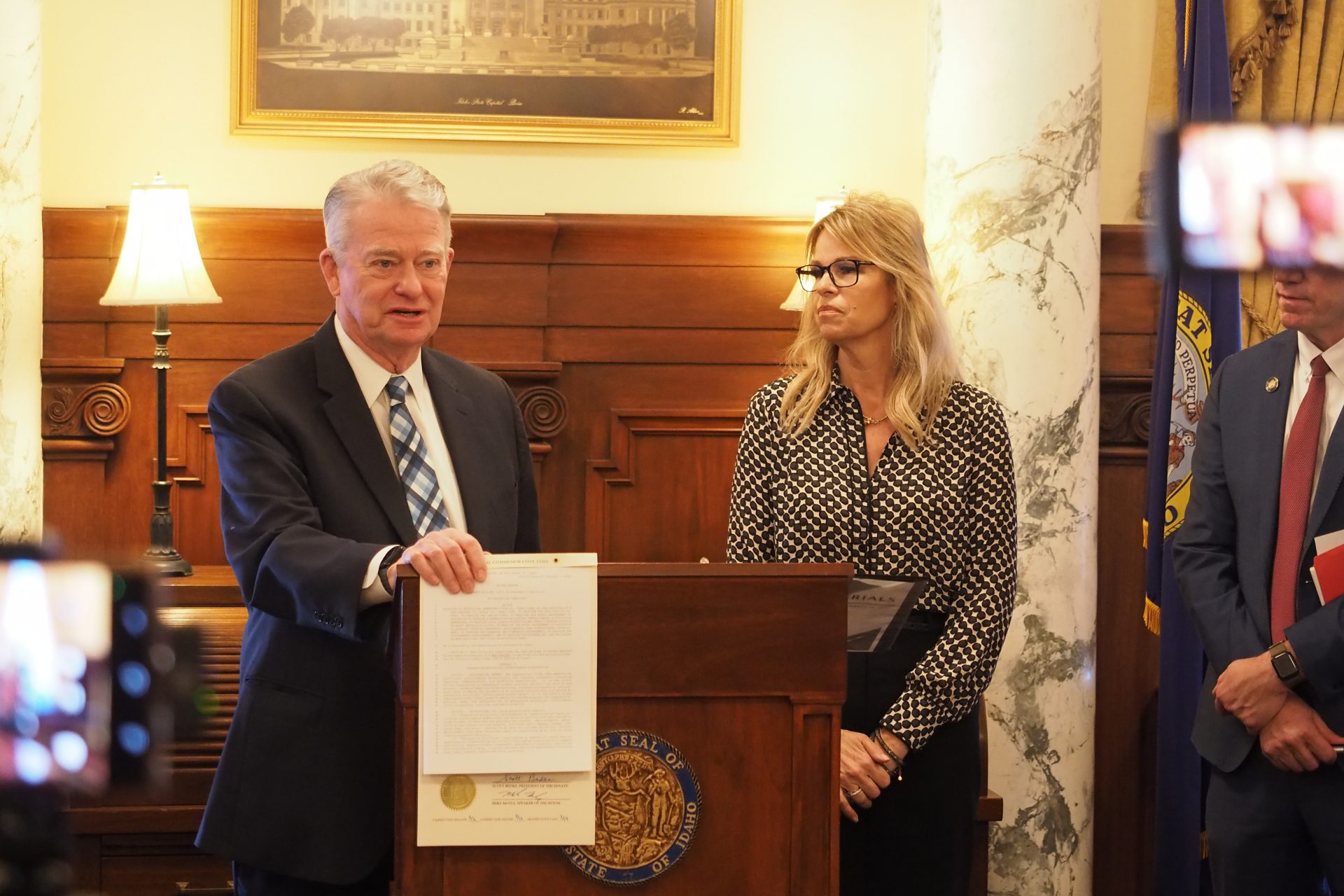
BOISE, Idaho (KIFI) — Governor Brad Little has signed Senate Bill 1250 into law, officially blocking the release of crime scene photos of the victims of the 2022 University of Idaho murders and similar future tragedies.

The legislation aims to close a loophole in public records requests that could have allowed sensitive images of the deceased to become public. The bill, which unanimously passed the Idaho House and Senate, was championed by the family of Kaylee Goncalves, one of the four students killed in the November 2022 attack.

“This change will help protect grieving families from the additional pain of having sensitive photos released that should remain private,” wrote Governor Little on Facebook. “I applaud Alivea and the Goncalves family for their incredible advocacy in the face of immense tragedy.”

According to the bill’s statement of purpose, the law explicitly prevents images of deceased crime victims from being disclosed through public records requests. The Goncalves family applauded the passage in an interview with NewsNation.

“It was long overdue, not personally for this case, but just for victims of rights in general in Idaho and, you know, other states,” Kaylee’s sister, Alivea Goncalves, told NewsNation Thursday.

The new law will take effect on July 1, 2026.

Unsettling Kohbergher DMV Footage Surfaces

Kohberger Caught in Casual Conversation With DMV Worker About Murders He Committed (Storyful)

The signing of the bill coincides with the release of security footage involving confessed killer Bryan Kohberger, who pleaded guilty in June 2025 to the murders of Madison Mogen, Kaylee Goncalves, Xana Kernodle, and Ethan Chapin.

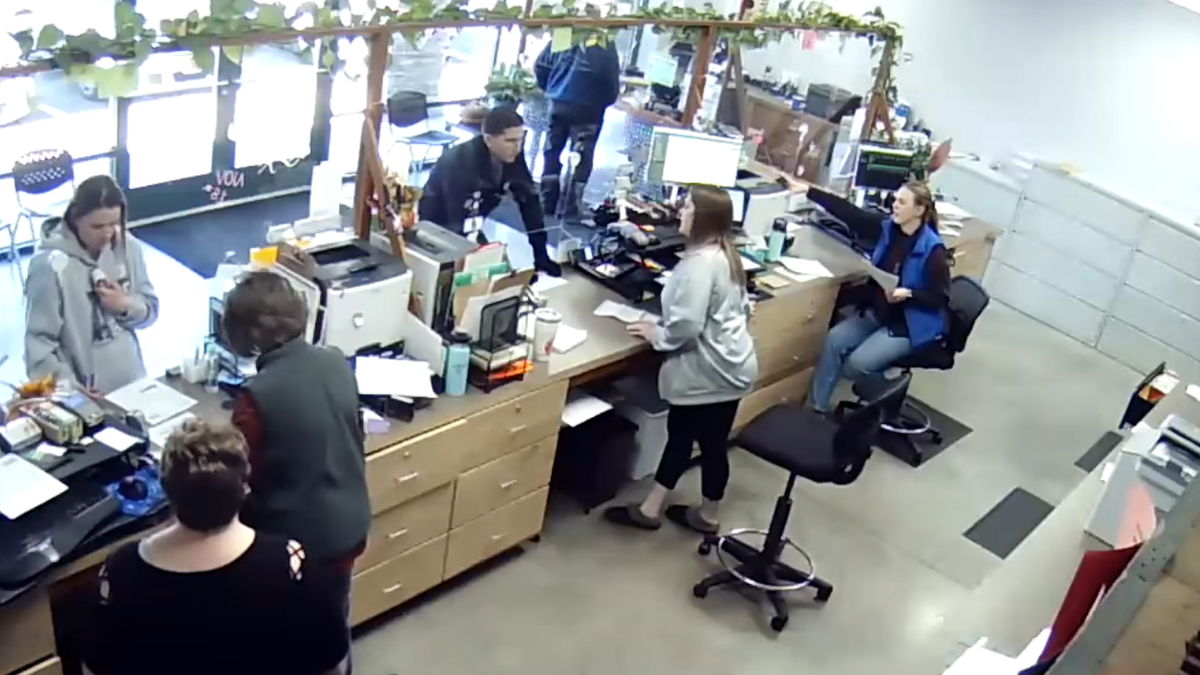
The video, captured on November 18, 2022—just five days after the murders—shows Kohberger at a Pullman, Washington, DMV office. He was there to switch his white Hyundai Elantra’s registration from Pennsylvania to Washington plates, after investigators say his car was spotted driving past the victim’s King Rd. home multiple times on November 15th.

The nearly 15-minute video, sent to Storyful by the Washington State Department of Licensing, shows Kohberger speaking with a local DMV employee. After telling Kohberger how safe she typically feels in Washington, the employee brings up to the local impact of the killings.

“I really like it though; I like how small, quiet, and I would say safe [it is],” the employee tells Kohberger. “But the whole Moscow thing kind of makes it feel a little less [safe].”

Kohberger remains “stony-faced,” offering brief responses as the clerk unknowingly discusses the very crime he had committed just days before.

Kohberger was arrested over a month later, at his parents’ home in Pennsylvania. He was later sentenced to life in prison on July 23, 2025, as part of his plea deal to avoid the death penalty.

Click here to follow the original article.

Arizona Western College presents: Peter Pan

Joaquin Hight

YUMA, Ariz. (KYMA) – Arizona Western College (AWC) is putting on their own version of the classic tale of Peter Pan.

Show Director Shadow Zimmerman said their goal was to take a familiar story to audiences and add a little bit of Yuma-love to it.

With puppetry and writing changes to the story, the crew are confident that this play sets itself apart from others telling the same tale.

Lead star of the show Julia Castillo says that it’s a challenge to use creative imagery and illusions to sell some of the story’s original concepts such as flying, but their approach is what sets the play apart.

She says In this production, the audience will see AWC’s Theatre performers stretched to their limits with this show, and that it’s a funny, delightful time for the whole family to enjoy.

“There’s a lot of things and elements to this production that is unlike anything else,” said Julia Castillo, who plays Wendy in the play.

The show runs April 9-11 at 7:30 p.m., and again April 12 at 2 p.m. at the AWC Theater building on campus.

Admission is $5 at the door, or free with a student ID.

Click here to follow the original article.

House Panel Debates Integrating AI in Heavily Regulated Banking Industry

By Tom LoBianco | Quincy News Correspondent

Click here for updates on this story

    Washington (Quincy News) — House lawmakers pressed some of the nation’s top banking regulators Thursday on how the heavily regulated industry is adapting to the rapid spread of AI.

Top staff from the Federal Reserve, Federal Deposit Insurance Corporation (FDIC), the Office of the Comptroller of the Currency, and the National Credit Union Administration (NCUA) detailed the balance federal regulators have been seeking between enabling AI innovation in banking and maintaining consumer protections

Republicans on the House Financial Services Committee’s subcommittee overseeing digital assets and AI said they wanted to know more about how regulators can best adjust for the rapid adoption of AI that’s already here.

“The question before us is not whether this transformation will occur, it will. The real question is whether our regulatory framework is prepared to meet the moment regulators must evolve as quickly as the technologies that they oversee,” said subcommittee chair Bryan Steil, a Wisconsin Republican, in his opening statement. “A static approach to supervision in a dynamic environment is a recipe for failure.”

The panel is eyeing a draft bill, the Financial Services Innovation Act of 2026, which would mandate federal regulators like NCUA, which oversees the nation’s credit unions, to establish new offices dedicated to facilitating AI adoption and innovation. The bill would also create formal “sandboxes” for regulators, banks and the financial industry to find safe ways to incorporate AI.

The panel’s Democrats, meanwhile, raised concerns that consumers were not represented at Thursday’s hearing, repeatedly demanding that someone from the Consumer Financial Protection Bureau (CFPB), established after the 2008 Great Recession, come before them to explain the dangers to consumers.

Long-serving California Democrat Brad Sherman said he was skeptical of new efforts by tech leaders to seek exemptions from consumer protection laws and regulations.

“We see often that people, particularly in the tech world, want to do something that we’re already doing, but they put a high-tech name on it, and then they say, therefore there shouldn’t be any regulation,” Sherman said. “I know that there’s a bill before us to create a special technology unit in the bank regulators, and I sure hope that that isn’t a system for saying, ‘Well, you just claim to be technological. You go to the special unit and they liberate you from all consumer protections.’”

Thursday’s hearing was the latest in a series of congressional sessions examining concerns and potential challenges as the Trump administration moves to reduce regulations and expand engagement with AI. President Donald Trump tapped Oracle founder Larry Ellison and venture capitalist Marc Andreessen, as well as Meta CEO Mark Zuckerberg and Nvidia CEO Jensen Huang to serve on the influential President’s Council of Advisors on Science and Technology (PCAST). He also appointed David Sacks, formerly the White House AI and crypto czar, to lead the PCAST panel.

The surge of attention from across the government comes as no surprise to experts tracking the issue.

Jamil N. Jaffer, founder of the NSI Cyber & Tech Center at George Mason University’s Scalia Law School, told Quincy News, “Financial services, like many other industries, is seeing significant opportunities for innovation with the advent of generative AI and the efforts of Congress to ensure that consumers can benefit from this innovation by providing regulatory clarity that promotes innovation is a smart move.”

“Ensuring that innovators and investors have the flexibility and incentive to effectively partner to deliver trusted, safe, and secure AI capabilities to financial consumers is also important in this critical industry,” said Jaffer, who is also setting up a new AI & Innovation Institute at GMU Law.

Please note: This story was provided to CNN Wire by an affiliate and does not contain original CNN reporting. This content carries a strict local market embargo. If you share the same market as the contributor of this article, you may not use it on any platform.

‘The genie’s out of the bottle:’ Little signs artificial intelligence education bill

Kaeden Lincoln

By: Kaeden Lincoln

Originally posted on IdahoEdNews.org on March 26, 2026

Idaho Gov. Brad Little signed a bill instructing the Idaho Department of Education to develop a statewide framework for integrating generative artificial intelligence (AI) into classrooms.

The framework will serve teachers just as much, if not more, than students, said State Superintendent Debbie Critchfield.

Critchfield once asked a classroom of fourth graders if they use AI every day. All of them raised their hands, she told reporters after the bill signing ceremony.

“The surprised group in the room were the adults,” Critchfield said. The framework the Idaho Department of Education develops, she said, should “force adults to catch up with kids.”

Before Little signed Senate Bill 1227, the state had no guidelines for AI use in schools. The law is open-ended so it can adapt over time.

“We didn’t tie down the bill,” said Sen. Kevin Cook, R-Idaho Falls. Cook, a software engineer, sponsored the bill in the Senate.

The law requires the framework to be “human-centered,” transparent and safe.

By “generative AI,” the bill means chiefly text, image and video generation, according to the bill’s own definition.

It excludes AI models that “have the primary goal of classifying data, such as those in automated vehicles.”

“You can make the argument that the AI genie is out of the bottle,” Little said. “Nobody’s putting that genie back in the bottle.”

Little referred to Moore’s Law, an observation made by former Intel leader Gordon Moore in 1965, which essentially proposed that semiconductors, the computer component that enables AI to “think,” would shrink to half their size every two years.

“Everybody thought it wasn’t going to happen,” Little said of Moore’s Law, “and it just continued to happen.”

Idaho Governor Brad Little after signing an AI education bill on March 26, 2026 at the Idaho Capitol. (Kaeden Lincoln/IdahoEdNews)

Click here to follow the original article.

Man who drowned in Fulton lake identified

Matthew Sanders

COLUMBIA, Mo. (KMIZ)

A man found dead after drowning in a Fulton lake on Thursday has been identified.

The body of Wallace J. Franklin Jr., 39, of Fulton, was pulled from Morningside Lake on Thursday morning. A witness told first responders that a person had been in the water yelling and showed them the location, a Fulton Police Department news release states.

The Missouri State Highway Patrol helped with the investigation and getting Franklin’s body out of the water.

The release did not include information about how Franklin ended up underwater.

Click here to follow the original article.

Father fights for his life as family says he’s being denied heart transplant he needs

By Leanne Suter

Click here for updates on this story

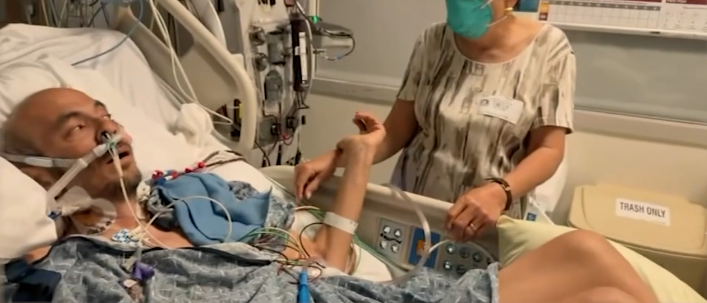
    LOS ANGELES, California (KABC) — A Southern California man in need of a heart transplant is fighting for his life. Despite having insurance, his family says the life-saving surgery has yet to happen.

Rhett Pascual has been hospitalized at Keck Medicine of USC since February. The 53-year-old is in a race against time and medical approval for a heart transplant to save his life.

“It’s a matter of life and death. I’m just looking for a chance. Give me a little bit more time,” Pascual said from his hospital bed.

Pascual, a husband and father of two, was first diagnosed with cardiomyopathy before later suffering a stroke. Pascual’s heart has now given out, and his only hope is a transplant.

“He’s fighting. He’s fighting for us. He’s fighting for his family. He doesn’t want to die,” his wife Julia Pascual told Eyewitness News.

Their son, Rhyss Pascual, described the ordeal as “a very difficult and heartbreaking journey,” adding that the family is determined to support his dad.

Pascual’s family says when he first arrived at Keck Medicine of USC they were told he couldn’t be put on the transplant list because of financial issues despite having full insurance coverage.

The time it’s taking to sort out the paperwork is taking a major toll on Pascual’s heart and triggering a second denial.

“Basically, they’re saying he’s getting denied now because he’s too weak, but why wait four weeks? He’s already been here a month,” Julia Pascual said.

A GoFundMe campaign has been set up to help the family cover the deductible costs of a transplant as Pascual remains focused on his faith and his fight for a new heart.

“I’ll get stronger, and once I’m on that list, it’s hope. That’s what’s important,” Pascual said.

Eyewitness News reached out to the hospital for comment. Officials say due to patient privacy they can’t release any details on the case.

Pascual’s family say they continue to pray he will soon be added to the heart transplant list.

Please note: This story was provided to CNN Wire by an affiliate and does not contain original CNN reporting. This content carries a strict local market embargo. If you share the same market as the contributor of this article, you may not use it on any platform.

Doolittle man killed in motorcycle crash

Madison Stuerman

COLUMBIA, Mo. (KMIZ)

A 25-year-old man died after a motorcycle crash in Phelps County on Thursday.

Missouri State Highway Patrol reported the crash happened at 3:48 p.m. on Highway D, half a mile north of Interstate 44 near Arlington.

The crash report states the Doolittle man was driving westbound ong Highway D on a 2022 Kawasaki motorcycle. Troopers said he was going too fast while on a curve and went into the opposite lane of traffic.

The other driver, a 49-year-old woman from Dixon, was in a 2017 Toyota 4 Runner when she tried to avoid the crash by going off the right side of the road.

The two vehicles crashed into each other, throwing the man from the motorcycle, according to the report.

The man was reported to be wearing a helmet.

Both vehicles were totaled, according to the report.

Click here to follow the original article.

Leader of ‘cult-like’ Amish community arrested on suspicion of sexual abuse, forced labor

Madison Stuerman

COLUMBIA, Mo.

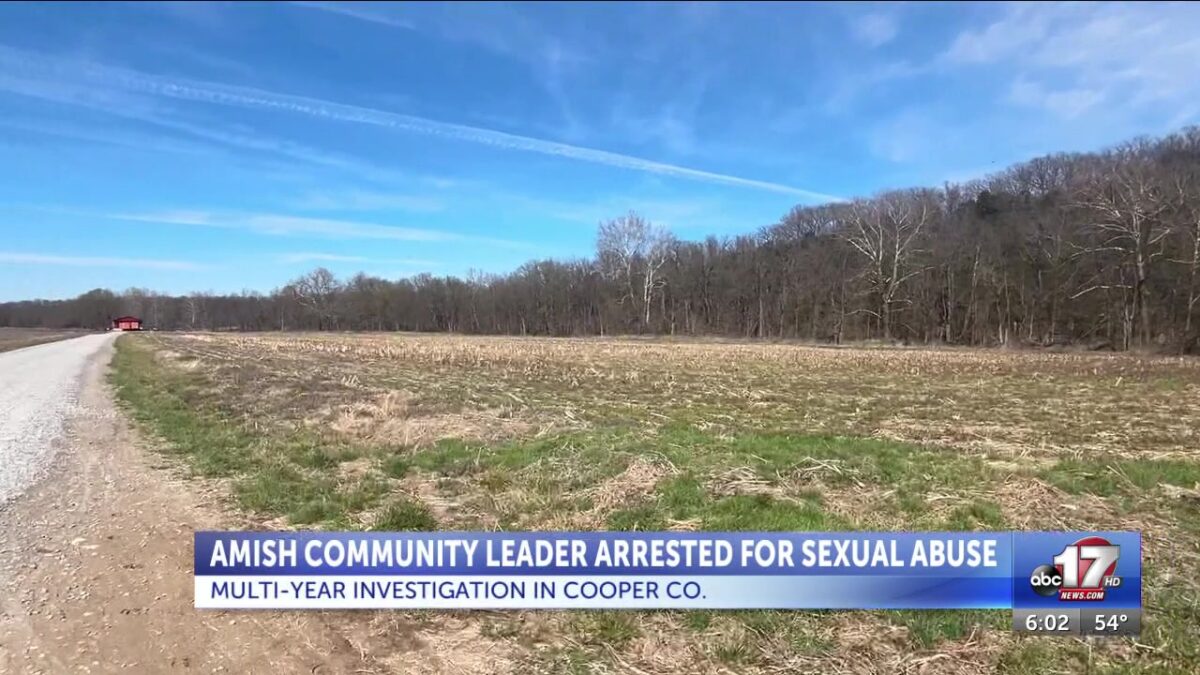
The leader of an Amish community in Cooper County was arrested on Wednesday over claims of sexual abuse and forced labor at a rural retreat.

Cooper County Sheriff Chris Class said Sam Shetler, 42, was arrested after a search warrant in the 11000 block of Hidden Valley Court at the Mercy and Truth-Amish and Mennonite Retreat between Boonville and Prairie Home.

Prosecutors filed charges on Wednesday, which were made available on Friday, for two counts of trafficking for forced labor and one county sodomy. Shetler is due in court on Tuesday at 10:30 a.m. for a counsel status hearing.

At least three witnesses spoke to deputies in early 2026 about their experiences at the retreat, describing abusive and controlling conditions.

Sam Shetler PCDownload

Court documents show that the sheriff’s office had received numerous tips from 2022 to 2026 about “cult-like” behavior at the retreat in rural Cooper County. Witnesses, many of whom stayed at the retreat when they were teenagers, described working on the property for no pay. Children would be “leased out” for work in town, a witness said, with any pay due going directly to Shetler. Some were made to sleep in the cold or have pepper put in their eyes as punishment.

One witness reported Shetler rubbed oil on them as a means of “healing” prior sexual abuse. The witness said Shetler touched them inappropriately during one encounter. The same witness also allegedly told deputies that they woke on night after taking pills given to her by Shetler to someone holding their legs and arms down, but they couldn’t figure out who it was.

According to court documents, Shetler made at least three women believe they were possessed by demons, and the only way to be healed was through his massages.

“‘Sam would mentally manipulate and mentally torture juvenile females, and young women into believing they were ‘demon possessed’ or that ‘evil spirits’ were present in order to ‘control’ them in exchange for self-gratification,” a Cooper County deputy wrote in a probable cause statement.

Deputies conducted a search warrant on the property after a multi-year investigation.

“The retreat was under the control of one individual who took advantage of his position in the Amish Community to control, coerce, and force vulnerable people for his own profit in different forms,” the sheriff said in a release.

His bond was set at $100,000 cash, according to the release.

Jasper Hoffman is an Amish activist and has a podcast called “The Plain People’s Podast,” where she speaks to Amish women about their experiences with the church and any abuse they might encounter.

Hoffman told ABC 17 News that there are about 70 retreats, like the one in Boonville, in the U.S., that “fly under the radar.”

She said the Boonville case sounds like many of the other retreats.

“It’s very, very typical, like there is nothing that stands out that makes me go ‘Oh my God’ I can’t believe that,” Hoffman said.

Hoffman said standing up to any kind of abuse in the Amish community is difficult, and scary for most women.

“It’s a lot of risk for them, from the inside, to come forward. They’re ostracised, they’ll be cut off from support within the church. That means financial support. Oftentimes, we see a lot of harassment happen with phone calls, driving by, intimidation, and they don’t know that’s illegal,” Hoffman said.

Overall, the retreats are “heartbreaking.”

“Truly, nobody’s really getting the assistance that they need. You know, there’s no therapy there, they’re not really receiving anything, and it’s just further creating harm,” Hoffman said.

Click here to follow the original article.

Suspect arrested for hiding cameras in restrooms at parks, police say

By Brandon Downs, James Taylor, CBS13 Photojournalist

Click here for updates on this story

    ELK GROVE, California (KOVR) — A suspect was arrested Thursday after cameras were found hidden in women’s restrooms at multiple Elk Grove parks, police said.

Detectives learned two hidden cameras were found in the women’s restrooms toliets at Elk Grove Regional Park and Jan Rau Park on March 5.

Elk Grove officers and the Cosumnes Community Services District then checked all other park restrooms throughout the city. Police said no additional cameras were located.

Video footage from a park camera and traffic cameras in the area helped officers identify a suspect, identified as 37-year-old William Raasch of Sacramento.

A search warrant at Raasch’s home was served and police said they learned Raasch had placed hidden cameras in at least two other community parks. Those parks are believed to be Kloss Park and Zimbelman Park.

Police said the restrooms where the cameras were placed are often located near playgrounds and sports fields, areas that are regularly used by children and families.

The investigation also determined Raasch dressed up to resemble a woman in an apparent effort to avoid detection, police said.

Raasch was arrested on 12 counts of photographing or videotaping an undressed person in a private area and three counts of eavesdropping.

“Our detectives served a search warrant at his residence and ultimately found a plethora of digital evidence. They spent the last couple of weeks going through all of that,” said Sgt. Jason Jimenez with Elk Grove police.

Police added that there could be additional victims who have not yet been identified and are urging anyone with information to come forward.

Anyone with additional information is urged to contact the Elk Grove Police Department.

Please note: This story was provided to CNN Wire by an affiliate and does not contain original CNN reporting. This content carries a strict local market embargo. If you share the same market as the contributor of this article, you may not use it on any platform.