Idaho lawmakers move to expand ‘sexual contact’ definition to hold prison staff accountable

InvestigateWest

Editor’s note: The article discusses sexual assault. “Guarded by Predators” is a new investigative series obtained through partnership with InvestigateWest, exposing rape and abuse by Idaho’s prison guards and the system that shields them. Find the entire series at investigatewest.org/guarded-by-predators.

Originally Posted: March 4, 2026

by Whitney Bryen, InvestigateWest

BOISE, Idaho — Spurred by InvestigateWest reporting that exposed sexual abuse by Idaho women’s prison staff, lawmakers are advancing legislation meant to close a gap in state law that makes it difficult to hold correctional officers accountable.

The state’s “sexual contact with a prisoner” law protects inmates from abuse only when staff touch the victim’s genitals or they’re made to touch the genitals of staff, omitting abuses such as kissing or groping. This falls short of federal Prison Rape Elimination Act standards, which prohibit all inappropriate touching and even suggestive comments or voyeurism by prison staff. Former prosecutors say the state’s narrow definition is partly why accountability for correctional officers accused of sexual abuse — even when a guard seemingly confesses to it — remains rare.

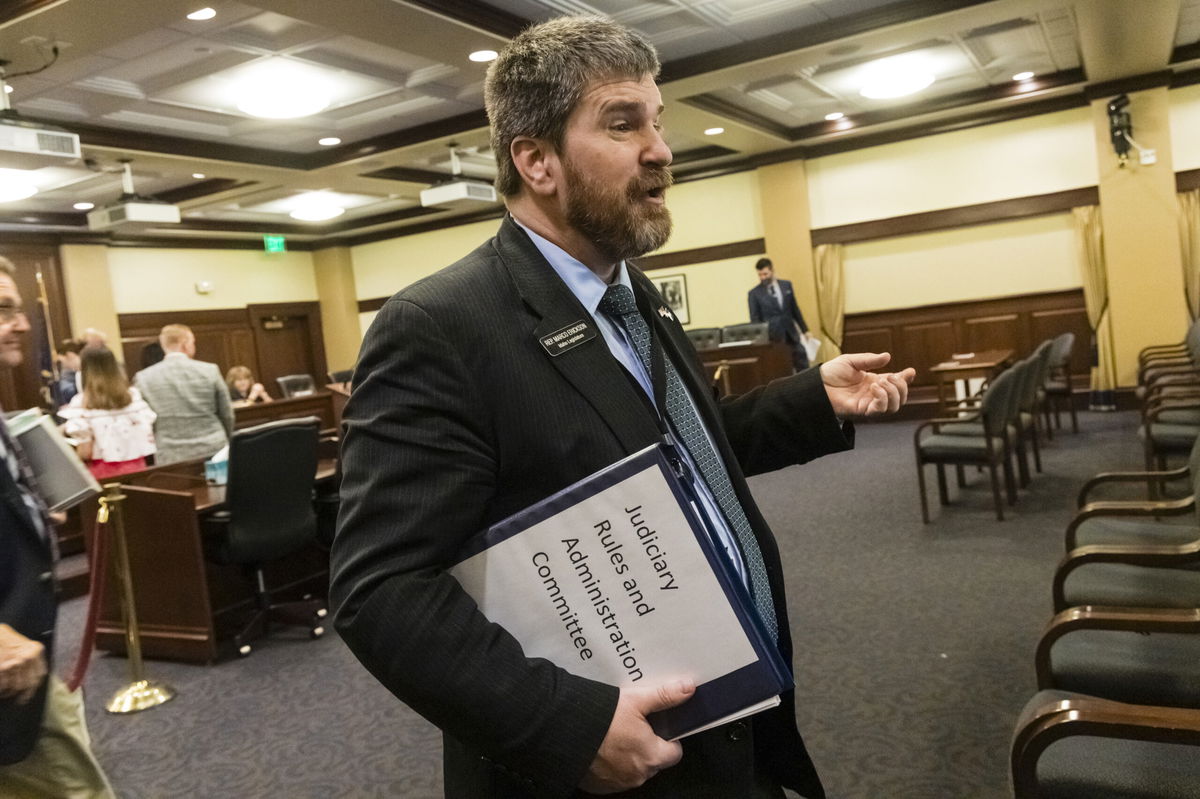
House Bill 696 would expand Idaho’s definition of sexual contact to include “any willful physical contact, over or under the clothing, when the physical contact is done with the intent of arousing, appealing to, or gratifying the lust, passion, or sexual desires of the actor or any other person.” The House Judiciary, Rules and Administration Committee voted unanimously to advance the bill during a hearing on Friday, Feb. 27, sending it to the full House for consideration. The House is expected to vote on the bill later this week. If it passes the House, the bill will still need to pass the Senate and be signed by the governor before being implemented.

The bill’s sponsor, Rep. Marco Erickson, R-Idaho Falls, said the proposal was prompted by a series of October reports by InvestigateWest exposing sexual abuse allegations against dozens of women’s prison guards — most of whom avoided criminal charges. 

The investigation found 37 prison workers accused in the last decade of sexual misconduct toward incarcerated women. But only three of those prison guards were criminally charged with sexual contact, and just one received a prison sentence, which he avoided after serving a nine-month rehabilitation alternative offered by the Idaho Department of Correction. 

Erickson’s bill aims to hold more correctional officers accountable and send a message that sexual interactions with inmates will not be tolerated. 

“In my mind, these guys, or girls, are predators,“ Erickson told InvestigateWest about why he introduced the bill. “I don’t want to put more people in prison, but I want to deter them from doing this, and I think this is how we have to do that.”

A view of the State Capitol reflected in the Joe R. Williams Building in Boise, Idaho on February 13, 2026. (Otto Kitsinger/InvestigateWest)

In 1993, Idaho made it a felony for correctional officers to have sexual contact with inmates, long before the U.S. Department of Justice developed its standards under the Prison Rape Elimination Act.

Incarcerated victims often go along with or reluctantly agree to sexual requests from guards because they’re afraid of what will happen if they say no. For that reason, federal and state laws say that inmates cannot consent to sexual contact and only require proof that the contact occurred. 

Idaho’s law, written by a former Ada County deputy prosecutor, carries a maximum sentence of life imprisonment and lacks a mandatory minimum sentence, leaving penalties up to the judge’s discretion. 

Erickson told lawmakers that Idaho Department of Correction Director Bree Derrick is in favor of the bill. In an email to InvestigateWest, the department said it does not comment on pending legislation. However, during a Board of Correction meeting on Wednesday, March 4, Tina Transue, the Department of Correction’s government relations advisor, supported the bill. Transue told InvestigateWest, “we’re excited that it gives us more teeth” and “brings us more in line with (the Prison Rape Elimination Act).”  

Idaho State Police, the agency that investigates criminal allegations against prison staff, did not respond to messages from InvestigateWest seeking comment for this story. The bill’s expanded definition of sexual contact could result in more police investigations and prosecutions of accused prison workers.    

During the Feb. 27 committee hearing, Rep. Chris Mathias, D-Boise, who supported the bill’s advancement, asked a question sent to him by a constituent: Would the bill make a hug between a guard and inmate a felony punishable by life in prison? 

“No, that would not be the case,” Erickson said, “because a simple hug is not for the purpose of sexual gratification.”

Other state laws still make it illegal to touch the groin, inner thighs, buttocks, breasts or genital area of any person, including an inmate, without their consent. For those crimes against an inmate, guards can be charged with felony or misdemeanor sexual battery. But those charges rarely happen because unlike sexual contact with a prisoner, Idaho’s sexual battery laws don’t recognize the power that prison staff hold over the people in their custody and, therefore, require prosecutors to prove that the victim did not consent. 

Andrea Weiskircher, who accused five prison workers of sexually abusing her while she was incarcerated, spoke at the hearing in support of the bill.

“Five individuals who were entrusted with complete authority over my life, my housing, my movement, my discipline, my safety, they use that authority to exploit and violate me,” Weiskircher told lawmakers. “Because of the way Idaho’s current laws are written none of my perpetrators will ever be held accountable. They are free. They are able to work in other correctional facilities, and as the law stands today, I will never see justice.”

In addition to Weiskircher, three Idaho women also urged lawmakers to pass the bill, including Boise attorney and women’s rights advocate Audrey Numbers, during last week’s hearing. 

“Idaho incarcerates more women per capita than any state in the United States by a huge percentage, a great deal, yet we do not properly protect and care for the women who are incarcerated in Idaho,” Numbers said. “We need to do much more to protect and care for them. This bill is just at least a small step toward providing them some additional protection from exploitation and abuse by guards ostensibly hired to protect them.” 

Joseph Filicetti, who penned the 1993 law as a “bright line” between illegal and permissible contact, is now a defense attorney who represented one of the guards charged with sexual contact with a prisoner. He said last year that the law as it stands doesn’t do enough to protect people in custody.

Erickson said the bill on its own does not go far enough to protect incarcerated people. He plans to address the state’s failure to properly investigate officers accused of sexually abusing the people in their care next year. 

“This was the easiest, quickest fix, but next year there will possibly be some other things that make sure that the internal investigations are happening a little stronger,” Erickson said. “And Idaho State Police has indicated that they’re going to ramp up their efforts on that as well.”

Click here to follow the original article.

Jefferson City details requirements for open council seat appointment

Ryan Shiner

COLUMBIA, Mo. (KMIZ)

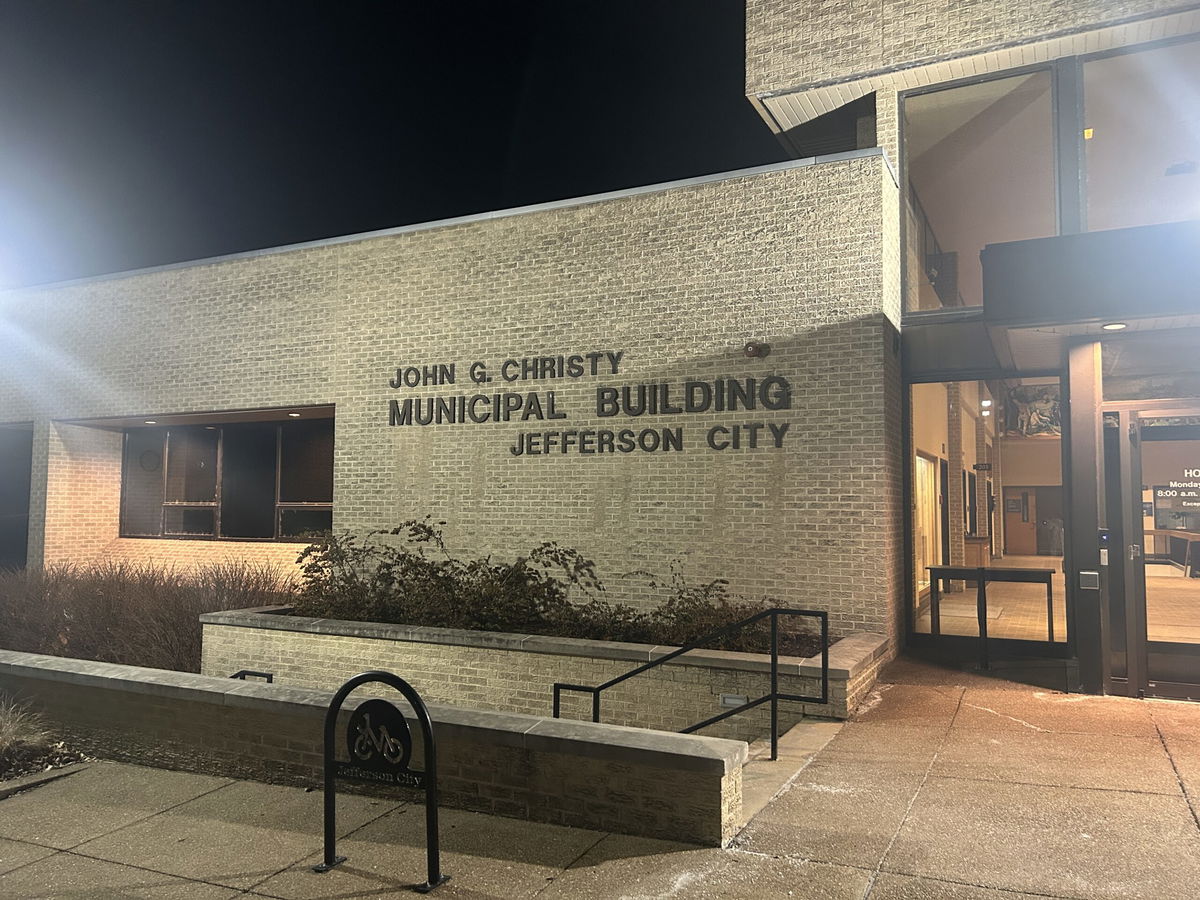
Jefferson City has outlined its process on its website for replacing now-former Ward 2 Councilman Aaron Mealy.  

The city shared a link on its social media to its website on Wednesday detailing the process, which has a couple of notable differences than what was described to media on Monday night. Mealy had announced his resignation in an email to media following Monday night’s City Council meeting.

Interested residents should “submit a letter of interest outlining their background and qualifications to the City Clerk at EDonaldson@jeffersoncitymo.gov,” the website says.

A resident can be nominated by any council member and must complete a declaration of candidacy form within four working days after they are nominated, the website says. A public form would then be conducted, followed by a council vote. The candidate needs to receive a simple majority of the council vote, the website says.

Qualifications include being a US citizen who is at least 21 years old who has lived within city limits for a year, and within the specific ward for six months. The candidate cannot have unpaid taxes, be guilty of defalcation or have been previously removed as a member of the council, the website says.

Click here to follow the original article.

Santa Maria City Councilman Suddenly Resigns, Motion For Ad-Hoc Immigration Committee Fails

Jarrod Zinn

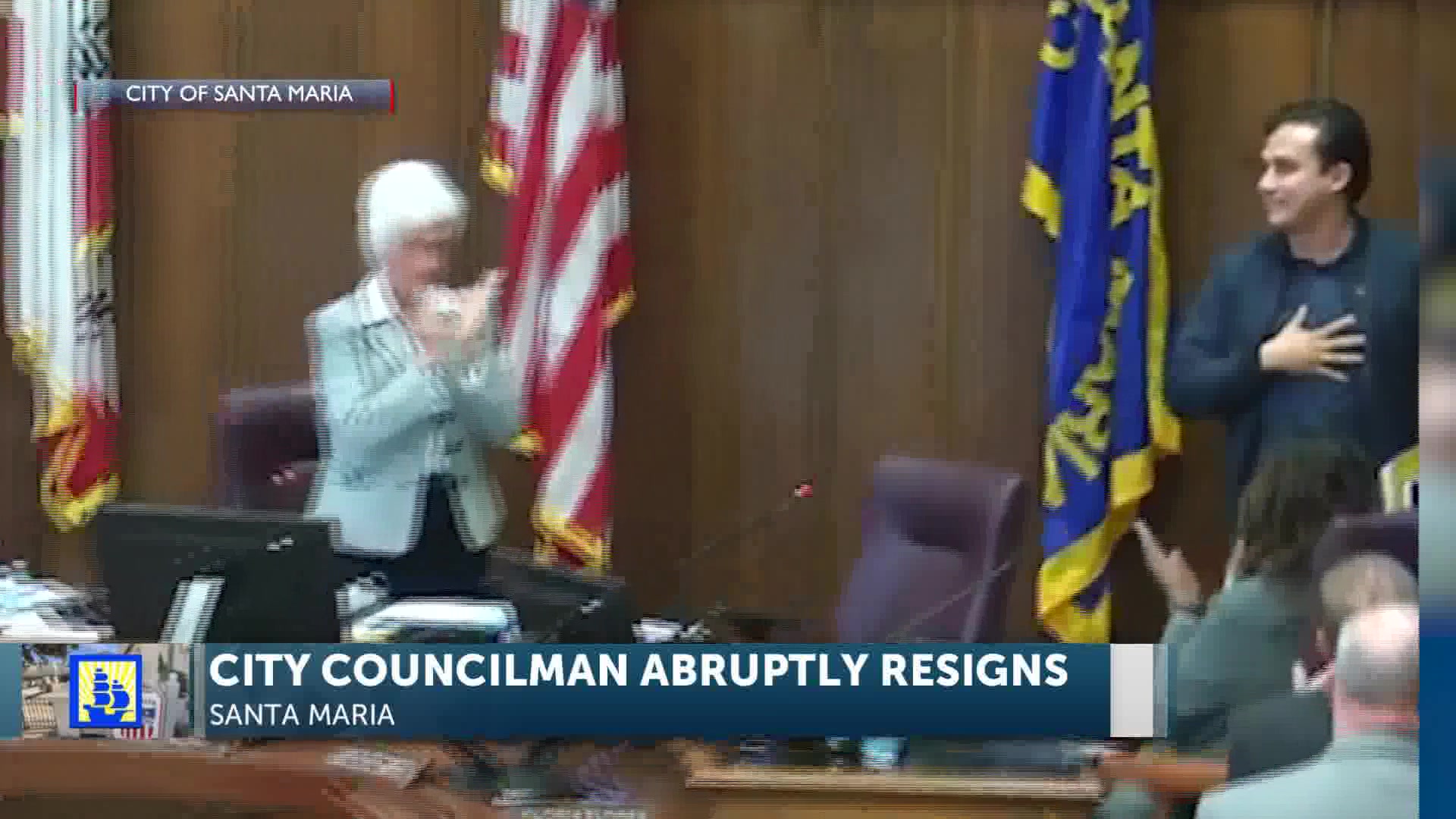
SANTA MARIA, Calif. (KEYT) – The Santa Maria City Council is reeling tonight, trying to understand why a Councilmember abruptly quit without notice.

It happened at last night’s council meeting.

Councilman Carlos Escobedo, who was first elected in 2020, announced his resignation near the beginning of the meeting and walked out.

“Due to my upcoming move outside District One, I will not longer meet the residency requirement necessary to continue serving in this role,” Escobedo said from the dais. “While this decision comes with mixed emotions, I believe that stepping down is the appropriate and responsible course of action.”

Escobedo has two years left in his term.

“So that’s effective now?” asked Councilmember Gloria Soto. “Do we talk about what happens next? That’s—No. Okay.”

His resignation appeared abrupt, seeming to catch other council members off-guard.

Brief discussion in the chamber reflects a lack of notice to city staff from the councilman.

“As surprised as I am, I will be providing the council with a memorandum as to next steps,” said Santa Maria City Attorney Tom Watson. “But as of right now, that seat is vacant.”

City attorney Tom Watson said he will have to examine the statutes before taking further steps, especially because this year is an election cycle.

“There will be an election in November,” said Watson. “But between now and then, I will provide legal opinion to council, whether or not an appointment and how such an appointment would take place.”

The council continued the meeting in Escobedo’s absence.

With Escobedo’s seat vacant, the motion to establish an Ad-Hoc Immigration Committee later in the evening tied 2 to 2, meeting with defeat.

Residents in attendance were audibly shocked and upset by that result.

The Latest Breaking News, Weather Alerts, Sports and More Anytime On Our Mobile Apps. Keep Up With The Latest Articles by Signing Up for the News Channel 3-12 Newsletter.

Click here to follow the original article.

Man accused of killing Michael Vaughan seen on video at time of disappearance

News Team

Originally Posted Wed, March 4, 2026 at 9:39 AM on CBS2

By Ryan Oswald

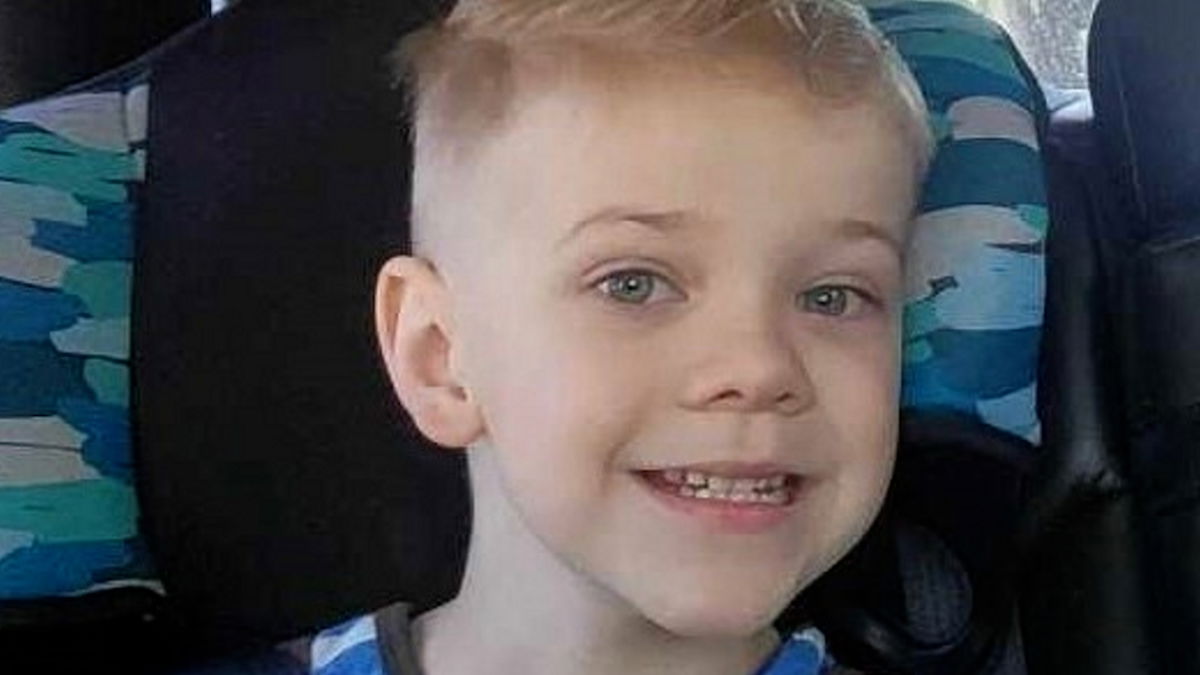
PAYETTE, Idaho (CBS2) — Stacey Wondra, the man accused of kidnapping and killing 5-year-old Michael “Monkey” Vaughan, is back in court on Wednesday as part of a preliminary hearing to determine whether or not the prosecution can take the case against him to trial.

The hearing began on Tuesday morning. Michael’s mother and father, Brandi and Tyler, were the first to testify. The couple individually testifying to the emotional and terrifying first moments of Michael’s disappearance from their home in Fruitland. Three separate K9 handlers, each who aided in various aspects of the search for Michael, also testified. Two of the handlers have specialized K9s that search for and detect human remains. Both dogs indicated the presence of human remains in the backyard of Sarah and Stacey Wondra’s home, though Michael’s body has not yet been found.

Juanita Kelleher, a Fruitland Police officer, was the first to testify on Wednesday morning. Officer Kelleher was involved in the investigation to find Michael from the very beginning. Officer Kelleher testified that every resource available, including professional search and rescue crews, dogs, and even helicopters, were brought in to assist. She also said that video from surrounding areas shows that Michael didn’t leave the neighborhood on foot.

Officer Kelleher testified that she identified a white Lexus, which belonged to Stacey Wondra, pulled into the parking lot of a park and splash pad near Michael’s home. According to Kelleher, Stacey was seen on video getting out of his car, testing the door handle on the passenger side. Traffic cameras also show a different vehicle belonging to the Wondras, a maroon pickup truck, left their home some time after 8:00 pm the night Michael disappeared.

Video of an interview with Stacey Wondra in 2022 with Fruitland Police was played in court. Wondra was an inmate at the Washington County Jail on unrelated charges at the time, was played in court. Stacey told detectives that he was trying to give them everything he knows, but wants to know what sort of plea deal he could receive. Stacey told detectives on the video, that he “wanted to help find Michael.” The video interview appears to show Stacey attempting to negotiate a deal in exchange for helping find Michael.

Click here to follow the original article.

Columbia man charged with child molestation, resisting arrest

Ryan Shiner

COLUMBIA, Mo. (KMIZ)

A Columbia man has been charged with a pair of felonies after authorities say he molested a child multiple times.

Jacob Knowles, 31, was charged on Tuesday with first-degree child molestation and resisting arrest. He is being held at the Boone County Jail without bond. An arraignment was held on Wednesday and he appeared from the jail without bond.

The probable cause statement says a youth told someone at their school on Monday that they had been inappropriately touched by Knowles and that Knowles also exposed himself to the victim. The most-recent assault allegedly occurred on Friday, the statement says.

When police arrived to Knowles residence, he allegedly ran out of the home to get away, the statement says. Officers were able to grab him and arrest him. Knowles allegedly told officers that he ran away because he didn’t want to be arrested.

A confined docket hearing is scheduled for 1 p.m. Tuesday, while a preliminary hearing is set for 9 a.m. Thursday, April 9.  

Click here to follow the original article.

Benji the Blind Pup Available to Adopt at Santa Barbara Humane

Alissa Orozco

SANTA BARBARA, Calif. (KEYT) – Santa Barbara Humane returned to your Morning News with a face you just can’t resist.

In a group of 16 new dogs, 7-year-old Benji arrived in Santa Barbara from the organization’s transfer program, already arriving three legged and with a skin and ear infection. Unfortunately doctors discovered Benji’s eyes to be in poor condition as well so the decision was made to remove them.

“I think when he came to us those eyes were in such bad shape that he really couldn’t see anyway, so it’s not a huge thing to be a new thing to be blind. Just a sweet little guy. He just wants to hang out in your backyard in a patch of sun, you know, just be cute little Benji,” says chief operating officer, Dory Villalon.

Benji, along with the other pups, will be available for adoption starting Thursday.

In a few days SB Humane will be throwing their Wild West Fest! The fundraising event helps support the organization and all those sweet animals they take in, just like Benji.

The Latest Breaking News, Weather Alerts, Sports and More Anytime On Our Mobile Apps. Keep Up With the Latest Articles by Signing Up for the News Channel 3-12 Newsletter.

Click here to follow the original article.

Senate Committee backs 9-year-old’s push to make hunting the official state sport

Kevin Richert

Originally posted on IdahoEdNews.org on March 4, 2026

By Ryan Suppe and Kevin Richert, IdahoEdNews:

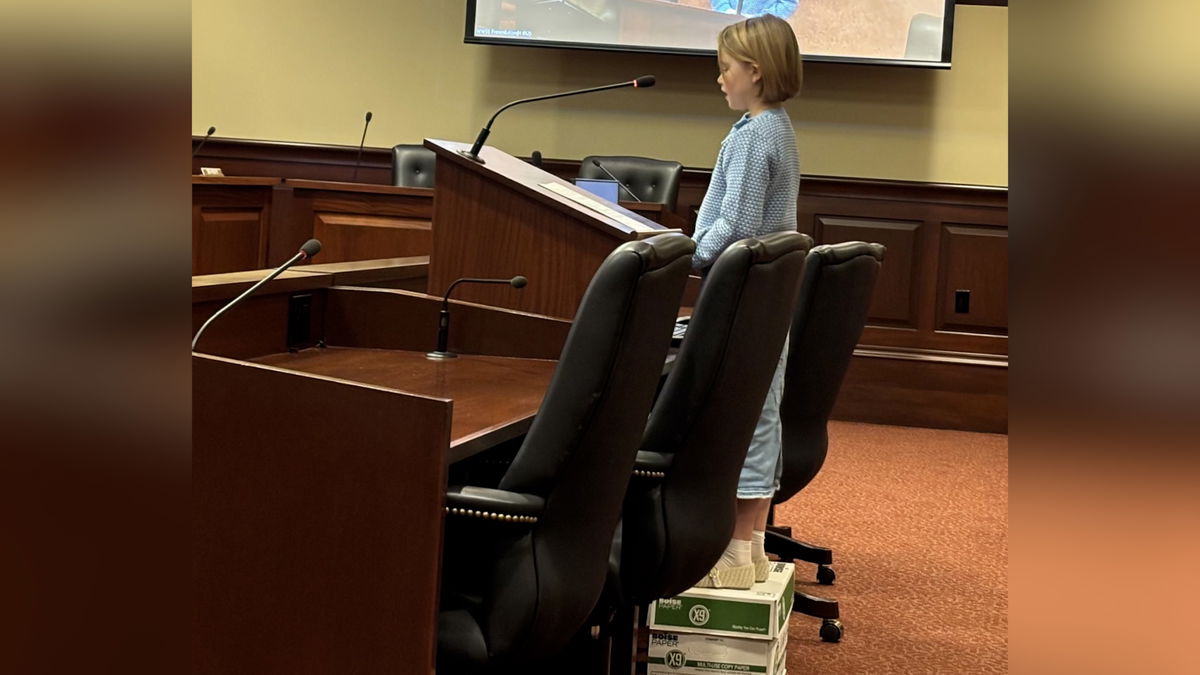
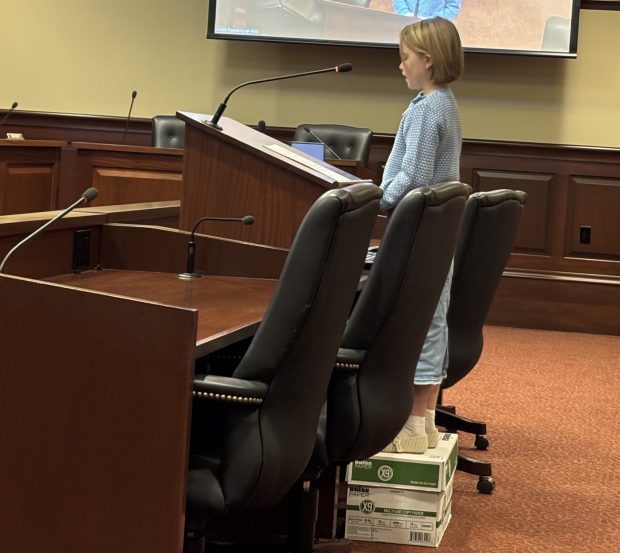
BOSIE, Idaho — Betty Grandy showed up prepared Wednesday morning.

She had data. She had a case study from a neighboring state. She’d already bounced her proposal off Gov. Brad Little.

Twin Falls fourth grader Betty Grandy speaks to the Senate State Affairs Committee Wednesday. Her bill to make hunting Idaho’s official sport is now headed to the Senate for a final vote. (Kevin Richert/Idaho EdNews)

Betty also had backup: her parents, a younger sister, her grandfather.

Minutes later, Betty had the Senate State Affairs Committee on her side. Equally persuaded and charmed, the committee unanimously endorsed the Twin Falls homeschooled fourth grader’s bill designating hunting as Idaho’s state sport.

Grandy, 9, told lawmakers that Idaho already has a host of state symbols. But no state sport — unlike other states, like Wyoming, which honors rodeo.

But when Betty polled readers of the Grandy Gazette, a newspaper she shares with family and friends, she found support for a different sport. “Hunting was a clear winner.”

Betty Grandy, 9, second from left, is flanked by her sister Margot, 7, and her parents, Neill and Diana. (Kevin Richert/Idaho EdNews)
Making her subscribers’ case, Betty said a state designation would honor hunting’s place in Idaho’s heritage. And, she said, it would ensure that future fourth graders learn about the role hunting plays in the state.

After presenting the evidence, Betty did what every savvy lobbyist learns to do. She employed some people skills. “I’m grateful you are willing to consider an idea from a kid,” she said.

“You might be the best public speaker in this room,” said Sen. Ben Adams, R-Nampa.

“Good luck following that,” said Rep. Grayson Stone, R-Twin Falls, as the bill’s Senate sponsor, Meridian Republican Treg Bernt, prepared to close the presentation.

But by then, the committee’s mind was clearly made up.

“Sen. Bernt, sit down,” said Sen. Mark Harris, R-Soda Springs, wryly.

The hunting bill now goes to the Senate floor for a final vote. It passed the House unanimously on Feb. 23.

Click here to follow the original article.

Idaho House committee deadlocks on bill punishing student protests

Ryan Suppe

Originally posted on IdahoEdNews.org on March 4, 2026

By Ryan Suppe and Kevin RichertIdahoEdNews:

BOISE, Idaho — The House Education Committee deadlocked Wednesday on a bill punishing student walkouts, effectively killing it for this legislative session. 

House Bill 794 would have required that public schools count protest walkouts as unexcused absences. A motion to advance the bill failed on a 7-7 tie, amid concerns that the bill would infringe on free speech rights and parents’ right to excuse their children from school. 

“This is an assault on parental rights,” said Rep. Chris Mathias, D-Boise. “And unless we can articulate a significant state interest in this restriction … this is not going to withstand constitutional scrutiny.”

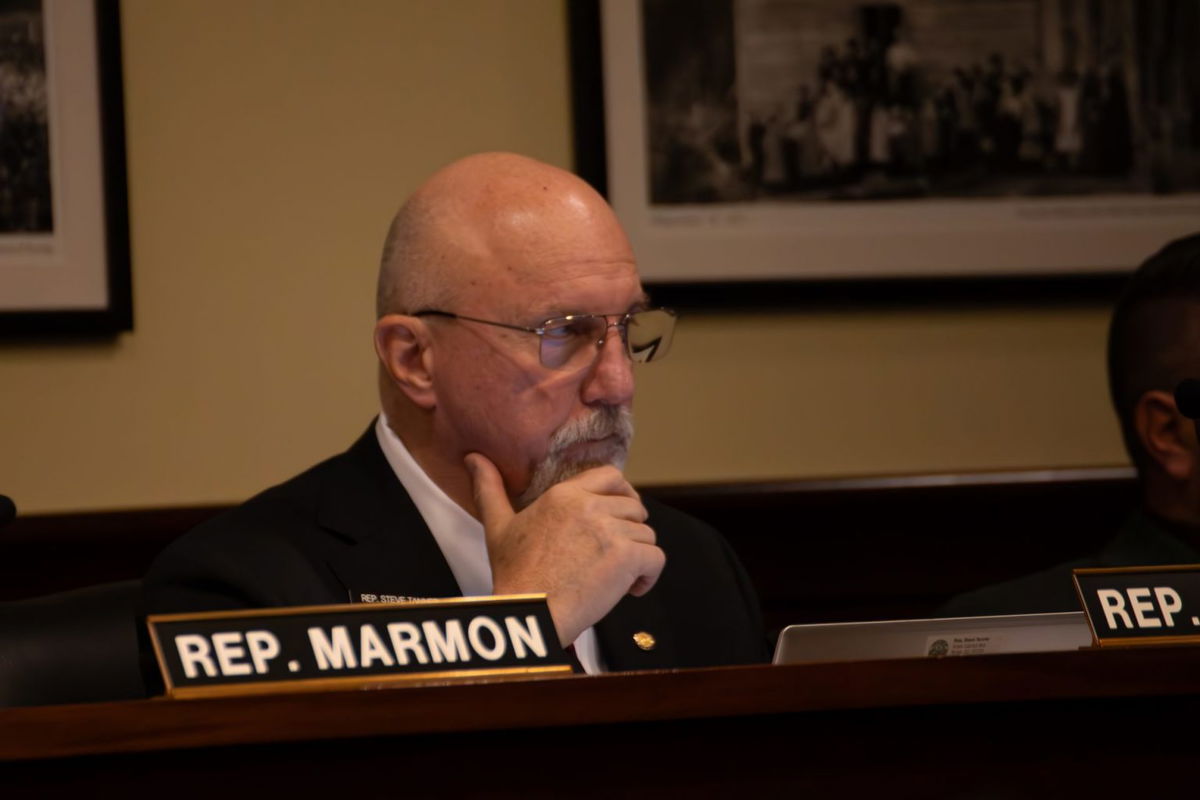
Rep. Steve Tanner, R-Nampa (Brandon Schertler/Idaho EdNews)
Sponsoring Rep. Steve Tanner gave the committee printouts of news articles on recent student protests. Students from Boise to McCall to Idaho Falls have staged school walkouts in recent weeks to protest federal Immigration and Customs Enforcement. 

“It’s a waste of taxpayer money for students to leave their classrooms to (protest),” said Tanner, R-Nampa. “Students are free to protest at any other time.”

Rep. Clint Hostetler, who supported the bill, said walkouts are disruptive and students are being used as a “political tool.”

“When we have large groups of children walking out to protest, many times, probably, for what they don’t understand or what they’ve been told without critical thinking itself, there’s some big issues there,” said Hostetler, R-Twin Falls. 

A Boise junior high student and his mother testified against the bill during Wednesday’s public hearing.

Cruz Beazer from South Junior High School said he helped organize a recent walkout. It occurred in the last 20 minutes of the school day — during a class period designed for students to catch up on late work. “We made sure we were not in disruption of other classes,” Beazer said. 

Jenn Beazer said she excused her son from school to protest — and to testify Wednesday. “I have lots of opportunities to be proud of my son,” Jenn Beazer said, through tears. “I was very proud that day, and I’m very proud this day, too.”

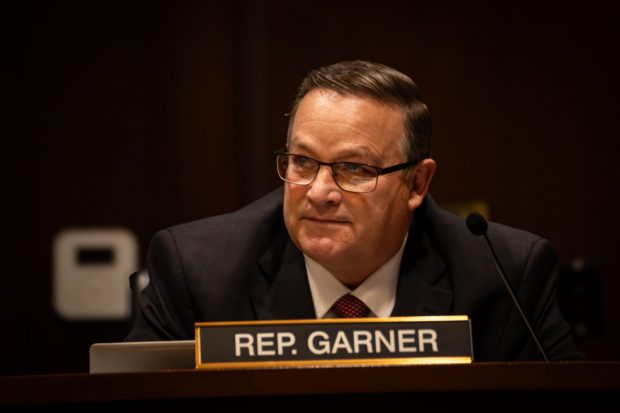
Rep. Dan Garner, who opposed the bill, recalled a walkout during his school days. Garner, R-Clifton, said he protested a school policy that forbade girls from wearing Levi’s jeans. “We learned more about government and how it should work in the democracy of the United States in that afternoon than I did the whole year in government class,” he said.

Rep. Dan Garner, R-Clifton (Brandon Schertler/Idaho EdNews)
Click here to follow the original article.

School bus crashes into vehicle on Pacific Avenue

Abraham Retana

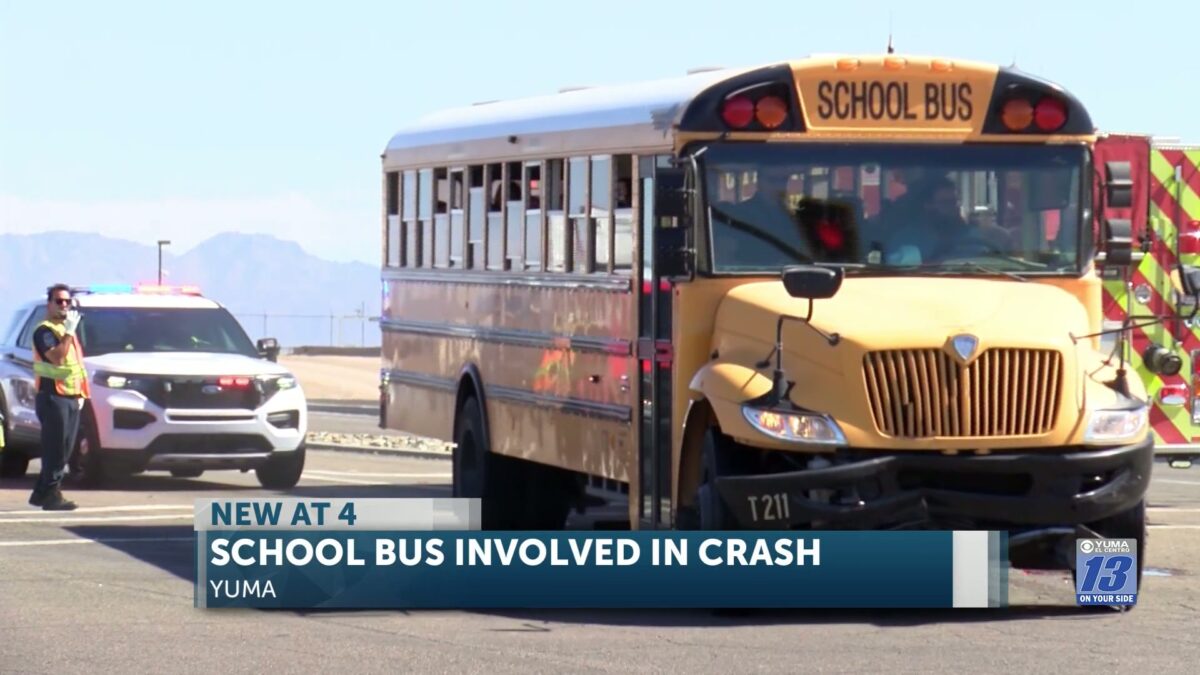
YUMA, Ariz. (KYMA) – The Yuma Fire Department (YFD) is on scene after a school bus crashed into a vehicle Wednesday.

According to YFD, the crash happened in the area of Pacific Avenue and 32nd Street after the bus hit an SUV from behind.

YFD says 40 kids were on the bus at the time of the crash.

“We arrived on the scene to find a bus with 40 or [more] kids, thankfully no one was injured, everyone seems to be okay…some minor complaints. We are transferring all the kids from one bus onto another bus, but thankfully everyone is okay,” said Capt. David Padilla with YFD.

YFD also says both the bus and the SUV were taken off the street, and said all traffic lanes on Pacific Avenue and 32nd Street are now open.

The exact cause of the crash remains under investigation.

Click here to follow the original article.

Callaway County sex offender faces more charges, including rape and sodomy se

Ryan Shiner

COLUMBIA, Mo. (KMIZ)

A Callaway County sex offender who was charged last month with a slew of child sex crimes is facing more charges.

Bradford Beck, 51, was charged on Wednesday with second-degree child molestation, first-degree sodomy and first-degree rape. He was charged last month with four counts of child molestation, three counts of first-degree sodomy, three counts of first-degree rape and two counts of tampering with a victim in a felony prosecution.

Beck is being held at the Callaway County Jail without bond. A hearing in both cases is scheduled for 9 a.m. Thursday.

In his new case, Beck is accused of raping a girl he brought back to his residence in December. He allegedly told the youth not to tell anyone and that he had connections to organized crime, the probable cause statement says.

In his other case, he is accused of giving a child alcohol and marijuana before raping them.

Click here to follow the original article.