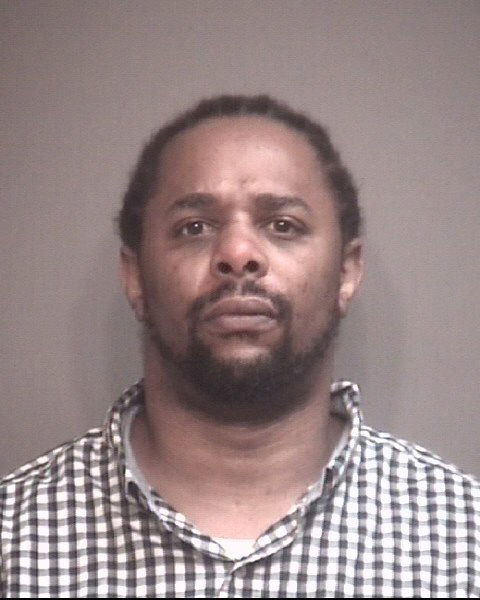
Leader of amish community looks to family during court proceedings

Marie Moyer

COLUMBIA, Mo. (KMIZ)

EDITOR’S NOTE: AI was used in background research of this article.

The leader of an Amish community who was accused of sexual abuse and forced labor at a rural retreat asked a Cooper County judge to get in contact with his family during a status hearing on Tuesday.

Sam Shetler, 42, faces two counts of trafficking for forced labor and one count of sodomy after a years-long investigation of Mercy and Truth-Amish and Mennonite Retreat in the 11000 block of Hidden Valley Court found signs of sexual abuse and labor allegations.

During Tuesday’s hearing, Shetler told Judge Keith Bail that he wants to speak with his family and church before hiring an attorney. Shetler also waived the public defender application until he can speak to his community. Shetler appeared via video feed.

“I would prefer to first talk to my family, my church, because I’m honestly not sure if my church approves of that,” Shetler said. “So if I’m allowed to, I would like to first communicate with family and my church, make sure I’m not doing something against the church.”

The investigation, which spanned from 2022 to 2026, involved interviews with at least three witnesses who spoke to deputies in early 2026. These witnesses, many of whom stayed at the retreat when they were teenagers, described being forced to work on the property without receiving pay.

One witness reported that Shetler touched them inappropriately during a session intended to “heal” prior sexual abuse. The same witness alleged that after taking pills provided by Shetler, they woke up during the night to find an unidentified person holding their arms and legs down.

Cooper County Sheriff Chris Class described the facility as being under the absolute authority of its leader and that Shetler took advantage of his position in the Amish community to control and profit from vulnerable people.

Shetler is being held in the Cooper County jail with a $100,000 bond. His next appearance is set for April 7 at 10:30 a.m. in the Cooper County Courthouse.

Click here to follow the original article.

Local nonprofits receive over $900,000 from Pocatello Light the World Giving Machines

Kaelyn Blessinger

POCATELLO, Idaho (KIFI) — After a tremendous winter season of giving, the Light the World Giving Machine presented checks to local nonprofits in Pocatello Tuesday morning.

Sponsored by The Church of Jesus Christ of Latter-day Saints, the machines work as “vending machines in reverse”, allowing people to donate various items in a simple purchase, such as meals, clothing, hygiene supplies, school materials, and livestock.

Over 48 days (from November 15th to January 1st), more than 95,000 people visited the machines. 78,000 donations were made across Pocatello, Rexburg, and Idaho Falls. 

The total donations raised in Pocatello was $960,534.

Care USA – $177,032

Right to Play – $189,345

Bannock Youth Foundation – $151,970

Bright Tomorrows – $125,050

Aid For Friends – $120,680

United Way of Southeastern Idaho – $119,488

South Eastern Idaho Community Action Agency (SEICAA) – $76,969

All of the money raised for these nonprofits is a wonderful showcase of the care within the community. This money could be life changing for so many people. The nonprofits are very grateful for all donations.

The Light the World will present Idaho Falls’ numbers on Thursday, April 2nd.

Click here to follow the original article.

SCOTUS set to to tackle Birthright Citizenship Wednesday; Idaho AG backs Trump’s executive order

Seth Ratliff

BOISE, Idaho (KIFI) — The U.S. Supreme Court is scheduled to hear oral arguments tomorrow, April 1, in the landmark case Trump v. Barbara, a legal battle challenging President Trump’s executive order on birthright citizenship.

In anticipation of the hearing, Idaho Attorney General Raúl Labrador announced that Idaho has joined 23 other states in an amicus brief supporting the executive order. Labrador is urging the high court to overturn current interpretations and restore what he calls the “original understanding” of the Fourteenth Amendment’s Citizenship Clause.

Interpreting “Subject to the Jurisdiction thereof.”

Idaho Attorney General Raúl Labrador, Courtesy Photo.

In an op-ed published on his official website, Labrador argued that the current interpretation of the clause—which grants automatic citizenship to nearly anyone born on U.S. soil regardless of their parents’ legal status—is legally flawed.

Labrador argues that the “original understanding” requires more than just physical presence to lead to citizenship, asserting that parents must be lawful residents or domiciled in the United States for their children to be born citizens.

The legal battle centers on the exact phrasing of the Fourteenth Amendment. The clause reads: “All persons born or naturalized in the United States, and subject to the jurisdiction thereof, are citizens of the United States and of the State wherein they reside.”

Labrador emphasized that the phrase “subject to the jurisdiction thereof” creates a specific legal condition that current interpretation ignores.

“That second phrase matters. It was added deliberately, and it means something. When the Fourteenth Amendment was ratified in 1868, its primary purpose was clear: to constitutionally protect the citizenship rights of freed slaves after the Civil War,” wrote Labrador. “Senator Lyman Trumbull, who drafted the related Civil Rights Act of 1866, explicitly stated that the citizenship provision excluded ‘persons temporarily resident in [the United States] whom we would have no right to make citizens.'”

Labrador ended his op-ed calling on the Supreme Court to “provide clarity on this fundamental issue.” To read his complete op-ed, click HERE.

ACLU argues SCOTUS already settled the Issue

The Supreme Court case is the result of a class action lawsuit by the American Civil Liberties Union to block Trump’s executive order. The ACLU and its partners are representing “Barbara”—a pseudonym for a Honduran citizen suing on behalf of her family and others in similar circumstances—to block the executive order.

The ACLU argued in its filings that withholding citizenship from future children born in the United States would create a distinct, unauthorized nationwide class of individuals.

In a legal brief filed in October 2025, the ACLU maintained that the Supreme Court already settled the issue of birthright citizenship over a century ago in the case United States v. Wong Kim Ark.

That 1898 case revolved around a San Francisco man born to Chinese citizens. After a trip to visit his parents in China, Wong Kim Ark was denied re-entry into the United States on the grounds that he was not a citizen. The Supreme Court ultimately ruled 6-to-2 that the Citizenship Clause of the Fourteenth Amendment automatically made him a U.S. citizen, establishing the current interpretation of the clause, argues the ACLU.

Attorneys for the Trump administration, however, argue that Wong Kim Ark has been misinterpreted for decades. They argue that the 1898 ruling applied specifically to children of parents who were granted authorization to reside in the U.S. at the time of birth—a distinction they claim does not extend to those in the country illegally.

The highest court is set to hear oral arguments starting at 10 a.m ET (8:00 am MST).

Click here to follow the original article.

Local CBP staff members and employees facing struggles amid partial government shutdown

Heriberto Perez Lara

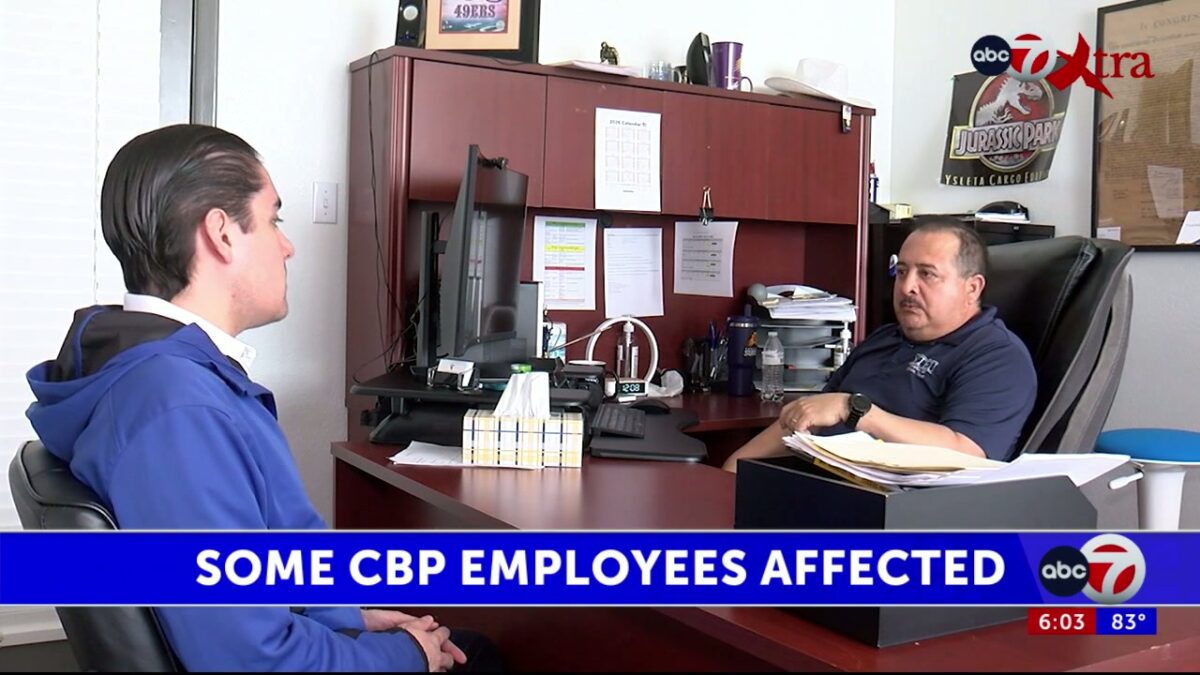
EL PASO, Texas (KVIA) — With the ongoing government shutdown partially impacting the Department of Homeland Security, some local CBP staff and employees are not receiving their paychecks.

President Trump recently signed an emergency order to promptly pay TSA workers who haven’t been paid during the current six-week shutdown and to help reduce long lines at various airports across the country.

According to Gustavo Sanchez, president of the National Treasury Employee Union (NTEU) chapter 143 here in El Paso, this partial government shutdown is not affecting the officer level, those working and operating at the Ports of Entry, but it is impacting support staff, administrative employees, CBP technicians, and even the managerial oversight in those departments.

“These employees are vital for us; they provide support in different areas, whether it’s administrative, which is the role of Mission Support Specialists (MSAs), or handling tasks like paperwork for travel, since we are still going to other locations, and the technicians who assist us with vehicle issues or at the ports’ lights,” said CBP Officer Sanchez.

This NTEU chapter covers the area from Albuquerque, New Mexico, to Presidio, Texas; President Sanchez represents about 150 employees, including union members and managers.

“Right now, some of them are actually part of our steward staff, and they are finding it harder to come to work,” NTEU chapter 143 president Sanchez also said. “Now, with the higher gasoline prices, it’s becoming more difficult, and food might also be an issue.”

“I’m afraid of those things that we don’t know and that people don’t want to disclose; those are all the aspects currently being brought to our attention,” he added.

DHS has other branches or sections also impacted, including Customs and Border Protection (CBP), Transportation Security Administration (TSA), Federal Emergency Management Agency (FEMA), U.S. Coast Guard, and Cybersecurity and Infrastructure Security Agency (CISA), among others.

“Right now, with all components, our leadership at the national level is trying to do everything that they can and here locally with CBP, they’re also trying to do everything they can, but their hands are tied,” Officer Sanchez said. “Of course, this comes from the top as far as the money being appropriated so people can get paid.”

During the previous full government shutdown in late 2025, Officer Sánchez had to miss a heart surgery because federal employees were not being paid, as he lacked the funds. “I went through it before, I told you before that I had to put off a surgery for my heart and I’m afraid to think of somebody out there having to go through the same situation.”

“Congress needs to sit down and say we need to fund it, we can’t be caught in the middle anymore because, us living every three months and not knowing if we’re going to get paid is a bad situation,” Sanchez added. “If it wasn’t because of the Big Beautiful Bill, we wouldn’t have been paid, so if that wasn’t there, all of us would be affected.”

There has been a reported increase in wait times at all Ports of Entry south of the border, but CBP officers working at all international bridges are being paid.

CBP Officer Sanchez says he doesn’t know the exact reason for the increase in wait time and maybe some infrastructure work and bridge remodeling at some ports of entry are the reasons for the impact and rise in traffic.

“What people need to know is that if our support staff doesn’t show up, somebody’s got to do their work, which means we’re (CBP officers) going to have to do our work.” “We’re going to have to go out there, and you’re going to take us away from the line.”

“One thing I do know is that we are currently providing support to other locations—specifically, we are assisting at the San Ysidro Port of Entry and collaborating with Border Patrol; consequently, not all of our personnel are stationed here. Over time, eventually becomes a problem and proves exhausting; so, that may very well be the situation. My point is that if support staff are not present, someone has to perform the work and that someone has to be us, which means we are diverting time away from our primary inspection duties,” Officer Sanchez added.

ABC-7 reached out to CBP and DHS to request comment; we are still awaiting a response.

Click here to follow the original article.

University of Utah scientists have made a discovery that could help battle Great Salt Lake dust

Fox13

Originally Published: 31 MAR 26 16:51 ET

By Ben Winslow

Click here for updates on this story

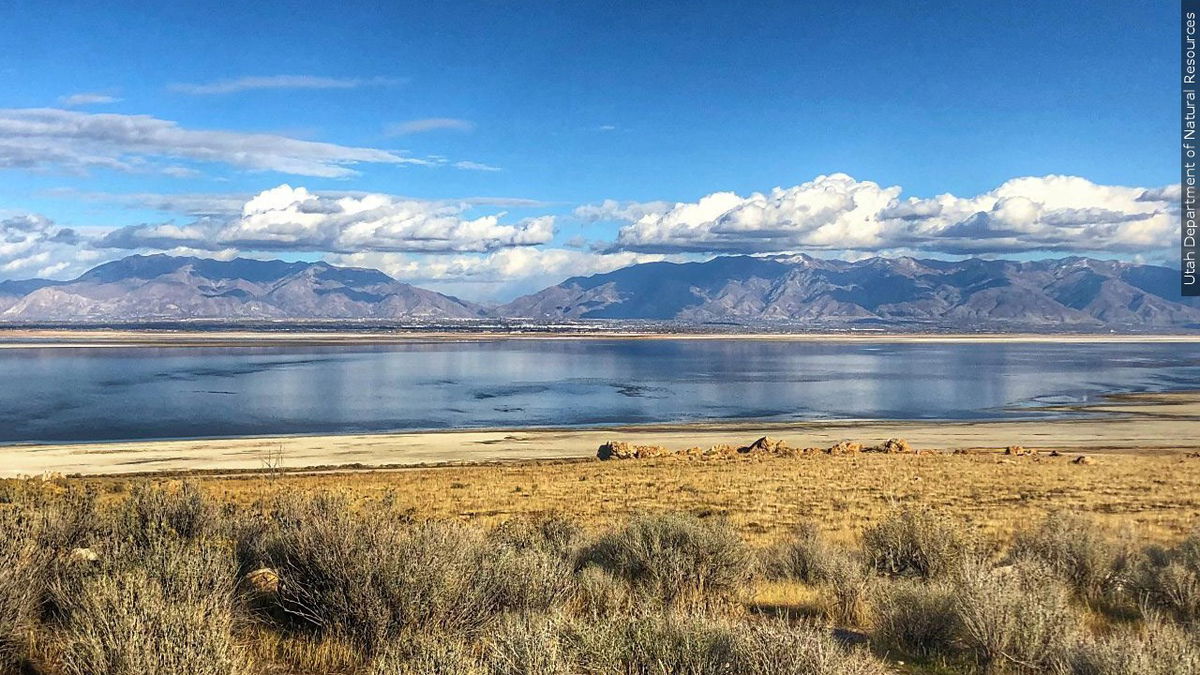
    FARMINGTON BAY, Utah (KSTU) — A recent scientific find by University of Utah researchers could help combat the problem of toxic dust blowing off the exposed Great Salt Lake bed.

They have found a freshwater reservoir underneath the lake’s salty playa, in an area between Antelope Island and Farmington Bay. It started when scientists observed “islands” of the invasive plant phragmites in the exposed lake bed.

“They require a lot of fresh water and the question was that Great Salt Lake has salty water, so how [does] this phragmites grow on the salt water because they require a lot of fresh water?” University of Utah geology and geophysics professor Michael Zhdanov told FOX 13 News.

Using helicopters and specialized equipment to send electromagnetic pulses into the ground, they were able to confirm the existence of a freshwater reservoir. The research, recently published in Scientific Reports, offers promise for a threat to surrounding communities. As the Great Salt Lake declines due to water diversions, drought and impacts from a changing climate, strong winds pick up dust and blow it into nearby communities.

The lake bed has naturally-occurring toxins, like arsenic, that are typically covered by water. The University of Utah is conducting other research on the impacts of the dust on the environment and human health. But Professor Zhdanov said this could help provide a new water source to help reduce the impact of the dust.

“This, we believe, is one of the most important and firsthand applications of this, but this requires more work because we need to cover the entire Great Salt Lake. We need to find exactly how much, where it’s located, and then make some educated decision where to drill and how to use it,” he said.

It remains unknown the extent of the reservoir. But more broadly, the techniques used to find the freshwater reservoir could be used in other parts of the world to help discover new sources of water.

The Utah Department of Natural Resources funded some of the research as part of its efforts to reverse the Great Salt Lake’s declines. The U. will seek additional funding to expand the research to other parts of the lake.

For Dave Foerber, a Kaysville-area birder who came out on Monday to look at the migratory birds on the Great Salt Lake, it was interesting research. But he believed there was a broader work that must be done.

“It’d be better if we could get some more water in the lake,” he told FOX 13 News. “That’d be the best thing.”

This article is published through the Great Salt Lake Collaborative, a solutions journalism initiative that partners news, education and media organizations to help inform people about the plight of the Great Salt Lake—and what can be done to make a difference before it is too late. Read all of our stories at greatsaltlakenews.org.

Please note: This story was provided to CNN Wire by an affiliate and does not contain original CNN reporting. This content carries a strict local market embargo. If you share the same market as the contributor of this article, you may not use it on any platform.

The-CNN-Wire™ & © 2026 Cable News Network, Inc., a Warner Bros. Discovery Company. All rights reserved.

Click here to follow the original article.

Firefighters sent to rescue call at Capen Park in Columbia

Mitchell Kaminski

COLUMBIA, Mo. (KMIZ)

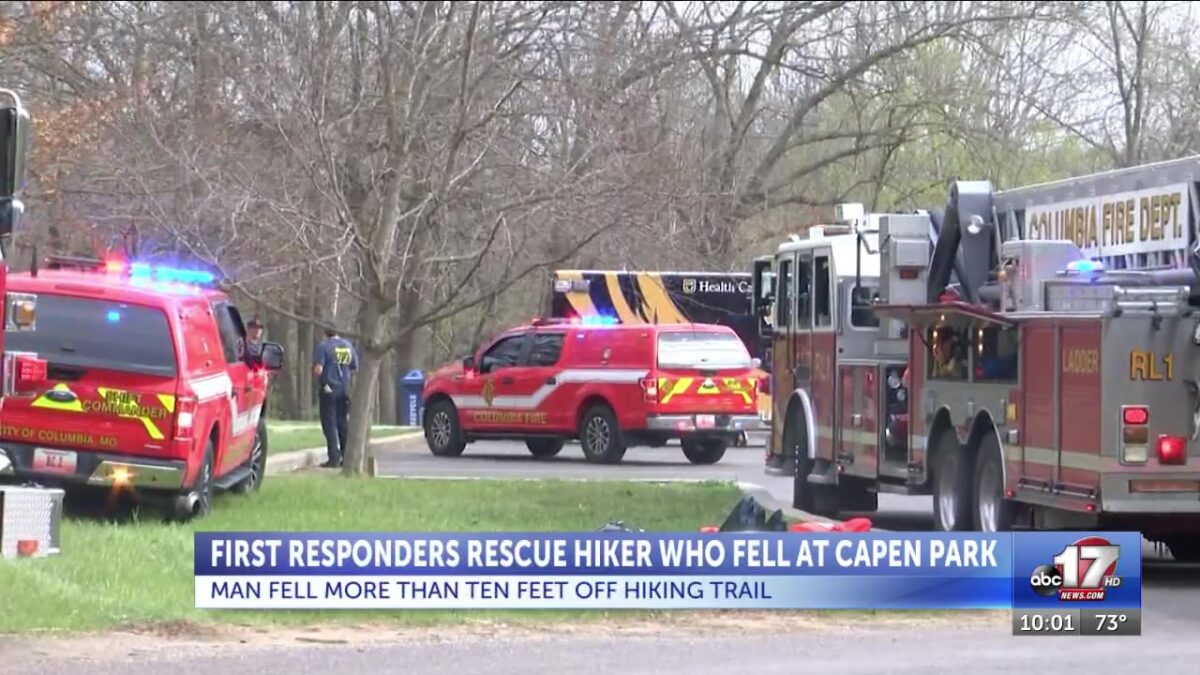
Firefighters and medics on Tuesday afternoon responded to Capen Park in Columbia after a man fell from a hiking trail.

According to the Columbia Fire Department, crews were called at 3:40 p.m. after receiving a report that a man had fallen about 30 feet off a cliff after rocks gave way. The park, known for its steep rock walls along Hinkson Creek, is a popular spot for hikers and climbers.

The man was hiking with another person, who called to report the fall. However, Columbia Fire Battalion Chief Ryan Adams said the initial challenges on scene were locating where the victim fell. 

“Unfortunately, we didn’t know exactly where that was. So when we got here, we did have a generalized area based on the cellphone pinging that our dispatch center got,” Adams told ABC 17 News.  “We sent two recon crews initially to try to see if we could locate where the patient was, so we sent one low and one high. We did eventually find the patient about a quarter mile up the cliff face. That was about 20-to-30 feet down from the actual cliff top.” 

Fire crews had multiple trucks at the park entrance, as well as crews along East Stadium Boulevard on the other side of the hill. After finding the victim, the call was upgraded to a technical rescue based on the fall’s location and the associated dangers. 

“We have many teams that are up on top because we have to have edge spotters, we have to have rigging personnel, so they’ll rig the entire system. And then we have two rescuers at least who go to the patient, and we always have backups for that. Plus, just the amount of equipment that it takes, especially when you’re in a wilderness environment like that,” Adams said. “We carry lots of other components that, if we have to make high-angle changes to the directions on the cliff face, we can do that.  So it’s just  very personnel heavy when we get to things like this.” 

Adams said CFD had crews working a high and low-angle rescue due to the steepness of the hill. Some of the rescuers were stationed next to the victim, while another group waited near the bottom of the hill with a UTV to transport the victim. 

Firefighters used information from Boone County Joint Communications to ping the caller’s GPS location and found the person within about 10 minutes.

Firefighters used special technical equipment, like chainsaws, to clear a path for equipment and ropes, which allowed for two rescuers to descend down to the patient.

The patient was back on the ground at 4:53 p.m. Columbia Fire and the University of Missouri Health Care personnel took the patient to an ambulance by UTV.

“The patient was able to walk out with assistance and being in a harness from where he was at down to the very bottom of the cliffside,” Adams said. 

Adams added that these types of rescues are uncommon, but crews train for them often due to the challenges involved. 

“They’re high-hazard events that encompass many different safety issues,” Adams said. “We were just training on this exact scenario yesterday at a different location.”

Click here to follow the original article.

Bend leaders push for housing at all income levels as prices outpace wages

Tracee Tuesday

BEND, Ore. (KTVZ) — As Bend’s population continues to climb, city leaders say the growing gap between housing costs and local incomes is becoming one of the community’s most pressing challenges.

The city’s population has grown from about 74,000 in 2010 to more than 110,000 in 2026, according to city data and World Population Review. Over the same period, home prices have surged. A home valued at $295,000 in 2016 was worth about $647,000 by 2022 and is now nearing $895,000, according to Realtor.com.

Local officials say wages have not kept pace, leaving many workers struggling to live in the community they serve.

Mayor Melanie Kebler said the city’s goal has long been to ensure housing is accessible for all workers, not just higher-income earners.

“What the city council has had as a goal for many years now is that if you work in Bend, then you should be able to afford to live in Bend. And that concludes all kinds of jobs,” Kebler said.

Kebler said the strain on so-called working professionals highlights how widespread the issue has become.

“Even when we talk about working professionals not having enough resources to get a home, what we’re saying is look how bad the issue is,” she said. “Because if those working professionals are having trouble getting a home, folks all the way down the income structure are going to be having trouble finding rent and homes to buy too.”

She added that the solution requires increasing housing supply across the board to reduce competition and stabilize prices.

“What we really need to do is we need to have homes at every level,” Kebler said. “We don’t want doctors moving here and competing on a scarcity of homes that other folks are trying to buy with a lower income, because there’s just not enough homes to go around.”

City leaders say they have been working for years to plan for growth through state-required development strategies, while also updating policies and investing in housing.

Efforts include an affordable housing fee on development projects, which helps fund deed-restricted units that must remain affordable to certain income levels over time. At the same time, the city continues to encourage construction of market-rate housing to increase supply and ease pressure on prices.

Kebler said those efforts are aimed at creating a more balanced housing market that serves a wide range of residents.

“A lot of that affordable housing work, and especially if you look at our goals now, we have certain numbers for each category of homes, including very low-income apartments and homes that are going to serve some of those folks who are on the lower end of the income scale,” she said. “We need to have homes for everybody in Bend to be able to afford.”

Affordable housing in Bend is typically defined as housing available to households earning up to 80% of area median income for homeownership and 60% for rentals.

According to the City of Bend, several local organizations are also working to connect residents with housing resources. Housing Works provides rental assistance, Section 8 vouchers and homebuyer programs across Central Oregon. NeighborImpact offers services focused on housing stability, including help for first-time buyers and renters.

Other options include Habitat for Humanity, which provides homeownership opportunities for qualifying families, and HomeShare Oregon, which connects homeowners with spare rooms to renters seeking more affordable living arrangements. Thrive Central Oregon and Pacific Crest Affordable Housing also offer support and develop affordable units in the region.

City leaders say increasing housing supply at all income levels will be key as Bend continues to grow, while local organizations remain a critical resource for those navigating the tight housing market.

Click here to follow the original article.
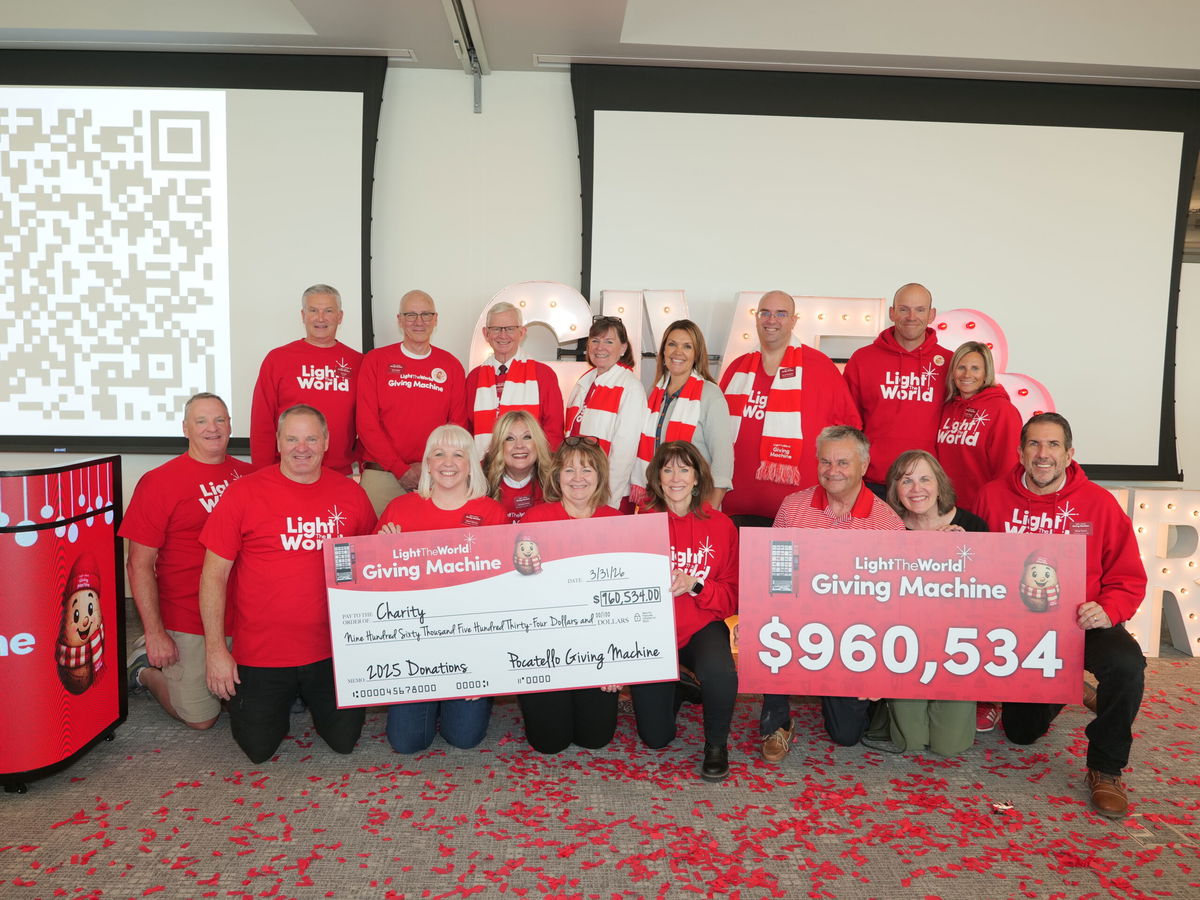
Columbia woman gets 120-day program, suspended sentence after plea deal in deadly crash

Matthew Sanders

COLUMBIA, Mo. (KMIZ)

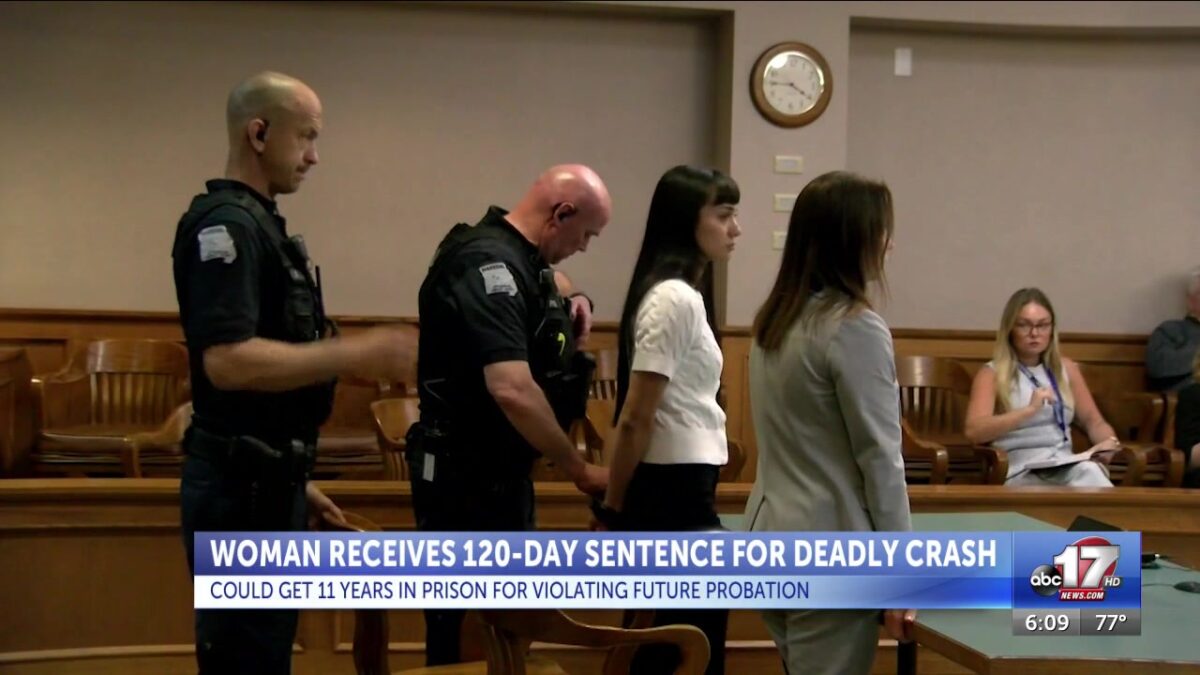
A woman who reached a deal with the state to drop a manslaughter charge for a deadly Columbia hit-and-run crash was sentenced to a short jail stay and probation Tuesday.

Judge Ben Miller sentenced Elizabeth Lopez to seven years in prison on three hit-and-run charges, but the judge suspended the sentence, with five years of probation. She will have to serve in a 120-day jail program.

Elizabeth Lopez was charged with second-degree involuntary manslaughter and leaving the scene of an accident following the collision on West Broadway that killed 18-year-old Walker Davis and injured two others in 2023. She pleaded guilty on March 23 to three counts of leaving the scene and the manslaughter charge was dropped.

After the crash, police say Lopez re-entered the Kelly’s Ridge apartments parking lot and fled the scene. Court documents allege she went back to her apartment and told her boyfriend about the crash. While officers investigated the scene and towed her vehicle from outside the apartment, Lopez allegedly did not make herself known to the police until the morning after.

Following her arrest, Lopez later paid a $7,500 bond after the August crash.

The state initially asked for the sentence to be 11 years in prison. The defense asked for probation with the guidelines to be determined by Miller.

The court heard several victim impact statements, including from the two other crash victims and several from Davis’ family.

“You have taken my son,” Davis’ mother Mary Davis said. “You’ve torn away all of my happy memories and replaced them with visions of my son’s dead body after you left him on the road to die.”

“If a life sentence was on the table, I would advocate for it, because that’s what she gave us a life sentence without one of our children,” Davis’ father Brad Davis, said.

Bodycam footage of police interactions with Lopez the morning after the crash was shown to Miller. Lopez could be heard saying, “I just panicked,” and “I wasn’t trying to do a hit and run, I just didn’t know what to do in the moment.” to the officer.

Lopez’s attorney, Jessica Caldera, pointed out that the motorcyclists in the crash were driving over 70 miles per hour. Lopez also allegedly did not realize she hurt anyone in the crash.

“There’s no evidence that Elizabeth ever stopped and examined her car or really looked at the scene, or rather, she just ran to her apartment and freaked out in private,” Caldera said. “She thought she was in the shoulder, that’s not exactly a criminal mastermind story.”

Caldera adds that while it was delayed, Lopez did later contact the police by calling 311.

“A prison sentence, much less than a near maximum prison sentence, will not bring Walker Davis back,” Caldera said. “A prison sentence would only spread the ripples of harm and hurt that this one accident had already caused.”

Assistant Prosecuting Attorney Melissa Buchanan claims that Lopez was aware of the damage to her vehicle long before notifying police and that Lopez did not seem concerned if others were harmed.

“She never once asked how any of the riders were, ‘Is everyone okay?’ Not once did she inquire about the safety of the riders,” Buchanan said.

In his decision, Miller said justice was “complicated.” He took into account that there wasn’t a clear driver at fault in the crash, and that Lopez later took accountability both with the police and during court proceedings.

However, Miller agreed that Lopez’s lack of concern for the other riders following the crash aided in his decision. Bodycam footage also featured Lopez telling the officer at her door that he already had her license plate number since her car’s bumper fell off due to the crash, which Miller pointed out.

“You took the time to look at it, to realize that your license plate wasn’t there,” Miller said. “We can’t have a situation in which a felony of this level occurs and no further time is served other than an evening before you bonded out.”

Click here to follow the original article.

Columbia man accused of using box cutter to stab man

Ryan Shiner

COLUMBIA, Mo. (KMIZ)

A man has been charged with two felonies after he allegedly stabbed someone with a box cutter knife at 12:40 a.m. Tuesday.

Robert Cross, 42, of Columbia, was charged with first-degree domestic assault and armed criminal action. He is being held at the Boone County Jail without bond and an initial court appearance is set for 1 p.m. Wednesday.

The probable cause statement says the victim had a 4-5-inch cut on his neck that was about a half-inch deep, as well as stab wounds on his leg and torso. The man was brought to a hospital, where he told officers that Cross had been pacing  and saying things “that did not make sense,” court documents say.

Cross allegedly stated something that made the victim worried for the well-being of another person and told Cross to leave, the statement says. Cross then charged at the victim and the victim and another person tried to restrain him, the statement says.

One of the people in the home heard a “flick” and that they claimed was a box cutter knife that Cross used for work, the statement says. Another person in the home had to pry the box cutter from Cross’ hands after he was restrained in a chair, the statement says.

The victim allegedly did not notice the stab wounds while he was restraining Cross, the statement says.

Click here to follow the original article.

Doña Ana County residents can leave improvement ideas for parks, community centers in survey

Gabrielle Lopez

DOÑA ANA COUNTY, New Mexico (KVIA) — Doña Ana County is asking residents to participate in a survey to shape the future of local parks, trails and community centers. The county said there’s only one week left to provide feedback.

The survey is part of the county’s Parks, Recreation and Community Centers Master plan, which aims to improve county amenities, the county said. The county has been working with residents to prioritize certain upgrades since a voter-approved General Obligation Bond passed in November 2025.

In the survey, you can leave thoughts about:

Improvements to parks and community centers

New recreation amenities and facilities

Trails and outdoor opportunities

Youth, family and senior programs

Accessibility and safety in gathering spaces

The survey is available in English and Spanish.

Click here to follow the original article.