Firefighters get a once-in-a-career call: rescuing a woman’s pet snake from underneath her car

By Joan Murray

Click here for updates on this story

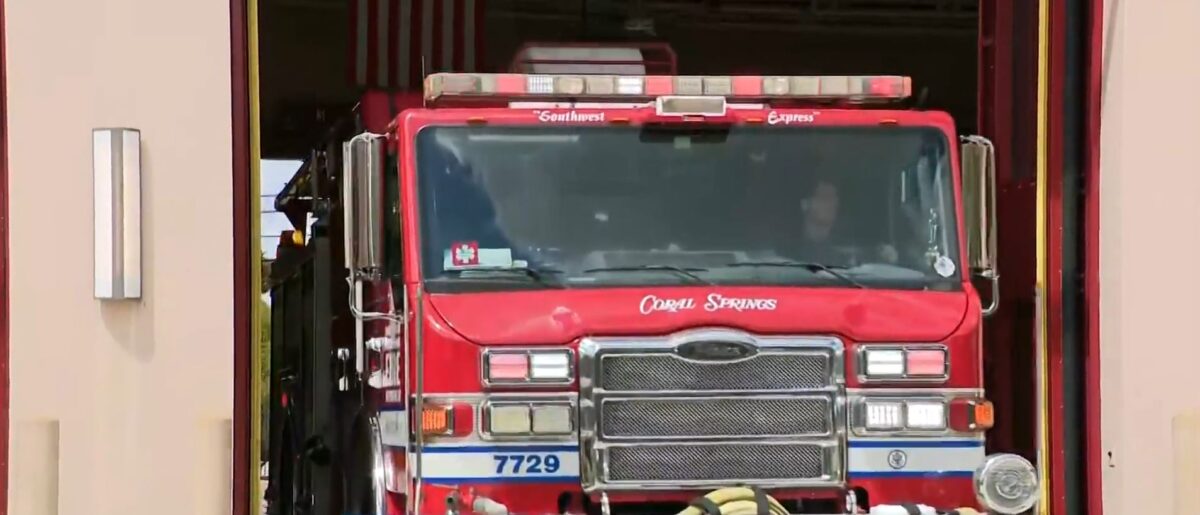
    CORAL SPRINGS, Florida (WFOR) — The crews at Fire Station 43 in Coral Springs are used to all types of emergencies, but nothing quite like what happened Saturday night.

“Our driver told us there’s a snake in the car!” said Justin Ehlin, a firefighter/paramedic of three years.

Two women in a Hyundai hatchback told the crew that their pet ball python, named Ritchie, had slithered into a compartment underneath the console and would not come out. The one-year-old ivory banana ball python was trapped for 8 hours, according to its owner, Camryn Drew.

Drew said she and a friend had just bought pet food and were back in the car traveling when Ritchie found an opening underneath and made his way into the compartment. “We tried, but we couldn’t get him out,” she said. They even bought tools to try to take the seat out and free Ritchie, but to no avail. That’s when someone suggested trying the fire department.

Once on the scene, the group of firefighters got to work, taking out panels and a seat to get to Ritchie. It took nearly an hour. Battalion Chief Jon Robbins recorded the rescue. “I am deathly afraid of snakes, so I supervised and took video,” he said.

After reaching the python, it was pulled to safety. Ehlin called it a once-in-a-career procedure. “It was curled up. I thought it would bite, but it was friendly,” he said.

Drew is grateful the firefighters saved the day, calling Richie a constant companion. “He goes with the flow. He’ll cling to you and hang out,” she said.

That’s why ball pythons are such popular pets, according to Robin Reccasina, executive director of The Sawgrass Nature Center in Coral Springs. “They don’t get big. They curl up like a ball,” she said.

Unlike the invasive Burmese pythons found in the Everglades, the ball pythons are docile and low-maintenance. Drew says she will still take Ritchie out in a car but will keep him contained next time.

Please note: This story was provided to CNN Wire by an affiliate and does not contain original CNN reporting. This content carries a strict local market embargo. If you share the same market as the contributor of this article, you may not use it on any platform.
Spelman College students developing AI tool designed to help people talk to their plants

By Madeline Montgomery

Click here for updates on this story

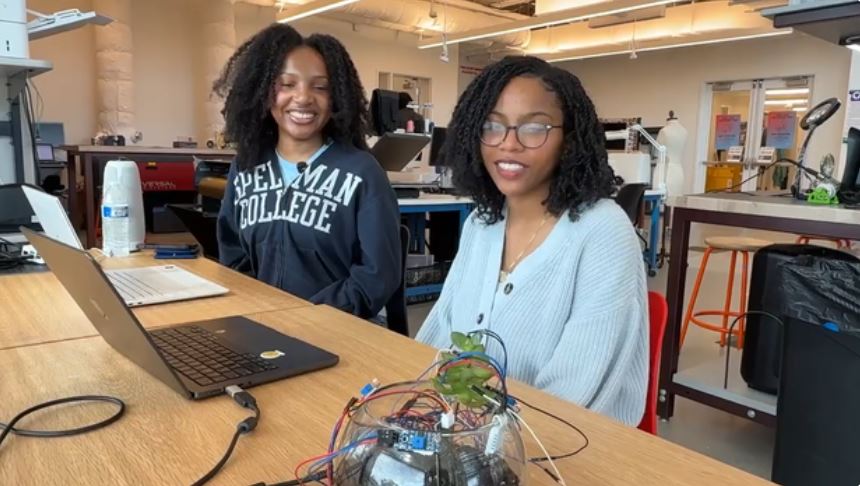
    ATLANTA (WUPA) — Spelman College students are working on an artificial intelligence tool that would allow people to talk to their plants.

It’s called PlantGPT, and the goal is to help anyone have a green thumb.

PlantGPT uses artificial intelligence to monitor a plant’s health data. Sensors in the soil collect real-time data. The AI processes the information and creates personalized care instructions.

“I don’t know anything about plants. That’s why this is perfect,” said Temple Dees, a junior working on the project.

“The original idea was really rooted in this concept of ‘Would the plant survive more likely if it has its own voice and agency?'” said Eric Thompson, the assistant director of the Innovation Lab at Spelman College.

Plant GPT can only handle certain questions.

“Humidity, light intensity, soil moisture, and its outside temperature,” said junior Jessica Obi.

Although Obi and Dees both claim not to have green thumbs, they have big plans for Plant GPT that go beyond simple houseplants.

“There’s a bunch of sensors going on right now, so for the average user, this is not really convenient for anyone, so we want to compartmentalize all of that and make it more accessible and easier for a user to use,” said Obi. “We do also want it to expand potentially for local farms, so a group of multiple plants as well, so any environment where the caretaker would need to know the stats and information about their plant.”

“You deal with a million different ideas, and to see the students supporting each other and also imagining what their futures can be in the space, and working on ideas that are way ahead of their time. I always leave this place with a sense of pride,” said Thompson.

Obi and Dees hope to pursue careers in computer science. In the short term, the project may get them to make their own lives a bit greener.

“Maybe I’ll get my own plant once everything is finished with this,” Obi said.

Please note: This story was provided to CNN Wire by an affiliate and does not contain original CNN reporting. This content carries a strict local market embargo. If you share the same market as the contributor of this article, you may not use it on any platform.
Adapted tango dance boosts mobility for veterans with Parkinson’s Disease

By Leondra Head

Click here for updates on this story

    ATLANTA (WUPA) — An Emory University professor is teaching adapted tango dance classes to veterans living with Parkinson’s disease, helping them reclaim their lives.

Dr. Madeleine Hackney recently completed a clinical trial on the benefits of Parkinson’s patients taking a specific type of tango class.

“I’ve lost a lot of my balance because of Parkinson’s,” said Jerry Feldman, a veteran living with the disease.

Sixty-nine-year-old Jerry Feldman is living with this incurable illness, which affects his mobility and balance. His remedy is a combination of medication and dancing.

Feldman has attended these adapted tango classes every week for more than three years.

“It makes a difference for me. Dancing is great exercise. It gives me an opportunity to get out of the house, socialize, and have fun,” Feldman said.

That’s the goal, according to Emory School of Medicine professor Madeleine Hackney.

She teaches adapted tango as a form of therapy and modified dance for people with Parkinson’s.

“Why is adapted tango more beneficial than other forms of movement for people living with Parkinson’s?” CBS Atlanta’s Leondra Head asked Hackney.

“I don’t want to say necessarily that it’s more beneficial than any other form of exercise. We do think dancing could be an excellent form of exercise and physical rehabilitation, because you have to engage the mind and try to remember steps,” Hackney said.

She completed a nationally registered clinical trial.

It included around 80 Parkinson’s patients who took adapted tango classes for 16 months—twice a week for the first three months, then once a week for the remaining 13 months.

“We had a pleasant finding that patients were reporting their medications were working better for them. We also noted that motor symptoms improved after the three months,” Hackney said.

The clinical trial findings suggest adapted tango improves balance in Parkinson’s patients with mild symptoms.

“Our participants, which included many veterans, had improved quality of life related to activities of daily living and disease burdens,” Hackney said.

Here’s Feldman’s advice to others living with Parkinson’s disease:

“Movement is critical. You gotta keep moving,” Feldman said.

Please note: This story was provided to CNN Wire by an affiliate and does not contain original CNN reporting. This content carries a strict local market embargo. If you share the same market as the contributor of this article, you may not use it on any platform.
“Call A Boomer” payphone at Boston University connects students, seniors 3,000 miles apart


WBZ

By Aaron Parseghian

Click here for updates on this story

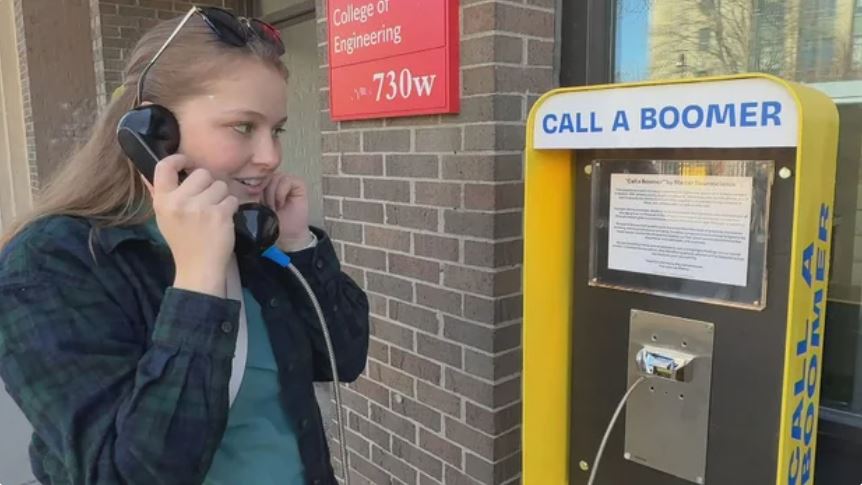
    BOSTON (WBZ) — Amid the hustle and bustle of Boston’s Commonwealth Ave, an unusual sight is catching the attention of passersby in 2026: a payphone.

But this one comes with a purpose.

The graphics across it and the directions posted on it, encourage people, especially college students to pick up the phone and “Call a Boomer.”

When someone lifts the phone, they’re automatically connected to another payphone at a senior living complex in Reno, Nevada, creating a chance conversation between strangers separated by roughly 3,000 miles.

Some calls end up going to voicemail, like the one left by Kyra, who hoped her message might reach someone who needed to hear it.

“I love it. I mean, I think younger people and older people, I would argue, need to talk to each other more,” she said. “We’ve all forgotten that there are lots of way to stay in touch and break that loneliness and isolation.”

Other calls lead to conversations. I talked with the manager of the housing facility, who said most residents, who are 62 and up and single or widowed, are thrilled to have the opportunity for connection.

When the phone rang in Boston Tuesday afternoon, a woman who grew up in New Hampshire, now retired in Reno, was excited to speak with someone back home.

The project is run by Matter Neuroscience, which says the goal is to foster connection between generations that most often experience loneliness.

“We believe in connection over cortisol. We want people to live happier lives and increase their wellbeing, their emotional fitness. And we believe the pathway to doing this is teaching people about their happiness,” said Calla Kessler. “How they can create more of it by understanding their brains, molecular interactions with neurotransmitters.”

The effort is part of the organization’s broader mission to boost happiness for the “collective good.”

“Right now, we’re in the midst of a growing mental health crisis, with over 200 million people living with major depressive disorders. We can reverse this if we start paying attention to what makes us happy — internally, molecularly. Luckily, we all have built-in biological reward systems that already do this for us. Most of us just haven’t had the tools to use and understand them until now,” reads a statement on the company’s website.

“We’re often in our little bubbles and we have a lot to learn from each other despite our differences,” Keller added.

The phones are refurbished payphones the company bought online, the one in Reno only differs by asking seniors to call “Zoomers.”

“We just want people to leave the phone conversation with a feeling of happiness and that connection is possible in this polarized world,” Kessler said.

For many participants, organizers say even a short conversation can make a difference.

“This is so sweet,” one caller in Boston said emotionally.

Matter Neuroscience says the phones will be up for at least a month, and they’ll be posting highlights from conversations on their social media pages.

Earlier this year they placed phones in Texas and California to foster connections between people on different sides of the political spectrum.

Please note: This story was provided to CNN Wire by an affiliate and does not contain original CNN reporting. This content carries a strict local market embargo. If you share the same market as the contributor of this article, you may not use it on any platform.

“Call A Boomer” payphone at Boston University connects students, seniors 3,000 miles apart

By Aaron Parseghian

Click here for updates on this story

    BOSTON (WBZ) — Amid the hustle and bustle of Boston’s Commonwealth Ave, an unusual sight is catching the attention of passersby in 2026: a payphone.

But this one comes with a purpose.

The graphics across it and the directions posted on it, encourage people, especially college students to pick up the phone and “Call a Boomer.”

When someone lifts the phone, they’re automatically connected to another payphone at a senior living complex in Reno, Nevada, creating a chance conversation between strangers separated by roughly 3,000 miles.

Some calls end up going to voicemail, like the one left by Kyra, who hoped her message might reach someone who needed to hear it.

“I love it. I mean, I think younger people and older people, I would argue, need to talk to each other more,” she said. “We’ve all forgotten that there are lots of way to stay in touch and break that loneliness and isolation.”

Other calls lead to conversations. I talked with the manager of the housing facility, who said most residents, who are 62 and up and single or widowed, are thrilled to have the opportunity for connection.

When the phone rang in Boston Tuesday afternoon, a woman who grew up in New Hampshire, now retired in Reno, was excited to speak with someone back home.

The project is run by Matter Neuroscience, which says the goal is to foster connection between generations that most often experience loneliness.

“We believe in connection over cortisol. We want people to live happier lives and increase their wellbeing, their emotional fitness. And we believe the pathway to doing this is teaching people about their happiness,” said Calla Kessler. “How they can create more of it by understanding their brains, molecular interactions with neurotransmitters.”

The effort is part of the organization’s broader mission to boost happiness for the “collective good.”

“Right now, we’re in the midst of a growing mental health crisis, with over 200 million people living with major depressive disorders. We can reverse this if we start paying attention to what makes us happy — internally, molecularly. Luckily, we all have built-in biological reward systems that already do this for us. Most of us just haven’t had the tools to use and understand them until now,” reads a statement on the company’s website.

“We’re often in our little bubbles and we have a lot to learn from each other despite our differences,” Keller added.

The phones are refurbished payphones the company bought online, the one in Reno only differs by asking seniors to call “Zoomers.”

“We just want people to leave the phone conversation with a feeling of happiness and that connection is possible in this polarized world,” Kessler said.

For many participants, organizers say even a short conversation can make a difference.

“This is so sweet,” one caller in Boston said emotionally.

Matter Neuroscience says the phones will be up for at least a month, and they’ll be posting highlights from conversations on their social media pages.

Earlier this year they placed phones in Texas and California to foster connections between people on different sides of the political spectrum.

Please note: This story was provided to CNN Wire by an affiliate and does not contain original CNN reporting. This content carries a strict local market embargo. If you share the same market as the contributor of this article, you may not use it on any platform.

Witness video shows officers responding to hostage standoff

By Kaicey Baylor, Adam Thompson

Click here for updates on this story

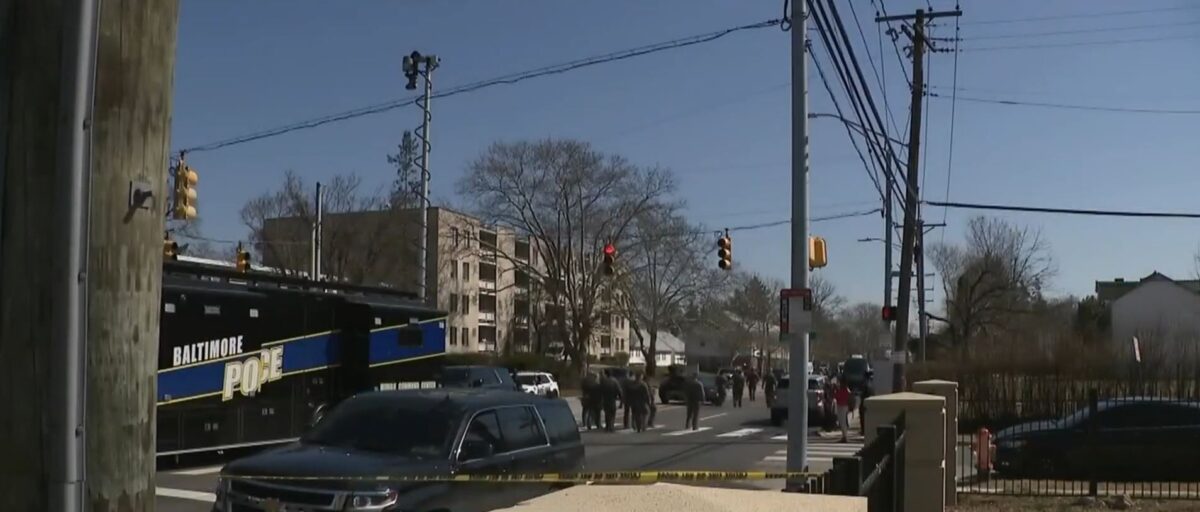
    BALTIMORE (WJZ) — A witness captured video of Baltimore police officers hustling to a home on Park Heights Avenue in response to a hostage standoff on Tuesday.

Police said an officer was shot, and a SWAT team sniper killed a suspect.

Nechemyah Rich said he followed the officers to Pinkney Road where he ran into a nearby synagogue, and started recording with his phone.

“I see a cop walking down the street with his guns drawn as you see in the movies,” Rich said. “My adrenaline starts pumping. I said, ‘I’m going to follow the cops.'”

Rich’s video shows several Baltimore and SWAT officers heading toward the home with shields and hiding behind trees.

“I was videoing and I heard a shotgun shot,” Rich said. “I dropped my phone. It was so loud and terrifying.”

Rich said he watched as police walked a person out of the home.

He said this is a “quiet residential neighborhood” that doesn’t have this type of violence.

“There’s a synagogue here, there’s a synagogue in that corner as well,” Rich said. “To have this kind of action, as they call it, right at home is pretty scary.”

Police said officers took cover after an officer was shot in the leg. Baltimore Mayor Brandon Scott said the officer was taken to Shock Trauma and is in “great spirits.”

Baltimore Police Commissioner Richard Worley said the officer is 36 years old and is a 13-year veteran of the police department.

“Kudos to his buddy for having the wherewithal to put a tourniquet on him at the scene,” said Dr. Thomas Scalea with the Shock Trauma Center. “He’s awake, he’s stable and currently undergoing evaluation.”

The suspect had a hostage and appeared in the window several times with a gun to the person’s head before he was shot, Worley said

A woman who jumped from the window of the home while trying to flee was also taken to a nearby hospital, police said.

The suspect was “neutralized” by a SWAT team sniper officer, according to police. The suspect was pronounced dead on the scene. A firearm was recovered from the home.

Please note: This story was provided to CNN Wire by an affiliate and does not contain original CNN reporting. This content carries a strict local market embargo. If you share the same market as the contributor of this article, you may not use it on any platform.

Woman pistol-whipped during robbery while walking to mosque for early morning prayers

By Maki Becker

Click here for updates on this story

    BUFFALO, New York (WKBW) — A 63-year-old Bengali woman was pistol-whipped and robbed while walking to early morning prayers at her mosque on Walden Avenue just before 3:30 Tuesday morning.

Surveillance video captured Bilkis Begum struggling with her attacker as he repeatedly struck her with a gun before grabbing her purse and running away. After the assault, Begum continued to the mosque. Police said the incident was not reported until two hours later.

Speaking through her son, Alzabir Shekh, who translated for her, Begum described the attack.

“The boy pushed her … and hit her with … the gun,” Begum said.

Begum said she tried to call out for help, but no one came to her aid.

“She thought maybe someone will come to help her, and there was nobody. Helpless. And she’s just calling, calling to someone to help,” Alzabir Shekh said.

Begum said she hopes the incident prompts action from local officials.

“She wants that our Muslim community will be safe in this community, and this is, this is what she hopes from the Buffalo City administration,” Begum said.

Members of Buffalo’s Bengali community are calling for increased police patrols, particularly during the remaining days of Ramadan.

“We need security, more security and police patrols… especially during this month of Ramadan,” said Mohammed Kaium, former president of the Buffalo Islamic Cultural Center.

“This was a cowardly act what the person did. He took her purse and her phone and he was beating her,” said MD Karim of Buffalo Bangla, a local online news outlet.

“The person with the gun… it should not happen. It should be better direction,” Mohammed Uddin said.

Begum has said she does not want to press charges at this time, but Buffalo Police C District Police Chief Thelma Jones said investigators are actively working the case.

“Obviously, it was a horrific incident and we’re concerned about all members of our community being safe,” Jones said.

Jones is asking anyone with information to come forward, no matter how minor it may seem.

“We are requesting anyone in our community… that is aware of anything regarding this incident, regardless of how insignificant they may deem it to be… to report it,” Jones said. They are urged to call 716-847-2255.

Police said that in addition to the investigation, they are willing to speak with the Bengali community about increasing safety measures for the remaining 10 days of Ramadan.

This story was reported on-air by a journalist and has been converted to this platform with the assistance of AI. WKBW verifies all reporting on all platforms for fairness and accuracy.

Please note: This story was provided to CNN Wire by an affiliate and does not contain original CNN reporting. This content carries a strict local market embargo. If you share the same market as the contributor of this article, you may not use it on any platform.

Delivery gone wrong: FedEx truck driver goes through homeowner’s yard

By Jiovanni Lieggi

Click here for updates on this story

    WEST SENECA, New York (WKBW) — A routine delivery turned into an unexpected situation for one West Seneca homeowner this week after a FedEx truck ended up stuck in his yard.

Paul Przystal says the delivery driver pulled into his driveway but missed a warning sign posted at the end warning delivery vehicles not to go beyond that point.

Instead of turning around in a designated area, Przystal says the driver drove into the grass while attempting to maneuver the truck.

“I went oh my god,” Przystal said. “My wife responded, ‘What’s going on?’ I said, ‘FedEx is on the grass.’”

Cell phone video captured the moment the driver apologized after the truck became stuck.

“I apologize man, I got stuck,” the driver can be heard saying.

Przystal says the truck left tire marks and ruts in the yard as the driver tried to back out.

“The tire marks are still all here, and he had to back up, got a couple ruts over there,” he said.

Despite the damage, Przystal says the situation was resolved quickly.

According to the homeowner, the driver contacted a supervisor and the company agreed to cover the cost of repairs.

A FedEx spokesperson told 7 News that safety is their top priority and that they are investigating the matter and will work directly with the property owners.

“Everything went great,” Przystal said. “I was very thrilled with the way it worked out.”

Przystal says incidents like this have become more common in recent years as delivery traffic has increased.

“It’s only recently, and honestly in the Amazon era, that now I’ve had to put that sign at the end because it’s costing me a fortune in repairs,” he said.

Please note: This story was provided to CNN Wire by an affiliate and does not contain original CNN reporting. This content carries a strict local market embargo. If you share the same market as the contributor of this article, you may not use it on any platform.

Parents advocating for bill to allow homeschool students to compete in state-sanctioned athletic events

By Caleb Barnes

Click here for updates on this story

    WILLIAMSTOWN, Kentucky (WLEX) — More than 30 states allow homeschool athletes to compete in state-sanctioned competition, but Kentucky is not one of those. Parents are hoping a new bill would change the requirements so their kids can compete in future state events.

Currently, KHSAA requires student-athletes to be enrolled in courses as a full-time student at the school they are competing with. That law impacts these athletes because homeschool students are not enrolled full-time at a member school, so they cannot participate in state-sanctioned events and tournaments.

“My oldest daughter that we homeschooled had to return to public high school this year in order to continue to compete with her peers for both wrestling and softball,” said Jessica Svec.

Her daughter, Aaliyah, was a state champion in wrestling this year.

“She wouldn’t have even been able to see the match if she didn’t go to school,” Svec said.

“I would love to swim high school,” said Ben Barnes-Israel, who is a sophomore homeschool swimmer. “I was the only high school boy on my team who couldn’t swim high school this year. I had to stick with the YMCA club.”

“My oldest daughter that we homeschooled had to return to public high school this year in order to continue to compete with her peers for both wrestling and softball,” said Jessica Svec.

Her daughter, Aaliyah, was a state champion in wrestling this year.

“She wouldn’t have even been able to see the match if she didn’t go to school,” Svec said.

“I would love to swim high school,” said Ben Barnes-Israel, who is a sophomore homeschool swimmer. “I was the only high school boy on my team who couldn’t swim high school this year. I had to stick with the YMCA club.”

Because of this, Franklin believes Joshua would benefit from a private school education. However, private schools in their area are small and lack programs like football.

Franklin hopes to see the bill succeed, so they can have the option to homeschool Joshua while he plays football.

“He could go to a school that he would thrive in and be able to go back to the district that loves him and he loves and still be able to play the sports that he wants,” Franklin said.

Parents and advocates say they’ve been pushing for this sort of change in Kentucky for 15 years now, but have been unsuccessful so far. More than 2,000 parents from 111 counties have signed a petition supporting HB 421, hoping to make their voices heard.

Please note: This story was provided to CNN Wire by an affiliate and does not contain original CNN reporting. This content carries a strict local market embargo. If you share the same market as the contributor of this article, you may not use it on any platform.

Man helps sibling escape house fire

By Jeff Hager

Click here for updates on this story

    WHITEFORD, Maryland (WMAR) — For nearly half a century, Ronald and Lawrence Scarborough have been inseparable, sharing a home on a little over three acres of land tucked along Slate Ridge Road in Whiteford. On Monday afternoon, that nearly came to an end.

“When I first saw the fire, I had been outside and then I went in the house and I closed the door,” Ronald told us, ”and then I seen flames and I came on through the house and woke him up.”

At 77 years old, Lawrence is six years Ronald’s senior. He had dozed off watching TV when his brother burst into the room.

“He yelled on me,” Lawrence recounted.

“Was it close? Did you smell the smoke? Did you see the flames?” I asked him.

“No,” he replied, “I didn’t even smell nothing.”

“So if not for your brother, you may not have made it?”

“I may have not.” Investigators believe the fire started in a gazebo located on the side of the house and flames spread to the two-story home. They have not ruled out discarded smoking materials.

The estimated loss to the structure here has been placed at $200,000 with another $50,000 loss in contents.

While a lifetime of possessions are lost, including their family photos, Ronald and Lawrence still count themselves lucky.

“But there’s no one more dear to you in this world than your brother?”

Ronald grew emotional while contemplating the question in a response, which defied words.

Please note: This story was provided to CNN Wire by an affiliate and does not contain original CNN reporting. This content carries a strict local market embargo. If you share the same market as the contributor of this article, you may not use it on any platform.