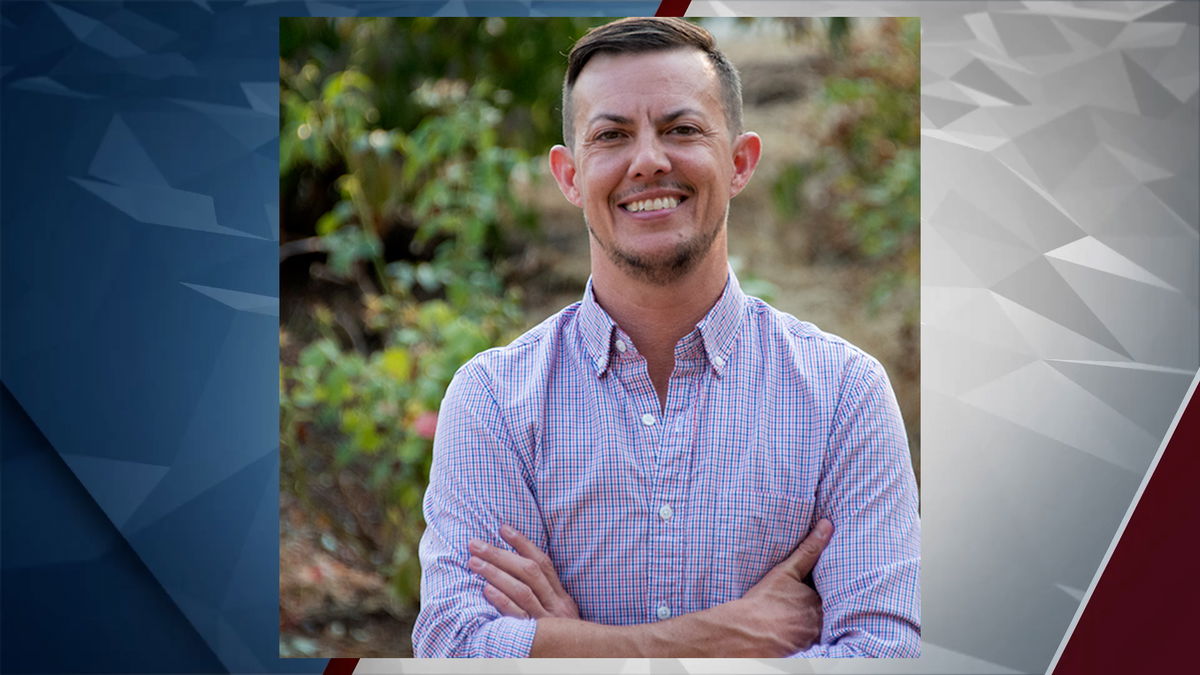
Interview with Fifth Ward Columbia City Council candidate Don Waterman

Lucas Geisler

COLUMBIA, Mo. (KMIZ)

ABC 17 News is talking to candidates in select April election races about their positions on key issues.

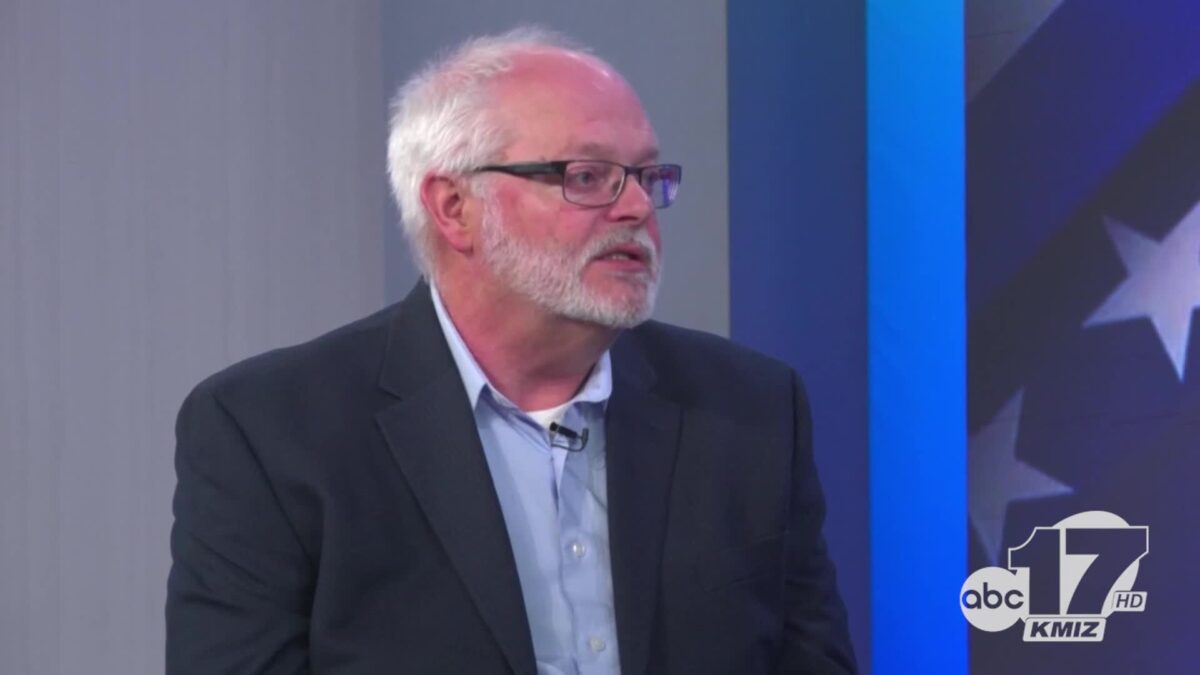
Below is the transcription of the full interview with Don Waterman, the incumbent Fifth Ward representative on the Columbia City Council.

Christina Hartman is challenging Waterman.

LUCAS GEISLER: Would you mind just introducing yourself further and what it is that you do in town?

DON WATERMAN: Well, thank you, again.

Don Waterman, running for the Fifth Ward, actually currently the incumbent as well, running for reelection. And right now, council is my job. I retired from full-time work a couple of years ago, so now I’m able to devote much more time to city council than trying to juggle both.

So I don’t know if you need more than that.

GEISLER: Why do you want to run for council?

WATERMAN: Primarily, the reason I’m running for reelection is unfinished business. There’s several things. Some infrastructure projects that I ran on, especially in the Fifth Ward, the water tower, the transmission line, and then there’s some continued, you know, development continues down there, and then public safety, we’ve made significant progress there with filling the empty positions in the police department.

Happy to say that, uh, you know, I was part of saying yes to starting our own police academy, which I think has been good for us. We’ve got a new class, I believe it’s this month, starting. We’re talking about staffing. We’ve gone from approximately 40 positions to now that we’re down to about 15 vacancies, so we’re making significant progress there. I think Chief [Jill] Schlude and her staff has been doing a great job with that.

GEISLER: So, city leadership in the last several months, they’ve been openly talking about this and seem to be gearing up for a public safety sales tax in the coming months here. Do you support any sales tax raise for public safety as long as it’s dedicated to public safety?

WATERMAN: Yes, I do. I think that it’s one of those things we can continue to grow it organically. But over the last couple of years, we’ve struggled with sales taxes being roughly flat, maybe a very slight increase, and given that the number of officers that we need to increase, and firefighters, public safety covers both, but given the number that we need for both of those, if we did it organically we’re talking a number of years to do. I think this would give us the opportunity to hire the officers. Chief Schlude said she needs somewhere between 50 and 60 just to get us up to where she thinks we should be, given the way Colombia has grown.

Fire department is asking for 40 more, so you know that. You know that comes at a cost, and there’s also capital projects that, there’s the police station that needs to be rebuilt or relocated so that’s there’s that. The other is fire stations. We’ve got three fire stations, I believe the last that I heard that are nearing the end of their life that need to be rebuilt, renovated, new fire stations that will be coming online again as we continue to grow. They want to add a fourth firefighter to each shift. Right now, they’re currently they’re getting by with three. Four would make it more efficient and a better response for each shift. So again, all that, those additional services and those additions come at a cost. And given that comes out of the general fund, which is primarily funded by sales taxes and fees, there’s not much room left to take it from somewhere else given the amount of money that would be needed. The other, the next two of the general fund, fire and police take up half of it. The next two largest are health and public works. Public works is our streets and related projects like that, so you know we don’t want to see our streets go down. We don’t want, you know, health department, they have their responsibilities, so we can’t really take it from there. If we did, it would have a, a negative impact on those two departments and then the other departments within the city administration.

Again, as Columbia grows, the staff needs to grow, whether it’s from customer service or just having more people available to, to do what needs to be done to run a city, or to run the fourth-largest city in the state of Missouri.

GEISLER: Which programs or city efforts now in effect do you support as far as public safety goes?

WATERMAN: Continuing to grow our police department, you know, whether it’s a deterrent or first response, is a significant part of it. I know one of the potential benefits uh if we are able to. Add the additional officers, and then maybe we can go back to more of a specific or dedicated routes, almost a beat cop type. I know some of the other council people have mentioned that that’s what they would like to see, is a return to that, so people get to know their neighborhood law enforcement. I know the Office of Violence Prevention, they’re doing some work, I think they’ve got a consultant maybe in town this week I believe … to help with them. And that’s really kind of the two-pronged approach, the Office of Violence Prevention, they’re looking at, and some of the programs and solutions that I believe they’re working on are gonna be, the next generation, ‘How can we advocate and show the young people that there are opportunities, there’s things that they could do, and even if you have a disagreement with someone, there’s other things that you can do to solve it rather than resorting to violence.’ I think that has a lot, has a lot to do with it. There’s kind of a, it seems that there’s been a mentality, if you will, it’s developed that people, if they have a disagreement, rather than trying to figure out a way to resolve it, they just step straight to violence, and that’s not a good thing obviously.

The other is, you know, there are a lot of other organizations in town that are doing work, working with the youth, and again showing them the alternatives, and the path forward, that there is a path forward, that they’re not trapped in the circumstances that they grew up in, that they can step beyond that.

GEISLER: How do you think DeCarlin Seawood has done as a city manager?

WATERMAN: I think that he’s done an effective job. I think, actually, I’ll say he’s done a good job. I know that there are those who would like to see him out front more in a case. Probably the latest major incident we had was at the sporting goods store where there was, originally, it was a report of multiple people, involved turned out to I think be a single individual carjacking, and through the technology that we have brought in, we were able to get it into the system and they were able to locate and apprehend the individual quickly out of town, but they were able to locate the individual but I go back to your original question about DeCarlin. Part of what he’s responsible for doing is hiring the various department heads. I think Chief Schlude and [Fire] Chief [Brian] Schaeffer have both been great hires. As I said, with under Chief Schlude, we’ve increased the number of officers, decreased the number of vacancies. We’ve got our own academy now, which again, we can then train our candidates or the recruits on how Columbia polices from the beginning rather than having to retrain them if they went somewhere else. And it’s at a lower cost to us than going through the Law Enforcement Training Institute. Great organization, we used them for years, but now we have our own academy with either current and/or retired Columbia officers that are, are running it, and again, doing a good job.

Some of the other department heads, I think, Erin Keys, a new recent department head in utilities. When she was with stormwater, I’d worked with her and thought well of her then. The new community development, Clint Smith, bringing him in, every indication, I know he’s relatively new, but every indication is that he’s gonna be good at it as well.

So I think in looking at the people that he’s bringing in, I think are good, so he’s made some good choices there. So that’s one evaluation. The other thing, and what I heard when I first got on council, was that there’s not a lot of communication between city government and the community. Well, some of the things we’ve done now, the Be Heard website, “Let’s Talk Local,” I actually have one coming up, I think later this month. I don’t have the specifics yet, but, later this month, but, so those, twice a year we go to every ward, and generally there’s a specific topic, so we can address that. The community summit coming up … Last year was the first year we did it, and was a resounding success. We had I believe over 300 people come through, and I was surprised when I arrived. I did not expect that big a crowd. It was full. So I’m expecting a similar turnout. So it was a way to reach out to the community, listen to the community, the budget process. We’ve had a number of town halls to inform the people, let them know what goes into creating a budget, you know, of the size for Colombia that it’s not just, it’s not a simple process.

Those are all things that have come to fruition that were asked for, and De’Carlon has said ‘yes, let’s do that,” so he supported it. I know we just approved the new communications department. Now what that’s gonna mean, it’s gonna be one new hire. The rest of the people will be reassigned from others, so it’s more of a, call it a reorganization, but that the intent of that is to help try and get information out a little more quickly, maybe a little more efficiently, when something happens like again the incident I just mentioned or the incident yesterday, we’re getting information out to the public, and not just about violent crime but other, other things that are involved with the involving the community. So again, that’s something that he spearheaded. So, all in all, I think that, as I said, I think he’s done a good job.

GEISLER: You mentioned at the beginning of this some infrastructure projects that have long been on the minds of Southwest Columbia in the Fifth Ward. Well, and the people of Colombia voted for them — the water tower project and an electric transmission line, specifically, as far as high-value, high-dollar projects, high visibility … and that still have not come to fruition in the several years that they’ve been talked about. So you’ve got three years under your belt. How are you going to keep on city staff and city leadership to get some of these things done in the next three years?

WATERMAN: Well, again, it’s just a matter of staying focused on it, the water tower, and it’s kind of funny we’ll talk, let’s talk about water first when the water bond was passed, yes, the water tower was part of it, but if you look at everything that was approved under that, from the renovations to the water plant and other things, the water tower was actually dollar wise one of the lower cost items, maybe the most visible, but the lowest cost. And yeah, that’s run into some snags, and so that’s kind of on a hold right now. In trying to address those, the transmission line again, for whatever reason, there was some pushback on it, specifically the route. I know there was a task force put together. They had some alternative recommendations. One of those, the cooperation, trying to do something with Ameren, we weren’t able to do that. The second one was to piggyback along the current transmission line on Chapel Hill, and then the other one was to bring the line up Vawter School Road. That one is gonna be the quickest and most cost-effective. In the electric bond that approved that, yes, that was the most visible and most expensive part of the project, or the bonds that were approved to be issued at that time. And that one is going to be. It’s back on. We just got a report recently, council did, and we asked them to move forward with it, bring us some more information, so we’re waiting, waiting to get that. It’s been long enough now that they’re gonna have to restart the entire process

To circle back around to the alternatives, the Chapel Hill, because you’re going to be, it seems simple. Just string another wire on some existing poles. It’s not that simple, because this is a different voltage. The poles would have to be replaced. We’ve seen pictures of where the current poles are. I mean, you’re talking backyards, front yards. They showed us a picture where the pole is literally in the front corner of the yard next to the driveway. Those poles would have to be removed and replaced with bigger poles … and be given that it would mean taking down the current line, it would take a lot longer to do, and so the cost would be significantly more. I think the report we got was about $20 million more than bringing it down Scott and up Vawter School and Nifong and Grindstone. So that’s the most cost-effective way to do it, the quickest way to do it, but we’re gonna basically have to restart with inform — interested parties meetings, public hearings, and I expect that there will be some questions, and some pushback from individuals, that concern about property values. I know there’s some questions about safety electrical emissions. Fortunately, [Ward 1] Councilwoman [Valerie] Carroll has actually done some research in that area, and she’s provided us with some information that, couple of reports, National Institute of Health that the radiation, or the emissions, probably a better term that come from the high voltage lines, are not as concerning as ionizing radiation which like gamma rays or something of that nature, and if there’s reports of higher instances of illness, there’s also usually some other circumstance or some other issue that contributes to it, it’s not solely from the emissions from the high voltage line.

GEISLER: So do you want to see these projects then started, or really moving in the time that you are in office here in the next three years?

WATERMAN: Yeah, yeah, oh definitely, and that’s one, like I said, one of the reasons I’m running is to try and keep moving those forward. Again, the transmission line, the report came back, and it didn’t seem, and I haven’t been able to find any clear direction from council to staff on how to proceed with it. I think they did investigate the cooperative process or approach with Ameren, and, like I said, that didn’t come through. So the line, again the Vawter School option ranked high in the task force report, or maybe middle of the pack, but from a cost standpoint and efficiency standpoint, that’s gonna be the best route.

The other thing is we need this line, it’s from a redundancy standpoint. If you think about it right now, if you look at how it’s laid out we have the transmission line up Chapel Hill, there’s another one north, this one would be south, so it gives us more if one were to go down, then we would have a backup. That’s another argument against running it down Chapel Hill is you’ve got it on the same poles. We had the tornado in April, with that recycled our recycling facility as I like to put it, there were some transmission lines taken down for that. Now they were older on wooden poles, and they were in the process of replacing them, but it just shows what can happen, so that’s why we need the other route, and again, from a redundancy and it’s not just Columbia and being able to provide, continue to provide in the event something happened, but also allows for maintenance and we’re part of a larger network of the electrical grid.

If you stop and look at it, it’s very much an interconnected grid. We’re part of what’s called MISO, the [Midcontinent Independent System Operator] … and that covers 13 states, and then of course that then falls under federal regulations. So you know, it’s all part of a network that we need to be able to maintain, and they have said since this was first initiated, actually going back almost 20 years, that it’s something that we need.

GEISLER: What role does the city play in addressing homelessness?

WATERMAN: My position on it is I think the local nonprofits, private organizations, I think can be much more efficient than if the city were to administer it. I think the city’s role should be to support as much as we can, whether it’s, you know, approving, improving building, making adjustments to various codes or something like that if necessary to kind of clear roadblocks if necessary.

Again, time and again, they’ve proven that they’re much more efficient than trying to have a city organization do it. So I think, ‘Might we need to support financially?’ Possibly, but again, I think from a city standpoint that should be, should be minimal.
Click here to follow the original article.

Interview with Fifth Ward Columbia City Council candidate Christina Hartman

Lucas Geisler

COLUMBIA, Mo. (KMIZ)

ABC 17 News is talking to candidates in select April election races about their positions on key issues.

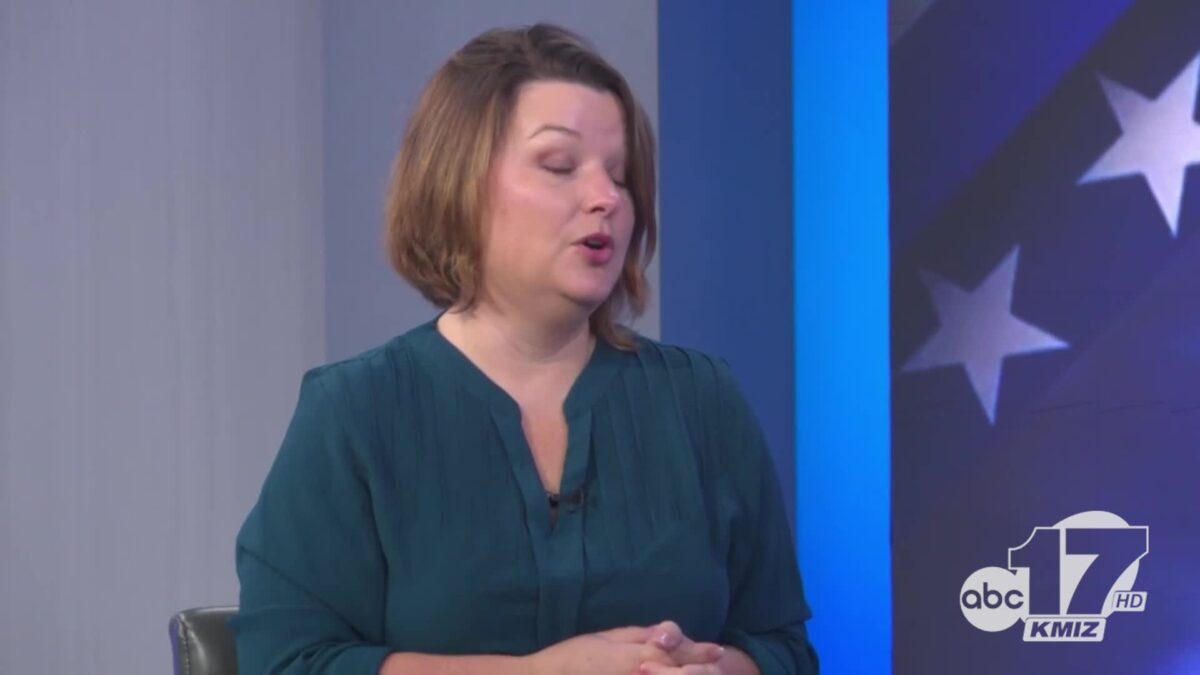
Below is the transcription of the full interview with Christina Hartman, who is challenging the incumbent to be Fifth Ward representative on the Columbia City Council.

Her opponent is Don Waterman.

LUCAS GEISLER: Why don’t you go ahead and, if you don’t mind, would you introduce yourself to our viewers and what it is that you’re running for?

CHRISTINA HARTMAN: Hi, I’m Christina Hartman, and I’m running for city council Ward 5 in Columbia, Missouri. I am running because the city needs proper infrastructure that we plan ahead for, and we need great job opportunities and available housing.

GEISLER: Why do you wanna run for city council?

HARTMAN: Yeah, so city council to me was kind of the next step in my evolution of volunteering. So I’ve been volunteering in Columbia since I got here … painting fences for different organizations to handing out food and those kind of things and I was like, ‘What is the next step for me. How do I make a real impact in Columbia?’ And when I noticed that there were some issues with transmission line projects being over a decade old, I was like, ‘I think we could do better Columbia.’ And so that’s why I chose to run.

GEISLER: Let let’s talk about those … topics, I mean, the 5th Ward specifically has seen a lot of delays and controversy around some of these, like a transmission line, a water tower that was supposed to be built in southwest Colombia for it. How do you plan on keeping city staff on target and getting some of these projects that were promised and voted on, even to the finish line and completed?

HARTMAN: Yeah, so I think part of that is going out and speaking with the community. Making sure that the community understands why we need those infrastructure projects so the transmission lines impact more than just Ward 5 and so like, let’s be good partners in our community and share that load of infrastructure needs, and then when it comes to keeping it forefront with the city staff, you know, that’s communicating with our city administrator, making sure that they understand the importance um of that to. To me and my constituents, um, and, and really trying to make sure that you’re engaged.

So my background is in IT project management. I’m a [project management professional] and so part of that is knowing when to follow up, give them a little bit of time, but then follow back up whenever there’s an appropriate amount of time that has allowed them to make some progress, and just keep checking in on those type of projects.

GEISLER: Can you tell us a little more just about your background, like what it is you do and what it is you do in town for a living and and things like that?

HARTMAN: Over the last 20-ish years I’ve worked in technology, so that’s from some simple coding projects to project management to worldwide delivery of computer assets, things like that. And over time I got interested in cyber security, always kind of a passion of mine as I was going through the ranks of different IT jobs, and once I developed the understanding of security and started auditing some systems, I was like ‘Wow, I really like doing this,’ and so I started my own business and I have a small cyber security business that I try to run and keep going with that, and so I think that that really applies well into city government. So being able to take a look at systems and understand that underlying process and pull out what’s working and what’s not to try to get things moving.

GEISLER: City leadership is gearing up to offer a public safety sales tax to the voters in Colombia, probably here in the next several months. Do you support, on its face, uh, a raise in the city sales tax for public safety? And why do you support or why not?

HARTMAN: Yeah, so I think that’s a really interesting question. So we know that the city does have a budget deficit, which means we’re pulling out of our coffers, and that’s not a good thing. It’s not sustainable. We can’t do that long-term. We know that there’s been pension issues that have crept up in that we, in order to maintain and keep our promises to the people that are protecting us, we need to look at those type of things. But we also know that the cost of everything is rising, right? We have additional tax that have come in from annexations and different things like that, and all of those things are adding up for the common, the average person. And so for me, I think we need to really look at the budget and see what’s giving us that return on investment, and get rid of things that aren’t working for us before we start asking the voters for additional money. We haven’t even used the money that they gave us for a water tower. Or that the voters voted on for the water tower and for the transmission lines and so we need to make sure we’re being good stewards of that money before asking citizens for additional funding.

GEISLER: Is there something more that you’d want to hear from city leadership before voting yes or no on going to the ballot with a public safety sales tax, or do you feel comfortable even saying right now how you decide on that?

HARTMAN: Yeah, I would want to sit with our administrators and really understand the bottom line on that, but I think ultimately the voters will get to decide on whether they want that city tax for themselves and their neighbors.

GEISLER: How do you think the city manager De’Carlon Seewood has done in his job since you’ve gotten to really see and pay attention to what’s going on?

HARTMAN: So my background is in tech and when we come in and we look at a system we, look at what process is working and we try to take out the people part of that and really look at the processes and so when we do a retrospect, which is going in after a project and looking at what went well, what didn’t, it’s really the processes that enable people to be good at their job or to be fantastic at their job, you. Like it’s how well do we have those things implemented, and I think that there’s a lot of structural things that they’ve been working to improve that could still use a lot of help.

GEISLER: Do any come to mind just off at the beginning, or is it something that you’re trying to get deeper into?

HARTMAN: Yeah, one of the things I think is the records request. So I hear a lot about people asking for information and not getting that in a timely way. We should be able to provide information to our constituents in a very quick and meaningful way. If they’re asking for information, let’s be transparent about it and get it out to them, and give them reasons … let them know if it’s not working quick enough, you know, stay in contact.

GEISLER: Are there any programs or efforts that you’re seeing going on in the city with regards to public safety that you think are working that you would like the city to maybe explore deeper into, invest more into anything that you see that you really are encouraged by and want to see keep going?

HARTMAN: Yeah, whenever I think about the programs, what I’m looking for is those proactive programs that are preventing issues rather than the reactive, and so almost in every aspect when you look at a proactive program, it’s going to be cheaper than dealing with the fact after. And so whatever programs we can really put an emphasis on prevention and limiting whatever exposure it be, that’s what we need to focus on.

GEISLER: What role do you think the city government has in homelessness, both speaking of maybe prevention but also in either dealing with it or trying to help kind of solve it?

What role does city government play in kind of that realm?

HARTMAN: Yeah, so I think when we talk about a population of people, we need to recognize that there’s a lot of different people coming from, with whatever population we’re referring to, and so we need to look at where people are and meet them at where they’re at. We know that it’s, I don’t have the exact statistic, but I think it’s like 15% cheaper to keep somebody from losing their home or losing their rental than it is to try to lift them up out of homelessness, and then, when you talk about that, there’s a lot of trauma that goes into that and so we need to be understanding. How do we help each individual at where they’re at to build programs that help them get to that next level and whatever step that looks like?

Click here to follow the original article.

Gov. Little signs sweeping budget cuts as Democrats blast ‘self-inflicted’ revenue shortfall

Seth Ratliff

BOISE, Idaho (KIFI) — Governor Brad Little signed the 2026 Budget Rescissions Act into law late Monday night without fanfare, narrowly beating a deadline to approve the sweeping budget cuts detailed in Senate Bill 1331. The legislation imposes a 4% reduction across nearly all state agency budgets.

The act adds a 1% cut on top of the Governor’s previous 3% state budget reduction mandate, reflecting the Governor’s Enduring Idaho Plan promises for state agencies to “tighten their belts.” While the belt-tightening is widespread, Idaho’s public schools, Medicaid, the Idaho Department of Corrections, and the Idaho State Police will avoid the additional cuts per the Governor’s request.

In a statement released Tuesday, Gov. Little defended the move as a necessary step to maintain a balanced budget.

“Idahoans expect their state government to operate efficiently and effectively, and the balanced budget we approved for the current fiscal year delivers on both fronts,” Little said in a statement to IdahoEdNews on Tuesday. “I appreciate my partners in the Legislature for working closely with my office to right-size state government to match the taxpayers’ means while minimizing the impact of spending reductions.”

A Thin Margin and Sharp Criticism

The path to the Governor’s desk was narrow. The bill cleared the Idaho Senate by a razor-thin 18-17 vote after a more comfortable 48-22 victory in the House. Idaho Democrats and holdouts from Little’s own party are labeling the cuts as irresponsible.

Senate Minority Leader Melissa Wintrow (D-Boise) pinned the blame on the $450 million revenue reduction passed by Republicans in 2025. Wintrow argued that the current shortfall was an avoidable, self-inflicted crisis.

In a statement released Tuesday, Senate Minority Leader Melissa Wintrow (D-Boise) took aim at the $450 million in revenue reductions Idaho Republicans passed in 2025, calling the shortfall now forcing cuts to essential services across Idaho a Republican-created problem.

“Republicans created this crisis when they cut more than $450 million in revenue in 2025 after years of tax breaks that favored the wealthiest Idahoans,” Wintrow said. “We have more than $1.7 billion in reserve funds built for moments like this. What Idaho does not have is a governor willing to make that choice when it matters most.”

Eyeing the Midterms

House Democratic Leader Ilana Rubel echoed Sen. Wintrow’s sentiment, warning that the “devastating blow” to infrastructure and healthcare would have real-world consequences. Rubel specifically highlighted the recent elimination of Assertive Community Treatment, which she linked to four recent deaths in the state.

As the state grapples with the projected revenue shortfalls and subsequent budget cuts, Rubel signaled that the budget battle would be a focal point of the upcoming November midterm elections.

“Idaho families are paying the price for failed GOP leadership,” Rubel said. “It is past time for change. This November, Idahoans have the opportunity to elect leaders who will truly fight for working people.”

Click here to follow the original article.

Lane closures scheduled next week for North Garth Avenue, South Fairview Road

Ryan Shiner

COLUMBIA, Mo. (KMIZ)

Road work in western and southwest Columbia will require lane closures next week, according to a Tuesday press release from the city.

City crews will perform work at:

North Garth Avenue between Parkade Boulevard and East Craig Street, in front of Parkade Elementary School. This will occur 7 a.m.-5 p.m. Monday, March 23.

South Fairview Road near Malibu Court, in front of the Fairview Park tennis courts. This will begin at 7 a.m. Tuesday, March 24 and by completed by 5 p.m. Wednesday, March 25.

Delays could cause the work to be completed by 5 p.m. Friday, March 27, the release says.

The release says crews will “replace sections of failed concrete pavement.” One lane will stay open to traffic and flags and signs will help guide vehicles, the release says.

Click here to follow the original article.

Woman accused of disseminating other woman’s nude photos to employer

Ryan Shiner

COLUMBIA, Mo. (KMIZ)

A woman has been charged in Audrain County after she allegedly sent nude photographs of another to their employer.

Ashley Withrow was charged with two counts of sending nude photos of someone without their consent and a count of threatening to send nude photos of someone. A warrant was issued and no bond was set.

The probable cause statement says police took a report of Withrow sending the photos on Jan. 13. Two people separately told police that Withrow had sent them nude photos of the victim on social media, with one occurring on Facebook Messenger and the other occurring on Snapchat with an account with Withrow’s name.

Withrow then allegedly sent a text message to the victim’s supervisor in an attempt to get the victim fired, the statement says.

Withrow was contacted by police and allegedly admitted to sending the photos, the statement says.

Click here to follow the original article.

IID accepts applications for Summer 2026 Paid Internship Program

Dillon Fuhrman

IMPERIAL COUNTY, Calif. (KYMA) – The Imperial Irrigation District (IID) has announced the application process for the Summer 2026 Paid Internship Program has opened.

According to a press release, the program is to offer “students a unique opportunity to gain practical work experience, develop professional skills, and make meaningful connections—all while earning a competitive salary.”

“The contributions of our interns help advance IID’s mission and vision as a community-owned utility committed to providing reliable and cost-effective services, which are important to us all,” said Marcy Rivera, IID’s Human Resources Department Manager, noting that about 5% of current District employees began their journey as interns.

“Investing in students today helps ensure our region has the skilled workforce it needs tomorrow,” said IID Chairwoman Karin Eugenio. “Through our internship program, students gain valuable experience while learning how a public utility serves its community.”

IID has issued the following requirements for those who want to apply for the program:

18 years or older

Currently enrolled full-time at an accredited college or university

Minimum 3.0 GPA

Majoring in one of the listed fields of study or a related field

Available to commit to a full-time internship for the summer

Applications are due Thursday, March 26, 2026 at 5 p.m. To apply, click here and select “Student Aide.”

Click here to follow the original article.

ACLUF-SDIC launches Federal Law Enforcement Abuse Reporting Hotline

Andrea Turisk

(KYMA) – One local non-profit has launched the Federal Law Enforcement Abuse Reporting Hotline in San Diego and Imperial Counties.

The ACLU Foundation of San Diego and Imperial Counties (ACLUF-SDIC) says this move is in response to a surge of civil rights violations occurring nationwide.

Two new regional hotlines have been launched for the public to report harassment, use of force, racial profiling, warrant less stops and detention from ICE or federal agents.

They’re now tracking and investigating unlawful conduct by federal immigration agents both against people lawfully exercising first amendment rights and against people otherwise detained by federal law enforcement agencies.

“Despite what this administration wants us to believe, ICE, Border Patrol and federal agents are not above the law. Nothing about our constitutional protections has changed. We must demand real accountability when federal agents harm members of our communities. We encourage folks to share this hotline with community members and call us if your rights have been violated by these federal agents.”

Frederick Carroll, Legal Director, ACLUF-SDIC

The number for people in Imperial County is 760-645-9335, and there is also ACLUF-SDIC’s online reporting form.

To learn more about this, click here.

Click here to follow the original article.

Cole County judge considers check-in with Secretary of State as signature verification continues

Marie Moyer

JEFFERSON CITY, Mo. (KMIZ)

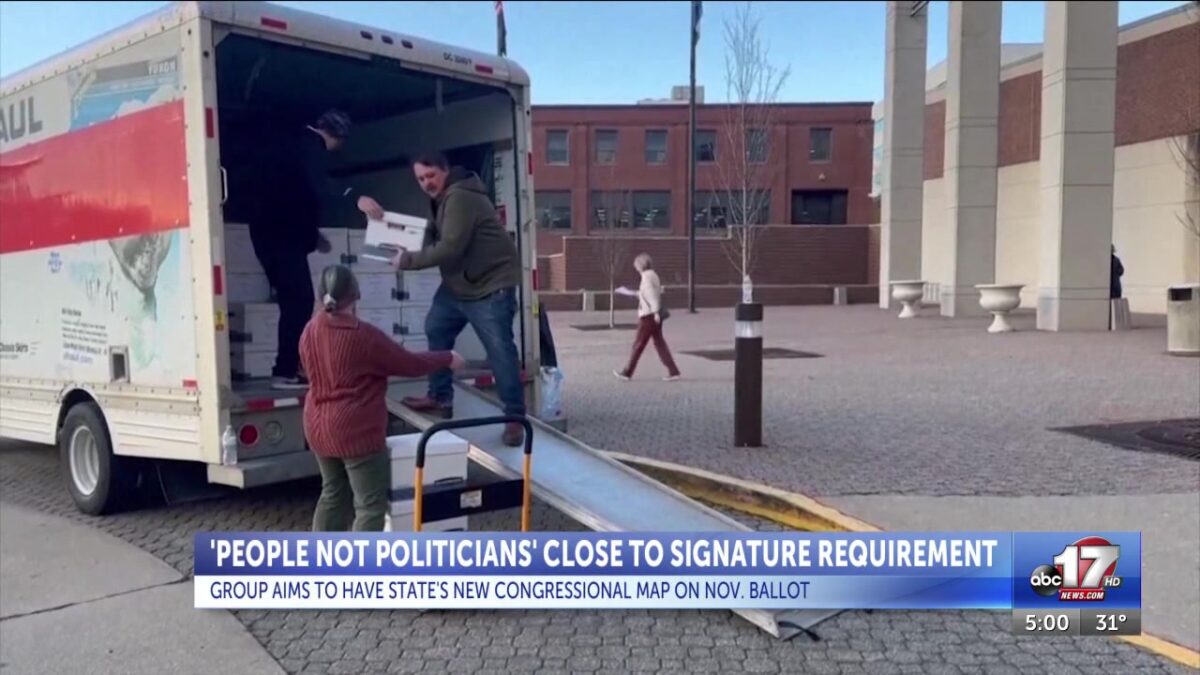
After about three months, the group People Not Politicians is still seeking a ruling from a Cole County Judge on whether more than 100,000 signatures will be verified by Secretary of State Denny Hoskins to put the new Missouri congressional map on the November ballot.

Representatives from People Not Politicians, the Secretary of State’s Office and Republican-backed group Put Missouri First met Tuesday morning in court for a case review, with People Not Politicians pushing for a decision from Cole County Judge Christopher Limbaugh.

According to People Not Politicians data, enough valid signatures have been collected in the First, Second, Third, Fourth and Fifth congressional districts. As of Tuesday, the Seventh District reportedly has 18,404 of the 18,499 necessary signatures.

Enough petitions need to be verified in six of Missouri’s eight congressional districts for the petition to be put on the ballot.

“The fact is, 305,000 Missourians signed a petition to their government asking for redress,” People Not Politicians Director Richard Von Glahn said. “It doesn’t matter if we need all of those signatures to be reviewed in order to qualify the referendum, all signatures should be reviewed just as a matter of course as to how the government interacts with its citizens.”

People Not Politicians filed the initial suit against Hoskins back in September, with the case seeing delays and moving through judges.

The suit was last put on hold by Limbaugh in December until all collected signatures were verified by local election authorities.

People Not Politicians argues that the Secretary of State’s Office received and rejected several referendum samples. Von Glahn was later told by Hoskins that the samples were rejected because Gov. Mike Kehoe had not yet approved the new map, and not due to content issues in the form.

Hoskins later approved the exact ballot language that was previously rejected, and the group then claimed that by not approving the referendum language earlier, Hoskins failed to follow Missouri open records laws.

The state argues that not having the governor’s approval of the map was a valid reason for Hoskins not to approve the language.

The more than 100,000 signatures that are on hold were collected before Oct. 14, which was when Hoskins certified the referendum petition language. Von Glahn adds that from People Not Politicians’ understanding, all pages, including those from before Oct. 14, should have been given to local election authorities for review.

“They are holding hostage the signatures of hundreds of thousands of Missourians,” von Glahn said. “We should remember what these signatures are; these are petitions from individuals to their government for redress of a wrong.”

The redistricting plan was established through House Bill 1, which passed during a summer 2025 special session. The new map splits the Fifth District in Kansas City, which has historically been a Democratic stronghold.

Kehoe referred to the plan as “Missouri First” as Republican lawmakers sought to redraw lines ahead of the 2026 midterm elections.

Critics have described the map as gerrymandering and noted that it is expected to provide Republicans with an additional lawmaker to represent the state.

If the petition is approved with valid signatures, Missouri voters will be able to decide on the map during the November election.

Limbaugh did not make a ruling and set a new case review date for April 7 at 9 a.m. During court discussions, Limbaugh did consider if he had the authority to order Hoskins to give an update on the status of both valid signatures and the signatures on hold that are going through a seperate review process.

ABC 17 News reached out to the Secretary of State’s Office for comment, but did not hear back.

Click here to follow the original article.

Award-Winning novelist Carter Sickels to read at OSU-Cascades May 14

Campbell Porter

BEND, Ore. (KTVZ) — Award-winning novelist Carter Sickels will read from his work at Oregon State University-Cascades on May 14. The event is scheduled for 6:30 p.m. as part of the Master of Fine Arts in Writing’s Distinguished Visiting Writer series.

The presentation will take place in the Charles McGrath Family Atrium in Edward J. Ray Hall on the university’s Bend campus. The series brings prominent authors to the school to engage with the public and lead workshops for graduate students.

Sickels authored the novel “The Prettiest Star,” which earned the 2021 Southern Book Prize and the Weatherford Award. The book was also named the Best LGBT Book of 2020 by O Magazine. Their debut novel, “The Evening Hour,” was a finalist for the Oregon Book Award and the Lambda Literary Award. That story follows a young man in Appalachia during the opioid crisis and was adapted into a film that premiered at the Sundance Film Festival in 2020.

Beyond his novels, Sickels’ fiction and essays have been published in national outlets including The Atlantic, Outside Magazine, BuzzFeed and Poets & Writers. His work has also appeared in The Kenyon Review and various other literary journals. In 2024, he received the Lambda Literary Duggins Prize for Outstanding Mid-Career LGBTQ Novelists and was previously a finalist for the John Dos Passos Prize in Literature.

Sickels currently serves as an assistant professor of English and creative writing in the Master of Fine Arts program at North Carolina State University. He previously earned a master’s degree in folklore from the University of North Carolina at Chapel Hill. His career has been supported by fellowships from the MacDowell colony, the Virginia Center for the Creative Arts and the Bread Loaf Writers’ Conference.

The Distinguished Visiting Writer series brings authors to the Bend campus to lead workshops for graduate students. Previous participants in the program have included novelist Raquel Gutiérrez, autofiction writer Hannah Pittard, short story writer Justin Taylor and poets Rebecca Morgan Frank and André Naffis-Sahely.

The upcoming event will conclude with a book signing. Local bookstore Roundabout Books will be on-site to facilitate book sales for attendees. Admission to the reading is free, though the university requires all guests to register in advance.

Interested attendees can register for the event at beav.es/carter-sickels. Those requiring accommodations for disabilities are asked to contact 541-322-3100 or email events@osucascades.edu.

Click here to follow the original article.

There’s Good News: ’80s Retro Ski Party raises funds for Oregon Adaptive Sports

KTVZ – News Team

BEND, Ore. (KTVZ) — An ’80s Retro Ski Party will bring music, costumes and fundraising to UPP Liquids on Friday, March 20, to support Oregon Adaptive Sports. The event runs from 6 p.m. to 10 p.m. at 550 SW Industrial Way in Bend.

Proceeds from the evening will support the mission of Oregon Adaptive Sports to provide outdoor recreation experiences for individuals with disabilities. UPP Liquids will donate a portion of beer sale proceeds to the organization and while there is no cover charge, voluntary donations will be accepted at the door.

DJ The Cosmic, also known as Atom Bram, will perform 80s remixes and vinyl sets throughout the evening. Attendees are encouraged to wear neon clothing and leg warmers for a costume contest that features various prizes.

Food will be provided by Sharkmouth Fajitas, which will serve guests from its red cart. A portion of the proceeds from food sales will be donated to Oregon Adaptive Sports. Additionally, Sparkle Strands will be on-site to offer sparkle hair extensions.

The event includes a raffle with prizes from several local and regional businesses. Items include a Mt. Bachelor Spring Pass, a ZipTour, and a Big Eddy Thriller whitewater rafting trip for two. Other prizes have been donated by Patagonia, Powderhouse, Bend Kayak School and Rentals, Pete Alport and UPP Liquids.

The venue will maintain a full bar offering beer, wine, cocktails, mocktails, and event-themed drinks. Representatives from Oregon Adaptive Sports will also staff a booth where guests can learn more about the organization’s programs and outdoor recreation initiatives.

Click here to follow the original article.