Interview with Fifth Ward Columbia City Council candidate Christina Hartman

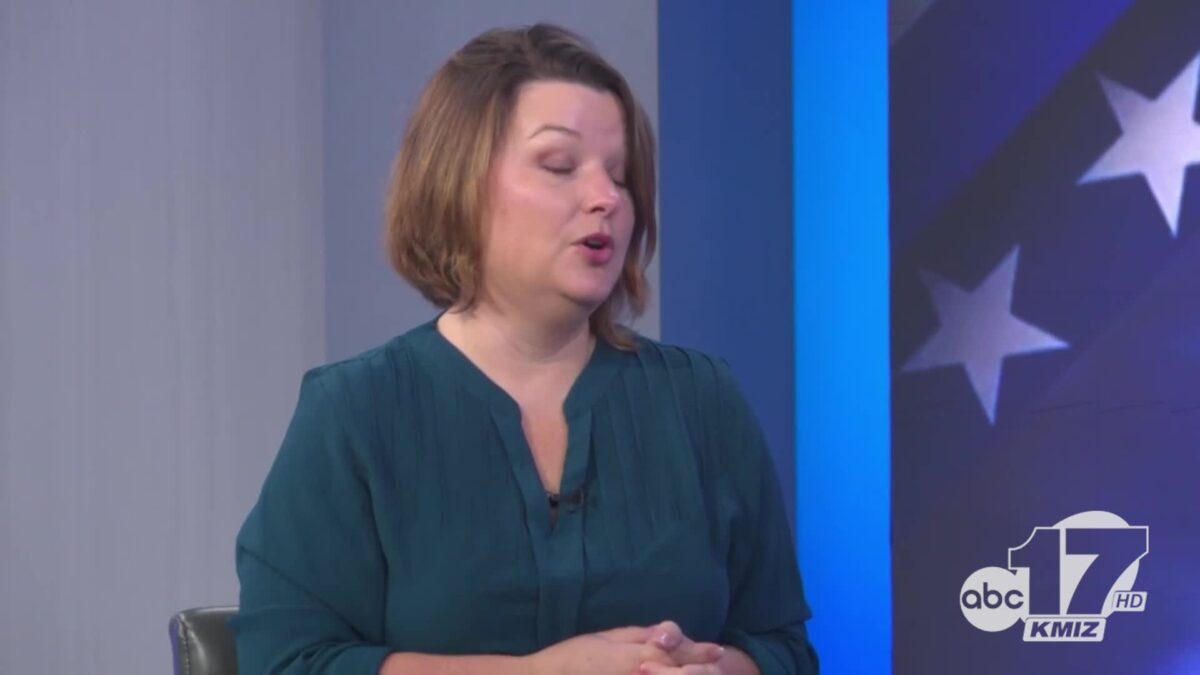
Lucas Geisler
COLUMBIA, Mo. (KMIZ)
ABC 17 News is talking to candidates in select April election races about their positions on key issues.
Below is the transcription of the full interview with Christina Hartman, who is challenging the incumbent to be Fifth Ward representative on the Columbia City Council.
Her opponent is Don Waterman.
LUCAS GEISLER: Why don’t you go ahead and, if you don’t mind, would you introduce yourself to our viewers and what it is that you’re running for?
CHRISTINA HARTMAN: Hi, I’m Christina Hartman, and I’m running for city council Ward 5 in Columbia, Missouri. I am running because the city needs proper infrastructure that we plan ahead for, and we need great job opportunities and available housing.
GEISLER: Why do you wanna run for city council?
HARTMAN: Yeah, so city council to me was kind of the next step in my evolution of volunteering. So I’ve been volunteering in Columbia since I got here … painting fences for different organizations to handing out food and those kind of things and I was like, ‘What is the next step for me. How do I make a real impact in Columbia?’ And when I noticed that there were some issues with transmission line projects being over a decade old, I was like, ‘I think we could do better Columbia.’ And so that’s why I chose to run.
GEISLER: Let let’s talk about those … topics, I mean, the 5th Ward specifically has seen a lot of delays and controversy around some of these, like a transmission line, a water tower that was supposed to be built in southwest Colombia for it. How do you plan on keeping city staff on target and getting some of these projects that were promised and voted on, even to the finish line and completed?
HARTMAN: Yeah, so I think part of that is going out and speaking with the community. Making sure that the community understands why we need those infrastructure projects so the transmission lines impact more than just Ward 5 and so like, let’s be good partners in our community and share that load of infrastructure needs, and then when it comes to keeping it forefront with the city staff, you know, that’s communicating with our city administrator, making sure that they understand the importance um of that to. To me and my constituents, um, and, and really trying to make sure that you’re engaged.
So my background is in IT project management. I’m a [project management professional] and so part of that is knowing when to follow up, give them a little bit of time, but then follow back up whenever there’s an appropriate amount of time that has allowed them to make some progress, and just keep checking in on those type of projects.
GEISLER: Can you tell us a little more just about your background, like what it is you do and what it is you do in town for a living and and things like that?
HARTMAN: Over the last 20-ish years I’ve worked in technology, so that’s from some simple coding projects to project management to worldwide delivery of computer assets, things like that. And over time I got interested in cyber security, always kind of a passion of mine as I was going through the ranks of different IT jobs, and once I developed the understanding of security and started auditing some systems, I was like ‘Wow, I really like doing this,’ and so I started my own business and I have a small cyber security business that I try to run and keep going with that, and so I think that that really applies well into city government. So being able to take a look at systems and understand that underlying process and pull out what’s working and what’s not to try to get things moving.
GEISLER: City leadership is gearing up to offer a public safety sales tax to the voters in Colombia, probably here in the next several months. Do you support, on its face, uh, a raise in the city sales tax for public safety? And why do you support or why not?
HARTMAN: Yeah, so I think that’s a really interesting question. So we know that the city does have a budget deficit, which means we’re pulling out of our coffers, and that’s not a good thing. It’s not sustainable. We can’t do that long-term. We know that there’s been pension issues that have crept up in that we, in order to maintain and keep our promises to the people that are protecting us, we need to look at those type of things. But we also know that the cost of everything is rising, right? We have additional tax that have come in from annexations and different things like that, and all of those things are adding up for the common, the average person. And so for me, I think we need to really look at the budget and see what’s giving us that return on investment, and get rid of things that aren’t working for us before we start asking the voters for additional money. We haven’t even used the money that they gave us for a water tower. Or that the voters voted on for the water tower and for the transmission lines and so we need to make sure we’re being good stewards of that money before asking citizens for additional funding.
GEISLER: Is there something more that you’d want to hear from city leadership before voting yes or no on going to the ballot with a public safety sales tax, or do you feel comfortable even saying right now how you decide on that?
HARTMAN: Yeah, I would want to sit with our administrators and really understand the bottom line on that, but I think ultimately the voters will get to decide on whether they want that city tax for themselves and their neighbors.
GEISLER: How do you think the city manager De’Carlon Seewood has done in his job since you’ve gotten to really see and pay attention to what’s going on?
HARTMAN: So my background is in tech and when we come in and we look at a system we, look at what process is working and we try to take out the people part of that and really look at the processes and so when we do a retrospect, which is going in after a project and looking at what went well, what didn’t, it’s really the processes that enable people to be good at their job or to be fantastic at their job, you. Like it’s how well do we have those things implemented, and I think that there’s a lot of structural things that they’ve been working to improve that could still use a lot of help.
GEISLER: Do any come to mind just off at the beginning, or is it something that you’re trying to get deeper into?
HARTMAN: Yeah, one of the things I think is the records request. So I hear a lot about people asking for information and not getting that in a timely way. We should be able to provide information to our constituents in a very quick and meaningful way. If they’re asking for information, let’s be transparent about it and get it out to them, and give them reasons … let them know if it’s not working quick enough, you know, stay in contact.
GEISLER: Are there any programs or efforts that you’re seeing going on in the city with regards to public safety that you think are working that you would like the city to maybe explore deeper into, invest more into anything that you see that you really are encouraged by and want to see keep going?
HARTMAN: Yeah, whenever I think about the programs, what I’m looking for is those proactive programs that are preventing issues rather than the reactive, and so almost in every aspect when you look at a proactive program, it’s going to be cheaper than dealing with the fact after. And so whatever programs we can really put an emphasis on prevention and limiting whatever exposure it be, that’s what we need to focus on.
GEISLER: What role do you think the city government has in homelessness, both speaking of maybe prevention but also in either dealing with it or trying to help kind of solve it?
What role does city government play in kind of that realm?
HARTMAN: Yeah, so I think when we talk about a population of people, we need to recognize that there’s a lot of different people coming from, with whatever population we’re referring to, and so we need to look at where people are and meet them at where they’re at. We know that it’s, I don’t have the exact statistic, but I think it’s like 15% cheaper to keep somebody from losing their home or losing their rental than it is to try to lift them up out of homelessness, and then, when you talk about that, there’s a lot of trauma that goes into that and so we need to be understanding. How do we help each individual at where they’re at to build programs that help them get to that next level and whatever step that looks like?