Missouri House approves Kehoe’s tax elimination bill

Alison Patton
JEFFERSON CITY, Mo. (KMIZ)
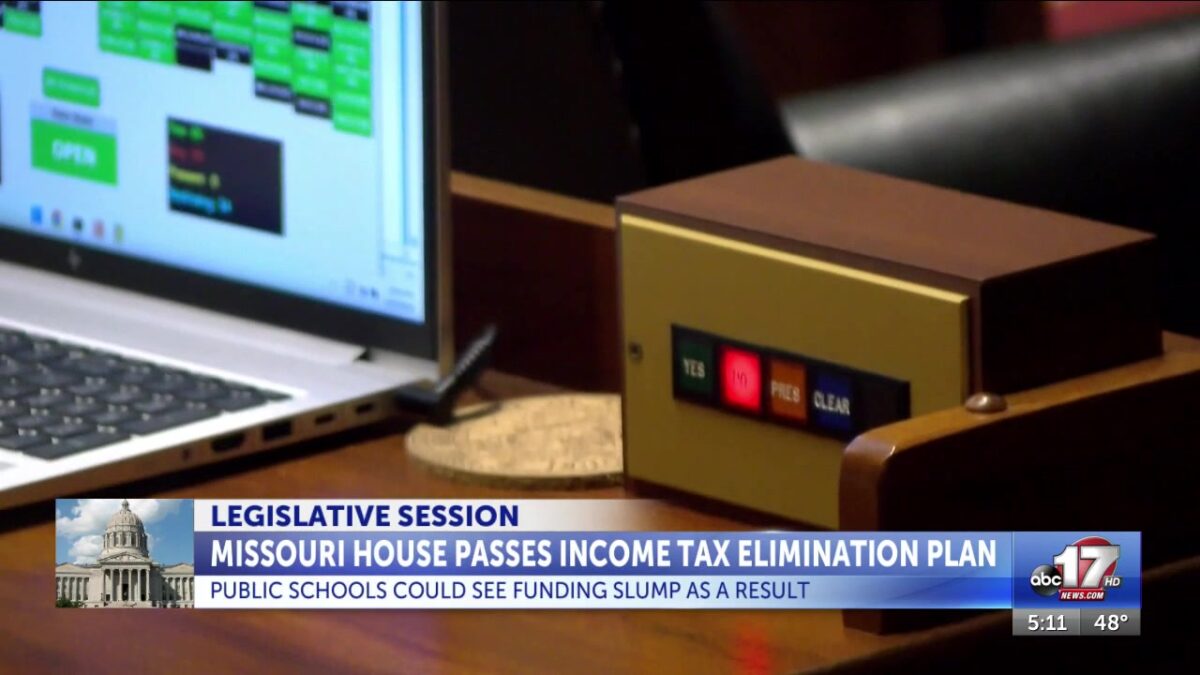
After less than an hour of debate, the Republican-led Missouri House approved Gov. Mike Kehoe’s income tax elimination bill with a 98-54 vote.
It will now be sent to the Senate, and that chamber is likely to pick it up after spring break, which starts Friday, and legislators will be back in session March 23.
House Joint Resolutions 173 and 174 would phase out the income tax, with the goal of eliminating it by 2032. Lawmakers plan to expand the sales tax base to include services and online purchases as a way to make up for the massive revenue cut.
Income tax makes up about two-thirds of the state’s revenue.
Republican lawmakers argue that the state’s tourism will make up for the revenue loss because out-of-state consumers will have to pay sales tax. The GOP also argues Missourians will take more home in their paycheck, and could choose to spend more, generating more sales taxes.
However, Missourians will have to pay that back at the grocery store, online subscriptions and purchases, and when they pay for services like haircuts or pet care.
Voters will have the final say at the ballot if the bill makes it through the Senate.
In final arguments on the House floor Thursday, Rep. John Martin (R-Columbia) reiterated the need for his colleagues to keep public safety, schools and infrastructure in mind while adjusting the state’s budget.
“We have a historic opportunity to help Missourians to have more take-home pay, and they can choose to spend that,” Martin said. “We also need to evaluate our state budget at this time, a good time to look at the target, as people are wondering how we’re going to make up the difference.”
The bill language said it would protect public school funding. However, Traci Gleason from the Missouri Budget Project said that might not be possible when legislators intend to cut the state budget by a million dollars this year and even more next year, and are already underfunding public schools.
“In that environment where we’re already underfunding, legislators are already making cuts and considering more drastic cuts next year, we’re talking about eliminating a huge source of funding for everything in our budget,” Gleason said.
The Department of Elementary and Secondary Education is also working to adjust the foundation formula for school funding.
Schools could also see shortfalls in local funding.
If the bill makes it through the general assembly and voters give the OK, it would provide a boost to local sales tax revenue. The bill would require local governments to lower property taxes to account for that increase, but that’s where many public schools get a chunk of their funding.
“Schools would be hit by an inability to handle real-world dynamics that any locality faces with population growth, demographics and things like that,” Gleason said. “It would really be a 1-2 punch at both state and local funding levels.”