Missouri lawmakers respond to joint attack on Iran

Alison Patton

COLUMBIA, Mo. (KMIZ)

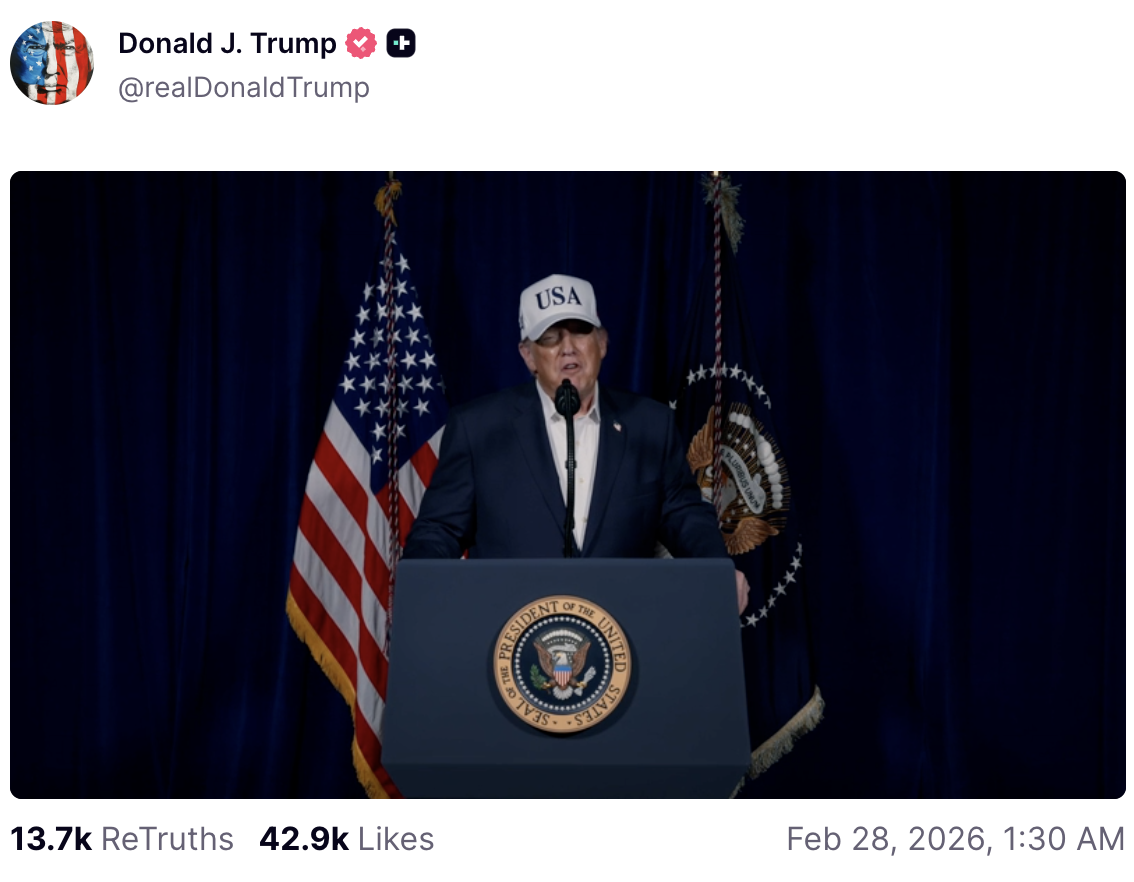
President Donald Trump announced the joint U.S. and Israeli attack on Iran early Saturday morning, just a few days before Congress was set to debate and vote on military action in Iran, according to CNN.

Some lawmakers are upset that Trump would engage in what he called “major combat operations” without congressional consent.

Rep. Emanuel Cleaver (D-MO) acknowledged that Iran is a bad actor, repressive and a threat to the U.S., in a press release but said Congress has to give the OK.

“However, President Trump has not made the case to Congress or the American people that there is an urgent threat to America and that they have a coherent strategy to achieve their goals. Our founding fathers in Article I of the Constitution gave Congress the sole authority to go to war,” Cleaver wrote.

But declaring war might not be possible.

“I don’t think there’s a snowball’s chance in hell that Congress declares war,” political science professor at the University of Missouri Charles Zug said. “The president doesn’t really have any incentive to ask Congress to declare war because if the president can do basically what he wants without congressional involvement, why invite Congress to be a part of it?”

There is some push from lawmakers on both sides of the aisle to limit the president’s power to engage in conflicts without the consent of Congress, according to CNN. But that legislation won’t go up for a vote until later this week.

Rep. Mark Alford (R-MO) has already expressed his support for Trump’s military action.

“I want to be clear about one thing: the United States did not start this fight, but we will finish it,” Alford said in a video. “I’m proud that we finally have a president behind the resolute desk who is holding this terrorist regime accountable.”

Iran installed a new regime in 1979, and it has been “anti-American and anti-Israeli” since, Zug said. Tensions between the U.S. and Iran have also been rising since then, but U.S. foreign policy didn’t stay consistent.

Although, Trump’s recent attack, along with two others–one in 2020 that killed Qasem Soleimani in Iraq and a 2025 attempt to destroy Iran’s nuclear facilities–have been the only conflicts, Zug said.


Click here to follow the original article.

Record turnout at Bend’s annual polar plunge to support Special Olympics Oregon

Spencer Sacks

BEND, Ore. (KTVZ) — More than 500 participants gathered in Riverbend Park, for the annual Polar Plunge. Despite water temperatures of 38 degrees, the event saw record attendance from local residents, students and community groups.

This year’s event grew to 550 participants, up from 300 people the previous year. The surge in popularity caused the event to start 20 minutes late after more than 100 people registered between late Friday night and the morning of the plunge.

Emily Rose, vice president of development and marketing for Special Olympics Oregon, noted the impact of the increased turnout.

“So to go from 300 to 500 and 50 in 1 year is amazing,” Rose said. “It’s great to see the Central Oregon community come together to support people with intellectual disabilities in their community.”

The event featured a 5K run and a costume contest. More than 28 different groups were represented during the plunge, including students from several local high schools such as Mountain View High School. Participants dressed in various costumes to spread awareness for the organization.

Deschutes County Interim Sheriff Ty Rupert was among the first-time participants taking the plunge. Rupert noted that many members of his agency joined the event.

“I am going to take the plunge. I’m excited to take on going just like this,” Rupert said. “This is a great event. It’s the Special Olympics Oregon. We have a lot of people from our agency participating. I’m super proud of them.”

Safety and support teams were stationed in the water during the festivities. Alex Beck, a member of Deschutes County Search and Rescue, monitored the area as participants jumped in.

“I’m stoked being in the water out here,” Beck said. “See all the smiles on Everybody’s faces and just have some fun.”

The cause resonated with local workers who interact with the athletes through their daily jobs. Lavonne Sholes, a Bend-Lapine Schools bus driver, said the event supports a group she knows well.

“It’s just an awesome cause,” Sholes said. “I take lots of trips with this Special Olympics groups and special needs groups and they are a fantastic group of kids so I want to support that for sure.”

While many were new to the event, others returned to continue their support for the charity. Abraham, representing Bend Honda and the Lithia Group, completed his fourth year at the plunge.

“You know, doing something for charity. That’s always wonderful about this,” Abraham said. “My fourth year doing it and I’m just happy to be doing it.”

Steve, another participant in the plunge, emphasized that the goal of the gathering was to raise awareness while bringing joy to the community. “It’s just a fun way to raise awareness for Special Olympics,” Steve said. “That’s what we’re out here doing, is making people smile.”

Click here to follow the original article.

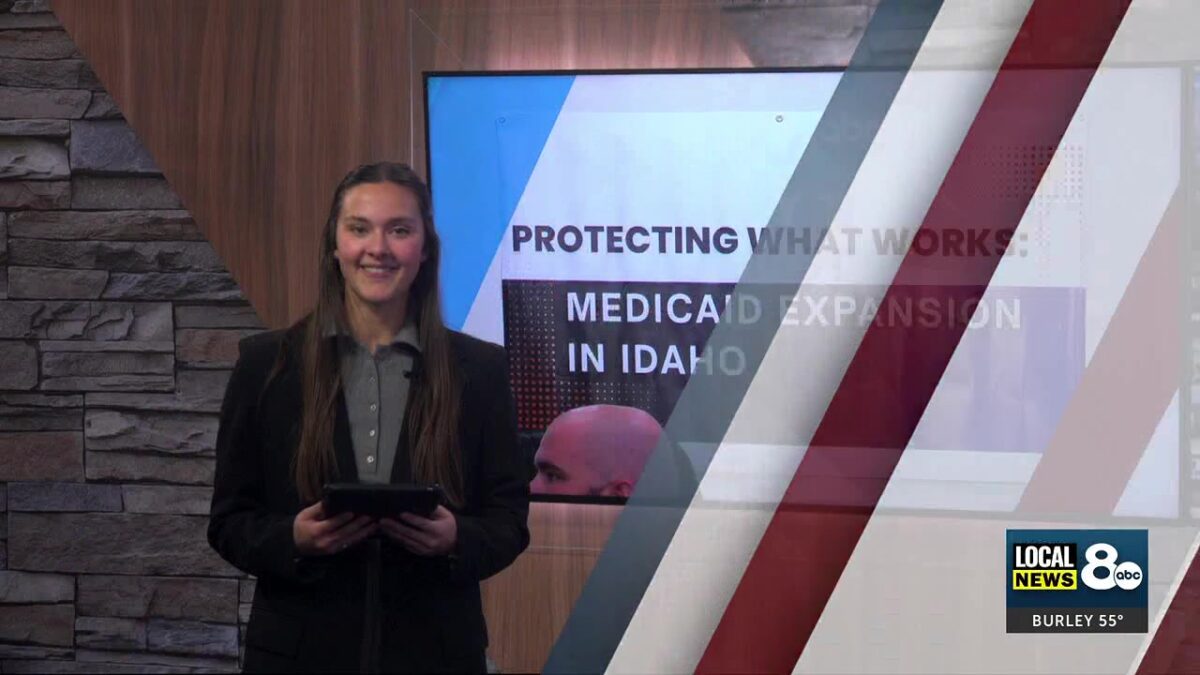
Protecting What Works: Medicaid Expansion in Idaho Town Hall Discusses Possible Repeal

Hadley Bodell

CHUBBUCK, Idaho (KIFI) – State legislators, panelists and community members met today at the Chubbuck City Hall for a forum titled “Protecting What Works: Medicaid Expansion in Idaho” hosted by the Pocatello-Chubbuck Chamber Legislative Council.

The purpose of today’s town hall meeting was to educate attendees about the possible repealing of the Medicaid Expansion program in Idaho. 61% of Idahoans voted for Medicaid Expansion, legislation that covers individuals in the health coverage gap, meaning they earn too much for traditional Medicaid, but too little to afford private insurance. Now, the state government is considering cutting the program in an effort to balance the state budget.

Those in support of Medicaid Expansion said the repeal would cost Idaho taxpayers $20 million, along with eliminating over 9,000 jobs. The program currently accounts for 3% of the growth in total Medicaid spending and 1.6% of Idaho’s General Fund appropriations.

90% of the Medicaid Expansion program is funded from the federal government. Senator Jim Guthrie said the Big Beautiful Bill has caused implications on the state budget, causing legislators to make decisions about where programs may be cut to save money.

“That 90% of federal funding, where does that go? If it goes to the hospital emergency rooms, that cost is exponentially higher,” Guthrie said. “Or it goes to the mental health services, law enforcement, and eventually it will raise insurance rates for all payer mixes that have insurance because they have to get the money from somewhere.”

A statewide poll conducted in 2023 found that 73% of Idahos still support the program and do not want it repealed. “Medicaid Expansion has become a critical part of Idaho’s healthcare system, workforce development, and overall economic health,” said Shantay Bloxham with the Chamber Legislative Council.

A main concern of attendees of today’s forum is the impact a repeal of Medicaid Expansion would have on rural healthcare in Idaho. Josh Sorenson with Bingham Healthcare commented on the effects this would have on rural hospitals.

“Our most rural and critical access hospitals, this would be detrimental,” Sorenson said. “I could see a scenario where many hospitals close.”

Another one of today’s panelists, Maggie Mann with Southeastern Idaho Public Health, gave examples of the people this repeal would directly effect. “I have a daughter who works two jobs,” Mann said. “One of them is for a very small local employer, which I think we would all agree that small businesses that serve at the local level are something we value. But because they are a small employer, they cannot afford to provide health insurance to the people that work for them.”

Contrary to the popular opinion that many individuals on Medicaid are reaping the benefits without cause, the panelists argue most of them are young, working professionals without employee insurance benefits.

Should the program be cut, the people on Medicaid Expansion would turn towards emergency services. Idaho Representative Rick Cheatum said the first major budget cut impacted mental health services, and that he’s wary of cutting this program.

“This is one area they’ve found the possibility of cutting some money out of the budget,” said Cheatum. “But in the long term, I’m not sure it’s the right solution.”

 Idaho legislators say the best way to get involved with this issue is to reach out to them over email or phone call and share a personal story about how you are effected by Medicaid Expansion.

Click here to follow the original article.