IFPD investigating suspected planned murder-suicide on Rainier Street

Seth Ratliff

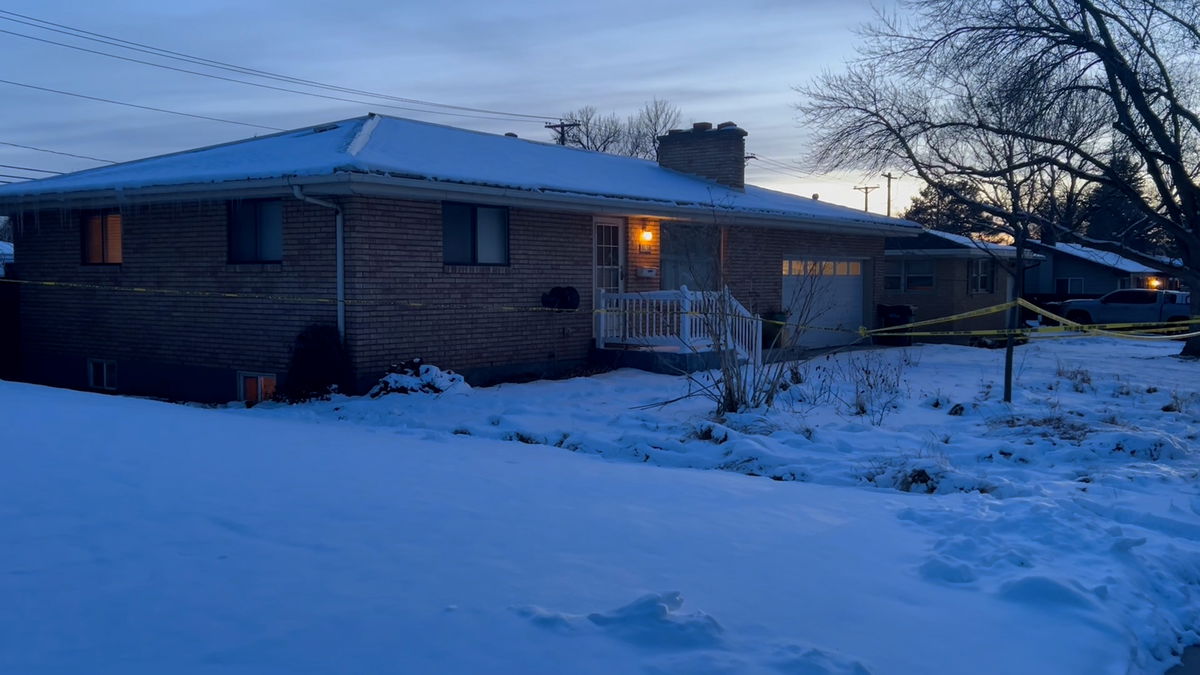
IDAHO FALLS, Idaho (KIFI) — The Idaho Falls Police Department (IFPD) is investigating an apparent murder-suicide after two bodies were discovered at a home in the 1700 block of Rainier Street on Thursday, February 19.

The investigation began around 12:30 PM when IFPD dispatch received a report regarding a potential suicide. A caller told the dispatchers that they had received a letter in the mail from a family member. The letter, which functioned as a suicide note, stated that two individuals—including the writer—had planned a murder-suicide, and their bodies could be found at the Rainier Street address.

Upon arrival, officers discovered the bodies of an adult man and an adult woman on the property.

“At this time, it appears that both individuals planned, cooperated in, and completed a murder-suicide,” wrote IFPD spokesperson Jessica Clements in the news release.

The IFPD confirmed that the next of kin have been notified. While the department typically does not release details regarding suicides, police chose to share information in this case due to the significant police presence required and to alleviate public concern.

Authorities emphasize there is no danger to the community stemming from this incident.

“The Idaho Falls Police Department offers our sincere condolences to the loved ones of the two people involved,” wrote Clements.

The Idaho Falls Police Department and local health officials urge anyone struggling with thoughts of self-harm to reach out for support. Any person who may be struggling with thoughts of self-harm or suicide is encouraged to call or text 988 to reach the 988 Suicide and Crisis Lifeline. The Behavioral Health Crisis Center, located at 1650 N Holmes, is also available in Idaho Falls.

Click here to follow the original article.

Government agencies plan for cash rewards for private bounty hunters to locate undocumented immigrants

María García

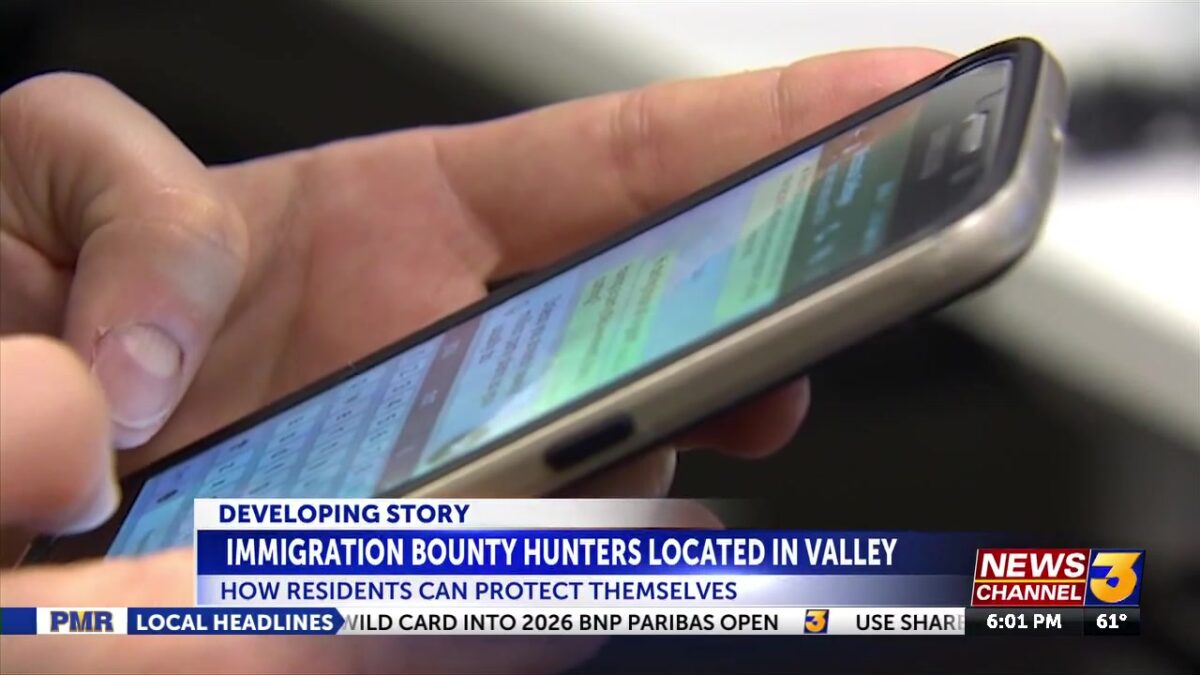
COACHELLA VALLEY, Calif. (KESQ) — Recent legislative proposals have explored utilizing private contractors or “bounty hunters” for immigration enforcement to track down and locate undocumented immigrants.

They use surveillance and location verification in order to increase arrest numbers. The reward is said to start at $1,000.

One nonprofit, “United Youth We Stand” says they’ve received reports of bounty hunters across the valley through social media raising concerns about safety and legality. “What we do is we look at all the photos of cars being used to detain undocumented immigrants in the valley on social media. From there, after verifying, we are able to alert the community and keep each other safe,” said Marilyn Aguilar.

“Ford Explorers, gray and white Ram 1500s. The Ford Explorer is more often black or a dark blue, and I think I’ve also seen them using minivans a few times, ” said Aguilar.

Organizers say their goal isn’t to create fear, but to make sure families know their rights as immigration enforcement continues in the valley and nationwide.

Click here to follow the original article.

New details emerge in the murder case of T’Neya Tovar, as Abraham Feinbloom faces charges

Garrett Hottle

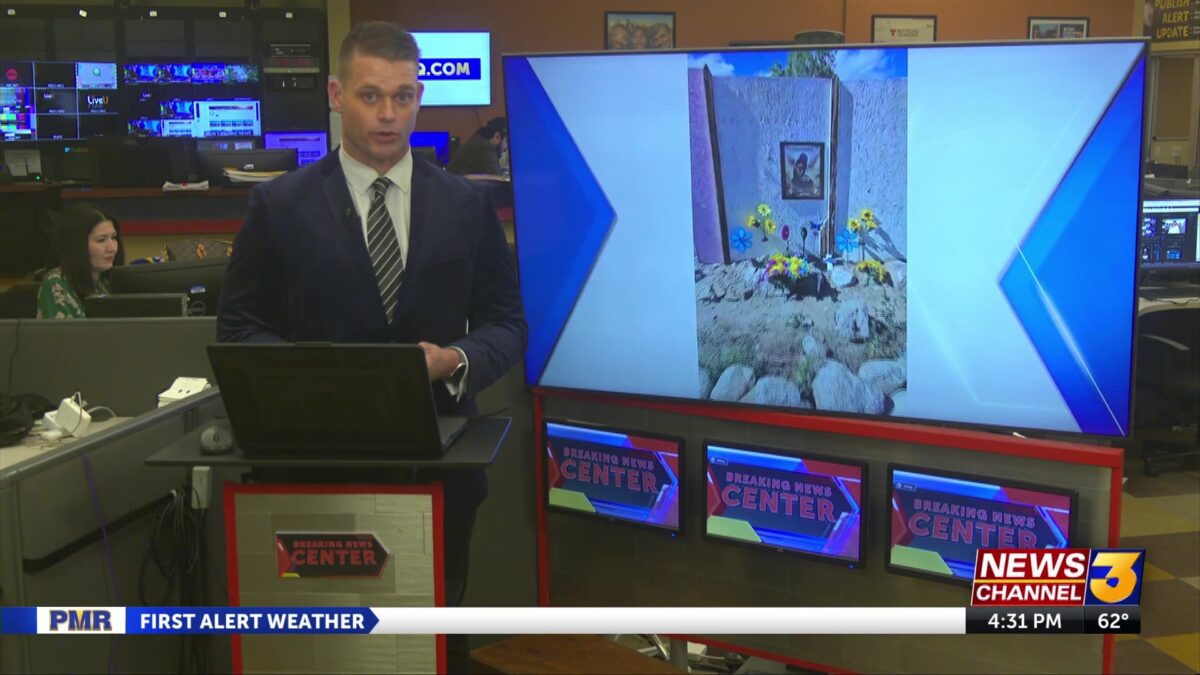
SALTON CITY, Calif. (KESQ)- As the murder case against 51-year-old Abraham Feinbloom moves forward, newly disclosed details are shedding light on how he became connected to 17-year-old T’Neya “TT” Tovar, how her remains were identified leading to Feinbloom’s arrest, and what prosecutors revealed at his arraignment about how T’Neya was killed.

Feinbloom has been formally charged with murder and resisting a peace officer. He entered a not guilty plea at his arraignment and is being held without bail. He is scheduled to return to court February 23 for a preliminary hearing.

During the arraignment, a judge stated investigators believe T’Neya died from a gunshot wound. Bullet fragments were found in the leg recovered December 21 in Vista Del Mar near Portsmouth Avenue and Newhaven Court, less than a mile from the Harlequin Court home where Feinbloom was later arrested.

The court further indicated Feinbloom and T’Neya had been in contact since October 2025. When he was arrested, authorities said he attempted to run from deputies and had a passport and Thai currency in his possession. It was also stated in court that someone brought T’Neya to the Harlequin Court home.

Earlier this month, News Channel 3 was the first to report that the partial human remains recovered Dec. 21, 2025 had been identified as T’Neya’s through DNA testing. Her mother, Charro Tovar, confirmed to News Channel 3 one day before law enforcement publicly announced the identification that investigators told her the DNA matched her daughter.

Charro said she was initially told the leg recovered in December was believed to be male and not thought to belong to T’Neya. Weeks later, investigators requested a DNA sample from her. The results confirmed the remains were her daughter’s.

She also told News Channel 3 she learned Feinbloom had been arrested in connection with her daughter’s death through News Channel 3 reporting. According to Charro, neither the FBI nor the Imperial County District Attorney’s Office personally informed her before it was publicly reported.

According to her mother, T’Neya had been in foster care. Charro said she lost custody when T’Neya was six and later served three years in prison. T’Neya was reported missing from her group home in Hemet in June, according to her mother.

Friends described T’Neya as someone who frequently ran away, sometimes calling those periods “adventures.” Charro acknowledged her daughter had active warrants and was on probation but said she regularly checked in with family and her probation officer and shared her location on social media.

Charro believes her own past and her daughter’s history in foster care and the juvenile system contributed to authorities not initially treating her concerns with urgency when T’Neya stopped responding in December.

Multiple friends told News Channel 3 they witnessed an encounter in October 2025 at the 7th Street/Metro Center station in Los Angeles in which Feinbloom appeared to be staring at T’Neya. Friends said they questioned her about it and she responded that she knew him. Law enforcement has not publicly detailed how the two first met.

News Channel 3 has also reviewed video showing law enforcement vehicles outside the Harlequin Court home on multiple nights in December, including the night the leg was discovered. Authorities have not publicly detailed what investigative steps were taken during those visits.

Court records show Feinbloom previously faced felony kidnapping and false imprisonment charges in Imperial County in 2018. That case was dismissed in January 2019. His former defense attorney confirmed to News Channel 3 that prosecutors dismissed those charges because they were unable to proceed. In statement received by News Channel 3 on Feb. 17, Feinbloom’s former defense attorney stated:

“As to the matter I previously handled, I can only say that the District Attorney dismissed all charges against my client under the advisement that they were unable to proceed.

As to the current matter: Mr. Feinbloom, like all persons accused of a crime in this country, is shrouded by the presumption of innocence.  That means he is innocent of all charges unless, and until, the prosecution can prove guilt beyond a reasonable doubt. 

This matter is best handled in the courts and should not be tried in the media.  Indeed, despite the recent reporting as of this time, I have not yet heard it published that a death certificate has been authored by a medical examiner in this matter.  And that is, I presume, because the proper authorities know that limb loss, without more, is not equivalent to death.  If it were, the 2.3 million amputees in this country would be surprised to know they are not counted among the living.

Reporting that the manner of death in this case is a murder without a death certificate stating the cause of death and that there is even a death, is tantamount to putting the cart before a horse.  It should not be reported as such, until the proper authorities have completed their investigation and determined such.”

A memorial for T’Neya is scheduled for Sunday. Charro said she plans to attend both the memorial and the upcoming court hearing.

Click here to follow the original article.

Readers report improper billing increases on TDS “Price for Life” internet plans in Central Oregon

Prineville Review

Published by our media partner, Prineville Review, on 02/18/2026. Click here to learn more.

BEND, Ore. (Prineville Review) — The Prineville Review has been investigating following numerous tips from Central Oregon residents who say their TDS internet bills unexpectedly increased despite being enrolled in so-called “Price for Life” or similar long-term promotional plans.

Over recent weeks, readers have contacted the Prineville Review describing a recurring $5 monthly increase, prompting confusion and frustration among customers who believed their rates were locked in.

One widely shared Facebook post from TDS customer Sarah Long captured the sentiment expressed by many:

“Everyone with TDS ‘price for life’ internet, check your TDS bills! I just spent a [sic] half an hour on the phone arguing with a customer service representative that ‘price for life’ doesn’t mean it goes up $5/month whenever they decide. They ended up changing it back, but I had to make a big stink about it first. Just FYI. TDS sucks.”

Long later described a lengthy customer service experience that she said required persistence and a credible threat of cancellation:

“You just have to see an offer and call customer retention, tell them your friend signed up and got such-and-such price and you want the same deal or you’re going to cancel. It’s a pain and takes forever … they kept transferring me and putting me on hold and I finally got to talk to a supervisor.”

Similar complaints have been shared directly with us. Several readers reported needing to contact TDS to correct the issue, and that the request for the fix and refund was not easy with TDS customer service.

On Tuesday, we reached out to TDS for comment. Hours later, in response to the inquiry, TDS acknowledged a billing issue affecting a limited group of customers and released a statement.

“A small group of customers enrolled in price promotions, including Price for Life, were incorrectly charged up to $7 more on their last statement due to a billing system error,” said Mark Schaaf, Manager of Communications for TDS.

“We sincerely regret this mistake and took immediate actions to resolve the issue. As we communicated to impacted customers on Feb. 3, they will automatically receive credit for the overcharged amount on their next statement. No action is required on their part, and customers’ price promotion remains in place.”

We then followed up with several of those who reached out to us over the last couple of weeks, but not a single source was able to find any reported communication from Feb 3rd. We have reached back out to TDS for information on the reported notice to customers, but have yet to hear back.

Some of the Central Oregon TDS customers alleged in recent days they had to deal with customer service agents who were often dismissive or took 30-60 minutes before agreeing to correct their bills.

Other customers told the Prineville Review their increases exceeded the amounts described by the company in its statement released yesterday.

TDS customer Diana Pullen of Redmond said her bill rose more sharply than expected.

“Mine went up $10! I thought we had price for life, too. What a crock!” said Pullen.

Another local customer reported on social media an even larger discrepancy tied to bundled services. “Can’t stand TDS. They did something very similar with me. Was supposed to have a locked-in price because I chose to get a house phone through them as well, but they started charging me 30 dollars more every month.”

Billing concerns are not entirely new for the company in the region. In August 2024, TDS upgraded Central Oregon customers on certain 300 Mbps and 600 Mbps plans to gigabit service. At the time, customers reported inconsistencies in pricing, noting that those already on the 600Mbps and 1Gig plans had to call into TDS to request the adjustment to the same pricing that those who had been on 300Mbps plans were getting now that customers were all on the new 1Gig plans.

Many said they were unaware that better rates were available at the time.

TDS did not indicate how many Central Oregon customers were affected by the most recent billing issue, but readers continue to advise fellow subscribers to closely review their statements.

According to the Better Business Bureau, TDS maintains an A+ rating, which primarily relates to its handling of customer complaints, although it is not an accredited business. The business’s customer review ratings are currently at 1.84 out of 5 with the BBB.

Click here to follow the original article.

Husband of Labor Secretary Lori Chavez-DeRemer accused of sexually assaulting 2 staffers

KGW

Author: Amy-Xiaoshi DePaola, Katherine Cook

WASHINGTON D.C., DC — The husband of Lori Chavez-DeRemer, U.S. Labor Secretary and former Oregon congresswoman, has been banned from agency headquarters after reportedly sexually assaulting at least two staffers, according to reporting by the New York Times.

The New York Times cited sources and a police report filed in December at the Labor Department. The women alleged that Chavez-DeRemer’s husband, Dr. Shawn DeRemer, had touched them inappropriately while at the Labor Department’s building, located on Constitution Avenue.

One of the incidents was recorded on office security cameras, the NYT said, involving DeRemer giving a woman “an extended embrace” during one of his frequent visits to his wife’s D.C. offices. DeRemer is an anesthesiologist based in Portland.

The women’s allegations were raised during an internal Labor Department investigation in January regarding alleged misconduct by DeRemer and her senior staff. On Jan. 24, a report from Washington’s Metropolitan Police Department was filed regarding the “forced sexual contact” in December. Police told the New York Times that the agency’s sexual assault unit is still investigating. 

The police report, obtained by KGW, noted the incident occurred on Dec. 18, redacting the victim’s names. The Metropolitan Police Department added in an email to KGW that it “cannot confirm the names of potential suspects or witnesses.”

After the staffers reported the incidents, DeRemer was banned from entering Labor Department premises, the New York Times reported, with a building restriction notice posted: “If Mr. DeRemer attempts to enter, he is to be asked to leave.” 

DeRemer, a Department of Labor spokesperson and a lawyer representing Chavez-DeRemer in the Labor’s Office of Inspector General investigation all declined to comment to the New York Times. 

In 2024, Chavez-DeRemer was named, then confirmed, as President Donald Trump’s Labor Secretary, shortly after losing her reelection bid to Rep. Janelle Bynum, a Democrat, for Oregon’s 5th Congressional District.

Chavez-DeRemer earned criticism from Oregon politicians after an August Cabinet meeting, where she urged Trump and U.S. Attorney General Pam Bondi to “crack down” on Portland — not long before the administration attempted to deploy National Guard troops in the city. That effort was stymied by a lengthy legal battle, culminating with the 9th Circuit U.S. Court of Appeals refusing to overturn the permanent injunction issued by U.S. District Court Judge Karin Immergut. Said injunction barred the administration from deploying any National Guard troops to Portland in response to protests outside the ICE building in the South Waterfront. 

Several months later, Chavez-DeRemer and several staffers were at the center of an internal complaint, which accused Chavez-DeRemer of pursuing an “inappropriate” relationship with a subordinate, would instruct staffers to “make up” official trips for vacations with friends and family, have aides run personal errands, and drink in the office during workdays. During the ongoing investigation, Chavez-DeRemer’s chief of staff and deputy chief of staff, as well as several members of her security staff, have been placed on leave.

KGW has reached out to the Labor Department and Dr. Shawn DeRemer’s office but has not yet heard back. 

Click here to follow the original article.

WATCH LIVE: President Trump hold press conference on Supreme Court tariff ruling

Curtis Jackson

WASHINGTON D.C. (KIFI) — President Trump is expected to address the U.S. Supreme Court ruling on tariffs in a press conference scheduled for today at 10:45 MST.

Watch the news conference below.

Click here to follow the original article.

Boise Woman Among Victims of Devastating California Avalanche

Seth Ratliff

BOISE, Idaho (KIFI) — A Boise woman was among those killed in an avalanche near Lake Tahoe, California, earlier this week.

Liz Clabaugh, 52, of Boise, and her sister, Caroline Sekar, 45, from San Francisco, were part of an experienced group of backcountry skiers caught in a slide during a historic winter storm in the Sierra Nevada. The disaster has been described by officials as one of the deadliest avalanches in the United States in decades.

instagramLiz Clabaugh

According to CNN, the sisters were identified in a statement by their families, along with their skiing companions Carrie Atkin, Danielle Keatley, Kate Morse, and Kate Vitt. According to Clabaugh’s LinkedIn profile, she was a clinical educator and coordinator at St. Luke’s Health System.

RELATED: 6 close friends on a backcountry ski trip identified as among those killed in devastating avalanche

“We have many unanswered questions,” the families’ statement said. “We are heartbroken and are doing our best to care for one another and our families in the way we know these women would have wanted.”

The sisters’ brother, McAlister Clabaugh, told the New York Times that the loss is incomprehensible.

“These are two of the best people I’ve ever known,” said Clabaugh. “They were incredible sisters, mothers, wives, and friends. And the idea that they are both gone is, I don’t even know how to put it into words.”

Rescue workers haven’t been able to retrieve the people who were found dead on the mountain because of severe storm conditions.

Click here to follow the original article.

One dead after shooting near Bohnett Park in Santa Barbara

Andie Lopez Bornet

SANTA BARBARA, Calif. – One person is dead after a shooting near Bohnett Park on the westside of Santa Barbara.

The incident happened around 1:30 a.m. Friday morning. When officers arrived on the scene, they found a man suffering from a gunshot would and another uninjured victim.

Officers gave CPR to the injured man, but he passed away later at Santa Barbara Cottage Hospital.

An early investigation shows that the suspect or suspects may have fled the area in an unknown vehicle.

It is believed to be an isolated incident and police say there is no remaining threat to the public.

The name of the deceased is being withheld.

UPDATE: A witness who lives in the area said she heard multiple gunshots at the time of this incident.

Police have been going door-to-door looking for video at the time of the shooting. There were cameras mounted on buildings in the area.

At least 15 evidence markers have been placed at the scene.

A Department of Justice crime scene truck with investigative equipment has been within the area cordoned off by yellow tape. Special photographic equipment and a drone are in use.

Some articles of clothing are on the sidewalk near an evidence marker just outside of the park. The scene on San Pascual St. is close to Victoria St. on a sidewalk across from apartment buildings.

Many friends of the victim and nearby community members have come to the scene with candles and flowers.

This is a developing story, and Your Newschannel will provide updates as it comes into the newsroom.

Senior Reporter John Palminteri contributed to this story from the scene.

Click here to follow the original article.

Supreme Court rules that Trump’s sweeping emergency tariffs are illegal

CNN Newsource

By John Fritze, Devan Cole, Elisabeth Buchwald, Tierney Sneed, CNN

(CNN) — The Supreme Court on Friday ruled that President Donald Trump violated federal law when he unilaterally imposed sweeping tariffs across the globe, a striking loss for the White House on an issue that has been central to the president’s foreign policy and economic agenda.

The decision is arguably the most important loss the second Trump administration has sustained at the conservative Supreme Court, which last year repeatedly sided with the president in a series of emergency rulings on immigration, the firing of the leaders of independent agencies and deep cuts to government spending.

Chief Justice John Roberts wrote the majority opinion and the court agreed 6-3 that the tariffs exceeded the law. The court, however, did not say what should happen to the more than $130 billion in tariffs that has already been collected.

“The president asserts the extraordinary power to unilaterally impose tariffs of unlimited amount, duration, and scope,” Roberts wrote for the court. “In light of the breadth, history, and constitutional context of that asserted authority, he must identify clear congressional authorization to exercise it.”

The emergency authority Trump attempted to rely on, the court said, “falls short.”

Trump received the news of the tariffs in a note while he was meeting with governors at the White House on Friday morning. After he read the note, he said aloud “that’s a disgrace” and then left the room shortly after, according a governor in the room.

At a news conference Friday afternoon, the president criticized the justices — two of whom he appointed — who ruled against him.

“The Supreme Court’s ruling on tariffs is deeply disappointing, and I’m ashamed of certain members of the court, absolutely ashamed for not having the courage to do what’s right for our country,” Trump said in the White House briefing room.

Justices Amy Coney Barrett and Neil Gorsuch, both Trump appointees, joined with Roberts and the three liberal justices in the majority. Justices Clarence Thomas, Samuel Alito and Brett Kavanaugh dissented.

The president and Justice Department officials had framed the dispute in existential terms for the country, telling the justices that “with tariffs, we are a rich nation” but that without them, “we are a poor nation.” A group of small businesses who challenged the duties similarly warned that Trump’s position represented a “breathtaking assertion of power” to effectively levy a tax without oversight from Congress.

In his opinion, Roberts brushed aside an argument from the administration that the president had power to use tariffs to regulate commerce. That was an issue that came up during the oral arguments last year as Trump suggested the president had inherent authority to issue the tariffs.

“When Congress grants the power to impose tariffs, it does so clearly and with careful constraints,” Roberts wrote. “It did neither here.”

“We claim no special competence in matters of economics or foreign affairs,” Roberts wrote. “We claim only, as we must, the limited role assigned to us by Article III of the Constitution. Fulfilling that role, we hold that IEEPA (the International Emergency Economic Powers Act) does not authorize the president to impose tariffs.”

No clarity on returning money

The 6-3 majority offered no clarity on the specific practical question of what to do with the money the administration has already collected through Trump’s tariffs. The issue of refunds has loomed large over the case, with Trump administration officials saying that potential repayments could have devastating consequences for the US economy.

As of December 14, the federal government had collected $134 billion in revenue from the tariffs being challenged from over 301,000 different importers, according to United States Customs and Border Protection data as well as a recent filing submitted by the agency to the US Court of International Trade.

That question will likely need to be sorted out by lower courts.

In his dissent, Justice Brett Kavanaugh noted that the court said “nothing today about whether, and if so how, the government should go about returning the billions of dollars that it has collected from importers.”

“That process is likely to be a ‘mess,’” Kavanaugh wrote.

Trump on Friday didn’t commit to returning the revenue collected, only saying he believes the issue will be litigated for years to come.

Court finally gives big loss to Trump, CNN analyst says

“Even though the Supreme Court has already ruled in dozens of cases involving the second Trump administration, those all involved emergency applications; this was the first Trump-related case to which the Court gave full review – and it’s an overwhelming loss for Trump on both the specific legal question and the more general ability to broadly use statutes like IEEPA,” said Steve Vladeck, CNN Supreme Court analyst and professor at Georgetown University Law Center.

“What that underscores is that, for as controversial as the court’s grants of emergency relief to the Trump administration have been over the past 13 months, the court is still willing to assert itself when these cases reach the merits – something that we’re likely to see again later this term in the birthright citizenship and Lisa Cook cases.”

Most significant case on US economy in years

The case was the most significant involving the American economy to reach the Supreme Court in years, challenging the legality of Trump’s “Liberation Day” tariffs, as well as duties he imposed on imports from China, Mexico and Canada. At stake were tens of billions of dollars in revenue the government has already collected.

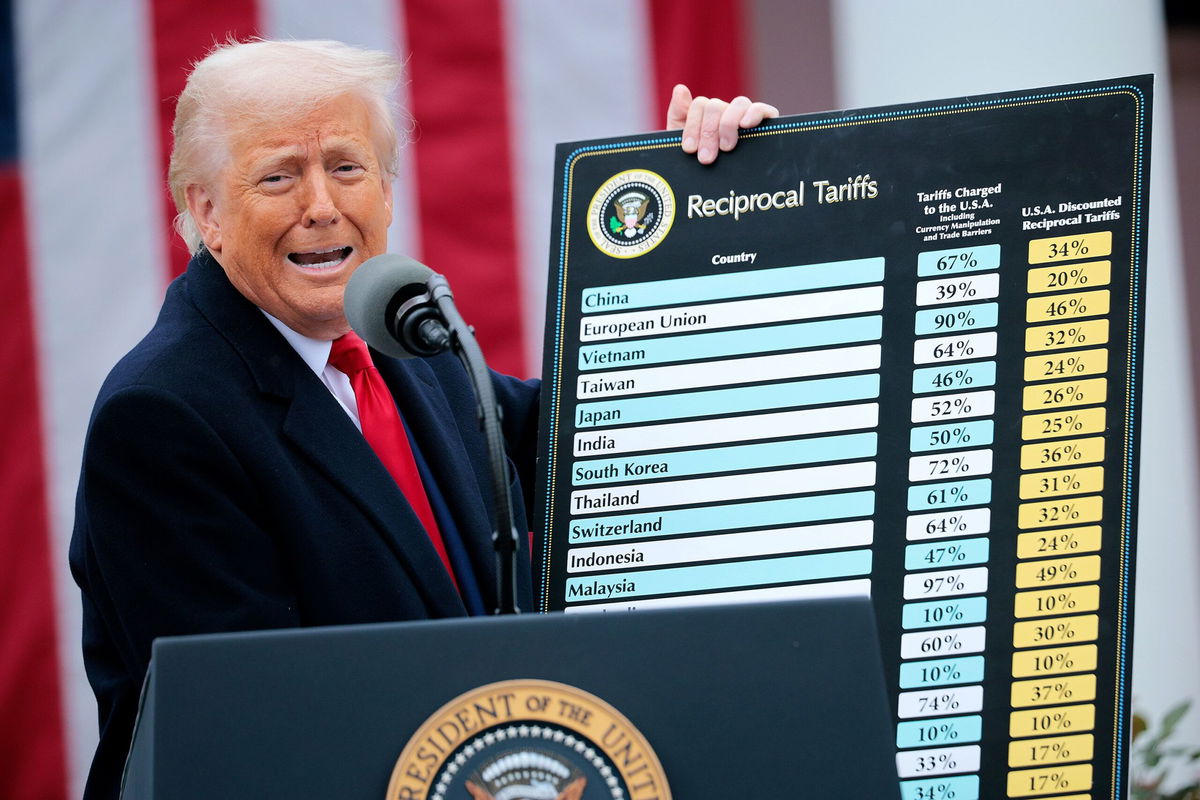
The so-called “reciprocal” tariffs raised duties as high as 50% on key trading partners, including India and Brazil, and as high as 145% on China in 2025.

Trump has relied on a 1970s-era emergency law, the International Emergency Economic Powers Act, or IEEPA, to levy the import duties at issue in the case. That law allows a president to “regulate … importation” during emergencies. The administration argued the word plainly includes the power to impose tariffs, but the businesses noted that the words “tariff” or “duty” never appear in the law.

That raised a series of difficult questions for the Supreme Court itself, which in case after case involving controversial policies from former President Joe Biden, ruled that an administration cannot take certain executive actions unilaterally without explicit authorization from Congress. That is particularly true, the court repeatedly ruled, when policies involve “major” political or economic questions.

In 2023, for instance, the conservative majority relied on the “major questions doctrine” to block Biden’s student loan forgiveness plan. A year earlier, the court stopped Biden’s vaccine and testing requirement for 84 million Americans, concluding that Congress never explicitly gave the government the power to demand those measures during the Covid-19 pandemic. Even some conservatives said the same logic should apply when it came to Trump’s tariffs.

Trump offered several counter-arguments, most notably that the tariffs implicate foreign affairs, where courts have traditionally referred to the executive branch.

Roberts did not accept that position.

“Taxes, to be sure, may accomplish regulatory ends,” the chief justice wrote. “But it does not follow that the power to regulate something includes the power to tax it as a means of regulation.”

The president has other more established authorities to levy tariffs without input from Congress. But each of those come with strings attached, such as time limits, that would make it harder for Trump to pursue his on-again-off-again strategy of raising and then lowering barriers as a negotiating tactic.

Another provision of law, for instance, clearly allows a president to raise tariffs — but only up to 15% for a maximum of 150 days. Another authority gives the president the power to impose higher tariffs for national security reasons. It can only be used to target specific industries and requires an investigation by the Commerce Department.

Every lower court that has reviewed Trump’s emergency tariffs found they violated federal law, though for different reasons. In one case, led by a New York-based wine importer called V.O.S. Selections, the US Court of International Trade concluded in May that IEEPA didn’t authorize Trump’s emergency duties. That decision was affirmed months later by an appeals court in Washington, DC.

In a separate case, an Illinois-based educational toy company, Learning Resources, sued in a federal district court in Washington, which also ruled against Trump. The case quickly went to the Supreme Court, leapfrogging the DC Circuit.

The courts in both cases put their rulings on hold temporarily, allowing the administration to continue to collect the tariffs while the appeals played out.

A significant question looming over the arguments was whether all businesses would be entitled to tariff payment refunds if the justices rule against the Trump administration’s use of emergency powers to impose tariffs.

The filing was in response to a group of importers, including Costco, requesting a preliminary injunction to prevent CBP from finalizing their tariff payments, a process formally known as liquidation. The importers argued that it was imperative for their payments to be unliquidated to get refunds down the road. Their request for a preliminary injunction was denied, however.

The three-panel judge explained that their verdict was supported by the administration’s promise to refund IEEPA tariff payments, if it came down to it, even if entries were liquidated. However, the administration has stated that it would likely be a laborious process.

Liberals rebuff concept of major questions doctrine

Justice Elena Kagan wrote a concurrence, joined by the two other liberals, to rebuff some of the reasoning that the three conservative justices ruling against Trump put forward for blocking the tariffs.

She specifically took aim at their use of a judicial doctrine known as “major questions,” which says that if Congress is giving the president the power to take an action with major economic or political consequence, it must use specific legislative language saying that it is doing so. The conservative court repeatedly relied on the major questions doctrine to shoot down major policies enacted by the Biden administration, including his efforts to forgive student loans.

Kagan has in the past criticized the conservative majority’s use of the major questions doctrines to halt executive actions on environmental regulations. Likewise, she was wary of using that tool to strike down Trump’s tariffs, even though she agreed with the decision to do so.

“The use of a clear-statement rule here is unnecessary because ordinary principles of statutory interpretation lead to the same result,” she wrote. ” It is not just that the Government’s arguments fail to satisfy an especially strict test; it is that they fail to satisfy the normal one.”

She said that the normal tools of statutory interpretation pointed to the ruling against tariffs, because the relevant law gives the President the emergency authority to “regulate” the importation of goods and nothing in the definition of that word “naturally refers to levying taxes”

For that and other reasons laid out in her concurrence, “straight-up statutory construction resolves this case for me,” Kagan wrote. ” I need no major-questions thumb on the interpretive scales.”

Pence and GOP critics celebrate ruling

In a rare statement, former Vice President Mike Pence praised the ruling against Trump as “a Victory for the American People and a Win for the Separation of Powers enshrined in the Constitution of the United States.”

“Our Supreme Court has reaffirmed that the Constitution grants Congress – not the President – the power to tax,” Pence wrote in a post on X.

“American families and American businesses pay American tariffs – not foreign countries. With this decision, American families and businesses can breathe a sigh of relief,” the post continues. “With this historic decision, America can now return to the pursuit of Free Trade with Free Nations under the Constitution of the United States!”

GOP Sen. Rand Paul and Rep. Don Bacon have both faced the president’s ire for criticizing his tariffs and backing legislation aimed at blocking them.

Bacon was one of only a handful of House Republicans to rebuke President Donald Trump’s tariffs in a vote on the House floor last week.

“I feel vindicated as I’ve been saying this for the last 12 months,” Bacon said in a statement. “In the future, Congress should defend its authorities and not just rely on Supreme Court. Besides the Constitutional concerns I had on the Administration’s broad-based tariffs, I also do not think tariffs are smart economic policy. Broad-based tariffs are bad economics.”

How Trump could still keep imposing tariffs

At his White House news conference, Trump announced alternative options, including an immediate 10% global tariff.

“Now I’m going to go in a different direction, probably the direction I should have gone the first time,” Trump said, calling it “even stronger than our original choice.”

The court only struck down one method for imposing tariffs – the use of the International Emergency Economic Powers Act.

There are other provisions of the Trade Act of 1974, the Trade Expansion Act of 1962 and the Tariff Act of 1930 that he could try. He already used some of these in his first term.

Section 122 of the Trade Act of 1974, for example, allows tariffs of up to 15% for up to 150 days under certain circumstances.

Another possibility is Section 338 of the Tariff Act of 1930, commonly known as “Smoot-Hawley.” It allows tariffs of up to 50% for five months on a country that “discriminates” against US commerce. Treasury Secretary Scott Bessent has cited this as a possible backup.

CNN’s Aaron Blake, Kaitlan Collins, Rebekah Riess, Morgan Rimmer, Lauren Fox and Sarah Ferris contributed to this report.

This story is breaking and will be updated.

The-CNN-Wire™ & © 2026 Cable News Network, Inc., a Warner Bros. Discovery Company. All rights reserved.

Click here to follow the original article.

McDonald’s in Madras damaged by fire, cause under investigation

Kelsey Merison

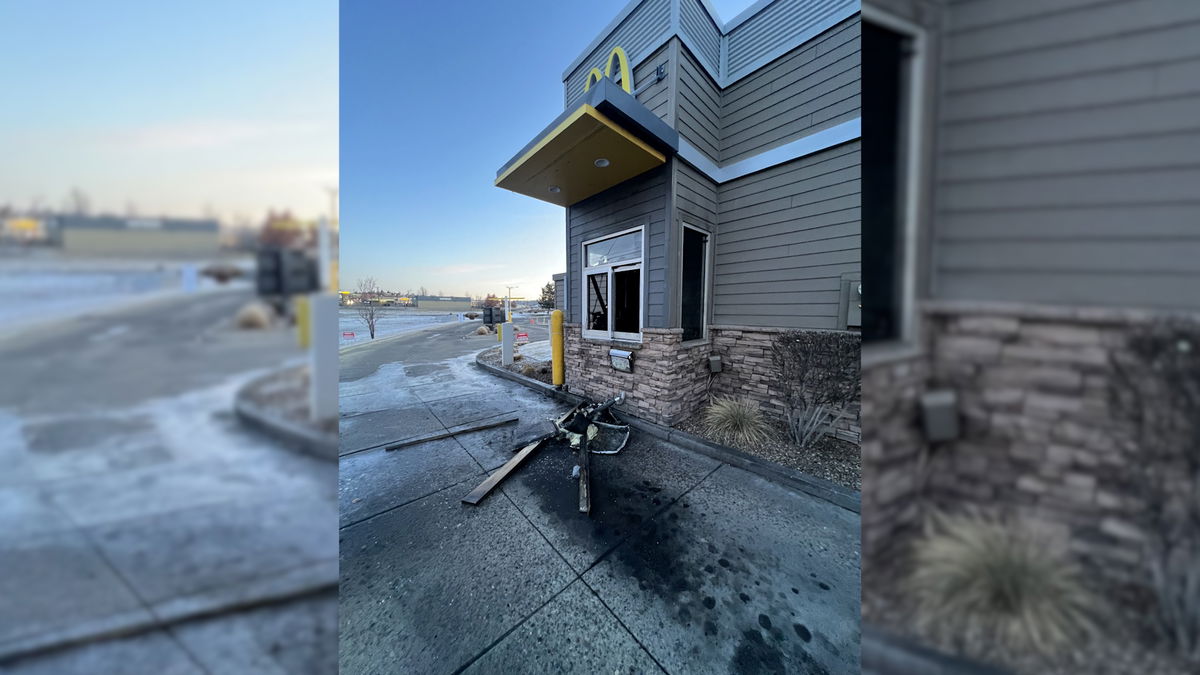
MADRAS, Ore. (KTVZ) — Jefferson County Fire & EMS crews extinguished a structure fire at the McDonald’s restaurant in Madras Friday morning. No injuries were reported and firefighters contained the blaze before it could spread throughout the building.

According to the agency, two employees arriving for work discovered smoke coming from the restaurant and called 911. When fire crews arrived on scene, they observed flames visible from the drive-thru window.

Firefighters initiated an interior fire attack through the front entrance of the restaurant. Simultaneously, crews deployed a second hose line to the drive-thru area to combat the visible flames. These efforts stopped the fire from spreading to other parts of the building.

Following the initial knockdown, firefighters conducted salvage and overhaul operations in the damaged sections of the restaurant. Crews also climbed to the roof to check for potential fire extension, but no spread was found.

Personnel remained at the McDonald’s for approximately 2 hours to ensure the scene was secure. No injuries were reported among employees or emergency responders during the incident.

Jefferson County Fire & EMS was assisted at the scene by the Oregon State Fire Marshal’s Office and the Jefferson County Sheriff’s Office.

The cause of the fire is currently under investigation. Fire officials have not released a damage estimate for the restaurant.

Click here to follow the original article.