10 Inland Empire donkeys killed in mysterious attacks since December

By Joy Benedict, Dean Fioresi

Click here for updates on this story

    LOS ANGELES (KCAL, KCBS) — At least 10 donkeys have been killed since December in a series of mysterious attacks in Riverside County, leaving wildlife activists desperate for answers.

The burros, a contentious topic for some residents living near the sprawling pastures where they roam, are a mainstay in the region. Over the last few months, however, they’ve become prey to an unknown attacker.

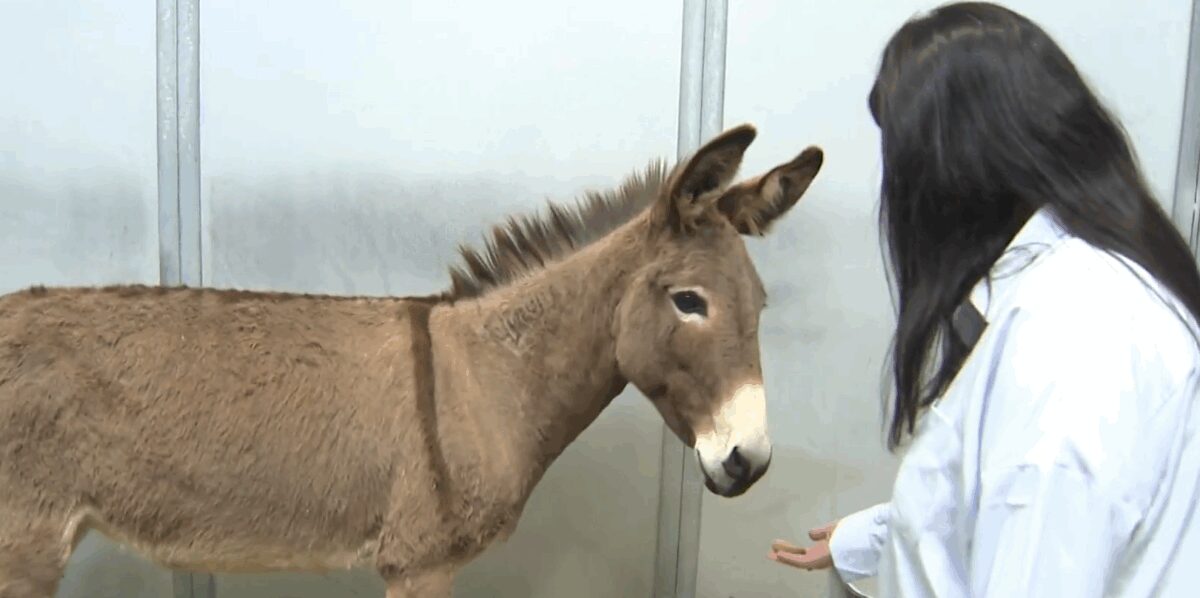
The latest attack, which happened over the weekend, was on Cannoli. She was found with a large bite mark on her rear and saved thanks to the work of Dr. Juan Castellanos and the team at SoCal Equine Hospital. While she’s expected to make a recovery, wildlife activists in the area say she was one of six donkeys attacked in the last week. The first happened in late December, and two took place in January.

“It wasn’t a full-on bite … it’s most likely a side bite,” Castellanos said.

The latest attack is part of a troubling trend for the creatures, which Castellanos says don’t have the typical survival instincts of other wild animals.

“They don’t know how to survive mountain lions or typical wild dogs; they’re getting caught off guard,” Castellanos said.

As for the attacker, Castellanos notes that they aren’t displaying the usual behavior of predators, which usually attack vital organs for quick kills.

“These behaviors we’re seeing are not typical of wild animals,” he said. “They know abdomen, neck are the easiest kills.”

He said that the recent incidents bear more similarities to dog fights, since they’ve either been attacked from behind or bitten on the head.

“They’re very similar to dog fights,” Castellanos said. “I have seen dog attacks before from fights. They usually go for the same area, butt or head. They were trained for that … They completely avoid the belly and go for the bare skull and snout, that’s not your typical predatory behavior.”

He’s worried that the signs point towards a dog trained to target the donkeys.

“Thats the biggest worry. Someone is out there with a vendetta against the donkeys and release these dogs just to hurt them,” he said.

Though beloved by many in the area, the burros have been targeted in other troubling incidents in recent years. Last summer, at least six donkeys were injured when they were shot by arrows. No arrests have yet been made in those attacks, either.

As a result, Donkeyland, the sanctuary that rescues donkeys in the area, is offering a $10,000 reward for information on the recent attacks, which they believe are not the result of a natural predator-prey relationship.

Please note: This story was provided to CNN Wire by an affiliate and does not contain original CNN reporting. This content carries a strict local market embargo. If you share the same market as the contributor of this article, you may not use it on any platform.
Kansas City priest thankful for new heart drug that ‘changed his life’

By Taylor Hemness

Click here for updates on this story

    KANSAS CITY, Missouri (KSHB) — As you likely know, February is American Heart Month.

So, hopefully, you’re paying a little closer attention to how your ticker is ticking.

One local priest is especially thankful he’s able to continue his calling this month, thanks to a new drug that was recently approved by the Food and Drug Administration.

I met with him and one of his parishioners … who just happens to be his cardiologist.

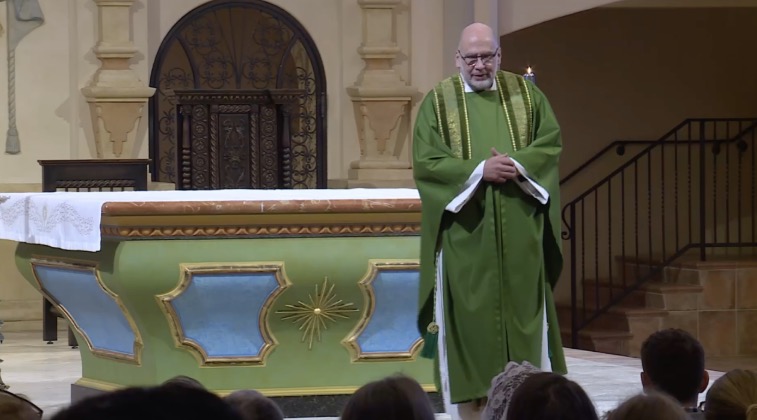
If not for his very vocal job, Father Greg Haskamp, of Visitation Parish in Kansas City, Missouri, may not have ever gone to the doctor — even as he noticed himself slowing down.

“I used to walk to my office; it was just a couple of blocks from my home,” Haskamp told me. “I couldn’t get halfway there without having to stop and catch my breath.”

Haskamp described himself as a person who would “just live with it” and would typically decline medication.

But that wasn’t really an option because his job was getting harder to do.

“I had learned to sing with a shallower breath,” Haskamp said. “I think I had forgotten how to take a deep breath.”

He spoke to Dr. Michael Nassif, a cardiologist at Saint Luke’s Mid America Heart Institute, who watches Father Greg do his job every Sunday morning.

I spoke to Nassif, too, who showed me some of the imaging and scans of Haskamp’s heart.

“Here’s the main pumping chamber, the left ventricle; this is kind of the most important chamber, the one that’s pumping blood to the body,” Nassif pointed out. “This muscle should be less than one centimeter thickness, that’s what we consider normal, and this was probably closer to 1.7, 1.8.”

Haskamp had hypertrophic cardiomyopathy (HCM), a condition that impacts thousands of people.

The most common symptoms are shortness of breath, dizziness and, in the most serious cases, people passing out when they exert themselves.

“For years, our best therapies were either slowing the heart down. The other one was invasive surgery,” Nassif said.

But not now.

Nassif got Haskamp into an experimental trial for a drug called Aficamten.

“The way your heart cells connect to each other is like hands on a rope,” Nassif explained. “And your heart cells squeeze each other, and these drugs, in a very targeted fashion, take some of these hands off the rope.”

They weren’t even sure if Haskamp got the drug or a placebo, but there were signs.

“I’d tell my research coordinator, ‘The homilies are definitely getting longer at church,’” Nassif said with a laugh. “Father Greg carries that big Bible, I think it’s 20–30 pounds; he definitely looks more spry.”

Spry and thankful.

“When Jesus heals somebody today, to think Jesus is healing, or God is healing, through the great advances in medicine, the progress of science,” Haskamp said.

I asked him if his homilies are now, in fact, longer.

“Maybe,” he told me. “Every once in a while, I’ll throw a short one in.”

Nassif says there are likely many people who have HCM and never seek treatment, just believing they’re getting older or need to exercise more.

If you’re experiencing shortness of breath, talk to your doctor.

Aficamten was just approved by the FDA. Father Greg will likely take this pill for the rest of his life, but he told me he’s OK with that.

If you’re already on multiple medications for your heart, Nassif says this new drug might be able to replace many of them.

Please note: This story was provided to CNN Wire by an affiliate and does not contain original CNN reporting. This content carries a strict local market embargo. If you share the same market as the contributor of this article, you may not use it on any platform.

Nurse honored for supporting postpartum moms

By Erin Miller

Click here for updates on this story

    NORFOLK, Virginia (WTKR) — A surprise at work turned into a heartfelt celebration for a nurse practitioner who has made it her mission to support new mothers.

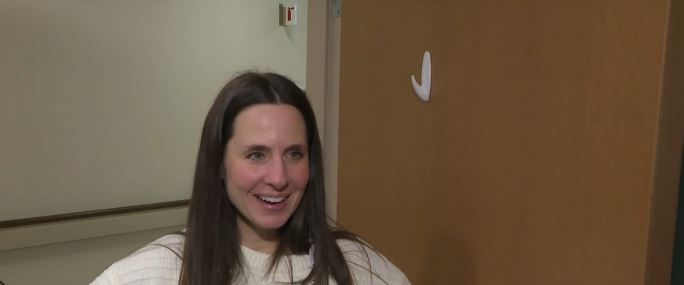
Jessica Schafer, a family nurse practitioner and lactation consultant at Sentara Leigh Hospital, thought she was getting new photographs taken at work. Instead, she was surprised with a News 3 Everyday Hero Award.

“This is really, really wild,” Schafer said with tears in her eyes. “Thank you for acknowledging the things that I do and that our hospital does and that my team does. I really appreciate it.”

I first met Schafer in January while reporting on a program she launched to help postpartum moms navigate mental health challenges.

“The next day [after our story aired], a grandma called about her daughter who had just had a baby and said, ‘Hey, I need to talk to Jessica Schafer. I saw her on the news and my daughter’s really struggling.’ So, we got her daughter some help and it’s been great. And even if it was just one person, it was like, oh my God, this is so amazing,” Schafer said.

For Schafer, the mission is deeply personal.

“I feel like mothers are the actual heroes,” she said. “They deserve so much support, and they deserve to be listened to. I’m so thankful every day that I was put in a position to be able to support these mamas and know that they’re not alone.”

One of the ways she provides that support is through “mom groups” at the hospital — and colleagues say her impact has been transformative.

“We had a mom group before her that had one or two patients that came and then COVID hit and nobody came because we had to shut it down. When we restarted it and when Jess took over, it exploded and I know it’s [because of] the way she relates to people,” said Lori Poul, a registered nurse at Sentara Leigh.

Poul describes Schafer as relentless in advocating for her patients.

“Jess is a bulldog when it comes to that,” she said. “She will fight for you and fight with you and challenge you. I can’t say enough about Jess.”

Ashley Kelly-Barnes, manager of patient care services, said Schafer’s dedication extends beyond her patients — she has felt it personally.

“I really think from a minority community with Black moms, it is really hard to sometimes breastfeed,” Kelly-Barnes said. “We have one of the lowest breastfeeding rates, and she really empowered me to say, ‘You can do this.’ I wasn’t as successful with my firstborn, but when I partnered with Jess [for my son], it was a game changer.”

Ashley Blue, a clinical nurse manager at the hospital, echoed that praise.

“She is that person who will go to the end of the earth for you,” Blue said. “And she does it for each and every person. She pours into my nurses. She helps to educate them and transfers that over to her patients each and every day.”

In recognition of her work, Southern Bank also presented Schafer with $425 to support her efforts and bring more awareness to resources available for new mothers.

“This is very validating and I’m so thankful for it,” Schafer said. “But this just makes it to where people can become aware of all the support that we’re offering for these mamas.”

As Schafer continues answering the call to serve families in Norfolk, her colleagues say her compassion and advocacy are changing lives — one mother at a time.

Please note: This story was provided to CNN Wire by an affiliate and does not contain original CNN reporting. This content carries a strict local market embargo. If you share the same market as the contributor of this article, you may not use it on any platform.
Aurora’s $1.9 billion infrastructure dilemma: Bridging the gap between rapid growth & public safety


KCNC

By Kelly Werthmann

Click here for updates on this story

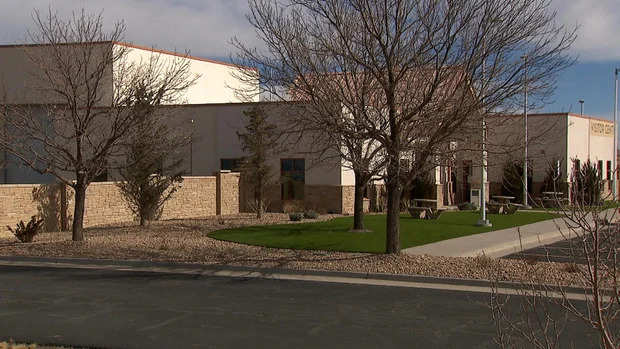
    COLORADO (KCNC) — If you’ve driven down E-470 past the Aurora Highlands lately, you’ve likely seen a building that has already lived two lives: first as a highway maintenance facility and currently as a visitor center. Soon, this structure in the eastern part of the Denver metro area will take on its most critical purpose yet: Aurora’s 18th fire station.

It’s a project Aurora Fire Rescue Chief Alec Oughton calls a “perfect location” to heal a stretched-thin emergency system.

“We’re very, very excited about this project and what it will mean for our organization, and for the community we take care of,” he said. “This is a great opportunity to give this building its third life.”

As Colorado’s third-largest city grows to more than 414,000 residents, the expansion is moving faster than the infrastructure can keep up, leaving newer neighborhoods miles away from the nearest help. In the Aurora Highlands, response times currently lag between 12 and 18 minutes — that’s an eternity in a business where every second counts.

“(Station 18) is going to shave 7 to 10 minutes off our response times to some areas of Aurora Highlands,” said Oughton. “It will have a very significant impact on this area of the city, and really not just in the Highlands itself but a couple miles north or south … it’s going to have a significant impact on how quickly we can get in there as the first responding unit.”

Oughton said, through a partnership with the community’s developer, repurposing the existing building — located near E-470 and Aurora Highlands Parkway — made the future for station project more attainable for the city.

“Fire stations are not inexpensive,” he said. “Trying to balance a budget while trying to balance emergency response infrastructure is a lot and takes a lot of collaboration.”

This “cobbling together” of resources, as Deputy City Manager Laura Perry described it, is a necessity in a city facing a nearly $2 billion list of city infrastructure needs.

“In total, our projects total $1.9 billion. Obviously, the city cannot afford to do that within the means we have available,” Perry said. “So, we really want to understand what matters most to folks.”

The challenge is a dual-front battle of “keeping up and catching up.” While new communities need protection, older parts of the city are aging out.

“We have five fire stations that are over 50 years old,” Perry said.

Recently, AFR Station 9 had to be demolished and rebuilt after its foundation began to crumble. The strain is also visible within the Aurora Police Department, where aging buildings that were never intended to be police stations need updating. In a citywide community survey last year, Perry said thousands of residents gave feedback about their wants for improved public safety.

“About 50% of the responses told us that folks want to see investment in stronger response times, fire stations, police … and that’s coming forward for further conversations through a variety of meetings we have planned over the next couple of weeks,” she said.

Those meetings, part of the city’s Build Up Aurora campaign, aim to discuss long-term solutions for projects ranging from public safety to transportation, parks, libraries, as well as accessibility. The city is seeking community input, Perry explained, to ensure it prioritizes what residents want most.

“That is a continual challenge in meeting the demands and needs of a growing city,” Perry added. “There are tools in the toolbox the city hasn’t used to fund capital projects, which are bonds as one example. We really want to understand through (Build Up Aurora) what the community needs and values. So, at meetings coming up, attendees will be asked to rank their top 5.”

For Aurora Fire, that feedback helps guide projects like the in-progress Station 18 — expected to be operational late this fall — and the future Station 19, which city council approved and allocated funds to be built on the southeast side in 2027. Chief Oughton said those two new stations will make a life-saving difference for the community, but the department will need at least three more in the next decade, he believes, to keep pace with Aurora’s growth.

“I think we’re making that progress,” he said.

Please note: This story was provided to CNN Wire by an affiliate and does not contain original CNN reporting. This content carries a strict local market embargo. If you share the same market as the contributor of this article, you may not use it on any platform.
Aurora’s $1.9 billion infrastructure dilemma: Bridging the gap between rapid growth & public safety

By Kelly Werthmann

Click here for updates on this story

    COLORADO (KCNC) — If you’ve driven down E-470 past the Aurora Highlands lately, you’ve likely seen a building that has already lived two lives: first as a highway maintenance facility and currently as a visitor center. Soon, this structure in the eastern part of the Denver metro area will take on its most critical purpose yet: Aurora’s 18th fire station.

It’s a project Aurora Fire Rescue Chief Alec Oughton calls a “perfect location” to heal a stretched-thin emergency system.

“We’re very, very excited about this project and what it will mean for our organization, and for the community we take care of,” he said. “This is a great opportunity to give this building its third life.”

As Colorado’s third-largest city grows to more than 414,000 residents, the expansion is moving faster than the infrastructure can keep up, leaving newer neighborhoods miles away from the nearest help. In the Aurora Highlands, response times currently lag between 12 and 18 minutes — that’s an eternity in a business where every second counts.

“(Station 18) is going to shave 7 to 10 minutes off our response times to some areas of Aurora Highlands,” said Oughton. “It will have a very significant impact on this area of the city, and really not just in the Highlands itself but a couple miles north or south … it’s going to have a significant impact on how quickly we can get in there as the first responding unit.”

Oughton said, through a partnership with the community’s developer, repurposing the existing building — located near E-470 and Aurora Highlands Parkway — made the future for station project more attainable for the city.

“Fire stations are not inexpensive,” he said. “Trying to balance a budget while trying to balance emergency response infrastructure is a lot and takes a lot of collaboration.”

This “cobbling together” of resources, as Deputy City Manager Laura Perry described it, is a necessity in a city facing a nearly $2 billion list of city infrastructure needs.

“In total, our projects total $1.9 billion. Obviously, the city cannot afford to do that within the means we have available,” Perry said. “So, we really want to understand what matters most to folks.”

The challenge is a dual-front battle of “keeping up and catching up.” While new communities need protection, older parts of the city are aging out.

“We have five fire stations that are over 50 years old,” Perry said.

Recently, AFR Station 9 had to be demolished and rebuilt after its foundation began to crumble. The strain is also visible within the Aurora Police Department, where aging buildings that were never intended to be police stations need updating. In a citywide community survey last year, Perry said thousands of residents gave feedback about their wants for improved public safety.

“About 50% of the responses told us that folks want to see investment in stronger response times, fire stations, police … and that’s coming forward for further conversations through a variety of meetings we have planned over the next couple of weeks,” she said.

Those meetings, part of the city’s Build Up Aurora campaign, aim to discuss long-term solutions for projects ranging from public safety to transportation, parks, libraries, as well as accessibility. The city is seeking community input, Perry explained, to ensure it prioritizes what residents want most.

“That is a continual challenge in meeting the demands and needs of a growing city,” Perry added. “There are tools in the toolbox the city hasn’t used to fund capital projects, which are bonds as one example. We really want to understand through (Build Up Aurora) what the community needs and values. So, at meetings coming up, attendees will be asked to rank their top 5.”

For Aurora Fire, that feedback helps guide projects like the in-progress Station 18 — expected to be operational late this fall — and the future Station 19, which city council approved and allocated funds to be built on the southeast side in 2027. Chief Oughton said those two new stations will make a life-saving difference for the community, but the department will need at least three more in the next decade, he believes, to keep pace with Aurora’s growth.

“I think we’re making that progress,” he said.

Please note: This story was provided to CNN Wire by an affiliate and does not contain original CNN reporting. This content carries a strict local market embargo. If you share the same market as the contributor of this article, you may not use it on any platform.
Town hall in Kapolei warns of fentanyl disguised as food, impacts on the community

By Jeremiah Estrada

Click here for updates on this story

    KAPOLEI, Hawaii (KITV) — Dozens of people took part in a town hall in East Kapolei on Tuesday night to raise awareness on fentanyl in the islands and how the drug is making its way here.

State Representative Diamond Garcia held the meeting at the Honouliuli Middle School cafeteria on Tuesday, Feb. 24. Law enforcement and state leaders shared the impact the deadly drug is having on the local population.

According to the Honolulu Police Department (HPD), Maui County had the highest percentage of fentanyl-related deaths with 40% of all drug-related overdoses linked to the drug in 2024.

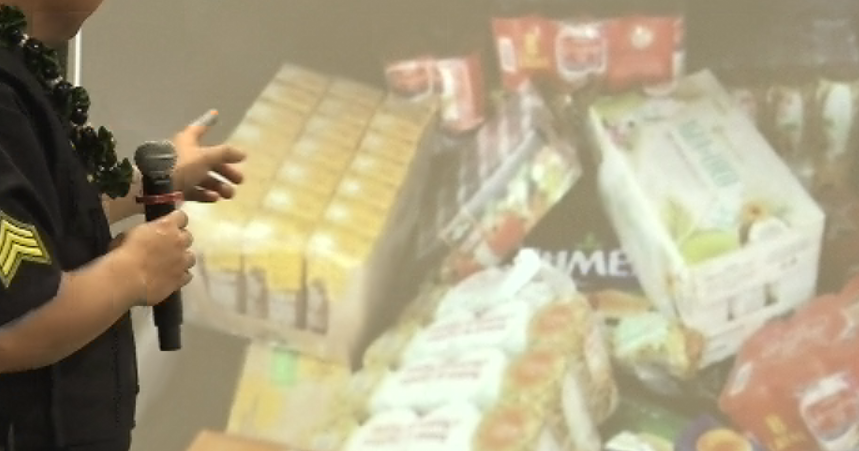
HPD also shared that the drugs come into the country disguised as food and canned goods.

Hawaii County Mayor Kimo Alameda also attended the town hall because he has seen the impact of fentanyl first hand.

“Here’s how addiction works: you go from ‘I like it’ to ‘I want it’ to ‘I need it,’ Alameda explained. “And when you’re in the stage of ‘I need it,’ you’re stuck. Your brain is hijacked and addiction is real.”

Mayor Alameda said education and spreading awareness is the best way to prevent addiction in the future.

Please note: This story was provided to CNN Wire by an affiliate and does not contain original CNN reporting. This content carries a strict local market embargo. If you share the same market as the contributor of this article, you may not use it on any platform.
A plate of purpose, food designer Krystal Mack uses art to explore Black history and drive change

By Kara Burnett

Click here for updates on this story

    BALTIMORE (WMAR) — Food is much more than a collection of ingredients on a plate.

For nationally acclaimed Baltimore food designer Krystal Mack, it’s a medium for storytelling, healing, and social change.

“In makes me proud to be a Baltimorean. It makes me proud to be a Black woman,” Mack said.

In the historic neighborhood of Wilson Park, Mack is transforming her 5,000-square-foot backyard into a community food garden.

“We will have crops from the Black American South, from the African diaspora,” she said.

Wilson Park was founded in 1917 by Harry Wilson, one of Maryland’s first Black bankers, who built and sold homes to Black families at a time when housing discrimination was widespread.

The neighborhood was designed as a place of refuge and prosperity. But today, the community faces new challenges.

Though rich in history, Wilson Park is now considered a food desert. More than 30 percent of households do not have access to a vehicle, and the nearest supermarket is more than a quarter mile away.

Mack hopes the garden will help restore both access and opportunity.

“We’ve practiced sustainability for a very long time as Black people,” she said.

Mack describes herself as a food designer, blending food and art to spark dialogue.

“Starting conversations that we wouldn’t generally have in a restaurant space, exploring food histories,” she said.

Her home library holds nearly 400 cookbooks, including publications featuring her own work. But her projects extend far beyond the kitchen.

Her design studio partnered with the Walters Art Museum to honor the legacy of Sybby Grant, an enslaved cook who once lived in what is now the basement of the museum’s historic mansion.

“I don’t think a lot of people think about slavery in Baltimore City, but it existed,” Mack said. “I thought it was really important for this woman’s voice to be heard and acknowledged.”

Grant documented the recipes she created but was never allowed to dine in the mansion’s dining room. Mack’s installation created space for reflection and conversation about that history.

At the Baltimore Museum of Art, her piece “Table of White Supremacy” explored how people of color are often underrepresented or overlooked in spaces of power.

“Not so much designing a product, but more so designing interactions,” she explained.

Through her art, she also reclaims ingredients tied to painful histories, transforming them into tools of connection and creativity.

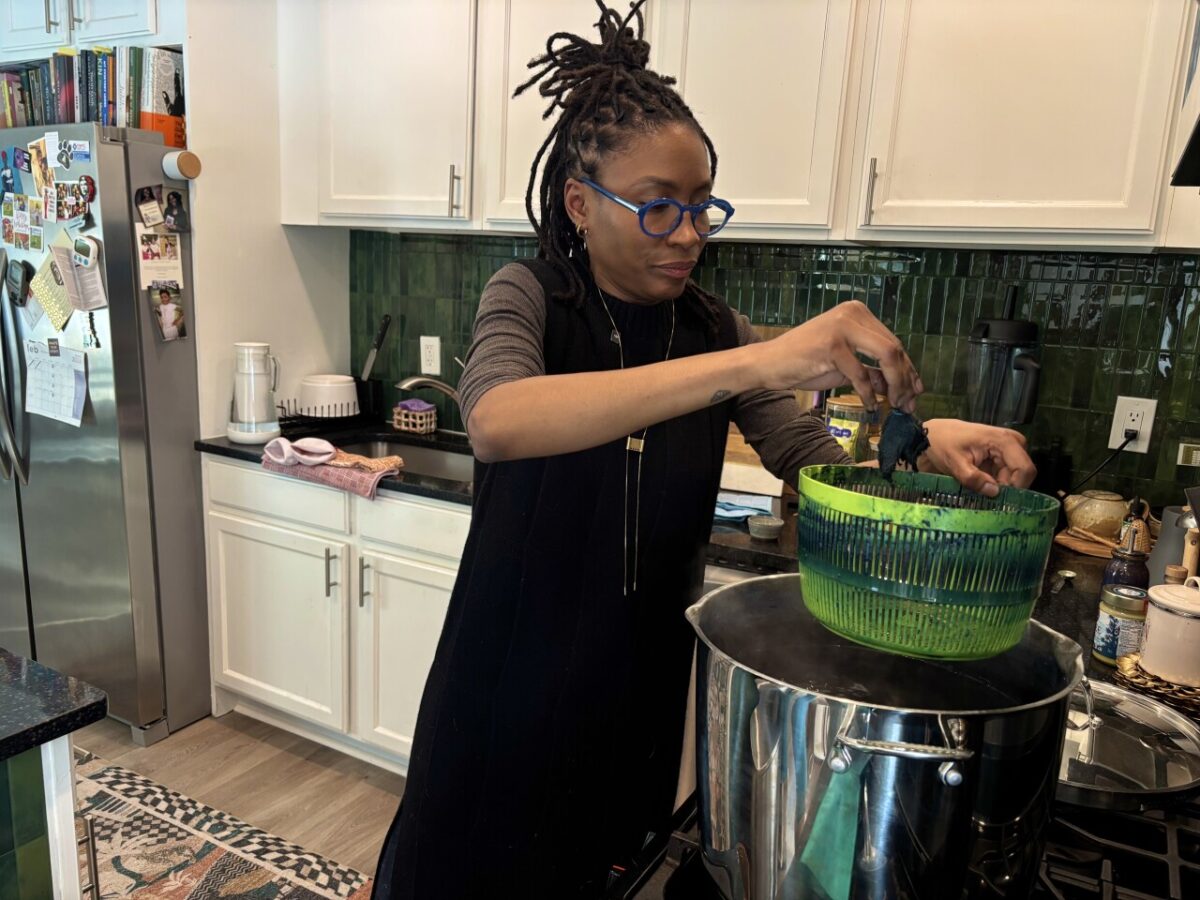
During an indigo dyeing demonstration, she feeds the fermentation vat sweet potatoes, dates, bananas, and beets, keeping the indigo alive.

Indigo was once a major cash crop during the transatlantic slave trade, processed under brutal and toxic conditions by enslaved workers.

“I wanted to find a way to work with food that could be restorative to me,” Mack said.

Mack’s work is not only about exploring history, it’s also about healing.

One of her most personal projects, “How to Take Care,” is a guide filled with recipes and stories from contributors around the world.

“It was rooted in my experience of growing up in an abusive household as a child,” she said.

Proceeds from the project supported organizations like the House of Ruth, which assists survivors of domestic and intimate partner violence.

“I wasn’t expecting it to have such a large reach and impact,” Mack said.

Despite national recognition, including becoming the first artist in U.S. Artist Fellowship history to be honored for using food as an artistic medium, Mack says the journey hasn’t been easy.

“I didn’t go to art school or culinary school. I didn’t go to college,” she said.

As one of the few Black women working in food design in the region, she says her work is sometimes undervalued.

“When they’re devaluing the work that I’m doing, it’s almost like they’re devaluing the work of their grandmothers or their ancestors or their mothers. And that’s kind of heartbreaking.”

Still, she continues.

“It’s been difficult to build that path,” Mack said. “But what gives me hope and pride and joy is knowing that in building that path, there are other folks behind me who’ll have an easier way to go.”

As she prepares to build a studio space and expand her community programming, Mack says her mission remains rooted in Baltimore, using food to connect past, present, and future.

Please note: This story was provided to CNN Wire by an affiliate and does not contain original CNN reporting. This content carries a strict local market embargo. If you share the same market as the contributor of this article, you may not use it on any platform.
Woman with rare disease becomes researcher to help others navigate their own diagnosis

By Ja Nai Wright

Click here for updates on this story

    BALTIMORE (WMAR) — Lexi Marta was diagnosed with neuromyelitis optica spectrum disorder in college. Now she’s using her own experience to help others with rare diseases.

Marta’s diagnosis — a condition similar to multiple sclerosis that affects the nervous system — came just before her senior year of college. Rather than letting it derail her future, she used it to shape one.

After completing her bachelor’s degree, Marta pursued a master’s in nutrition from Johns Hopkins Bloomberg School of Public Health, supported in part by the RAREis Scholarship from the EveryLife Foundation for Rare Diseases. A scholarship supported by Amgen.

“My diagnosis is neuromyelitis optica spectrum disorder. It’s very similar to MS so it causes symptoms with your nervous system,” Marta said.

Following graduation, Marta became a clinical research coordinator, where she ran a drug trial and worked directly with patients facing their own rare disease journeys.

“I got to see patients every single day, and I got to listen to their stories and help them through their diseases, and because I was also going through the same thing or similar, it was really easy to have a conversation with them,” Marta said.

But her progress was interrupted when her condition began to worsen.

“It was a really beautiful time in my life and unfortunately, though, that was cut short because of the way that my disease progressed. It cost a lot of other health issues and I did end up in the hospital for a month in a coma with COVID-19 and pneumonia and sepsis and all of that really fun good stuff. And it forced me to take a step back from research for a bit to focus on my health,” Marta said.

Despite the setback, Marta says she has no intention of stopping.

“My goal ultimately is to go back and get my PhD and then bring my nutrition knowledge into the world of chronic illness and address misinformation within that,” Marta said.

Her story is exactly the kind the EveryLife Foundation for Rare Diseases had in mind when it created its scholarship program. Stephanie Riordan, who works with the foundation, says financial and systemic barriers often follow rare disease patients well into adulthood.

“Because people with rare diseases have so many barriers, especially financial barriers to care and access in treatment, that by the time it comes to college and careers, sometimes those barriers impact the career path, so this is really an opportunity to alleviate those barriers,” Riordan said.

Riordan says the scholarship holds personal meaning for her as well.

“I actually got diagnosed with my own rare disease when I was in college and it was right before my senior year and so the scholarship has a really special place in my heart because of my own diagnostic odyssey,” Riordan said.

The EveryLife Foundation is opening applications on March 17 for the upcoming fall semester. Anyone over 17 who has a rare disease and needs support is encouraged to apply.

This story was reported on-air by a journalist and has been converted to this platform with the assistance of AI. WMAR verifies all reporting on all platforms for fairness and accuracy.

Please note: This story was provided to CNN Wire by an affiliate and does not contain original CNN reporting. This content carries a strict local market embargo. If you share the same market as the contributor of this article, you may not use it on any platform.

Family launches fundraiser after former Russ’ Kitchen chef steals over $3,000

By Drew Amman

Click here for updates on this story

    GEORGETOWN, Kentucky (WLEX) — Levi Bourget, the father of 12-year-old Russ Bourget who inspired Russ’ Kitchen — is speaking out after the community restaurant’s former chef pleaded guilty to criminal attempt theft by deception.

Investigators say Jacob Southworth spent more than $3,300 gambling at Red Mile Gaming using the Amen House’s credit card instead of purchasing food for the non-profit.

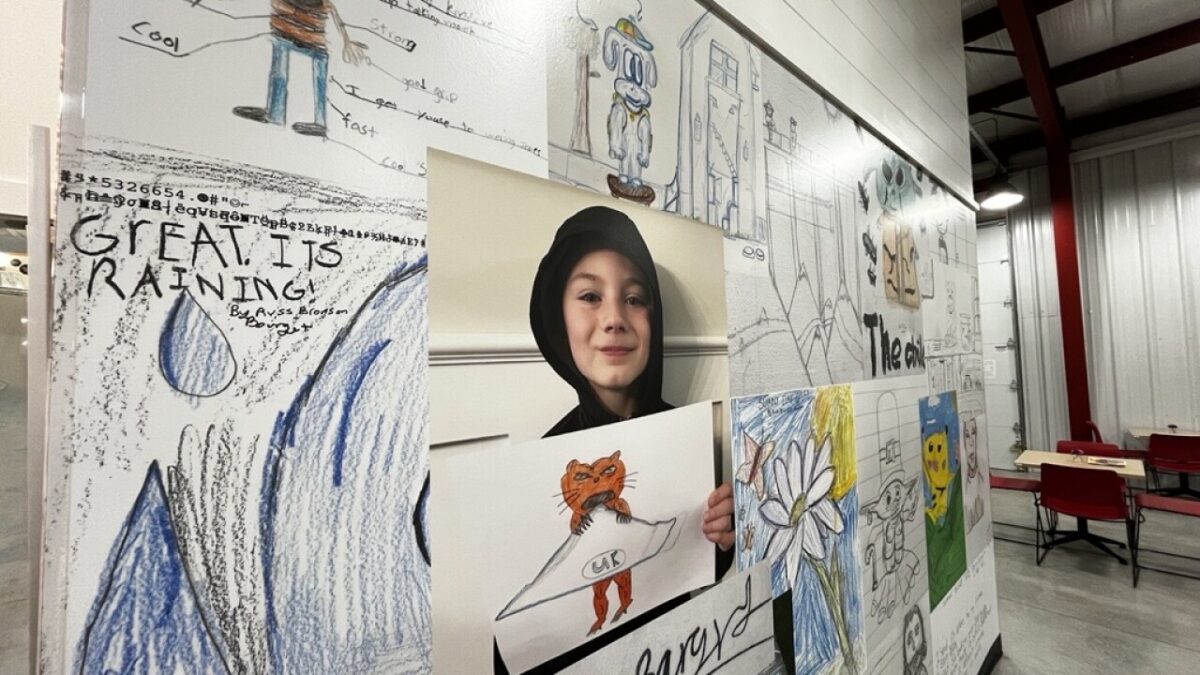
Russ Bourget passed away in a UTV accident in July 2024. He was known for his generosity and his commitment to giving back.

“He was a typical kid, loved sports, he was silly, creative,” Levi Bourget said.

One of Russ’ passions was the Amen House, a Georgetown non-profit. His adopted father says giving back was always on his mind.

“He always had a goal list of each summer donating items to the Amen House or to other charities,” Levi Bourget said.

The Amen House opened Russ’ Kitchen in November in his honor. Southworth led the effort to get the restaurant ready, but he is accused of using an Amen House credit card to gamble at the Red Mile.

Levi Bourget says he hopes Southworth will get the help he needs.

“He had some demons that unfortunately cost the Amen House and himself,” Levi Bourget said.

Bourget says he wants Southworth to have a path forward.

“That maybe he would get a second chance — not necessarily with Russ’ Kitchen or anything — but that someone out there would give him a second chance,” Bourget said.

The Bourgets are now leading a T-shirt fundraiser to benefit the Amen House and pay off the debt left by Southworth. Amen House Executive Director Michele Carlisle says she expects a strong response from the community.

“This place in its entirety, not just Russ’ Kitchen but the full Amen House, runs on the generosity of the community,” Carlisle said.

The Amen House opened Russ’ Kitchen in November in his honor. Southworth led the effort to get the restaurant ready, but he is accused of using an Amen House credit card to gamble at the Red Mile.

Levi Bourget says he hopes Southworth will get the help he needs.

“He had some demons that unfortunately cost the Amen House and himself,” Levi Bourget said.

Bourget says he wants Southworth to have a path forward.

“That maybe he would get a second chance — not necessarily with Russ’ Kitchen or anything — but that someone out there would give him a second chance,” Bourget said.

The Bourgets are now leading a T-shirt fundraiser to benefit the Amen House and pay off the debt left by Southworth. Amen House Executive Director Michele Carlisle says she expects a strong response from the community.

“This place in its entirety, not just Russ’ Kitchen but the full Amen House, runs on the generosity of the community,” Carlisle said.

Please note: This story was provided to CNN Wire by an affiliate and does not contain original CNN reporting. This content carries a strict local market embargo. If you share the same market as the contributor of this article, you may not use it on any platform.

UCSB works extra innings to beat LMU

Mike Klan

LOS ANGELES, Calif. (KEYT) – Five UCSB pitchers combined for 17 strikeouts as the Gauchos outlasted Loyola Marymount 5-3 in 11 innings for their fourth straight win.

Despite the solid work on the mound, the Gauchos trailed 2-1 heading into the 9th inning but Noah Karliner took care of that with one swing of the bat. He led off with a home run to right and this game would go to extra innings tied at 2.

Each team plated a run in the tenth inning and UCSB took the lead in the 11th inning on a wild throw to first base on a bunt by Corey Nunez. The error allowed Nick Husovsky to score and the Gauchos added another run on a sacrifice fly by Cole Kosciusko.

UCSB pitching did not allow a hit to the Lions until the eighth inning and LMU only totaled 3 hits all game.

Gauchos starter Josh Jannicelli pitched 3 2/3 innings allowing a run without the aid of hit and he struck out seven.

Reliever Donovann Jackson pitched three innings of shutout ball without allowing a hit and he struck out 5.

Raymond Olivas, Chase Hoover and AJ Krodel followed on the mound and held the Lions in check.

Krodel pitched the final two innings to get the win, giving up just one hit and striking out two.

UCSB is now 5-2 on the year and play their next 8 games at home starting Friday against Utah with first pitch at 4:05 p.m.

Click here to follow the original article.